Students can pray before, during breaks, and after school. They don’t need (and many don’t want) sanctioned time to pray or adults forcing religion on them. School is a time to learn, make friends, and develop life skills.
@RepMattGaetz, keep your religion out of our schools!
A stunning polished slab of fossiliferous limestone! Check out the amazing detail of these ancient creatures. #fossils#geology
Photo: gelerypetriefiedwood
The eerie and surreal view of the 'incandescent' lenticular clouds over Villarica volcano, Chile, illuminated by the crater's eruptions
[📹 Sur de Chile: https://t.co/oqZ7iBATnH]
https://t.co/BhOu3AGufN
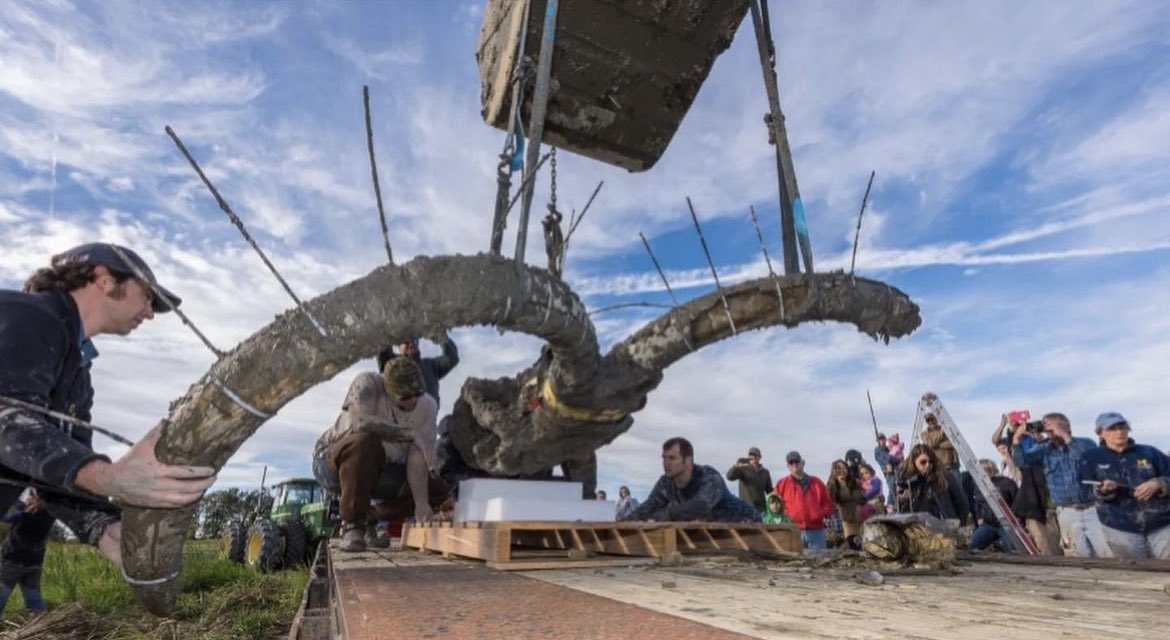
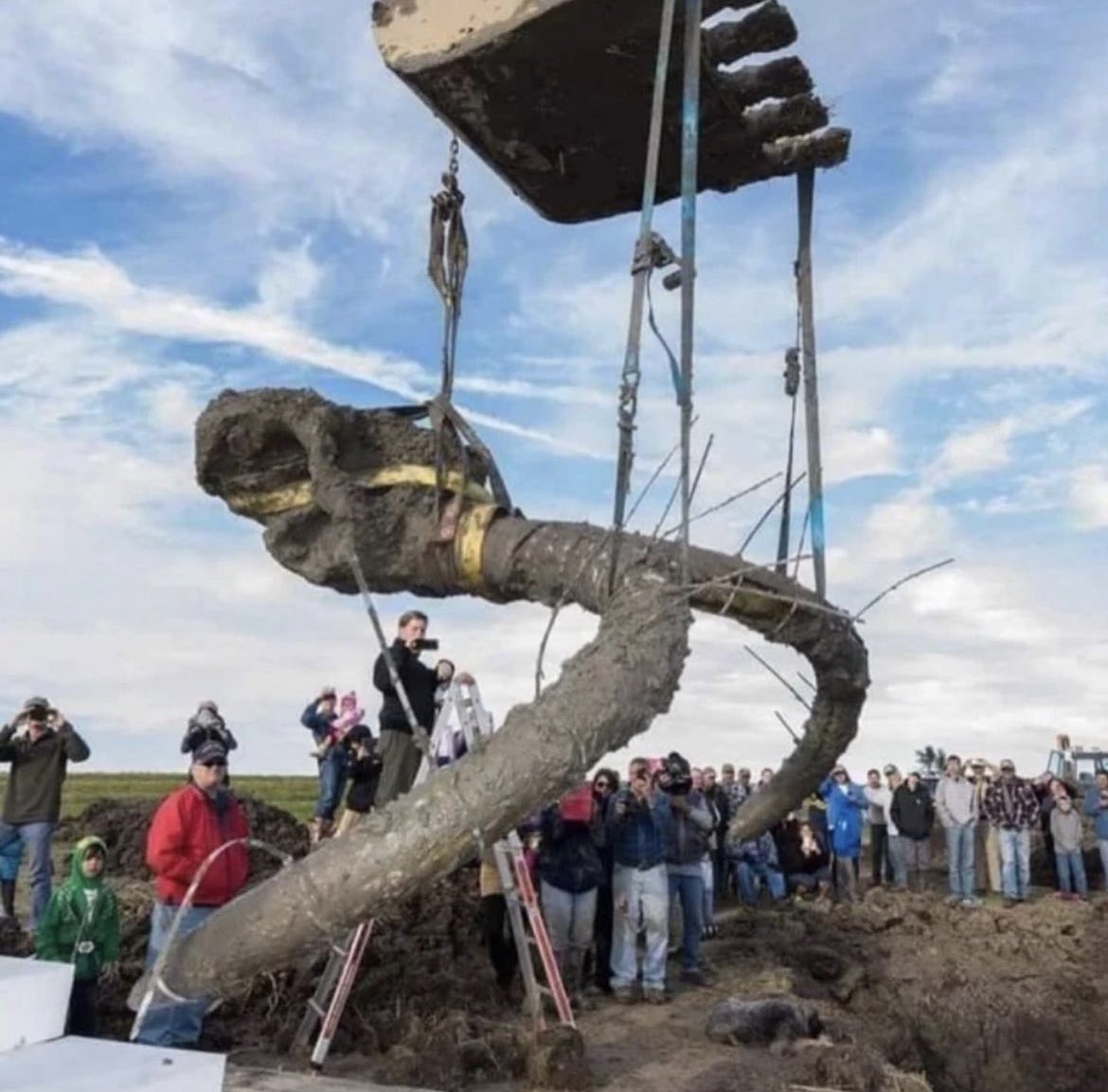
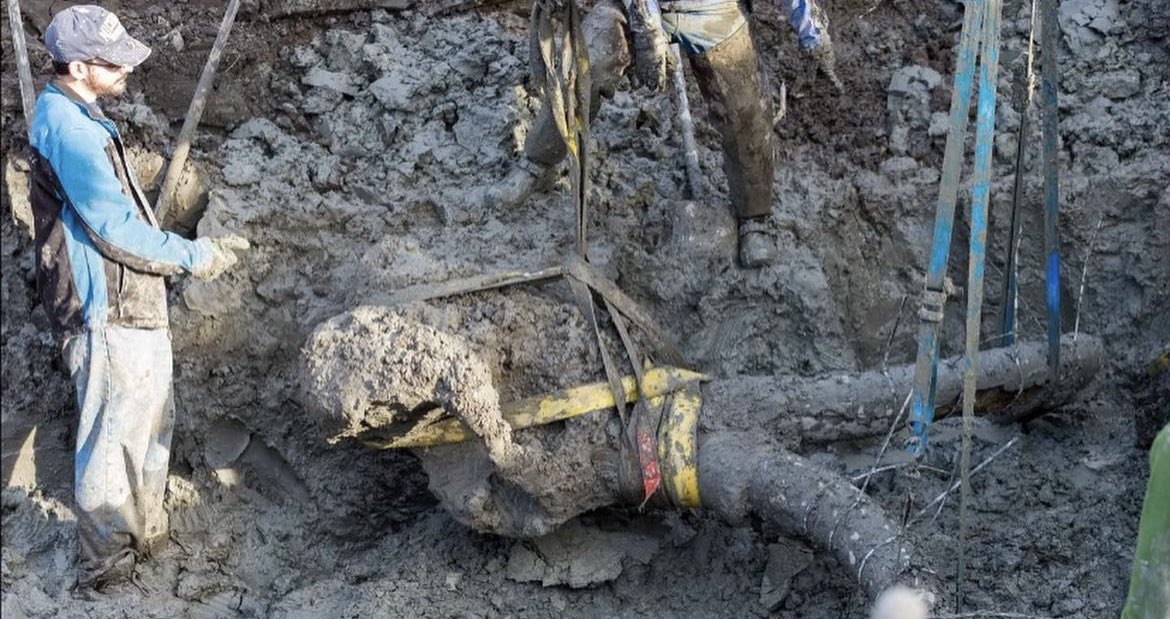
In 2015, Farmer James Bristle and his neighbor were diligently digging a trench in Lima Township, Michigan, with the purpose of installing a drainage pipe on Bristle's farm. To their surprise, their backhoe struck something solid about eight feet underground. Upon further investigation, they discovered an enormous three-foot-long bone that was clearly much larger than that of a cow.
Recognizing the potential significance of their find, Farmer Bristle and his neighbor immediately contacted the University of Michigan Museum of Paleontology, which happened to be just 10 miles away from the field. The museum's team of paleontologists arrived promptly, and Bristle generously allowed them only one day to complete their work, as he needed to resume his drainage project.
Working briskly and meticulously, the paleontologists carefully excavated the site. They revealed the remains of a prehistoric mammoth, a species that had roamed North America until their disappearance approximately 12,000 years ago. While Michigan had seen the discovery of remains from 30 other mammoths previously, this particular find was exceptional in its level of preservation.
The mammoth's remains, dating back between 12,000 and 15,000 years ago, were identified as those of an adult male who likely lived to be in his 40s before meeting its demise. However, what made this discovery even more intriguing was the evidence of human activity associated with the mammoth's remains.
The paleontologists found indications suggesting that ancient humans might have played a role in preserving the mammoth's meat for later use. The theory suggested that the carcass was submerged in a pond, aided by three basketball-sized boulders found near the remains, possibly used to weigh down the carcass.
The paleontologists utilized zip lines attached to a backhoe to carefully hoist the mammoth's gigantic skull and tusks. They then placed these impressive specimens onto a flatbed trailer, along with the skeleton's vertebrae, ribs, pelvis, and shoulder blades, before filling in the pit.
The discovery shed new light on the ancient history of North America and provided valuable insights into the interactions between prehistoric mammoths and early human populations. Farmer Bristle's accidental find became an invaluable contribution to the scientific understanding of this fascinating era.
Spray of lustrous, translucent and colorless wheatsheaf calcite crystals on matrix from Iraí, Alto Uruguai region, Rio Grande do Sul, South Region, Brazil
Photo: Robert M. Lavinsky CC
This week we'll rip and roll our way into crocodile fossils! Their survival throughout millions of years of evolution means they pop up in all sorts of habitats-from aquatic to terrestrial.
#CrocodileWeek#Paleontology