@claire_adams694 Army Foundational College is outstanding. I have never met anyone who completed it, served and then entered the civilian workforce who was not excellent.
On this day in 1950, after almost five straight weeks of American and South Korean forces getting beaten and pushed backward down the length of the country, one general stood up and said it out loud. No more. We stop here, or we die here.
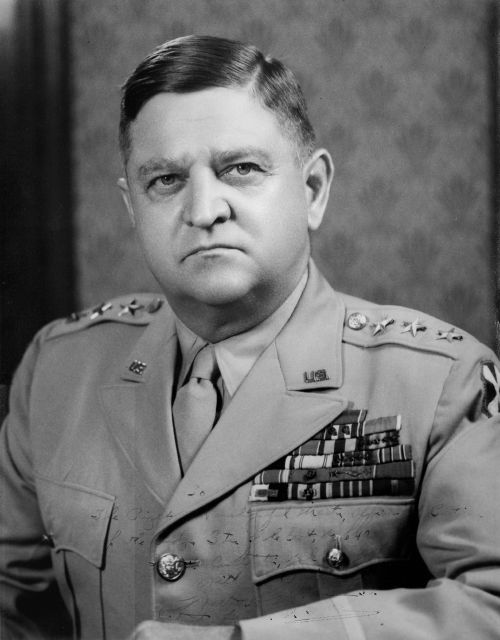
His name was Walton Walker, a stocky, bulldog of a man they called Johnnie, and he commanded the Eighth Army in Korea. He had spent the entire month watching his forces bleed and give ground, Osan, Chonan, the Kum River, Taejon, Yongdong, town after town, all of it a fighting retreat toward the last corner of the peninsula and the vital port of Pusan. And now he had almost run out of room. There was nowhere left to fall back to. Lose Pusan and the war was simply over, everyone driven into the sea.
So on July 29 Walker issued the order that history remembers as Stand or Die.
The words were blunt and grim and exactly what the moment needed. He told his commanders there would be no more retreating, no more withdrawing, no more adjusting the line, no matter what anyone chose to call it. There was no line behind them to fall back to. And then the part that men never forgot. There will be no Dunkirk, he said. There will be no Bataan. A retreat to Pusan would be one of the greatest butcheries in history. We must fight to the end. We will hold this line, and we will hold it together, or we will die in it.
That line became the Pusan Perimeter, a desperate rectangle of ground in the southeast corner of Korea, a couple hundred miles of front anchored on a river and the mountains, holding the last free piece of the country. For the next six weeks the North Koreans threw everything they had at it, probing and smashing at it again and again, and it bent and cracked and nearly broke in a dozen places.
But it held. It held because Walker was a genius at one brutal, exhausting thing, racing his handful of reserves back and forth behind the line, rushing units to whatever spot was about to collapse, plugging holes just in time, over and over, all summer long.
And holding was everything. Because every day that perimeter did not break was a day closer to the counterstroke already being planned, the landing at Inchon in September that would flip the entire war on its head.
The whole story of that terrible summer, all those delaying actions and last stands and doomed battalions, was leading to this one line in the sand. July 29 was the day the running stopped.
@nicholadrummond@gjb70@andyburnham@JohnHealey_MP@wesstreeting@LukePollard I disagree. We need fully funded GCAP and AUKUS and sort out current SSN availability. Looking to bring in more foreign partners dilutes our sovereign options more than it already has. The hybrid navy, while a huge risk, is where we are and best go all in.
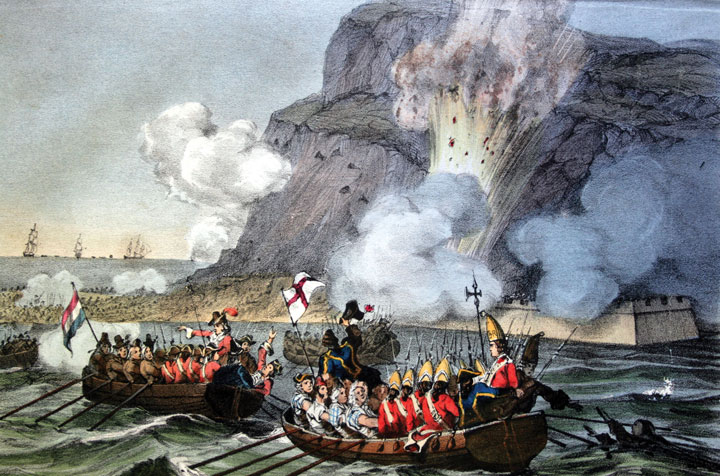
On 24 July 1704, British and Dutch Marines stormed the Rock of Gibraltar — and secured a prize that would shape British naval power for centuries.
During the War of the Spanish Succession, an Anglo-Dutch fleet under Admiral Sir George Rooke arrived off Gibraltar. With the Spanish garrison small and the defences vulnerable, the decision was taken to seize the strategic fortress that controlled the entrance to the Mediterranean.
Under the command of Prince George of Hesse-Darmstadt, around 1,900 English Marines and 400 Dutch Marines landed on the sandy isthmus at the northern end of the peninsula. Covered by a heavy naval bombardment, they quickly cut Gibraltar off from the mainland.
Further assaults followed at the Old and New Moles and at Europa Point in the south. After several days of fighting, the Spanish governor, Diego de Salinas, surrendered the Rock on 4 August 1704.
The Marines then held the fortress through a determined Franco-Spanish siege that followed. A contemporary account recorded that “the garrison did more than could be humanly expected and the British Marines gained immortal honour.”
That honour endures. “Gibraltar” remains the sole battle honour borne on the Colours of the Royal Marines, it's a unique distinction that sets the Corps apart. Every subsequent generation of Royal Marines has drawn on the example set in those fierce days of 1704: bold amphibious assault, tenacity in defence, and the ability to seize and hold key ground from the sea.
More than three centuries later, the capture of the Rock still stands as one of the foundational moments in the history of the Royal Marines and the day they first proved they could take a fortress that many thought impregnable, and keep it.