In 2010, at sixteen, my friend Mizuho was sent to Kansas for a school year. Population 2,400. One stoplight.
Her host family gave her their son's room.
His name was Kolby. He was 20. He was in Afghanistan.
The room was exactly as he left it. Football trophies. A poster of a truck. A dent in the wall at about fist height that nobody would explain.
On her first night, Mizuho's host mom, Debbie, stood in the doorway and asked her for a favor.
"Would you write to him, honey? He doesn't get much mail but mine."
Mizuho's English was very bad. She wrote the letter with a dictionary. It took her three hours.
"Dear Kolby. I am Mizuho. I am sleeping in your bed. It is very comfortable. Your mother says you are brave. Please do not die. Mizuho."
Six weeks went by. Then a letter came with a military address.
"Dear Mizuho. Glad somebody's using it. Don't touch the trophies. I'll do my best on the other thing. K."
She dusted the trophies the next day. His next letter said, "I know you touched the trophies. I can feel it from here."
They wrote all year.
She told him about Kansas. He'd lived there twenty years. He said Kansas had never sounded so interesting.
He taught her English. Real English. "Fixin' to." "Y'all." "Bless his heart," and what it actually means. She taught him one Japanese word per letter. He used them wrong, on purpose, to make her laugh. One letter was signed, "Sayonara. I am a potato. K."
She wrote "Please do not die" at the bottom of every letter. Every single one. She had no idea it was an unusual way to sign off. Nobody told her.
There was one bad week. He has never said what happened. When he got back to base, there was a letter waiting on his cot. Same handwriting. Same last line.
He read it eleven times.
After that, his unit started reading her letters out loud.
By Christmas, the whole platoon was saying it. Before patrols. Over the radio. Big men from Georgia and Ohio, saying "Please do not die" to each other in a 16-year-old's grammar.
Mizuho found out later. She was horrified. Debbie told her it was the best thing that had happened to that unit all year.
One night that winter, Mizuho woke up around two and saw a light under the door. Debbie was sitting at the kitchen table with her coffee, looking at nothing. Mizuho went back to bed and pretended she hadn't seen.
Then Mizuho wrote it in Japanese, on a small square of paper. 死なないで. Kolby taped it inside his helmet.
In April, he came home.
The whole town was at the airport. Signs. Flags. His grandmother in a wheelchair, crying before the plane even landed.
Mizuho had made a sign too. She checked the English with her dictionary twice.
"YOU DID NOT DIE. GOOD JOB."
Kolby walked out, found his mother, and wouldn't let go. Over her shoulder, he spotted the sign.
He laughed until his knees gave out, and he ended up on the floor of the arrivals hall. In uniform. In front of half of Kansas.
When he could stand again, he walked over and lifted a Japanese girl he had never met right off the ground.
"Kid," he said. "You're the reason I kept my head down."
That night, after everyone had gone home, Debbie found Mizuho in the kitchen.
"I need to tell you something," she said. "Every night this year, I said it. 'Please don't die.' To the ceiling. At that table. I never once wrote it in a letter. I was afraid if I wrote it down, he'd think I thought he might."
She took both of Mizuho's hands.
"You wrote it for me. Every single time."
That was fifteen years ago.
Two years ago, Mizuho got married in Tokyo. Kolby flew over. So did Debbie, who cried through an entire ceremony she didn't understand one word of. Kolby gave a toast. He held up a piece of paper so soft and creased it looked like cloth.
Her first letter.
He read it to the room. "Please do not die."
"I didn't," he told eighty Japanese wedding guests. "Seemed rude, after she asked so nicely."
Kolby is a firefighter now, back in Kansas.
Every time they talk, Mizuho ends the call the same way. In English. In her 16-year-old grammar, on purpose.
"Please do not die."
He says it's still the best advice he gets.
And on every shift, that little square of paper is still inside his helmet.
Carl Jung believed the people who irritate you are showing you yourself.
He called it the shadow: every trait you refuse to admit you have, you start hunting in everyone else. That’s why the reaction is always too big for the crime.
Jung, in 5 minutes on Deepstash.
Every few weeks, my wife hands her high school English class in Tokyo a question about America. And I lose an evening.
This month's prompt:
"You get an American grandpa for one day. What do you do together?"
Some context. Japanese grandfathers are quiet. They watch sumo. They say "mm." They love you very much, and they would rather die than say so.
Her students had clearly been studying American grandpas. Closely. On TV.
"Ride in his truck with the windows down. He drives with one hand and waves at everybody with the other. He knows everybody. Even the cows."
"He calls me 'sport.' I am not sporty. He does not care."
"We go fishing at 5 a.m. We catch nothing. On the way home, we stop for pie, and he tells Grandma we caught one this big." (The student drew the arms.)
"He tells the waitress the same joke every time. She laughs every time. They have been doing this since 1994."
"He has a story for every scar. Some of the stories are true."
"He falls asleep in church and still says 'Amen' perfectly on time."
"He says, 'I'm not hungry.' Then he eats every fry on my plate. One at a time. Looking me in the eye."
My wife laughed until she had to set the whole stack on the floor.
Then she got to Kotone's.
Kotone is 16. She is the quietest student in the class. Her grandfather died last spring. Since the funeral, nobody in her house has said his name. In Japan, that's how a family is kind to each other. You don't bring up the sad thing.
Her answer was one paragraph.
"I would ask my American grandpa to tell funny stories about my grandpa. In American movies, at the funeral, people stand up and tell funny stories about the person who died. Everybody laughs. Then they cry. Then they laugh again. Nobody in my family laughs about my grandpa anymore. I miss laughing about him."
My wife asked if she could read it to the class. Kotone nodded.
When she finished, nobody moved.
Then, from the back row, a boy's hand went up. "My grandpa once got stuck in a convenience store door for twenty minutes because he refused to ask for help. Afterward, he told everyone the door started it."
Everybody laughed. Even Kotone.
Then a girl: "My grandmother hid candy in every coat she owned. We are still finding it. Last week my dad found one and cried, and then he ate it."
Then a boy who never talks in class: "My grandpa pretended to be asleep every time my grandma asked him to do something. Fifty-one years. At his funeral, she leaned over the coffin and whispered, 'Nice try.'"
The whole class lost it. Half of them were crying. Nobody could tell which half.
Then another. And another.
Until the bell, thirty Japanese teenagers held an American-style funeral for every grandparent they had ever lost.
Kotone laughed until she cried. Then she laughed again.
At the end, my wife asked her why she'd needed an American grandpa for that.
Kotone thought about it.
"Because in America, you don't stop being somebody's grandpa just because you died."
That night, Kotone's mother called my wife.
At dinner, Kotone had said her grandfather's name. Out loud. Nobody had, since spring. Then she told the story of how he sang Elvis in the bath every night. Terribly. Always the same song. Always the wrong words. He never once set foot in America. He did the hip thing anyway, and the whole house could hear the water sloshing.
Her mother laughed. Then she cried. Then she laughed again.
Just like the movies.
America, to every grandpa reading this: keep telling the same joke to the waitress. Keep the scars interesting. Keep lying about the fish.
There's a classroom in Tokyo learning how to remember people from you.
A teenage waiter stood over my spaghetti holding a rotary cheese grater like a weapon.
"Just say when," he said, and began cranking.
I understood immediately.
"Say when" is not hospitality. It is a game of chicken.
Two men locked in silent combat over a bowl of pasta. The first one to speak blinks first, and I did not cross an ocean to blink before cheese.
White snow buried the noodles. At ten seconds, the boy glanced down at my face to check my resolve.
I looked straight ahead at the breadbasket without moving an eyelash.
A man who surrenders to dairy cannot govern himself.
At twenty seconds, his right forearm began to cramp. Respect entered his eyes, and he switched grips mid-crank like a veteran oarsman.
Rome disappeared beneath an alpine winter. Still I held my tongue.
At thirty-four seconds, the grater made a hollow wooden clack. The drum was completely empty.
He lowered the machine, exhaled hard, and looked down at the white pyramid covering half the table.
"Never had nobody clear a whole block before, man," he said softly.
Honor requires eating every flake you summoned into battle.
It took forty-five minutes. I refused water twice so the kitchen would know it was deliberate, and left with paste in my teeth and my name intact.
Oh my god I started a war against a country and killed their leaders and blew up their schools and bridges and massacred their kids and now I am morally outraged that I feel sacred and moved to a military base because of what they might do in response.
Evil Islamist monsters.
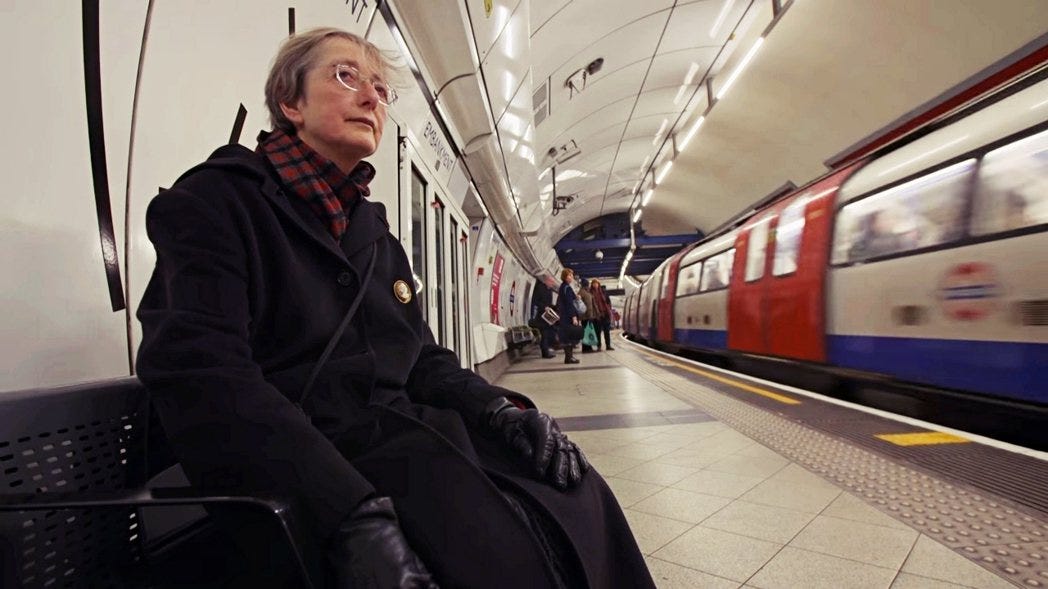
In the 1970s, an actor named Oswald Laurence recorded the famous “Mind the gap” announcement for the London Underground.
After he passed away in 2007, his wife Margaret used to sit on the bench at Embankment station just to hear his voice.
One day in 2012, the voice was replaced by a new digital recording. Heartbroken, she asked Transport for London if she could just have a copy on a CD.
When they heard why she wanted it, they didn't just send her a copy - they restored his voice at Embankment station so she could still visit and hear him.
To this day, it's the only station on the line that still plays his voice. ❤️
ERIC BOLLING: Howard Lutnick handed Cantor Fitzgerald over to his two sons, who increased their stake in Intel by 2,000% the same day Trump announced a federal investment in the company.
They also shorted 30-year Treasuries right before Liberation Day.
This is self-dealing, and it's filthy.
@ericbolling
🚨BREAKING: A sickening ruling has triggered outrage: Three teenage boys who gang-raped two girls — filming the attacks on their phones while laughing and cheering each other on — have been given zero jail time.
But Brand gets 10 years
I'm gonna take a risk, and ask a really dumb politics question, but which I'm asking in total sincerity.
Given the view that the Iran War contributed to the GOP's disastrous performance last Tuesday, why does it seem like the party's hawks have the wind behind their backs rn?
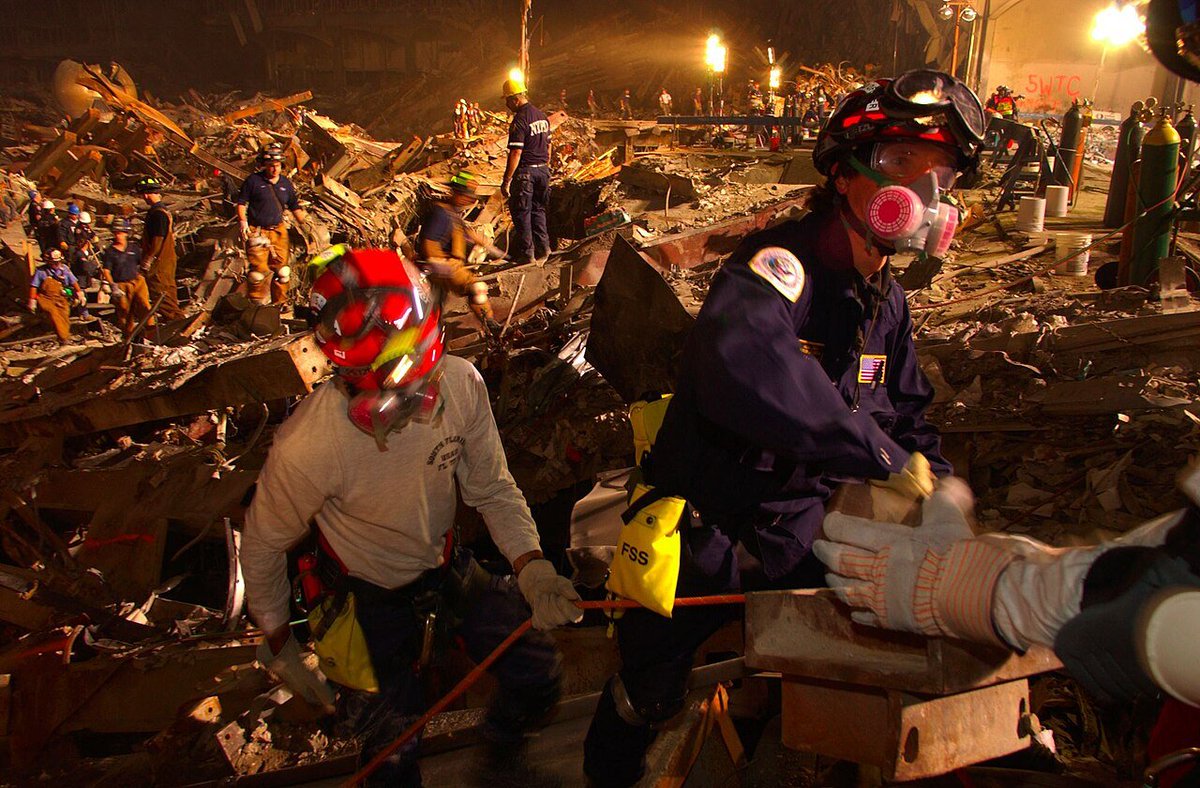
Jason Thomas was twenty-seven years old, dropping his daughter off at his mother's house on Long Island, when his mother told him planes had hit the towers.
He had left active duty in the Marines one month earlier, in August.
He put on his camouflage utilities. He drove into Manhattan. He parked his car.
The North Tower collapsed.
He went in anyway. He had no plan. He said later, "Someone needed help. It didn't matter who. I didn't even have a plan. But I have all this training as a Marine, and all I could think was, 'My city is in need.'"
On the pile he met another Marine. Staff Sergeant David Karnes. They agreed on a search and rescue plan.
They tried to pull in soldiers and other Marines on site. People told them it was too dangerous. Most would not come.
Thomas remembered what he and Karnes said. "We're going to start the search and rescue with or without you because someone needs us."
They climbed the debris with an infantryman's shovel. Two men. One shovel. Fire still burning in the pile.
They called four words, over and over.
"Is anyone down there? United States Marines!"
A retired EMT joined them and crawled down into a fifty-foot hole in the debris. Down there, in the dark, two Port Authority Police officers were still alive. A third officer with them had been killed by falling debris from a second building. His last act had been to fire his service weapon through a gap in the rubble, trying to signal for help.
The EMT started treating one of the officers. The fires in the hole grew worse. The rescuers climbed out to clear smoke from their lungs, then climbed back in.
After twenty minutes, Fire Department and Emergency Services men reached them. After five hours of digging, with the jaws of life, both buried officers came out of the pile alive.
Thomas only ever gave his name on the pile as "Sergeant Thomas."
He went back to Ground Zero every day after that. He never told his five children what he had done.
I am Japanese. I have thought about this story for a long time. Two Americans whom no one had called, who had no orders, chose to walk into a fifty-foot hole full of fire because they still answered to the word Marine.
One shovel. Four words.
Both officers came home.