If anybody is looking for a quick way to become an open source project contributor this weekend, I'd like to invite you to have a look at a few "good first issue" I've set up in the Edge Addition Planarity Suite. They won't last long, so come and get 'em! https://t.co/SHo0K7WKLh
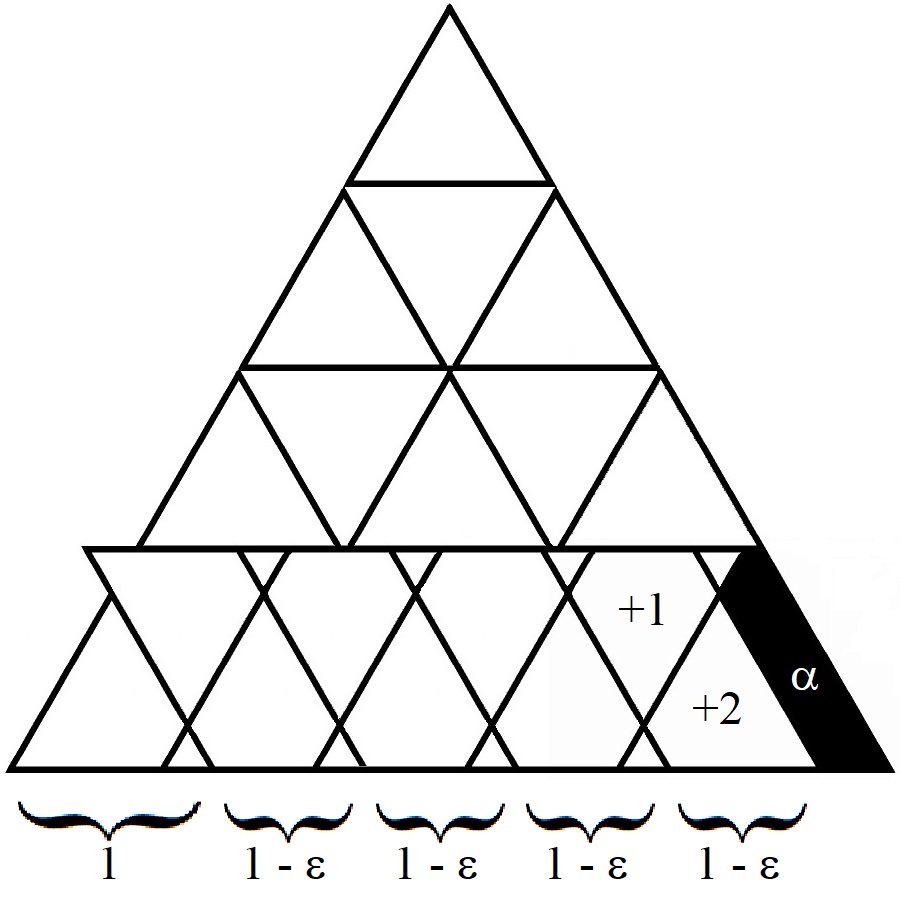
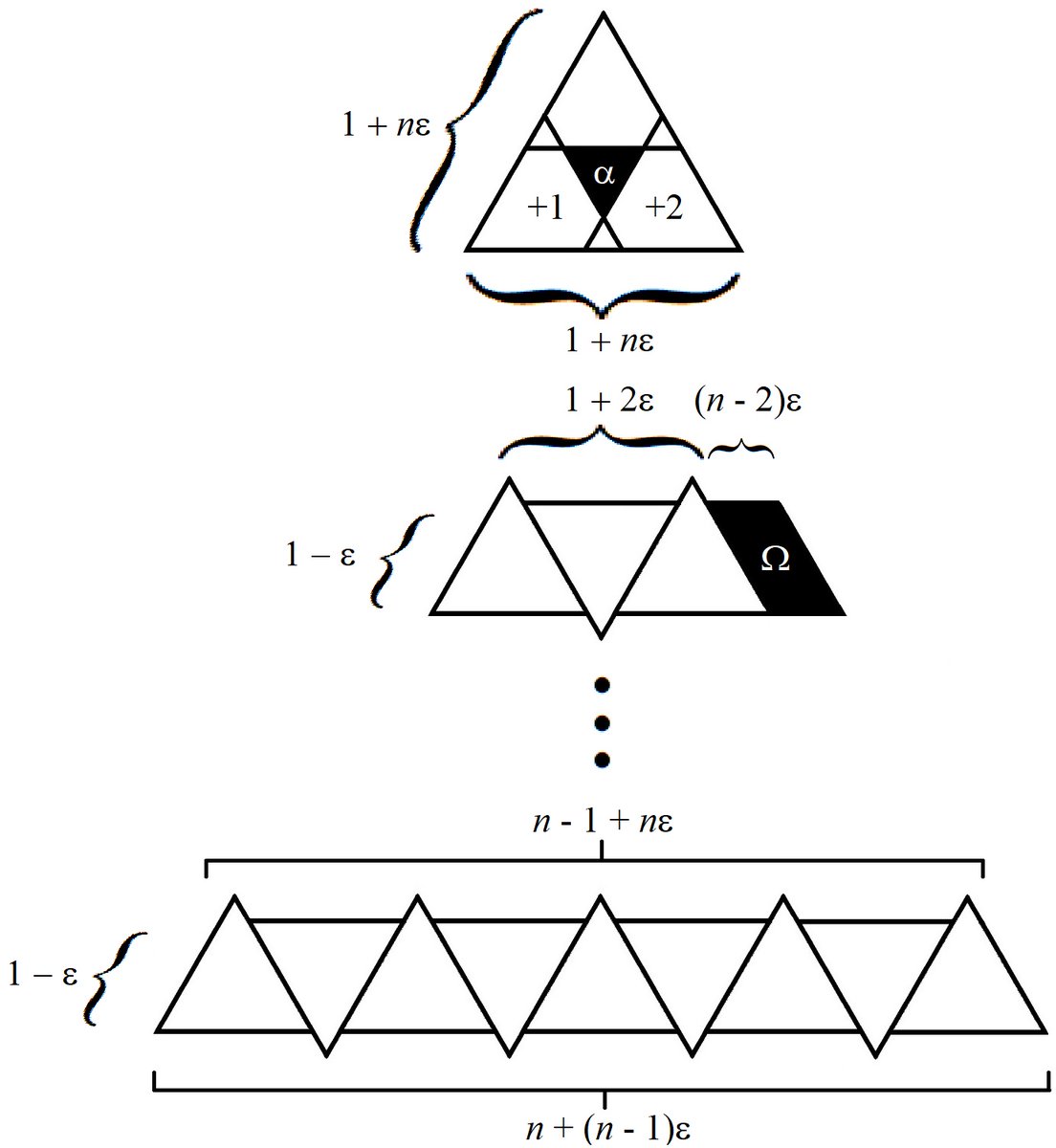
New arXiv preprint alert. Solved an open problem from the American Mathematical Monthly. Interesting new ways to cover triangles, and particularly pleased to be able to prove that they are optimal. Comments welcome, please see here: https://t.co/eWbV21rZuF
@latzplacian This was helpful, TY. You and your readers may like this Geombinatorics paper that fixes the 2nd method (for equilaterals and non-equilaterals): https://t.co/eeWQZAa4pS
@latzplacian Since both methods work but also _almost never_ work, hopefully you and your readers may also like this second Geombinatorics paper that extends the 1st method so that it covers half of all triangles more efficiently than the naïve method: https://t.co/ccOmw9uWRK
2nd Geombinatorics journal paper on covering triangles. Last one proved theorems whose prior proofs didn't. This is on how to extend the methods from existential proofs. Result: one method that covers half of all triangles better than the naive method. https://t.co/ccOmw9up2c
“On the Conway and Soifer Schemas and Methods for Covering Non-Equilateral Triangles” has now appeared in the journal Geombinatorics (get full text here: https://t.co/eeWQZAa4pS)
I am pleased to announce a major new release of the Edge Additional Planarity Suite Project. This open source project is used by many computer scientists and mathematicians internationally. Release details here: https://t.co/hOIcigX32U
@ZahlenRMD There is a second valid way to answer this puzzle if one adheres to the order of operations. Label the bottom source node X. The path to the node on the right gives 4X. The clockwise path from the source gives X + 5x3 - 6 = X + 9. Given 4X=X+9, X=3 can also be a valid solution.
@ZahlenRMD@BradBMath 4/4 I like how Brad solved it in a ‘goal-directed’ way, by labeling the end, working back to the source, then solving it algebraically. Harder to do mentally though, more like playing mental chess, whereas this arithmetical approach is more like playing mental tic-tac-toe :-)
@ZahlenRMD and to @BradBMath
1/4 Yes, there is a way to approach this entirely mentally using only arithmetic, logic, and effort. All circles (vertices) have at least one inward arrow (edge) except the bottom vertex, which is the source of value because it has only outward edges.
@ZahlenRMD@BradBMath 3/4 Starting with 1 ends with 4 to the right and 12 going clockwise (difference of 8). Starting with 3, ends with 12 and 18 (difference of 6). Since starting 2 higher decreased the difference by 2, we decrease the difference by 6 more with 3+6=9, which gets 36 in both directions.
@ZahlenRMD@BradBMath 2/4 Pick a number, like 0, then do the arithmetic to get a sense of the patterns. To the right, 0x4=0. Going clockwise, 0+5=5, 5x3=15, 15-6=9. Since with an even number (0) produced one even answer (0) and the other odd (9), then we know that we can’t start with any even number.
@pickover Since pi is irrational, a stairwell with those length and width dimensions can’t be built out of all the atoms in the universe, so the ant could only travel approximately 2 pi distance.
@OKalliokoski@rtorkar@MaartenvSmeden Fisher is not saying that .05 is convenient (I.e. arbitrary, as being implied). He’s saying it is conveniently close to two standard deviations.