Retired Headteacher. Had to retire early after crashing out with burnout. Slowly learning to adjust to a new identity, purpose, pace. Interested in history/WW2
Calculated the screen time in our school today. Roughly 15 minutes tops. Most classes less than that. Some people really do spout rubbish and try to create drama. Most of the time children are using pencil and paper.
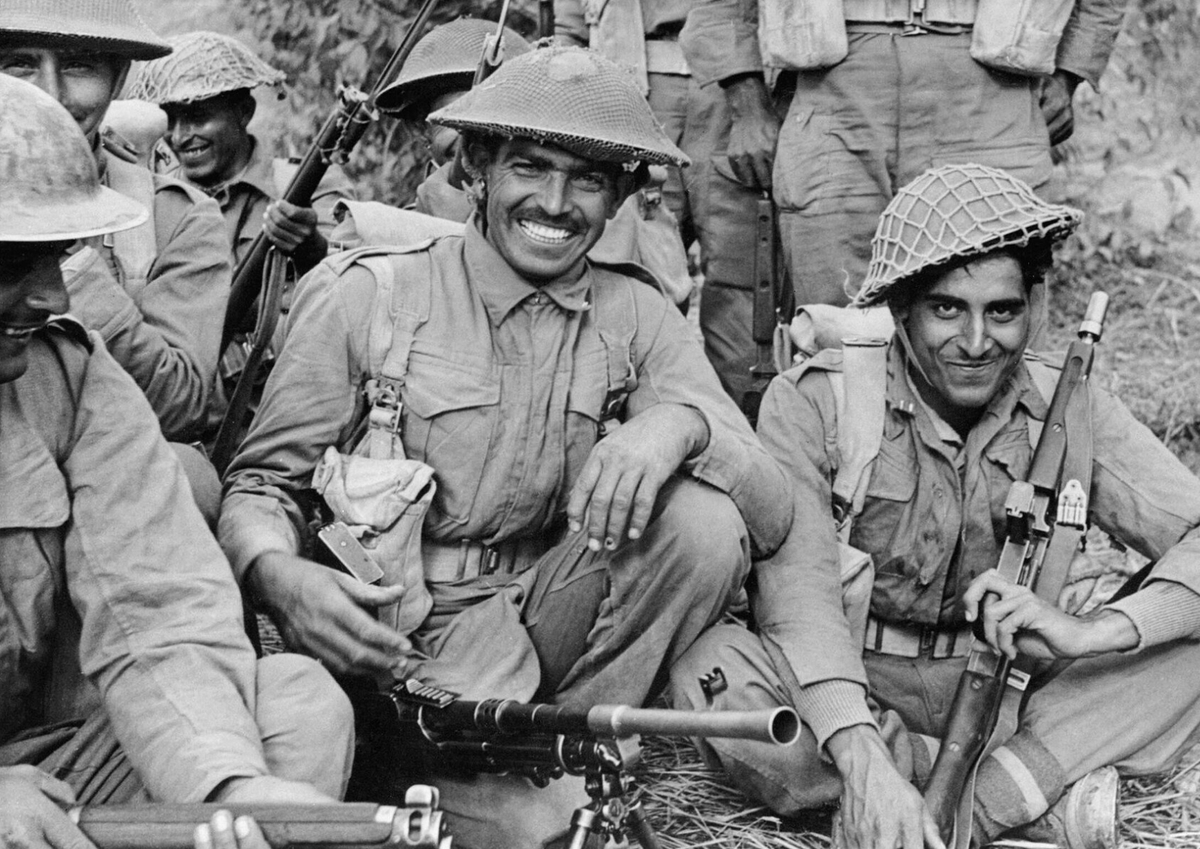
On this Remembrance Day, we remember all who have served and given their lives for their country. We remember especially all those at the Battles of Kohima & Imphal in 1944 and we give thanks for their sacrifice.
#Remembrance
More than 2.5 million soldiers from what is now India, Pakistan, Bangladesh, Nepal and Sri Lanka fought for Britain in WW2 – the largest volunteer army in history.
Yet only half the UK public (52%) are aware of their service.
It's important we remember and honour all who served.
If you need to know more about the Lancaster story come to our museum at Woodford where almost 3000 of the 7378 Lancasters produced were assembled and test flown. @SarahLouMiller
On this Remembrance Sunday, a reminder about our online Book of Remembrance: a unique collection of family stories from the Burma Campaign including the Battle of Kohima: view on our website:
https://t.co/EYGwh0UJBV
On this Remembrance Sunday we join all who remember those who fought & gave their lives, in particular at the Battles of Kohima and Imphal 1944
When you go home
Tell them of us and say
For your tomorrow
We gave our today
Dear Families,
There is absolutely no way that anyone can possibly judge the quality of your children's school during a 2 day visit.
So ignore Ofsted please
Talk to families in the community and their children. They will tell you all you need to know about local schools
🙂
Nick Gibb tells how DfE advisor Sam Freedman made a bet with a colleague about how many academies they could make. He won. But more recently Freedman has acknowledged: 'the policy hasnt been as transformative as hoped… schools that didnt become academies perform roughly as well'
You say we should be honest about the whole history and not just the convenient parts. I agree so let's do that.
African rulers and merchants did sell captives into the Atlantic trade. Nobody serious denies it and plenty of Africans have faced it openly. Benin's president, Mathieu Kérékou, apologised for his country's part in 1999. Ghana spent years building reconciliation projects with the diaspora around exactly this history. Africa has been looking at its own role for a long time. The question is whether Britain is willing to look at its own with the same honesty.
Because the scale was never equal. The ships were British, French, Portuguese and Dutch. So were the insurance, the financing, the ports, the sugar plantations and the laws that turned human beings into property. British vessels alone carried more than three million Africans across the Atlantic. A local chief selling captives on the coast didn't build Bristol or Liverpool. The demand and the machinery came from Europe and Britain sat near the top of it for most of the 18th and 19th century.
You mention Britain's role in ending the trade and that part deserves credit. The rest of that story matters too. When Britain abolished slavery in 1833 it paid £20 million in compensation, around 40% of the Treasury's annual budget at the time. Every penny went to the slave owners. The enslaved received nothing and were made to keep working for their former owners as apprentices for years afterwards. That's the part of the history people find inconvenient.
Then there's your point about taxpayers. You say nobody alive today should pay for something that happened generations ago. British taxpayers were paying off the loan that funded that compensation until 2015. The Treasury confirmed it so British taxpayers today have already paid for slavery. They paid to compensate the people who owned human beings. The descendants of the people who were owned are the only ones who have never received anything.
If the argument is that the present shouldn't pay for the past, the British state already settled that question when it chose who to pay.
On debt relief, I'm the last person who'll defend corrupt African and Caribbean elites. I spend most of my time criticising Ghana's leaders for mismanaging our country and I'll keep doing it but writing off debt in the 2000s was never reparations. Most of that debt was owed to Western lenders in the first place & much of it on terms that kept poor countries dependent on selling raw materials. Cancelling some of it was the lenders tidying up their books. It wasn't anyone acknowledging the centuries of extraction that left these economies where they started.
Tony Blair expressed deep sorrow in 2006. Sorrow is something you express at a funeral you weren't responsible for. Caribbean governments are asking for a formal acknowledgement from the state that profited which is a different thing entirely. CARICOM's plan asks for an apology, help with public health and education and debt cancellation. Calling that global welfare tells me you haven't read it @KemiBadenoch
As for looking forward and not backwards the Asante gold looted from Kumasi in 1874 was still sitting in British museums until 2024 when some of it was lent... not returned to the Asantehene for his jubilee. The past isn't behind anyone while Britain is still holding it in glass cases.
Nobody is asking the average British worker to feel guilty for what their great-great-grandparents did. We're asking the British state, the same institution that ran the trade and compensated the slave owners to deal honestly with what it did. A country that's proud of its history should be able to handle all of it....the part where it ended the trade and the part where it built its wealth on it.
You're right that the Commonwealth should look forward. It just can't do that properly while one side keeps insisting the other has nothing to complain about @KemiBadenoch
Kemi, congratulations on leading a major British party as a Black Woman. It takes real talent to rise to where you are and deceit is what it takes to rise as a Black leader in a western Conservative Party.
It is a pity the climb did not leave room for a history book and since you chose to argue in the language of history, let us do the history. Let’s dissect your verbal diarrhea point by point.
Everyone participated." Slavery existed on every continent. So did war, and nobody calls a village feud the World War. The transatlantic trade ran for 366 years (1501 to 1866) and put about 12.5 million Africans on ships, of whom about 1.8 million died before they saw the Americas, according to the Trans-Atlantic Slave Trade Database. It ran through joint-stock companies, chartered monopolies, Lloyd's underwriters and acts of Parliament. It was hereditary, because the law made the child of an enslaved mother property from birth. It was racial, because a whole continent was defined as chattel. No other system in history combined those features at that scale. Dissolving all of it into "people from every continent" is far worse than intellectual dishonesty.
Britain was a market leader, not a participant. British ships carried about 3.2 million Africans, second only to Portugal and Brazil. The Treaty of Utrecht (1713) gave Britain the asiento, a thirty-year monopoly to supply 4,800 enslaved Africans a year to Spanish America. The Royal African Company, chartered in 1672 and headed by the Duke of York, later James II, branded its captives "DY". During Edward Colston's years in its leadership it shipped about 84,000 people, and roughly 19,000 died on the way.
You say British taxpayers should not answer for what happened before they were born. They did. In 1833 Britain borrowed £20 million to compensate slaveholders, and taxpayers serviced that loan until 2015, including the descendants of the enslaved. So the principle you invoke was not applied when the cheque went to slaveholders. It only appears when the cheque changes direction.
"Navel-gazing" is a curious charge from someone whose party spends more energy on the past (Empire nostalgia, culture war crusades) than most of those you accuse. Defend Britain if you must. But do not use your Nigerian name as the permission slip for arguments Nigerians know better than anyone.
@LauraTrottMP I think these awful responses give a good indication of the sources of antisemitism, and that schools are part of the solution but should not be blamed for prejudicial viewpoints.