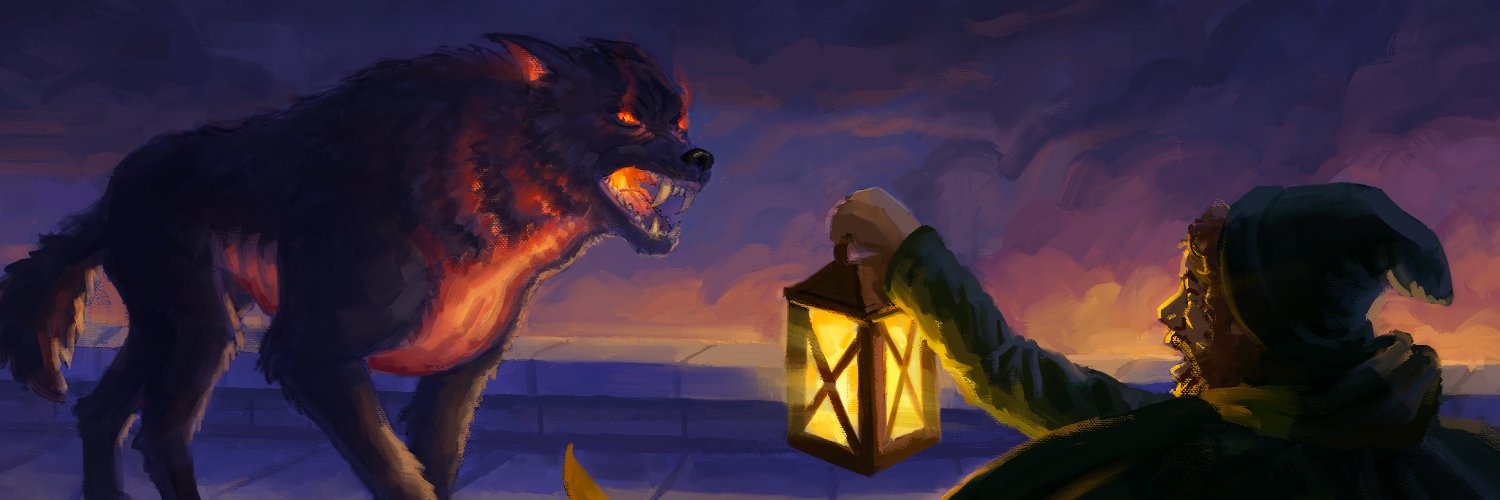
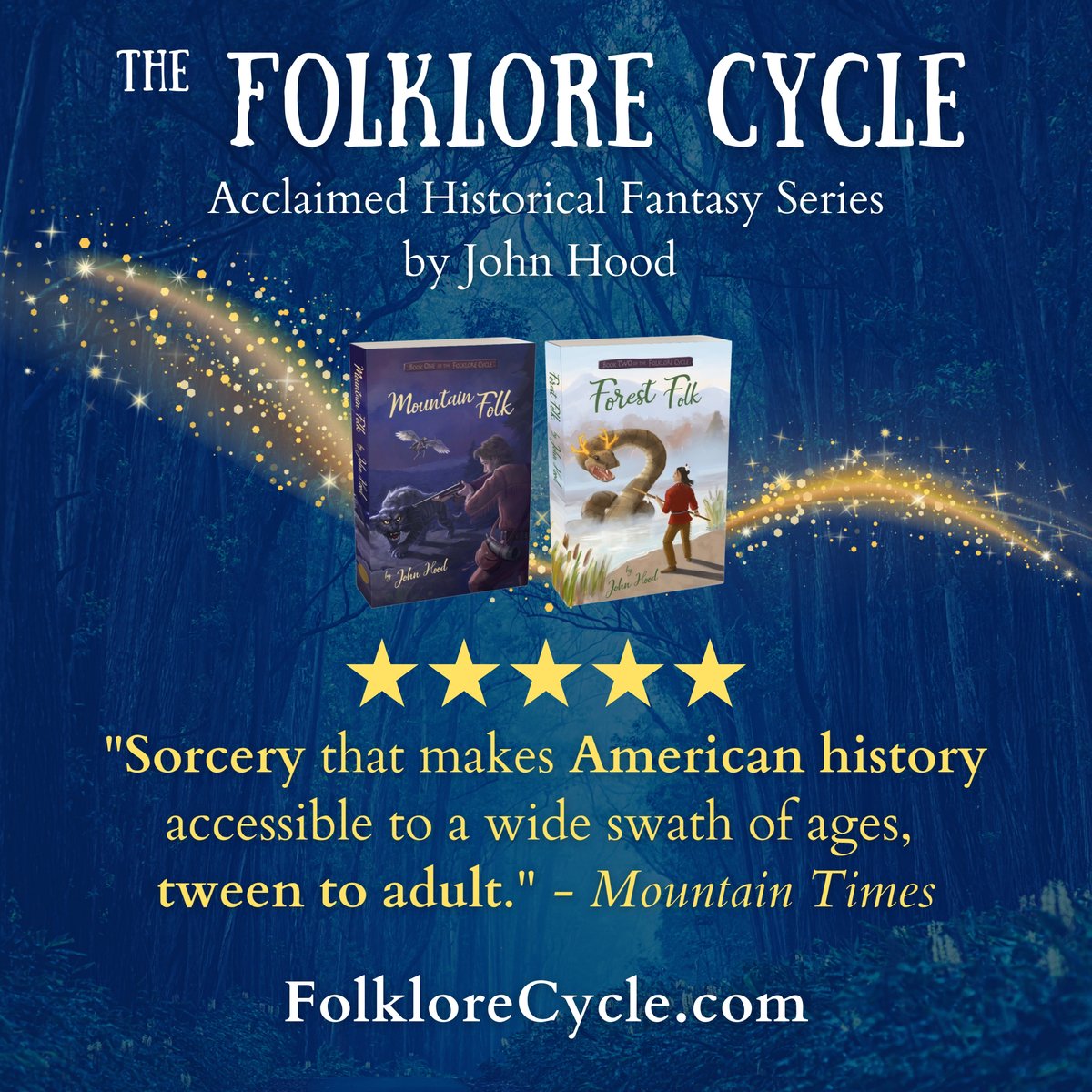
Is my novel “Mountain Folk” a historical tale of the American Revolution with star turns by George Washington & Daniel Boone? Or an epic fantasy with thrilling escapes, terrifying monsters, & a blade-wielding dwarf queen?
The answer is YES. More here: https://t.co/1PdqLEydlT
1/2 At @thecentersquare, @FreeConTalk signatory @andashleysays chronicled the European Union’s continuing efforts to undermine American tech companies and the competitive markets that facilitate their creation and growth.
Over many years, EU digital policies have “prioritized investigating, regulating, and punishing a small group of American technology companies while insulating domestic competitors,” wrote Baker, executive director of the @CmteForJustice.
“These policies are not only unfair and out of step with what one would expect from an ally, but also strategically counterproductive. They have increased transatlantic tension and undermined American technological innovation at a moment when it is vital to Western economic strength and national security.
“Policies that consistently disadvantage U.S. firms carry serious consequences for the broader alliance, including opening the door for Chinese companies that pose significant security threats to European digital infrastructure.” #FreeCon
I am not irascible. I'm tired of being called irascible by a bunch of lazy loudmouths who don't know the first thing about responsibility. Instead of demanding that I take care of their needs, they should try doing some hard work. Why, back in my day ... uh ... I am not irascible.
America’s Founders established a constitutional order that incarnated to the best of their ability the spirit of liberty *because* they were steeped in the spirit of religion.
In case you missed my latest: https://t.co/vF3osUXyyO
1/2 Michael McShane is director of National Research at @edchoice and a @FreeConTalk signatory.
In a recent piece for @NRO, McShane reported that nearly a third of U.S. students have a “below basic” understanding of American civics.
“Low levels of civic awareness persist into adulthood,” he continued. “More than 70% of respondents failed a basic civics quiz on topics like the three branches of government, the number of Supreme Court justices, and other basic functions of our democracy.”
A EdChoice survey found that more than seven in 10 parents said schools should “teach the rights and responsibilities of citizens, the U.S. Constitution, the three branches of government, major events in U.S. history, the Declaration of Independence and other founding documents, state and local government, elections and voting, civil rights history in the U.S., how to evaluate news and information sources, and how to discuss political or social issues respectfully.”
“If we want our nation to endure for another 250 years,” McShane concluded, “we have to cultivate virtue in our citizens and demand it from our leaders. Virtue is shaped through education, and learning about the history of our nation and that of other nations can give ample examples of both virtuous and vicious leadership.
“Really engaging with that history and asking the tough questions is the only way to instill in young people the knowledge and disposition to participate in representative democracy.” #FreeCon
Today's wisdom from Isaac Asimov: “Straightforward preaching spoils the effectiveness of a story. If you can't resist the impulse to improve your fellow human beings, do it subtly.”
The pop culture of the ’70s exhibited a great deal of change, of ferment, even of confusion. Take the “American Top 40” radio show, for example. Some weekends it was hosted by Batman’s sidekick Robin. Other weekends, it was Scooby’s pal Shaggy, or Josie and the Pussycats manager Alexander Cabot III, or even Cattanooga Cats drummer Groove.
Like I said, confusing.
1/2 @LathanWatts is vice president of public affairs at @ADFLegal, a columnist for @townhallcom, and a @FreeConTalk signatory.
In a recent @NRO piece, he argued that the American Founders understood freedom and morality to be inextricably linked.
Watts pointed out that the first sentence of the Declaration begins with the phrase “When in the course of human events . . . ” which “presupposes the existence of human events.”
“Human beings with free will, balanced and aided by divine providence, can influence and even shape the world around them. This is a distinctly Judeo–Christian view of the co-laborer relationship between man and God and a departure from Greek, Roman, or Eastern religion.”
Thomas Jefferson’s personal theology “is still debated and puzzled over to this day,” Watts continued, yet “two and a half centuries after he penned it, the theology of the Declaration of Independence is sound.”
“In a letter to Henry Lee, Jefferson referred to his work as an ‘expression of the American mind.’ More importantly, it was the annunciation of the American heart and soul. It is worthy of commemoration and every effort to persevere toward the high calling set forth in it.” #FreeCon
Among Tocqueville’s observations was that "Americans mix Christianity and liberty so completely in their mind that it is nearly impossible to make them conceive one without the other."
https://t.co/vF3osUXyyO
1/2 Wilfred McClay is a professor of history at Hillsdale College, where he holds the Victor Davis Hanson Chair of Classical History and Western Civilization. He is also a @FreeConTalk signatory.
In a recent piece for @CivitasOutlook, McClay argued that America is both an idea and a home — and patriotism withers if it loses its roots in shared memory, history, and love of an actually existing place.
These experiential roots are clearly visible in “popular culture, songs and stories,” he wrote, “where one can find the more primal aspects of American patriotism expressed with directness and vividness.” His examples include “The Star-Spangled Banner” and “God Bless America” as well as “This Land is Your Land” and “Brother, Can You Spare a Dime?”
“The debate between America defined as an idea and America defined as a home should not be based on the false premise that it is possible to be entirely one or the other,” McClay concluded.
“Instead, there is a vital and living tension in the makeup of American patriotism, a tension between its universalizing ideals, which so often form the propulsive force behind our aspirations and reforms, and its particularizing sentiments, with their emphasis upon memory, history, tradition, culture, and the land.” #FreeCon
On this date in 1807, the British warship HMS Leopard spotted the American frigate USS Chesapeake off the coast of Norfolk, Virginia. The Leopard was part of a British squadron that was blockading two French ships in Chesapeake Bay. Some sailors on the British ships — who’d been forced into service during the Napoleonic wars, and were often American- rather than British-born — deserted the squadron and found sanctuary on shore. Some even enlisted in the American Navy, and were assigned to the Chesapeake, which was headed to the Mediterranean.
On June 22, the Leopard hailed the departing Chesapeake. A British officer boarded to deliver a search warrant. Commodore James Barron, who commanded the Chesapeake, did not comply. Alas, Barron and his men were not prepared for what happened next. The Leopard fired a shot across the bow of the Chesapeake, followed by broadsides that killed three Americans and wounded 18. Barron managed only a single shot before surrendering. Four of his crewman were removed. The only British-born sailor was hanged, while three American-born sailors were sentenced to 500 lashes (later commuted).
The incident inflamed tensions between two countries. President Thomas Jefferson didn’t choose a military response, a wise choice given America’s manifest lack of preparation. But his diplomatic and economic responses didn’t do much to stem impressment. War would come in 1812.
As for James Barron, he was court-martialed and suspended from naval service for five years. His reputation never recovered. In 1820, he challenged one of his longtime critics, naval hero Stephen Decatur, to a duel and killed him. (These events appear in my novel, “Forest Folk,” though I supply a somewhat more fanciful explanation for the bad blood between Barron and Decatur.)
Today’s wisdom from Calvin Coolidge: “I favor the policy of economy, not because I wish to save money, but because I wish to save people. The men and women of this country who toil are the ones who bear the cost of the Government. Every dollar that we carelessly waste means that their life will be so much the more meager. Every dollar that we prudently save means that their life will be so much the more abundant. Economy is idealism in its most practical form.”
1/2 At @NRO, @FreeConTalk signatory @NoahCRothman ridiculed a Guardian piece by by Thomas Piketty, Joseph Stiglitz, and four other left-wing economists claiming “growth” was a “doomed strategy.”
Their piece “was an exhibition in moral blackmail masquerading as an argument,” wrote Rothman, the author of the just-released “Blood and Progress: A Century of Left-Wing Violence in America.” “It made no attempt at persuasion. Rather, it was a fundraising pitch aimed at the already converted.”
“By the final paragraphs,” he continued, “the reader is wading hip-deep through a fetid cesspool of socialist buzzwords. The West must commit to ‘debt justice,’ which in practice leaves Western taxpayers on the hook for profligacy and mismanagement in the developing world. Another wealth transfer in the form of ‘reparative climate finance’ would also be nice. And this isn’t just sound economic policy, these ostensibly economic minds contend. It’s a ‘moral obligation rooted in the historical reality that many rich countries built their wealth by impoverishing the south.’”
“Are you ready to fly the red banners and storm the Winter Palace yet? No? Then perhaps you weren’t the intended audience for this one.” #FreeCon