In modern society, efficiency becomes the supreme value, and once that happens, every system reorganizes itself around it—until human beings serve the system rather than the other way around.
Every revolution eventually reaches the altar. Once a civilization forgets what formed it, its churches cease to be sanctuaries and become symbols to be desecrated.
This is an important insight. I’d only add that trustees don’t arise in a vacuum. They are usually the product of traditions that formed their loves, disciplined their judgment, and taught them fidelity to something higher than themselves. A civilization that consumes its formative institutions shouldn’t assume it can indefinitely produce trustworthy guides.
@ChrisStefanick Every civilization eventually answers the question, “What is man?” Today’s confusion is downstream of forgetting the answer Christianity gave.
The deeper question is how long morality can survive after forgetting where it came from. A civilization can spend inherited moral capital for generations. It cannot replenish what it no longer believes.
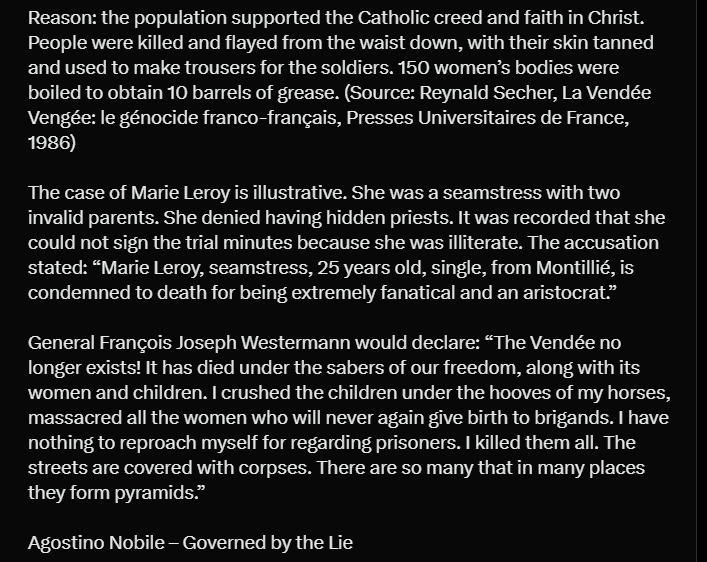
People like to think they can live according to their own personal ideas of morality once Christian ideas are finally eradicated.
Here's what that looks like in real life:
The modern state grows not simply because politicians desire power, but because the West no longer recognizes any authority above politics. Once God is removed from public imagination, the state inevitably reaches for what only God can rightly hold.
@kalezelden We have become experts at explaining away the things that once formed us. The commentator replaces the poet, analysis replaces encounter, and we wonder why so few inherit greatness.
Fatherhood, in the broad Christian sense, means bearing life for others. A man accepts the duty to guide, protect, and sacrifice for those entrusted to him. He does not evade responsibility through abstraction or institutional insulation.
New in The Far Country series: Inheritance Without the Father.
The first act of exile is not open rebellion. It is wanting the Father’s gifts without the Father’s claim.
That request is far more familiar than we like to admit.
The modern world offers endless abundance, yet many men remain spiritually hungry.
Part V of The Far Country asks why.
When the world stops feeding us, the problem is not a lack of comfort. It is that the soul was made for something comfort cannot provide.
Link below.
Our societal drift will not be reversed through elections, protests, or social media posts.
It will be reversed when men rise, return to the Father, and begin ordering their lives according to the one true faith—with strength under obedience, courage under command, and love willing to bear the cost.
The Red-Blue distinction avoids treating family structure as tribal evidence. I found that distinction very useful. But here’s the obvious follow up question:
Does either model endure once the conditions that made family intelligible are stripped away?
If the father is no longer formed to be a source of order, sacrifice, and moral authority, the Red model cannot survive. Likewise, the Blue model probably fails whenever the couple’s shared projects become detached from obligations that precede individual choice.
In both cases, the family is being asked to carry burdens that were once more widely distributed. When the scaffolding of kinship, church, neighborhood, inherited obligation, and a shared moral grammar collapse, family becomes either a little more than a lifestyle arrangement or a private emotional project.
The way I see it, the real crisis is the loss of conditions that made marriage durable.
@JMGreerWriter A society of proprietors produces citizens. A society of employees and managers produces clients. The political consequences are difficult to overstate.