@konstructivizm My bet is that the universe is expanding like a boiling pot where “bubbles” of mass are constantly being created and destroyed, but the creation process is faster than the destruction. Thus the expansion rate would vary by time and location.
The scientist has a lot of experience with ignorance and doubt and uncertainty, and this experience is of very great importance, I think.
When a scientist doesn't know the answer to a problem, he is ignorant. When he has a hunch as to what the result is, he is uncertain. And when he is pretty darn sure of what the result is going to be, he is in some doubt. We have found it of paramount importance that in order to progress we must recognize our ignorance and leave room for doubt. Scientific knowledge is a body of statements of varying degrees of certainty — some most unsure, some nearly sure, but none absolutely certain.
@elonmusk A brain 🧠 can selectively rewire itself after testing reality and learning new information; can we selectively retrain a branch in a model without having to retrain the entire model? Model evolution needs to become more efficient to reach full truth convergence.
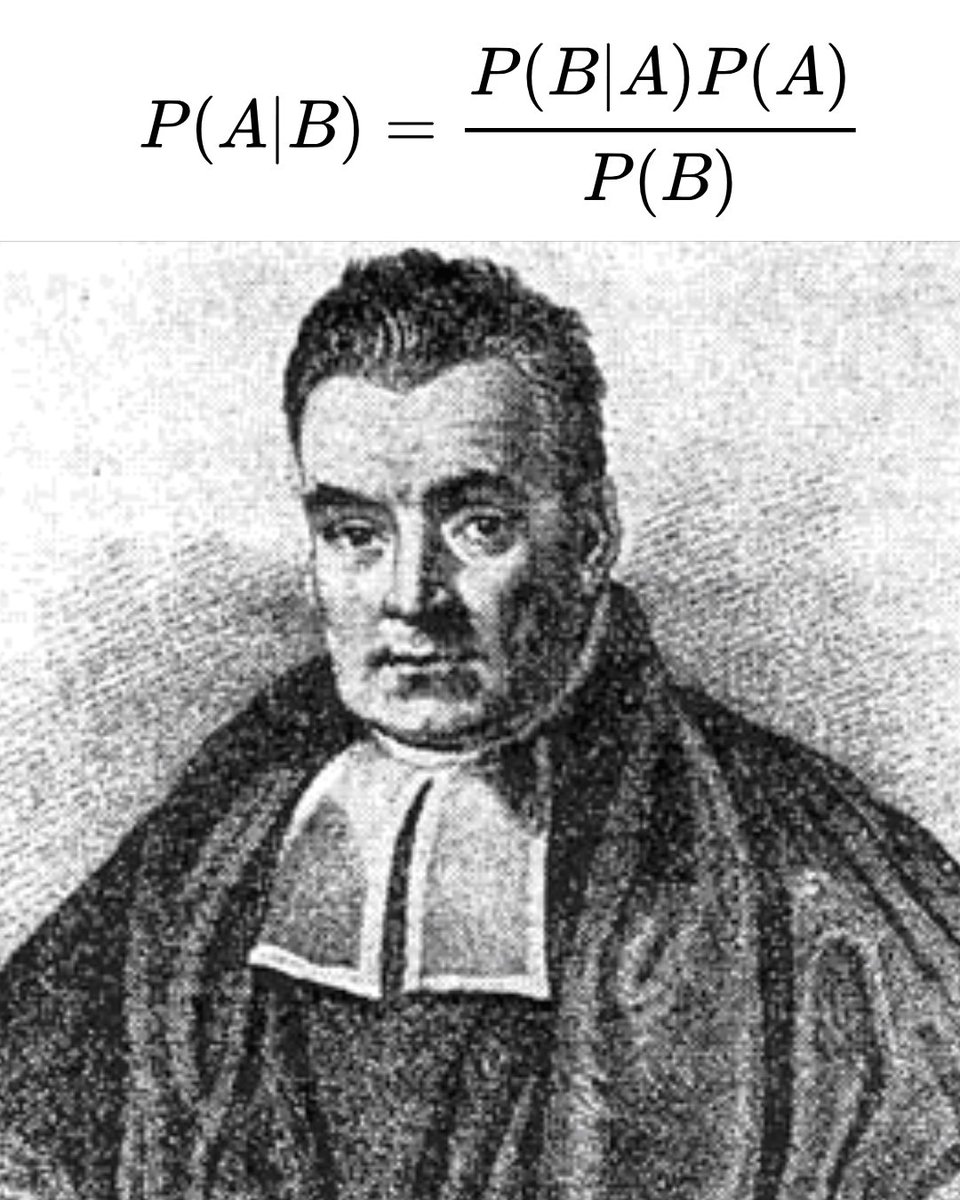
Bayes’ theorem is probably the single most important thing any rational person can learn.
So many of our debates and disagreements that we shout about are because we don’t understand Bayes’ theorem or how human rationality often works.
Bayes’ theorem is named after the 18th-century Thomas Bayes, and essentially it’s a formula that asks: when you are presented with all of the evidence for something, how much should you believe it?
Bayes’ theorem teaches us that our beliefs are not fixed; they are probabilities. Our beliefs change as we weigh new evidence against our assumptions, or our priors. In other words, we all carry certain ideas about how the world works, and new evidence can challenge them.
For example, somebody might believe that smoking is safe, that stress causes mouth ulcers, or that human activity is unrelated to climate change. These are their priors, their starting points. They can be formed by our culture, our biases, or even incomplete information.
Now imagine a new study comes along that challenges one of your priors. A single study might not carry enough weight to overturn your existing beliefs. But as studies accumulate, eventually the scales may tip. At some point, your prior will become less and less plausible.
Bayes’ theorem argues that being rational is not about black and white. It’s not even about true or false. It’s about what is most reasonable based on the best available evidence. But for this to work, we need to be presented with as much high-quality data as possible. Without evidence—without belief-forming data—we are left only with our priors and biases. And those aren’t all that rational.
@sierraoperator@alpha_defense@Firezstarter1@IXGguy It looks like the ground air density was on the low side due to surface heat buildup. I suspect a combination of high heat, low humidity, and low wind.
@elonmusk I have a 2019 model 3 with full self driving. If the trade-in process was integrated into the purchase process and also included an additional incentive for legacy FSD (factoring in teslas eventual hardware upgrade cost), then it would probably tip the scale for my conversion.
ChatGPT can now connect to more internal sources & pull in real-time context—keeping existing user-level permissions.
Connectors available in deep research for Plus & Pro users (excl. EEA, CH, UK) and Team, Enterprise & Edu users:
Outlook
Teams
Google Drive
Gmail
Linear
& more
@sama it seems rational on the surface, but if you assign a cost to each question, then you will elicit rationing behavior. When it feels unlimited, we can experiment without consequence, which leads to breakthroughs in how we use AI.
Do NOT buy an electric vehicle UNLESS it’s a Tesla.
At the very least buy an EV that will work with the Tesla Supercharger network.
Having to rely on chargers like electricity America make the experience horrible.
If Tesla didn’t exist, I wouldn’t own an electric vehicle. The experience would be too horrible. Gas cars WOULD be better without Tesla.
A deal is a deal.
@elonmusk transformed Tesla from a loss-making company to a company that’s changing the world.
And he created tremendous value – over $735 billion – for $TSLA stockholders along the way.
Elon upheld his end of the bargain; it is time to uphold ours.
Watch Board Chair Robyn Denholm discuss below why it’s important to vote FOR proposals 3 and 4 & make your voice heard – vote by June 13
→ https://t.co/WbcKtqU02U
@sama Can you please relax some of the new guardrails for legal questions. As an attorney I know it’s not perfect, but I can judge the quality of the responses for myself and pick and choose what I like. GPT pros usefulness with contract feedback was greatly degraded with the updates.
@DanLinna It’s true, most lawyers struggle with technology and have a strange addiction to printing everything out. Ive gone completely paperless and use AI legal research / analysis tools every day to dominate larger law firms with far more experienced lawyers. It’s an insane advantage.
@ianmiles It’s a hard quality to define, but any empath can detect something is off. I recognize the same change in people I know who were overprescribed antidepressants. Something alters in the brain and they are no longer the same person. Sometimes the cure is worse than the disease.
@lexlanham 1) Enforcement: There should be in depth analytics tied to every law to create a better feedback loop. Also, the danger of selective enforcement is that a law could broadly apply to everyone but only be used as a sword against select people.