Kasparov: Putin used Russian money effectively to buy entire Western political parties and corrode the political class.
That system became a foundation strong enough to help his regime survive even under today’s pressure. 1/
i recommended to Benjamin Netanyahu’s government that he help Ukraine. Isreal declined saying they didn’t want to upset Russia. So Russia kept spending nearly $1bn+ on Iranian drones. Now ordinary Israelis have to face the consequences of Netanyahus judgement . Since the invasion of Ukraine Isreal has welcomed all the dirty Russia money and crooks. A sad decline for a once decent Country.
2 Russian women arrive in UK together
1 marries
1 gets work for MP
Married woman divorces & MP ‘helps’ with visa
She then remarries - Arran Banks
Arran Banks finds £8 million for Brexit
Holds boozy lunch in Russian embassy
Funds Farage
Woman working for MP exposed as spy
The problem with much of the Western realpolitik analysis that accuses Ukrainians of being naïve, idealistic, and unrealistic is that it is itself profoundly naïve and unrealistic. It assumes that “realism” means cynicism: abandoning values and seeking compromises with Russia. Yet this is precisely the approach that has repeatedly proved naïve, unrealistic, and ultimately self-defeating, because it has only encouraged further Russian aggression.
Time and again, it has been the supposedly “naïve idealists” — the Ukrainians — who have been right. They warned that Russia’s war against Georgia in 2008 was only a prelude. They argued that the annexation of Crimea in 2014 would inevitably lead to a much larger war. They insisted that Russia is far more vulnerable and weaker than many in the West assumed, that it has numerous pressure points, and that it can be defeated. They also argued that increasing the sense of discomfort within Russia itself would undermine the imperial myth of “stability through expansion” on which Putinism depends.
Yet despite the fact that these Ukrainian assessments have repeatedly been vindicated by events, this pseudo-realpolitik mindset continues to dominate many Western policy circles. It is not realism at all. It is naïve infantilism.
Drohnenforscher der TU München treffen sich regelmäßig mit chinesischen und russischen Kollegen. Offiziell geht es um zivile Projekte. Experten warnen vor einem Wissensabfluss an das Militär. #drohnen#china#russland https://t.co/E0Q45dE8a8
Russian code is inside the White House app, which is now mandated on all government phones. The company behind the code is growing. Its founders bank at sanctioned Russian banks. And its accountant has a criminal history. My investigation:
The EU and Britain have unmasked a specialized Russian intelligence unit behind a decade of cyber-espionage, revealing a foiled winter plot to cut power to 500,000 people and exposing the Kremlin’s deep ties to criminal hacking syndicates.
https://t.co/LDJ5oevTSF
In light of the recent data breach of Ksenia Sobchak’s media empire, Ostorozhno Media, exposing her as working directly with Russian authorities, I want to remind everyone that this ✨️article ✨️ exists.
The Kremlin keeps sending stool pigeons to the West, and Western media publishes every piece of Russian propaganda they are given and hungrily asks for more.
Every person with knowledge of the region (or more than two living brain cells) told the NYT that they were platforming a propagandist at the time the article was released. Did they listen? Nope.
Meanwhile, the interesting things we are finding out from the data breach include groveling to Kremlin censors, namely Sergey Novikov, head of the Kremlin’s Presidential Directorate for Social Projects; hard-core self-censorship on the fuel crisis in Russia; scolding her chief news editor for publishing bad remarks about Russian messenger Max, an FSB project to keep the Russian internet space under control; long talks with Margarita Simonyan; funding from the Moscow Mayor's office and state-backed corporations; and many, many more interesting things exposing Ksenia herself and her media as a complete and total Kremlin tool.
Yet, does the Western media learn anything from this? Nope. The Economist article with Russian oligarch Andrey Melnichenko shows exactly how much nonsense they are ready to swallow if you wave a chance to write a ✨️sensation✨️ in front of their noses.
Maybe it's time to stop and think about whether your sensationalism feeds your own citizens with foreign propaganda and helps an invading state wage a war and keep murdering civilians daily?
Don’t provoke Russia’ is the most expensive sentence in European history. Every red line we drew for ourselves — no tanks, no F-16s, no strikes inside Russia — collapsed later, at a higher price. Appeasement isn’t caution. It’s paying more for the same result.
Jaw-dropping stat from @Paul_Swinney's latest. Something he and I have been looking for a long time. Britain outside of South England operates at fiscal deficits on the scale of Greece at the worst of its financial crisis. https://t.co/1YILvqKwKr
🏴 Happy 1099th Birthday England 🏴
On 12th July, 927AD, King Æthelstan secured control over the last Viking kingdom of Northumbria and united the Anglo-Saxon kingdoms under one ruler, becoming the first King of a united England.
Terrible day for Norway.
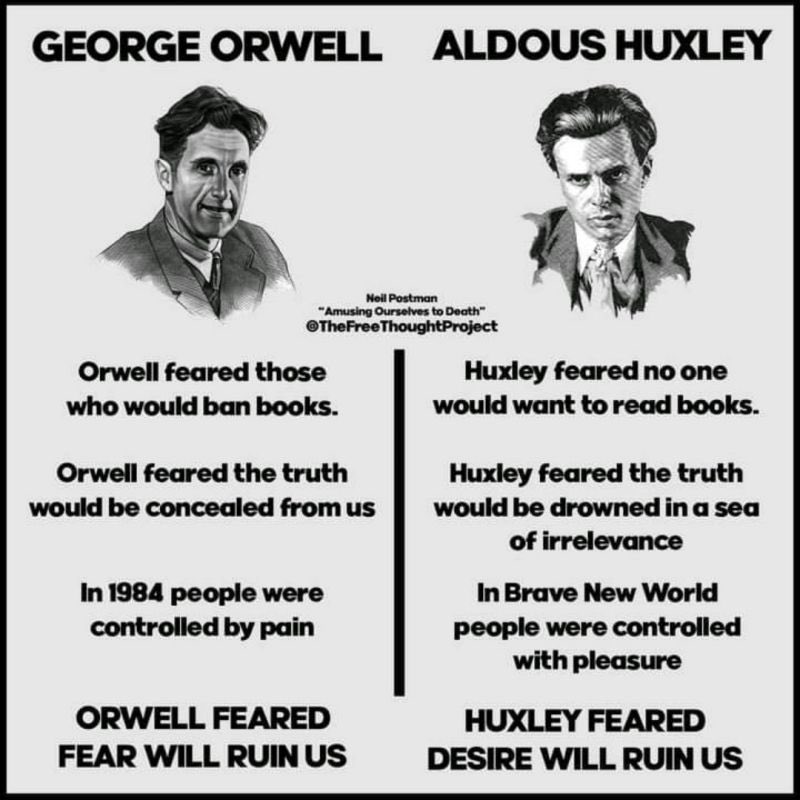
One of my longest-standing arguments is that we are not living in Orwell’s 1984, where truth is centrally suppressed and censored by force (that’s former communist societies, modern-day China, Russia, North Korea).
We are living in something much closer to Huxley’s Brave New World.
The truth is not hidden - it is almost always readily available. But it is buried beneath an industrial quantity of noise: propaganda, outrage, half-truths, conspiracy theories, influencer theatre, algorithmic rage bait and an endless stream of content designed not to inform us, but to keep us emotionally stimulated.
The modern information system does not need to censor the truth when it can simply drown it in noise.
A fact no longer has to be disproven - it only has to be surrounded by a hundred competing claims, stripped of context and nuance, turned into partisan ammunition and pushed into the same feed as celebrity gossip, memes and 15 second videos engineered to deliver the fastest possible dopamine hit. By the time the truth reaches us, it appears as just another piece of content competing for our attention.
That is the more sophisticated form of control: not preventing people from knowing, but exhausting their capacity to care.
Orwell feared a world in which people would be deprived of information. Huxley feared a world in which they would be given so much distraction, stimulation and triviality that they would lose the desire to seek it.
The defining struggle of our age is therefore not simply between truth and censorship, but between truth and indifference.
BREAKING:
Shooting for the Stars: secret military documents we obtained show China fully involved with supporting Russian war in Ukraine and plans against the West, even offered a contingency plan to shoot down @elonmusk's Starlink. https://t.co/uFfZtB7jde