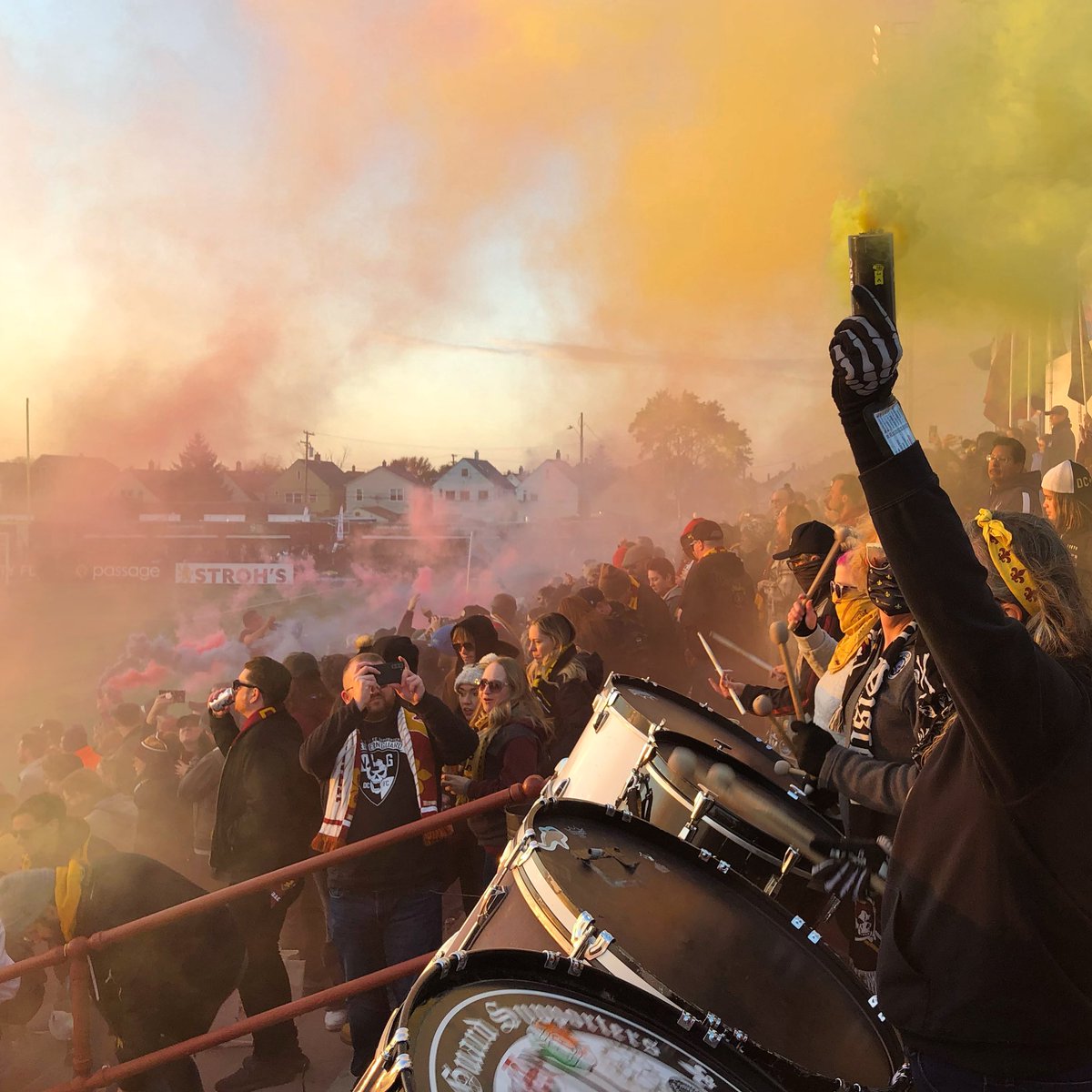
The @DetroitCityFC season starts this week, so it’s time for my annual preemptive apology to anyone who follows me on Twitter for economic development policy or other substantive stuff and instead gets a dose of American minor-league soccer supporter culture. #DCTID
@JKSully313@2024dion Or we could simply stop trying to centrally plan an economy and let diversification happen naturally.
If the past 50 years should have taught us anything in Michigan, it’s that our state government sucks at industrial policy.
@jwwalter1@HopeSickRaider Not sure of the relevance, since the Rose Bowl/Tournament of Roses is not a pro sports event, and is run by a nonprofit with (AFAIK) no public funding other than the game being played in a municipally owned stadium, which the nonprofit pays to operate and maintain.
It is simply untrue that stadiums generate "a massive amount of economic activity." NFL teams host only as many customers in a year as an average-sized American supermarket does (~700,000). In reality, stadiums spend almost their entire lives dark, empty & silent.
So we just lost the Chicago Bears over real estate taxes that the Bears have never paid in the history of the team. The local boards in Arlington Heights - who would’ve received those taxes - wanted to do the deal. Every team in the NFL gets tax breaks for a reason … these teams can go anywhere and they generate a massive amount of economic activity wherever they go.
The Bears will be moving to Indiana for one reason - Illinois is completely and wholly incompetent. The mere fact that - after all these years - they were scrambling at midnight to figure something out only highlights the point.
Democrats have cratered Illinois and nothing here is getting fixed without sweeping political change.
Vote red!
@jwwalter1@HopeSickRaider The most tourist-heavy ballpark ever was Camden Yards. At its height it generated $3 million/year in local economic impact, at a cost of $14M/yr to Maryland taxpayers.
After the Braves' Battery was built there, Cobb County's economy grew slower than other Metro Atlanta counties.
@ChrisAubin9@Trad_Dad13@ChiRuxinBGO I'm only aware of one municipally owned sports team in the U.S. The Columbus Clippers AAA baseball team are owned by the Franklin County government. https://t.co/PErOUHcefg
Whether you support, oppose or are neutral on data centers, we should ALL be able to agree that incredibly wealthy AI companies shouldn't be getting taxpayer-funded subsidies to build them in Michigan or anywhere else.
@HicksCBER@JimLaPorta He'd been at Ia Drang, I guess he figured anyplace else he went was going to be better by comparison.
(His "We Were Soldiers..." book with Hal Moore was amazing.)
Possibly the greatest parenting success my wife and I can claim is that we raised a son who perfectly complements us in bar trivia, turning the three of us into an unstoppable juggernaut that's won three straight trivia nights against 15-20 other teams.
@HopeSickRaider@TheeuwesMark@jwwalter1 For what it’s worth, opposition to stadium subsidies comes from both the right and the left. My group’s opposition is from free-market, limited-government principles. Lefties oppose them for their own reasons, such as opposition to corporate subsidies and dislike of billionaires.
@jwwalter1@HopeSickRaider Stadiums don’t create new entertainment spending; they’re just competitors in the local marketplace for households’ entertainment budgets. A dollar spent at a stadium is a dollar not spent at some other local business.
@HopeSickRaider Real-world experience is that hotel visit and local business impact is minimal at best. The data says NFL games move local hotel occupancy rates by about 3%, and 100 NFL stadium attendees generate ~29 visits to local businesses (again, just 8x/year). https://t.co/zQs7fg3tly
@Carlso1 Infrastructure demand for an NFL-sized stadium is different than for other uses. Few (if any) other uses involve ~700,000 people all showing up around the same time, gobbling power and water/sewage for 3 hours, then leaving at the same time from a 4-6 block plot.
@jon84041248 A pop-up Spirit Halloween store is open more than 80 days/year.
But even if we accept a high end of 80 events, the stadium is dark, empty and silent for 285 days a year, creating ~0 jobs, generating no taxes and contributing nothing to the local economy for 9.5 months/year.