82 YEARS!
Carolina became the first team since the 1944 Canadiens to win a Stanley Cup Final game after trailing by multiple goals in the final 10 minutes of regulation 😳
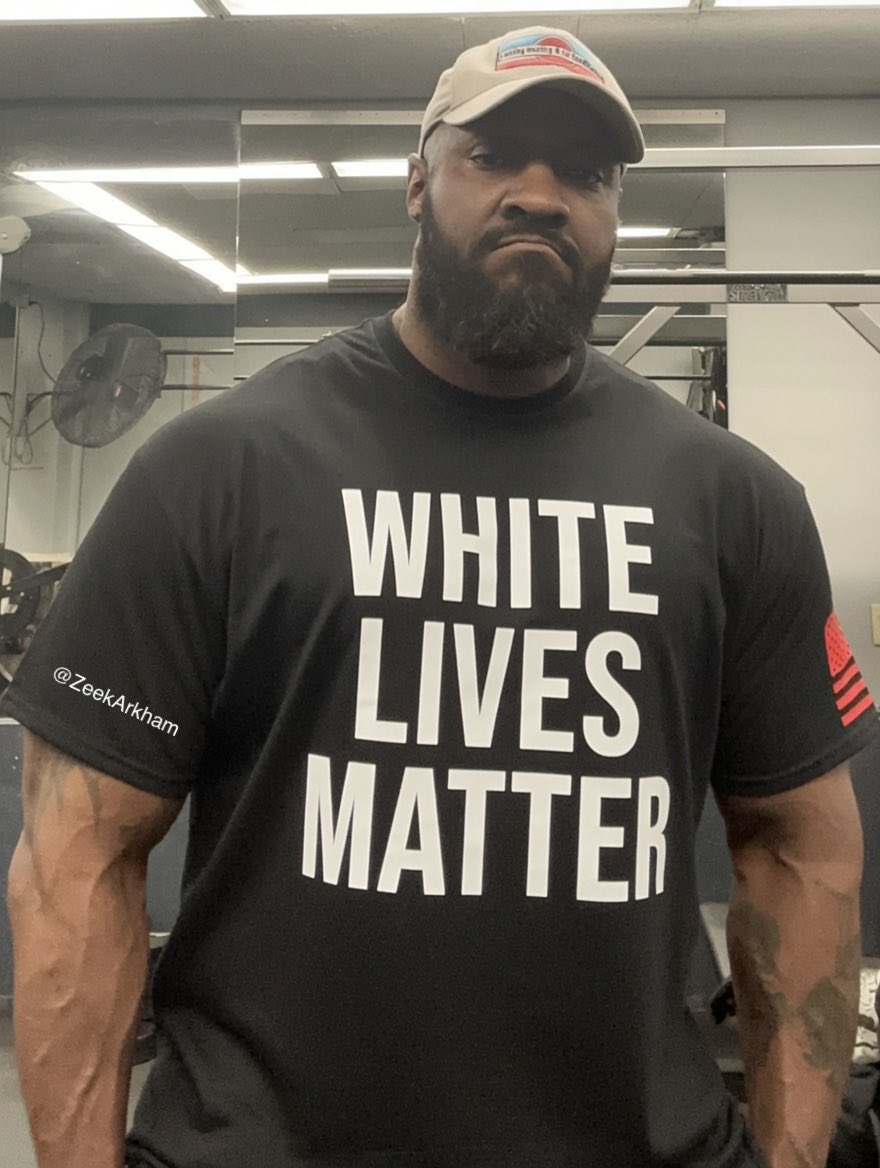
I believe all lives matter. However…
What was done to Iryna Zarutska was beyond heartbreaking. Afterwards, the savage who stabbed her said “I got that white bitch.” Also, while she was bleeding out, the people around her did nothing.
What was done to Henry Nowak was legitimate injustice. The cops were way more afraid to be seen as racist than they were to enforce the law.
Besides, wearing this shirt would piss off the right people, so I think it’s funny.
Reason I don’t wear a Black Lives Matter shirt is because no one wearing that shirt would give a rat’s ass if my black conservatarian ass died. Speaks to a larger problem than just “black lives.”
@JeremiahDJohns@BrettJEllingson Because the Constitution 1️⃣ separates the powers between POTUS and Congress and 2️⃣ requires a two-thirds majority of BOTH houses of Congress to override presidential authority! So, no, what the simple majority of Congress says does NOT have legal effect on presidential authority.
So, I've worked in the beef industry. I have a fairly detailed knowledge of beef markets, the supply chain, parasites and parasiticides, etc. Suffice it to say, this is a nightmare scenario, but one we've known was coming since at least 2022.
New World Screwworm was eradicated from North and Central America in the mid-90's. The US gov't (APHIS) funded a program of screwworm drops, where they bred sterile males so that extant populations couldn't reproduce and move northwards. But in 2022 NWS jumped the Darien gap and started moving northwards once again. It's most likely that they came undetected on livestock brought alongside migrants fleeing political instability in South and Central America. Elon Musk/DOGE, of course, cut several monitoring programs that would have detected this exact scenario. The screwworm drops are still funded, but the monitoring programs are what have been cut - a stupid move if there ever was one.
A serious Central/South America policy would have worked hand-in-hand with CA/SA governments to help contain this, but we've never had a serious policy towards South America, not during the Biden years, and especially not under Trump. The USDA broke ground on a sterile screwworm facility in Texas... last month. I worry it's too little, too late.
Screwworm is so dangerous because, unlike other fly larvae, they lay eggs and feed on living flesh. So something like a small scratch (or even bug bite) can quickly becomes infested, and the larvae will burrow into the flesh, growing the wound and attracting more screwworm. They don't only parasitize cattle, but will also feed on wildlife, domestic pets, even humans. Since they have detected screwworms in domesticated cattle right now, it's likely that there is a wild reservoir as well. We can quarantine herds and pets, but we can't quarantine deer and armadillos. They will move, and so will the NWS.
Under normal circumstances, cattle are moved around - a lot. Calves will be sent to stockers through their adolescence, then shipped to feedlots for finishing. A lot of calving operations (like 70%) are small, and small-time producers don't always catch parasite infestations. Cattle moved in-state don't require a certificate of veterinary inspection, so it's easy for an infested animal to be moved without being noticed. Animals crossing state lines do need a CVI, but Texas has such an enormous cattle population (something like 13 million head) that as goes Texas, so goes the nation.
Fortunately, we have a lot of drugs that treat NWS. The FDA has issued several emergency use authorizations in the last year or so. But every input raises the price of beef, and treatment only makes a difference if producers catch an infestation early. If an infestation spreads unnoticed on a large feedlot, it can hit hard, both in terms of cattle that have to be killed, and treatments that then have to be deployed. Producers will spend days at a time running cattle through the chute, inspecting them and applying parasiticides. It costs a lot of money, which is then passed on to the consumer.
What does that mean for you? Beef is a commodity, and just because there's no NWS up here in Illinois doesn't mean that prices won't skyrocket - and they will skyrocket. US herd size is already at record lows, and this will result in culls. Consumer prices also run 18-24 months behind, which means that shocks to the supply chain now are still going to be felt by consumers in 2028.
It's hard to say if our government will be able to muster an effective response - though I don't trust our current administration, which can't even throw a 250th anniversary party, to be able to deal with an ecological issue of this magnitude. It doesn't help that our current USDA secretary is a lawyer and think-tank creature. I don't much trust the state government of Texas either. The industry has also taken the workforce of large animal veterinarians for granted - a monopoly/market power issue that I just can't get in to here.
For me, it comes back to our federal government having an incoherent policy on Central and South America. We knew what was coming, we know what's going to happen, but we cut the program meant to prevent this scenario. Instead of taking those countries seriously as partners, the government has been stupid and domineering.
Here's the kicker: this is what the industry voted for. They might scream, they might get bailed out, but all that means is that you, the consumer, are going to be paying more for beef, plus whatever bailout gets shoveled their way. Until the industry accepts that they are part of a larger system; that they cannot eternally privatize the gains and publicize the losses of beef production; that they need to consider sustainability and stewardship in the management of their operations, this is only going to keep happening. Eventually, they may find that there is very little goodwill for them among the public, and people will decide that a Brazilian ribeye tastes just as good as one from Texas.
The theory is that if you encounter a bear, you should avoid eye contact and slowly retreat instead of turning around and running. Interestingly, bears behave the same way when they leave
Taal in the Philippines is one of the most closely watched high risk volcanoes in the world, and its complex volcanic system plays a key role in that.
What exists today is a volcano sitting inside a large ancient caldera formed by massive prehistoric eruptions. That caldera is now filled by Taal Lake. Inside the lake is Volcano Island. On the island is a main crater. And inside that crater is a crater lake.
This layered caldera–lake–volcano system matters because it allows magma to interact directly with water, which can trigger highly explosive phreatomagmatic eruptions, fast moving ash and gas surges, and widespread ashfall with little warning.
It is also located in one of the most densely populated regions of the Philippines, meaning millions of people can be affected depending on the scale and direction of an eruption.
Taal is not the largest volcano on Earth, but it is one of the most closely monitored because of how quickly it can escalate and how many people live within reach of its impacts.
The U.S. recorded 181 space launches in 2025, nearly double China’s 93 launches and far ahead of Russia’s 17 🚀
This graphic, created in partnership with the @hinrichfdn, charts annual space launches by superpower from 1957 to 2025, highlighting how launch dominance is shaping the global space economy.
https://t.co/1x8HYHbHZr #hf09
How does this even happen⁉️😭
A woman somehow drove her car onto Seattle’s elevated light rail tracks at Mount Baker Station on Wednesday evening, bringing train service to a halt. 😳🚆
Witnesses say the driver told people she was “following GPS” after ending up on the tracks and driving a significant distance before getting stuck. The vehicle had to be removed from the guideway, causing major delays for riders across the 1 Line. #DUBSEA