@pseudoerasmus@Jackbmeyer John Holker, France, 1756: In England 'the master manufacturers have much more authority over their workers, against whom the law is very severe and always favours the merchant, strictly punishing the worker for faults in manufacture'.
Just published, ‘Transformations in Textiles, 1400-1760’, my (critical) homage to Jan De Vries’s ‘Industrious Revolution’. Available as an open access e-book chapter https://t.co/ow7517ihwS
in
@pseudoerasmus@AngusBylsma Similar story in Japan. Cotton manufacture didn't arrive until the 16th century. Previously, the generally used fibres – hemp and ramie – were spliced to produce yarn rather than spun. The main use for spinning wheels was probably to spin silk waste (as in pre-cotton China).
Just published, my 'Printed Calicoes between India and Europe: Lost in Translation?' in Émilie Hammen (ed.), The Crafts of Fashion vol. 2: Geographies (Éditions B42). 'India was a model and a source of inspiration, but India was not necessarily the tutor.'
@SarahABendall@MarloAvidon Great! Happy to discuss further when I see you in September. The piece width issue must have had implications for garment construction, especially if makers were combining European silks with Chinese taffeta linings.
@SarahABendall@MarloAvidon 2. But Chinese silks were woven on wider looms than most European silks. For a recent study which gives information on piece lengths and widths, see Hannah Hodacs, ‘Cheap and Cheerful’, Eighteenth-Century Studies, 2017.
@SarahABendall@MarloAvidon 1. Yes, JF's Merchant's Ware-house laid open / Plain Dealing Linnen-Draper is a reasonably good guide to many Indian cotton piece lengths in the 1690s, but don't forget widths. Easier for Indian cottons, many of which were approximately a yard wide.
@antonhowes 3. and keeps the Hands from being so soon numb'd in Cold Weather ; Whereas by the use of the Hand Shuttle, the Weaver much sooner has his Hands numb'd with Cold, by changeably handling the Shuttle, first with one Hand, then the other”.
@antonhowes 1. “in Weaving with the same, one Hand keeps its Position upon the Lathe Top, the other Hand holds an Handle, by which the Wheel Shuttle is cast through the Shed at Pleasure, which Lathe Top, and Handle, soon becomes warm,
@antonhowes 1. 18th century space heating was not just an issue for the comfort of 18th century Swedish visitors, but also for productivity in domestic manufacturing. Poor space heating accounts for one of the arguments in favour of the wheel (ie. ‘flying’) shuttle:
@cmicmeissner The full 1959 edition of Fairchild's Dictionary is available online at HathiTrust, but if you're really desperate to know whether leas are different from cuts, you need David Jeremy's 'British and American Yarn Count Systems,' Business History Review, 45, 1971.
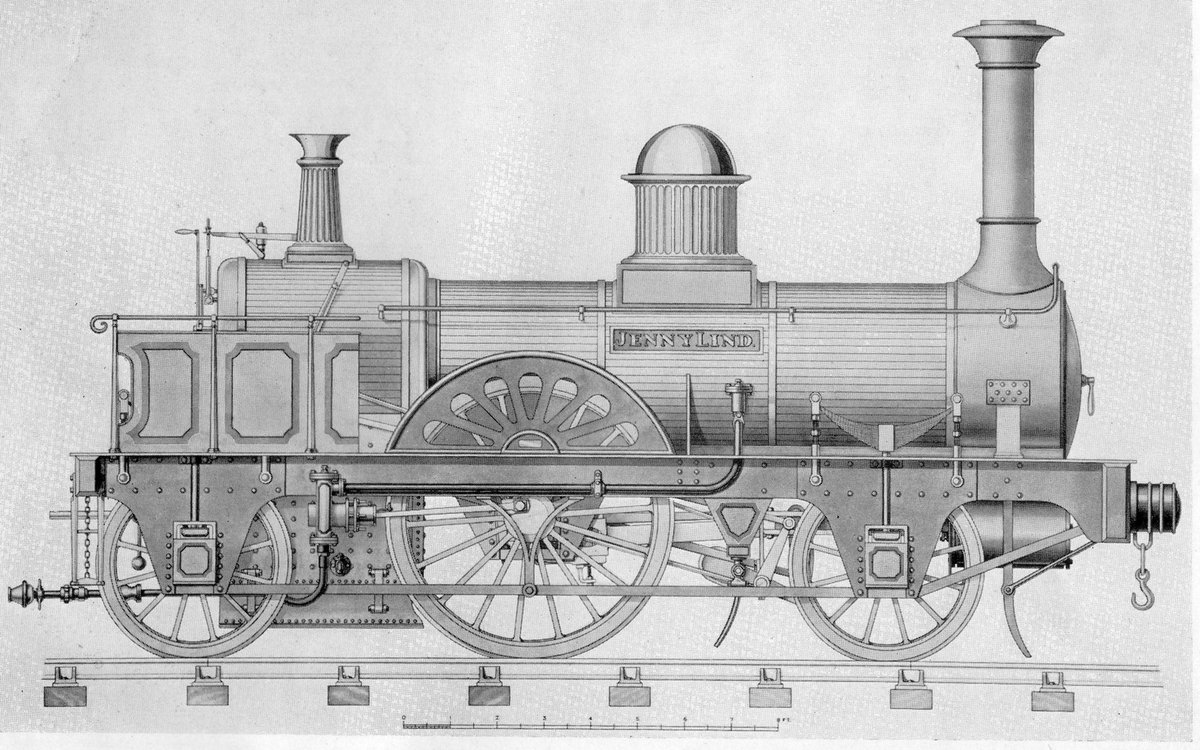
@andrewpopp6 But how about the railway locomotive? More steam power was used in transport than in factories at your period. This 1847 'Jenny Lind', built at Leeds, is brilliantly architectural.
@andrewpopp6 It's all so characteristically Enlightenment. At the Foundling Hospital it was the babies who were given numbers; at Manchester it was the textiles.
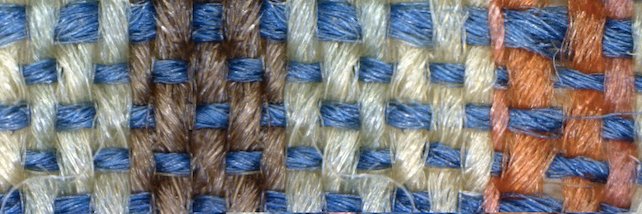
@andrewpopp6 Great! And why not juxtapose threads of feeling and threads of commerce, by showing this 1784 Manchester sample book (at Cooper Hewitt). https://t.co/Jb9Qq7iQgP
@rozsro 3. And, of course, there’s Colette Establet’s excellent Répertoire des tissus indiens importés en France entre 1687 et 1769 at https://t.co/vH70XbPtkj