🗂️ Just out in Bioinformatics Advances: "Review of open-source software for developing heterogeneous data management systems for bioinformatics applications"
Explore the full study: https://t.co/JtwLjCXkCK
Authors include: @moir_monika, @Tuliodna, @joicy_xavier, @INFORMAfricaHub
#OpportunityAlert: Are you passionate about satellite data, GIS, and climate modeling? Join CERI at @StellenboschUni for a 3-year, tax-free fellowship focused on infectious disease prediction in a changing climate! Apply: https://t.co/QaRpvdx1Vl
ℹ️: @houzhou[email protected]
As South Africa celebrates #WomensDay2024, we honor the remarkable women who are the backbone of our success at CERI. Their dedication and expertise drive our advancements in infectious disease research, genomics, and public health. https://t.co/zbaBHqbB2P
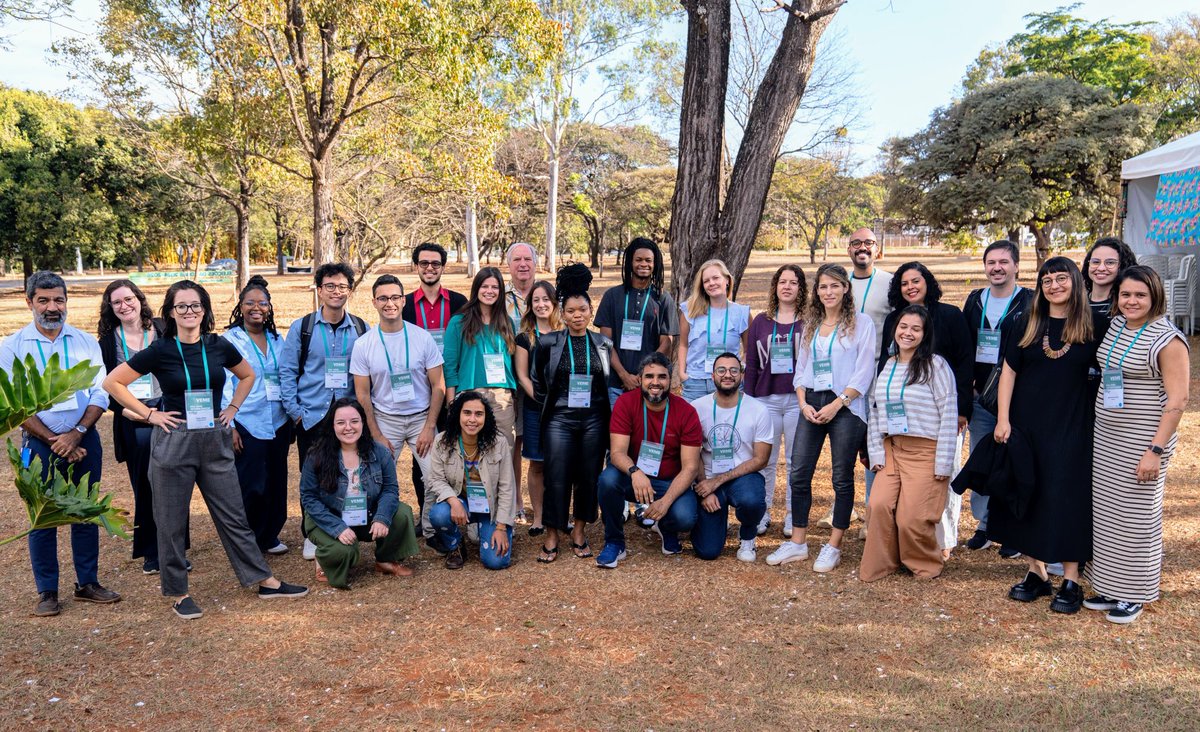
We are always very serious about the group photo competition at #VEME. So, this year we brought #VEME2024 message to Rio de Janeiro with a view of the Christ the Redeemer! ✨@houzhou@EduanWilkinson Jenicca
@ceri_news@fiocruz
Happy for being at #VEME one more year! Welcome everyone to Brazil. I hope you all have a wonderful experience here. 🧬💻🦠🎉
#Fiocruz#PAHO#VEME2024#Brazil
The official opening of #VEME2024 at @OPASOMSBrasil in Brasília, Brazil. #VEME2024 has been held in 18 countries across 28 editions. This year, we have participants from 33 countries and teachers from 12 countries.
Heading to Brasília to teach at #VEME2024 after a week enjoying the end of the holidays with my African friends in Rio de Janeiro. It was an incredible week of lots of Brazilian culture and tours to Rio's main tourist attractions.
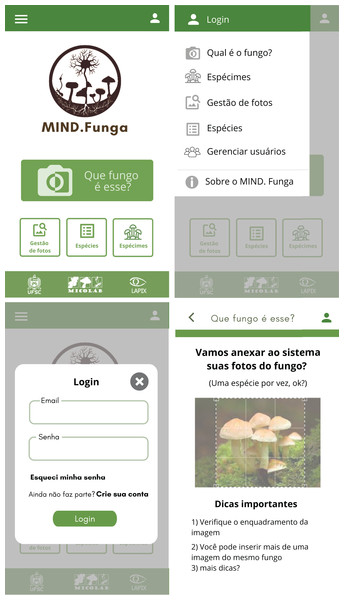
This interface is specifically crafted to acquire images, and, utilizing the image recognition capabilities afforded by the trained CNN, proffer potential identifications for the macrofungal species depicted therein.
This technology can democratize access to the Brazilian Funga, thereby enhancing public engagement and knowledge dissemination, facilitating contributions from the populace to the expanding body of knowledge concerning the conservation of Brazilian macrofungal species.
The purpose of utilizing this database is twofold: firstly, to furnish training and validation for Convolutional Neural Networks (CNNs) with the capacity for autonomous identification of macrofungal species; secondly, to develop a sophisticated mobile application.
The work is also a partnership with the Mind.Funga group from the Federal University of Santa Catarina (UFSC).
In this study, we employ a structured database assembled by experts, encompassing 13,894 photographs from 505 distinct species of macrofungi collected in Brazil.
New paper published! This was the first collaboration with Prof. Aristoteles Goes Neto after my graduation. Prof. Aristoteles was one of the coordinators of the Bioinformatics PhD program, and it is a pleasure to have him as a colleague and mentor nowadays.
Our paper "SARS-CoV-2 Genomic Epidemiology Dashboards: A Review of Functionality and Technological Frameworks for Public Health Response", published in Genes, is now online.
This paper reviews the genomic epidemiological dashboards developed to monitor the SARS-CoV-2 virus.
An important strength of genomic epidemiology dashboards is their adaptability to present information on novel, emerging, or re-emerging pathogens. So that, they can be used to respond to future outbreaks and epidemics by presenting data in near-real time.