Director and head of environment @CambridgeEcon, working on the economic impacts of decarbonisation policies and pathways. BHAFC fan and father. Views my own.
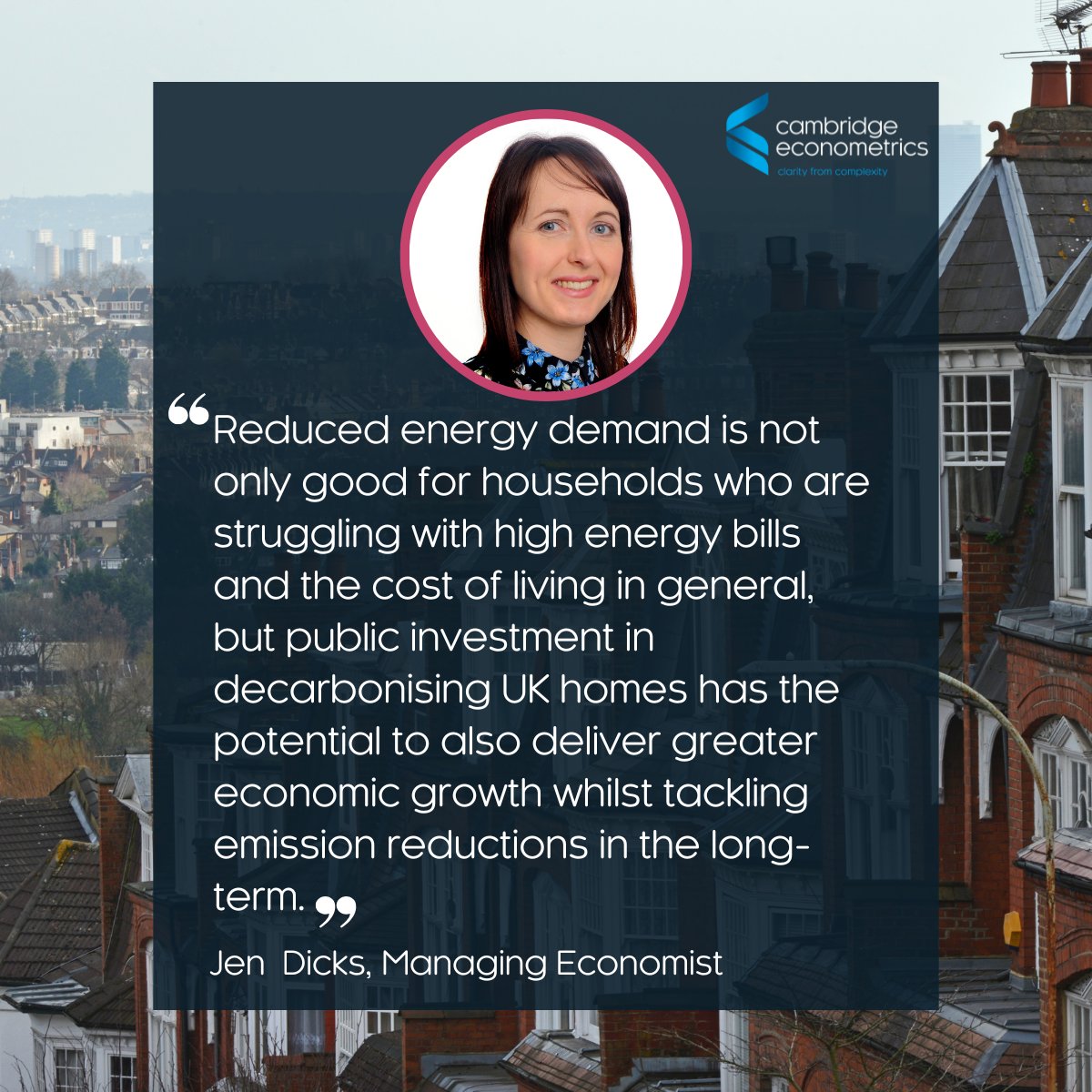
🧵 Great to see this article from @FionaHarvey today talking about our new @CambridgeEcon analysis for @GreenpeaceUK which looked at the impacts on the UK of decarbonising household heating in line with the @theCCCuk's Balanced Pathway 1/3
https://t.co/t59SBqY30u
@thomaswalters@Edgbaston Despite saying in the email that I could buy four tickets for the Friday, when I got in the system said I could only buy two! Very frustrating, and similarly two disappointed party members
@heatpolicyrich It's complete nonsense but, as others have pointed out, the headline bears no relation to the article. There's plenty of evidence that the opposite is true, and that at least initially the acceleration in inflation was driven by gas and FF price increases
Come hear me and @EeistP colleagues waffle on about our failures and a few successes applying complexity economics and systems thinking in very applied energy policy work...🤓
@JoMicheII We had quite some internal discussion about the framing of this - for me 1.5C is just about in the realms of the technically possible but given the glacial speed of policy, and human self interest, has a zero percent chance of being achieved.
How can we harness a new generation of economic modelling to accelerate the global energy transition?
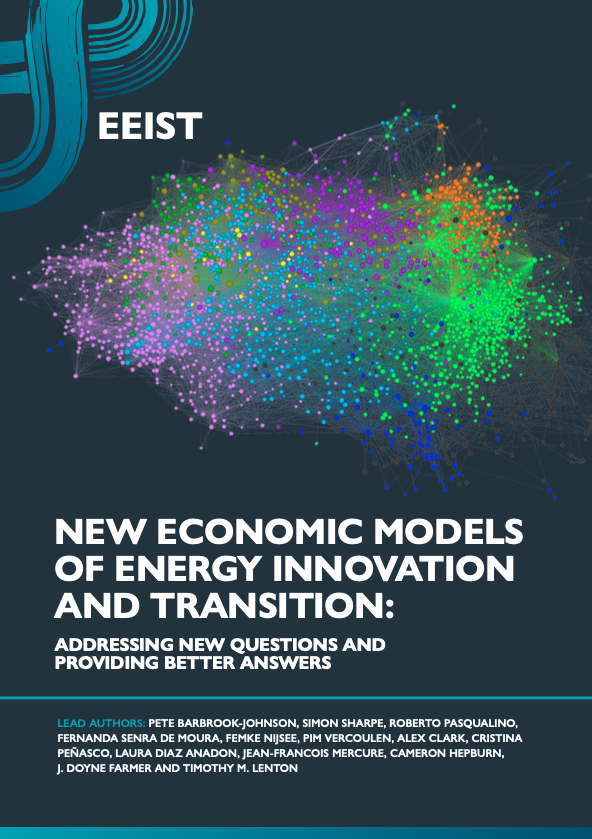
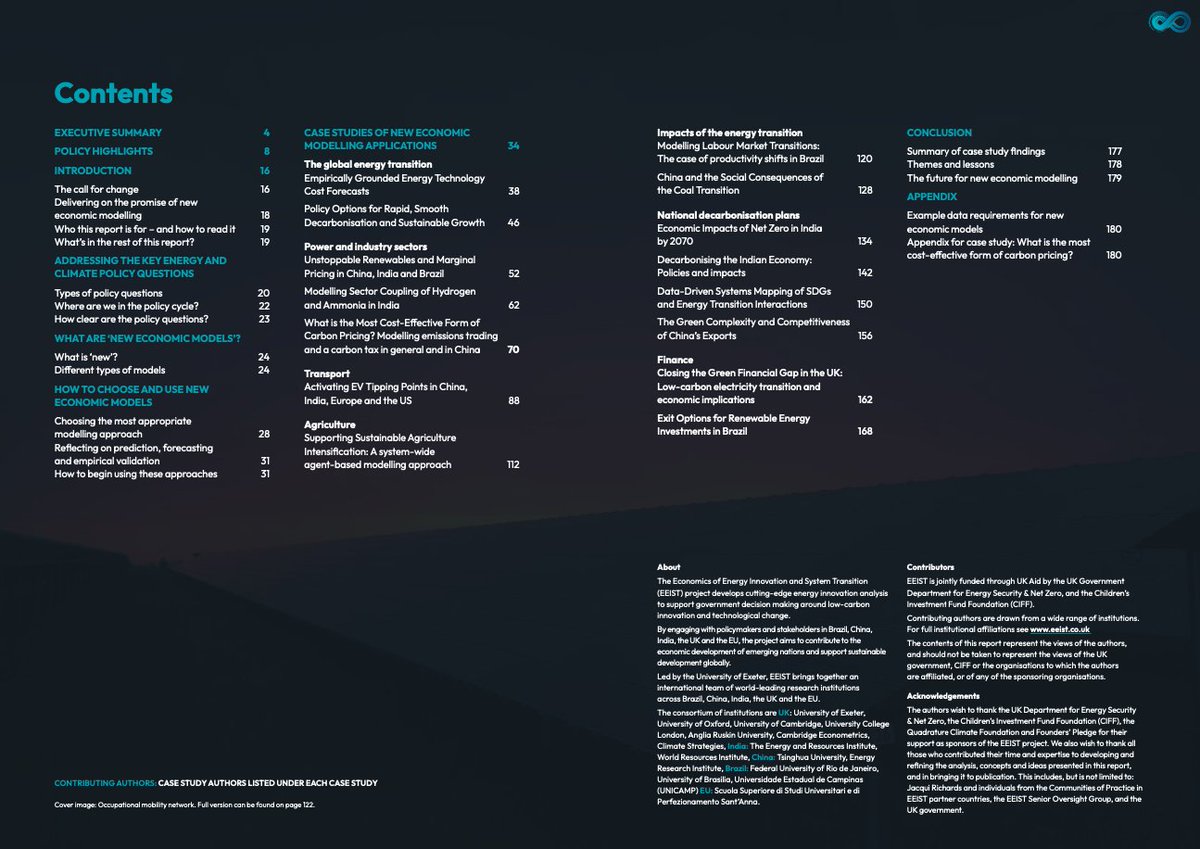
New economic models of energy innovation and transition – our latest report – details how governments can empower policymakers with new tools
https://t.co/BolxkeaRgM
Sneak peek of our @EeistP new report
📒 New economic models of energy innovation and transition
🌟 This report really delivers on the promise of complexity economics and systems thinking for energy and climate policy. Relevant and timely insights, developed with policy makers
What role could the UK Gov. play in ensuring Britain has more efficient homes?
The #AffordableEnergyCalculator which we worked on with @GreenpeaceUK allows people to see how much they could save in the future if their homes were more efficient➡️https://t.co/AA3MtYWp5x
How much does the UK need to invest in its electricity grid? How does that compare to Victorian investment in the railways?
From what I can tell:
- The UK invested ~2% of its GDP in building railways from 1845 - 1870
- We need to invest 0.2% - 0.5% of GDP in the grid to 2050
For a just and fair transition to #netzero, what are your global climate policymaking priorities for 2023?
Our experts choose three insights from 2022 that could make a real impact on the deployment of global #climatepolicy in 2023 -https://t.co/lp20tKux88
#CEPolicyInsights
@peterwsmith101 Right - the carbon budgets make assumptions about energy prices and economic activity, and if those turn out to be optimistic in reality, the budgets are easier to achieve. Our work on CB1 and 2 showed that this is largely why those targets were met... https://t.co/MSWzs3fYKh
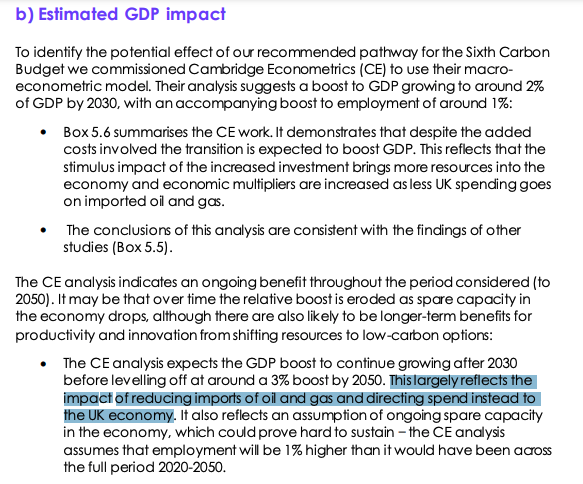
The improved UK balance of payments from lower fossil fuel imports is a major reason why UK GDP is expected to rise if we meet net-zero
(and this result was pre-gas price crisis)
https://t.co/MaoVP3dp2W
@Peters_Glen So the choices were a hugely limited set of price-based measures, that could only work at the margin (i.e. where they affected the least cost technology choice). It's not clear how they can, in their current form, get near to illustrating the required range of policy options.
@Peters_Glen I struggle to reconcile an optimisation model being consistent with illustrating the consequences of choices. Particularly when for a long time a lot of these models had exogenous technology costs.
@HistoryKss It neatly demonstrates the dearth of Tory ideas... suggesting that public services falling apart due to strikes is a problem for the Opposition, rather than the Government. And in the absence of anything better, just repeating this nonsense ad nauseam