The SEC case officially ended yesterday. The judge approved and signed the Final Judgment. The Tron Foundation is fully dismissed on all claims with prejudice. Chapter closed.
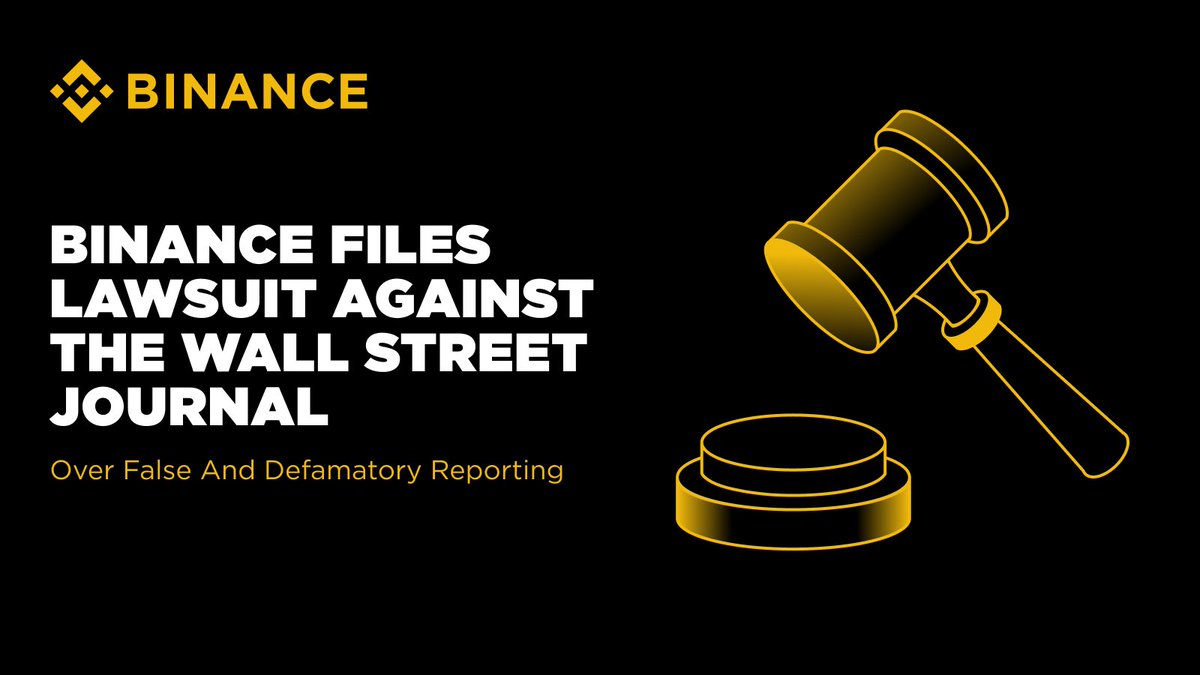
We have filed a complaint against the @WSJ for publishing a false and defamatory report, and to shine the light of truth.
We view this suit as a necessary step to defend ourselves against misinformation, hold the WSJ accountable for prioritizing clicks over journalistic integrity, and address the significant reputational harm that has resulted. The WSJ continues to report the same falsities, further demonstrating the need for the suit.
This type of reporting erodes trust in the broader industry and undermines the efforts of those who are committed to protecting users and advancing positive innovation.
👉 https://t.co/35ttiZL8kU
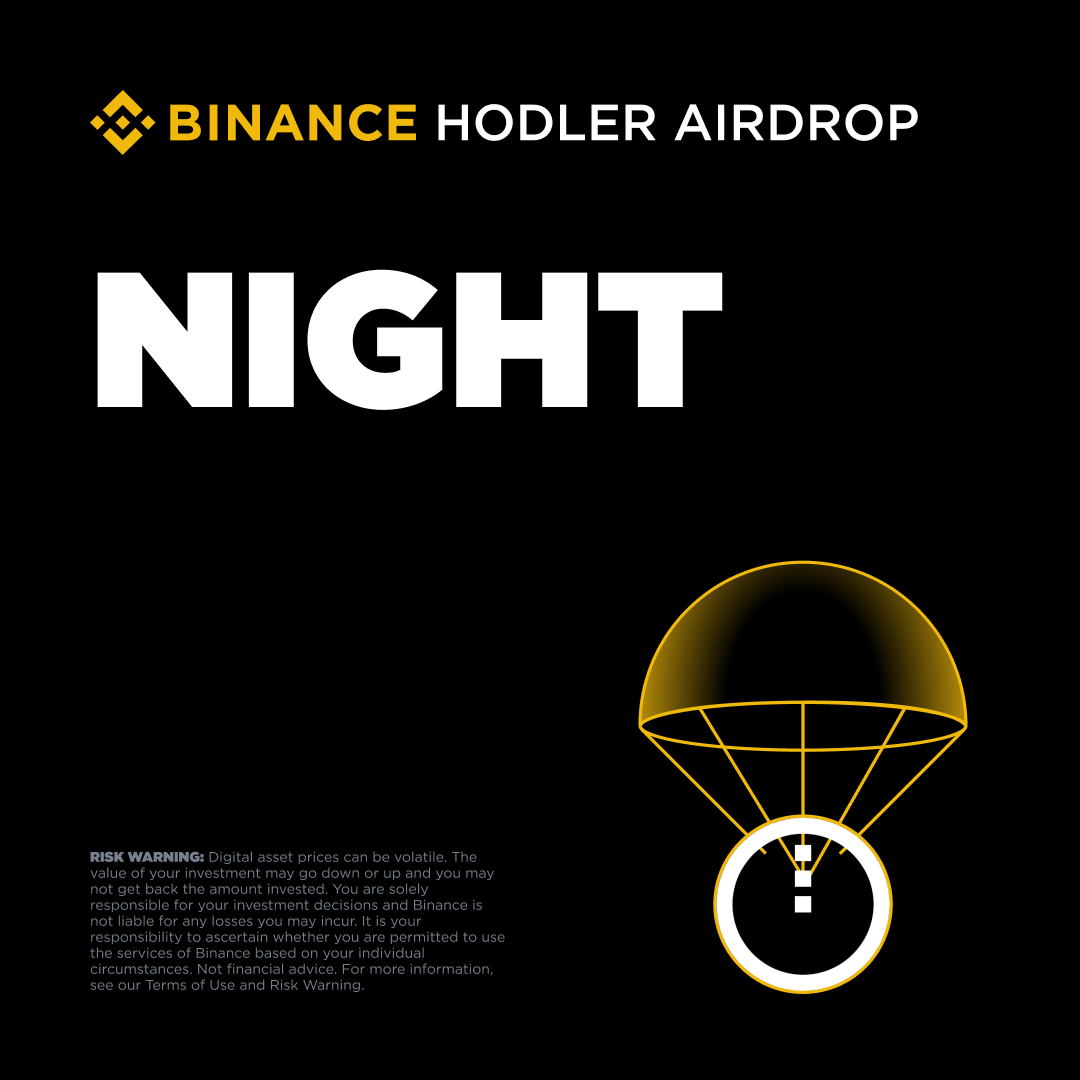
#Binance is excited to announce the Midnight HODLer Airdrop – @MidnightNtwrk $NIGHT.
BNB Holders, get ready! The Airdrop page will be available on the Binance Airdrop Portal in 3 hours. Plus, this token will be listed on Binance soon!
👉 https://t.co/wZcJT6WH0V
This #IWD2026, we’re spotlighting Binance female leadership - and we're reserving the center position for every woman in the community!
Use the template, add your photo in the center space, and post yours for a chance to win from 1000 $USDC.
Tag @Binance + #IWD2026 to join now
The Ethereum Foundation is using DVT-lite to stake 72,000 ETH:
https://t.co/V5x9TrdXoU
My hope for this project is that in the process, we can make it maximally easy and one-click to do distributed staking for institutions. Choose which computers run your nodes, make a config file where they all have the same key, and then from there everything gets set up automatically.
The idea that "running infrastructure" is this scary complicated thing where each person participating must be a "professional" is awful and anti-decentralization, and we must attack it directly.
It should be a docker container or nix image or similar, one click or command line per node, enter the same key in each node, and they automatically find each other, the networking is set up, the DKG happens, and the staking begins.
I also plan to use this soon, and I hope more institutions holding ETH can stake in this way. We want the authority over staking nodes to be highly distributed, and the first step to doing this is to make it easy.
7 years ago today, March 6th 2019.
EthCC[2] was a not-so-large conference.
A rogue fire bell emptied the rooms and so we took the opportunity to snap a group photo.
Back when the whole conference fit in one frame. Who do you spot? 👀🔔
Hinkal Pay is live on @ethereum
Confidential settlement is now end-to-end.
Sender, recipient, amounts - all private.
With Hinkal Pay you can:
- Send confidentially
- Receive confidentially
- Execute private & public payouts
- Maintain compliance controls
How it works
When you settle through Hinkal Pay, funds move to a confidential balance inside Hinkal’s smart contract, controlled by the recipient’s existing wallet.
From there, recipients can access funds with the wallet the sender entered as the recipient and:
Pay privately
Execute confidential payouts. Sender, recipient, and amounts remain confidential on-chain.
Send to public wallets
Send funds as a standard on-chain transfer to any public wallet address. The sender remains private.
Zero-knowledge technology validates funds without revealing balances on-chain, while selective disclosure enables auditability when required, without publicly exposing financial data.
Same wallets.
Same assets.
Same custody.
Same Ethereum security, now with complete confidentiality.
Try it at https://t.co/5TxHBDHp7d
@Tumimi9@Julius_S_Malema@EFF@MbalulaFikile@SihleLonzi@Mandlashikwamb1@SABCNews Hungry? Y'all wanna choose what you eat like it's your houses. There was food in the cafeteria but y'all strike about chicken. You blew things out of proportion.
Live off campus and get your nsfas allowance so you can buy your own food for fucks sake.



![EthCC's tweet photo. 7 years ago today, March 6th 2019.
EthCC[2] was a not-so-large conference.
A rogue fire bell emptied the rooms and so we took the opportunity to snap a group photo.
Back when the whole conference fit in one frame. Who do you spot? 👀🔔 https://t.co/48EhkggIHv](https://pbs.twimg.com/media/HCuR4CBaUAg48Hf.jpg)


