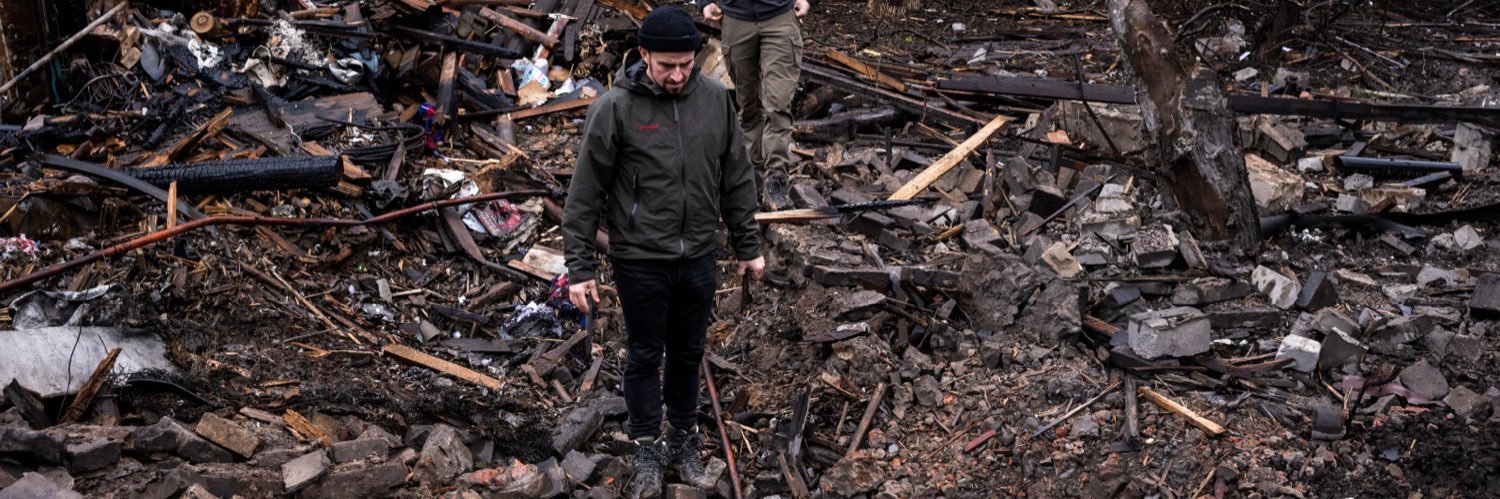
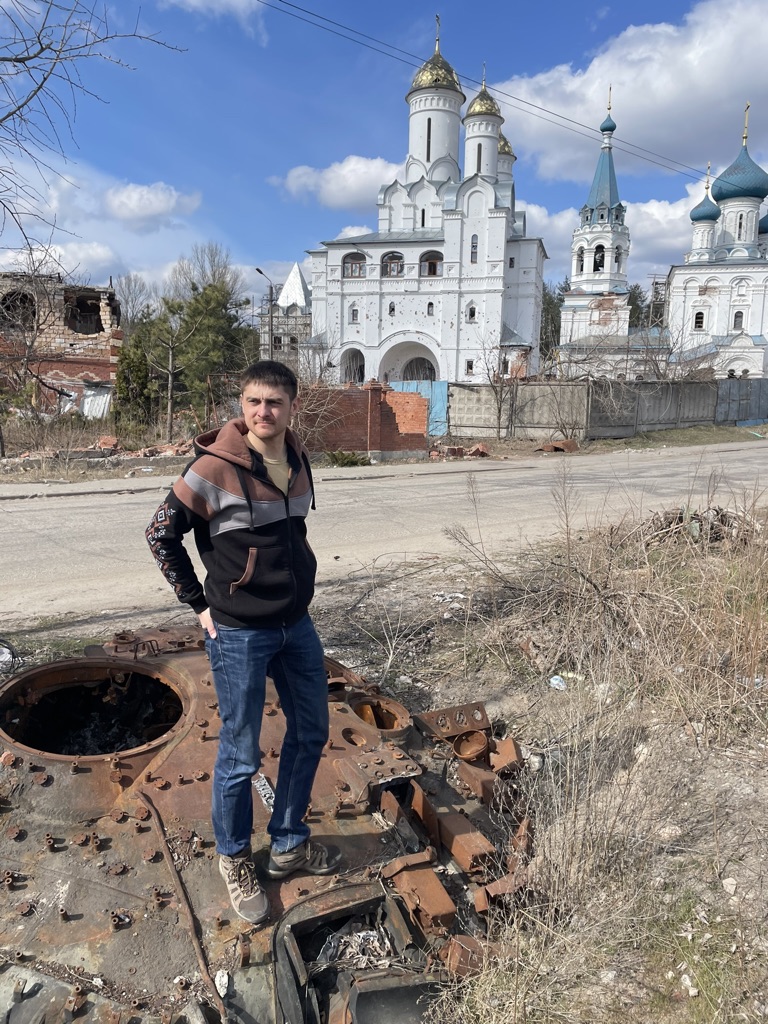
Die Firma Fire Point stellt jene Drohnen und Marschflugkörper her, die Russlands Kriegswirtschaft immer wieder empfindlich treffen. Gemeinsam mit @dominicnahr habe ich eine geheime Fabrik von Fire Point besucht. Mehr dazu in unserer Reportage: https://t.co/KZI0IViLhM via @NZZ
Die Firma Fire Point stellt jene Drohnen und Marschflugkörper her, die Russlands Kriegswirtschaft immer wieder empfindlich treffen. Gemeinsam mit @dominicnahr habe ich eine geheime Fabrik von Fire Point besucht. Mehr dazu in unserer Reportage: https://t.co/KZI0IViLhM via @NZZ
Seit vier Jahren wehrt die Ukraine iranische Shahed-Drohnen ab - und sieht jetzt die Gelegenheit, den angegriffenen Golfstaaten aus der Patsche zu helfen. Was kann die Welt von der Ukraine in der Drohnenabwehr lernen? @NZZ
https://t.co/KLMdwOtjnd
Trump is basically calling up every journalist in his phone to workshop different timelines and goals for his war. In the past two days:
@washingtonpost: the aim is "freedom for the people" of Iran
@axios: maybe we can "end it in two or three days" with a deal
@nytimes: might be "four to five weeks", I have "three very good choices" who might take control in Iran
@abc: actually, nevermind, we killed those choices
He doesn't sound convinced by any of it. He's throwing spaghetti at the wall. Ultimately I suspect he just wants to say he "solved" a problem that has vexed every American president since Jimmy Carter.
But there's no clear idea what that looks like and no plan for how to get there. And there are plenty of possible scenarios in which Trump declares victory and leaves the region with an absolute mess
The first hours of the current strikes against #Iran already show important differences from the 12-Day War; in timing, objectives, coordination, and the scale of escalation.
What we know so far:
🔹The attacks began with explosions reported across Tehran. Early reports indicated ~30 targets in the first wave, including leadership residences, intelligence facilities, and reportedly even the Supreme Leader’s office.
🔹Unlike the 12-Day War, which began with nighttime strikes, this operation started early in the morning, on the first day of Iran’s calendar week. The timing suggests an attempt to maximize operational disruption and leadership exposure from the outset.
🔹Target selection points to a decapitation strategy. Initial strikes appear aimed at leadership nodes and Iran’s security apparatus rather than purely military infrastructure.
🔹U.S. involvement marks a major shift. This time, Washington appears directly engaged from the beginning, with American officials reportedly describing the campaign as extensive and closely coordinated with Israel.
🔹Donald Trump framed the operation as defending Americans and removing immediate threats, but his remarks supporting the Iranian people against the regime strongly suggest regime change is an underlying objective.
🔹The operational concept appears phased: early missile strikes targeting leadership and air defenses, including sites in southern Iran such as Chabahar, likely intended to clear the way for later air force operations against missile bases and strategic assets.
🔹Iran’s response has been unusually rapid. Missile launches reportedly began within a couple of hours, with reported strikes in Tel Aviv and Haifa. The Iranian statements signaled that no “red lines” remain and that full-force retaliation is underway.
🔹This suggests predelegated response authority: rather than waiting for centralized coordination, Iranian forces appear instructed to maintain continuous firepower against Israel from the outset.
🔹Another key difference: Iran has already expanded the confrontation beyond Israel. Reports of explosions in GCC states indicate strikes targeting U.S. bases, signaling direct confrontation with Washington from the start.
🔹This contrasts sharply with June 2025, when Iran’s strike on Al Udeid in Qatar was largely symbolic and designed to facilitate de-escalation before a ceasefire.
🔹Meanwhile, Yemen’s Houthis have announced renewed attacks in the Red Sea, meaning the conflict has already begun evolving into a multi-front regional confrontation.
🔹Overall, the early pattern suggests a far more coordinated, expansive, and escalatory conflict than the 12-Day War, with regime decapitation, direct U.S. participation, rapid Iranian retaliation, and immediate regional spillover.
🔹The key question now: whether escalation stabilizes into controlled exchanges or whether the removal of previous “red lines” pushes the conflict into a prolonged regional war.
Mal etwas anderes aus dem Nahen Osten: Ich habe das Skigebiet Mzaar in Libanon besucht - hoch über dem Mittelmeer gibt es Schweizer Käse, dicke Karren und Après-Ski. Der Ort ist ein Safe Space für die Schönen und Reichen - aber wie lange noch?
https://t.co/Srff0OyItU
Wie ist ein Alltag möglich, wenn jeden Tag Raketen auf die eigene Stadt fliegen? Gemeinsam mit @dominicnahr bin ich in Charkiw dieser Frage nachgegangen. Via @NZZ https://t.co/FWjbUqM65j
Einst war die Omar-al-Mukhtar-Strasse die Lebensader von Gaza, das zeigen Videos. Vor ein paar Monaten sind wir die Strasse abgefahren. Alles ist anders.
https://t.co/hD9CNUSM1D
@adinarenner, @jonasmroth, @jesseberhart, @xeophin, Malak Tantesh und Enash Tantesh
„Donald Trump ist ein riesiger Klitschko-Fan“, sagt Wolodimir Klitschko im Interview mit der @NZZ . „Er kanm Russland in die Ecke drängen.“
Bild von @dominicnahr
https://t.co/bEawmY2vBZ
Eine Stadt trägt ihre Kinder zu Grabe: Der Raketenangriff auf Kriwi Rih trifft die Ukrainer ins Mark - @dominicnahr und ich haben den Ort der Tragödie besucht https://t.co/fuMJ2e9CKY
Es war eine Zufallsbegegnung, die uns nicht mehr losgelassen hat. @dominicnahr und ich waren dabei, als Jaroslawa sich am 1. April in Kramatorsk von ihrem Mann verabschiedete - zum letzten Mal. Das ist ihre Geschichte:
https://t.co/Sn8wcwEjuO
Die Recherche für diesen Artikel war wohl das Verrückteste, was ich je gemacht habe. Doch um diesen Krieg verstehen und erklären zu können, muss man vor Ort sein. Das ist nur möglich dank Leuten wie unserem ukrainischen Produzenten Kostya - ihm gebührt grosser Dank.
"Sie wissen, was jetzt kommt", sagt der Drohnenpilot. Dann wirft er die Granate auf die Russen ab. @dominicnahr und ich waren Ende März an der ukrainischen Ostfront unterwegs, um zu verstehen, wie der erste Drohnenkrieg der Geschichte funktioniert.
https://t.co/6TJ8EyWz9H
Drohnen sind für die Kriegsführung in der Ukraine unerlässlich geworden. Zu jeder Tages- und Nachtzeit sind ganze Schwärme von Drohnen in der Luft. Sie können töten, überwachen und aufklären, aber auch die eigenen Soldaten an der Front versorgen.
Nur die Besten dürfen mit dem Luftgewehr auf eine Wasserflasche schiessen – die hartnäckige Suche der Ukraine nach neuen Soldaten.
Die zweite Repo aus der Ukraine von @dominicnahr und mir via @NZZ https://t.co/Wf5Q7jrUGI
Die Kleinstadt Tschasiw Jar ist das neue Bollwerk der Ukrainer im Donbass - @dominicnahr und ich haben sie besucht. Hier zeigt sich symptomatisch, mit welchen Problemen die Armee zu kämpfen hat. https://t.co/43uO3lsKJS via @NZZ