An awesome and free course, "Advances in Computer Vision" from MIT. The chapters start with the basics of image formation, FFT, and diving into deep learning.
https://t.co/b6g0l5fD3S
Creator of C++, Bjarne Stroustrup:
AI-generated code isn't ready — it generates more bugs, more bloat, more security holes, and is nearly impossible to validate
"senior developers are already retiring rather than deal with it"
The problem is that even a small prompt change can shift the entire codebase in unpredictable ways
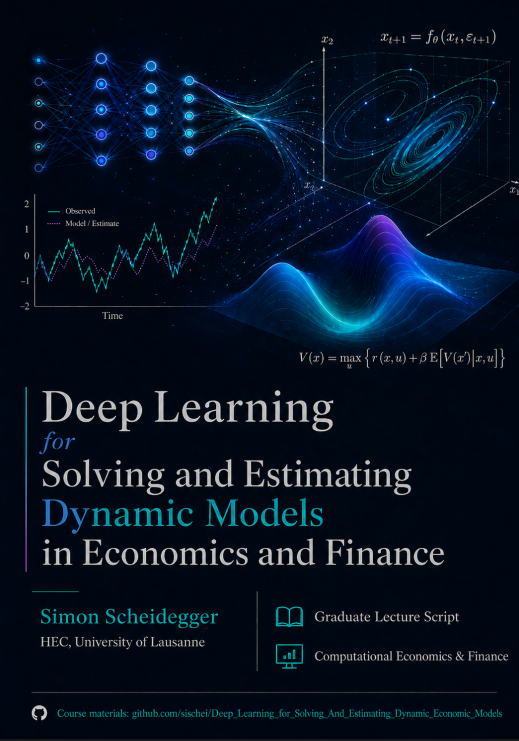
Thrilled to share a project I've been refining: a complete, open-source repository on "Deep Learning for Solving and Estimating Dynamic Models in Economics and Finance."
I've cleaned up the materials from my PhD classes and summer schools into one coherent resource. 🧵 1/6
All you need to learn about LLMs is 10 minutes!
This microlearning Google Skills course explores what large language models are, the use cases where they can be applied, and how you can use prompt tuning to enhance LLM performance → https://t.co/Cv0MzO1LnC
61 years ago this month, the Fast Fourier Transform was created, a powerful tool for image compression & data analysis.
Watch a classic MIT breakdown of FFT, perhaps the most-taught algorithm at the Institute: https://t.co/R7zdspBswx
v/@MITOCW
Book #OTD
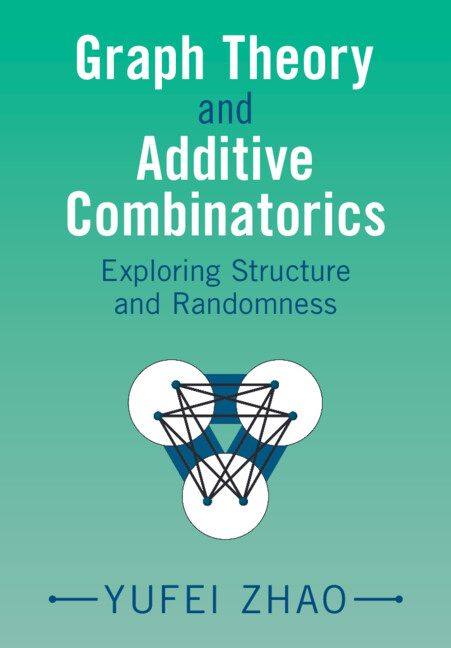
Graph Theory and Additive Combinatorics:
Exploring Structure and Randomness
book hp including PDF draft:
https://t.co/94SNckRq8W
publisher: https://t.co/iw1laSqVIQ
Free Math Book.
"How We Got from There to Here: A Story of Real Analysis." Introduces students to difficult definitions by including historical developments. An intro analysis textbook. Students solve problems that include historical context.
Contents
Prologue: Three Lessons Before We Begin
I: In Which We Raise a Number of Questions
1 Numbers, Real (R) and Rational (Q)
2 Calculus in the 17th and 18th Centuries
2.1 Newton and Leibniz Get Started
2.1.1 Leibniz’s Calculus Rules
2.1.2 Leibniz’s Approach to the Product Rule
2.1.3 Newton’s Approach to the Product Rule
2.2 Power Series as Infinite Polynomials
3 Questions Concerning Power Series
3.1 Taylor’s Formula
3.2 Series Anomalies
II Interregnum
Joseph Fourier: The Man Who Broke Calculus
III In Which We Find (Some) Answers
4 Convergence of Sequences and Series
4.1 Sequences of Real Numbers
4.2 The Limit as a Primary Tool
4.3 Divergence
5 Convergence of the Taylor Series: A “Tayl” of Three Remainders
5.1 The Integral Form of the Remainder
5.2 Lagrange’s Form of the Remainder
5.3 Cauchy’s Form of the Remainder
6 Continuity: What It Isn’t and What It Is
6.1 An Analytic Definition of Continuity
6.2 Sequences and Continuity
6.3 The Definition of the Limit of a Function
6.4 The Derivative, An Afterthought
7 Intermediate and Extreme Values
7.1 Completeness of the Real Number System
7.2 Proof of the Intermediate Value Theorem
7.3 The Bolzano-Weierstrass Theorem
7.4 The Supremum and the Extreme Value Theorem
8 Back to Power Series
8.1 Uniform Convergence
8.2 Uniform Convergence: Integrals and Derivatives
8.2.1 Cauchy Sequences
8.3 Radius of Convergence of a Power Series
8.4 Boundary Issues and Abel’s Theorem
9 Back to the Real Numbers
9.1 Infinite Sets
9.2 Cantor’s Theorem and Its Consequences
Epilogue
Epilogue: On the Nature of Numbers
Epilogue: Building the Real Numbers
The Decimal Expansion
Cauchy sequences
Dedekind Cuts
Link: https://t.co/weyKXgmvKV