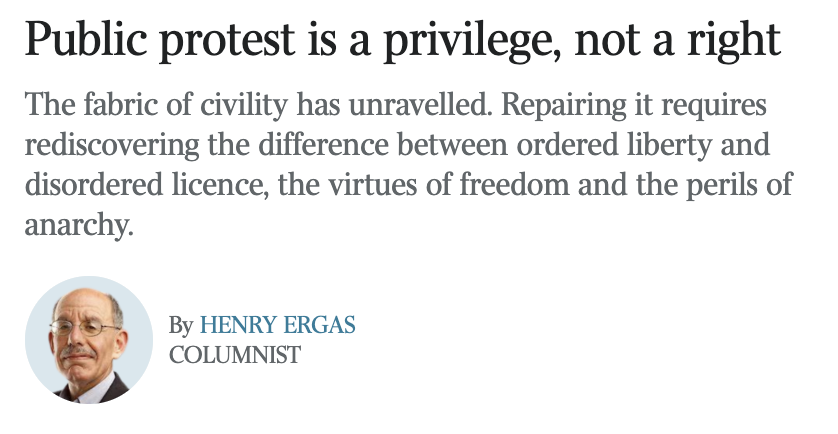
The Myanmar regime said there were no such people as the Rohingya. The International Court of Justice identified this as one of the ideas that led to genocide against them.
🔒rt
same playbook as claiming “from the river to the sea” is genocidal rhetoric. taking zionists at their word — incl/esp Western lib (slur) zios (slur) like OP — and strenuously scolding/policing each other around their narcissistic demands makes fools of us all.
I can tell if a student has used AI to generate the text of an assignment in the first 2-3 sentences. Those who think AI 'can write extremely well' just have a tin-ear for style. However, AI can do bureaucratic writing very well and will probably get better at other forms.
New article of mine out in Historical Materialism, in which I read Lukács's "The Young Hegel" as containing a critique of Stalinist irrationalism.
Access via institutional affiliation (or drop us a DM and I'll see what I can do xo 😉)
https://t.co/XP7Y4mMDK7
Very basic rule for international adjudicators: If your standard for determining genocidal intent would exonerate Nazi Germany between 1935 and 1941, your standard is wrong
Reposting a thing I wrote for @deepcutnews about how the Age —quite correctly — labelled the killing of Rohingya ‘genocide’ and called for sanctions on perpetrators long before the ICJ ruling. Compare and contrast with the coverage of Gaza.
https://t.co/KJviJ9B0ve
“A mined diamond moves earth. A lab-grown diamond burns energy. Neither arrives without cost.”
Jens Kirsch on working in the diamond industry and the hidden realities of ethical stones. https://t.co/3r5xSNMnHy
The Israel lobby's repressive measures are an admission of guilt, Louise Adler writes.
"The ongoing intensification of the repressive assault, the march through the institutions and Segal’s updated evidence-empty national plan, disheartening though they may be, paradoxically should be grounds for hope."
"It is testament to the ever-growing solidarity with Palestine and the power of a collective commitment to justice and peace."
https://t.co/t8faTv5qZ6
I helped to organise a symposium on the political aeconomy of Artistic Freedom in Australia in June. Here is a collective statement from participants kindly published by @OverlandJournal:
https://t.co/wN7nPCdBlx
⭕️ American artist and writer Molly Crabapple accused the Australian newspaper The Sydney Morning Herald of heavily censoring an interview it conducted with her, saying the newspaper removed all references to genocide, Palestinians, the Gaza Strip, and Zionism from the published article.
▪️ In a comment posted on her social media accounts after the interview was published, Crabapple revealed that the newspaper had not only removed these topics but also taken a statement she made rejecting Zionism out of its original context.
▪️ The American writer expressed her dissatisfaction with how her statements were handled, saying: "I have done hundreds of interviews about my book with media outlets from around the world, but I have never had an interview subjected to this much censorship and deletion."
▪️ Crabapple's accusations highlight what she described as editorial interference that changed the substance of her interview, particularly on issues relating to Palestine and Gaza. She argued that deleting her statements and taking some out of context stripped her positions of the context in which she had expressed them during the interview.
Adam, you are projecting. Despite being an anthropologist-in-training (not a historian), you misrepresent history to accommodate your ideologically motivated meta narratives about Zionism as an "indigenous rights" movement and antizionism as made in Moscow, etc.
"This radical contingency is not only a source of instability, but it is also precisely what makes communism possible as something that could be present in any moment."
Eda Gunaydin reviews CRIMES OF CLASS—supported by the @CopyrightAgency Cultural Fund.
https://t.co/DJgpolP7TZ
"This radical contingency is not only a source of instability, but it is also precisely what makes communism possible as something that could be present in any moment."
Eda Gunaydin reviews CRIMES OF CLASS—supported by the @CopyrightAgency Cultural Fund.
https://t.co/DJgpolP7TZ