Artificial intelligences do not undergo experiences, do not possess a body, do not feel joy or pain, do not mature through relationships, and do not know from within what love, work, friendship or responsibility mean. Nor do they have a moral conscience, since they do not judge good and evil, grasp the ultimate meaning of situations, or bear responsibility for consequences. They may imitate or even simulate, but they do not understand what they produce, for they lack the affective, relational, and spiritual perspective through which human beings grow in wisdom. #MagnificaHumanitas
The aversion to synthetics can be reasonable, depending on the context, but some of the stuff I read on here reads like an oversimplification or simply misinformation.
First, it's almost certain you already wear synthetics. If you wear tailored clothing — such as suits, sport coats, tailored trousers, and dress overcoats — those garments are likely lined in a semi-synthetic material known as rayon. You need this lining so you can easily slip in and out of the garment without the material catching on your shirt (also to protect your skin from the itchiness of wool, which is why you find such lining in trousers).
Even if you don't wear tailored clothing, your underwear and socks are likely made with a synthetic-blended yarn, such as a wool- or cotton-nylon blend. This is necessary so that the garment stays up on your body. If you wear pure cotton socks, you'll often find they stretch out and droop down your leg, which isn't comfortable. Underwear is also often made with a synthetic waistband that essentially functions as a rubber band around your torso. Without it, you would likely need a belt or suspenders for your underwear.
Synthetics show up in other places. Shoes commonly have ethylene-vinyl acetate (EVA) or polyurethane (PU) materials in the insole. Swim trunks for men (or bikinis and swimsuits for women) are commonly made from quick-drying polyamide (a petroleum-based material).
Second, labels are not always a good indication of what you're wearing. I've known mills, brands, and shops to mislabel things. Sometimes this is intentional; sometimes it's just information that gets lost somewhere in the supply chain. A yarn supplier may not disclose that the "magical property" of their cotton or linen yarn was achieved by adding a touch of elastane, so when they sell it to a mill, the resulting fabric is wrongly labeled as purely natural. This misinformation trickles down from the factory to the shop, which is the point where you see the clothes.
Additionally, there's a disconnect between what consumers expect and what's actually practiced in the fashion industry. For instance, a consumer might purchase a garment labeled "100% wool" and marketed as a "machine washable garment." This is common with activewear and undergarments. People don't want to take their activewear to the dry cleaner; they want to throw it into a washing machine for a wet wash.
But have you ever wondered why you can't throw other wool garments into a wet wash? It's because your machine-washable wool garment has been specially treated. Before the yarns were woven or knitted into fabric, they were coated with a polymer resin. This prevents wool fibers from felting or shrinking during the wash. Sometimes these fabrics are marketed as "Superwash wools." The fiber is technically 100% wool, but it's been coated with a plastic that touches your skin.
Third, and finally, it's not true that synthetics are a modern thing. People often harken back to the 1950s as a more beautiful, natural state of existence. But when you look at clothing catalogs from that period, you will see men's clothing was commonly made with nylon or rayon (an inveterate thrifter can tell you this). Attached is a scan from a 1954 Sears spring/summer catalog. Note the trousers — nylon and rayon.
My view of synthetics is purely pragmatic: what will produce the best, most functional clothes that people will wear for a long time? For example, Sierra Design's mountain parkas — popular in the 1970s — are made from a 60/40 blend of cotton and nylon, which allows them to shed water while remaining reasonably breathable (unlike waxed cotton, which is as breathable as a trash bag). To be sure, this is not the only showerproof fabric, but the 40% nylon serves a function.
To me, someone who purchases clothes and wears them for decades is more sustainable than someone who buys pure cotton or wool garments that they wear for a few years and discard. Such disposability can result from a few things: the garment failed in its function, or it simply doesn't resonate with the wearer anymore for whatever reason (it's not fashionable or doesn't make the person feel excited).
Every material, whether synthetic or natural, has an environmental impact. Yet, we are required by law to wear clothes. Thus, to me, the most sustainable decision is to build a wardrobe that you will love wearing for a very long time. Discussion about synthetic vs. natural, to me, revolves around that goal first.
Often see people here frame synthetics as automatically bad and natural as automatically good. IMO, this oversimplifies things. In China, some of the rivers run in indigo blue because of the (pure cotton) denim plants nearby. India is dealing with toxic wastewater because of leather tanneries. I think it's better to consider the whole picture when thinking about sustainability and health, not rely on mental shortcuts.
rules for good conversation:
1) never apologize for tangents
2) avoid cutting people off or finishing their sentences
3) engage in metacommentary (neutrally describe your reactions and intentions re: the convo as you’re having it)
4) always define your semantics
5) steelman their arguments
6) don’t make statements, ask questions
7) never be afraid to make a joke, the most memorable conversations cycle between comic and serious
8) pass judgement on actions, never on thoughts and feelings
9) look for the goodness and wisdom in everyone
10) give your opinions by asking for theirs (instead of “I think ____” say “do you think _____?”)
Being overweight comes with a health risk , like alcohol and seeking help to overcome personal challenges is always the right thing to do. I think it’s great that @serenawilliams don’t pretend it just happened overnight , but openly inform about what she did to achieve her personal goals in terms of her body. There is not one right or wrong way here, there is only the way that is good for you and we should not shame on this
@drflugenflok@MILFmassacre I used to work at park and like 24th in 2016 and would often look at the cam and sprint there with my colleague at like 11:30 if we saw the line was empty. Would get 2 burgers!!! By that point, they were open year round
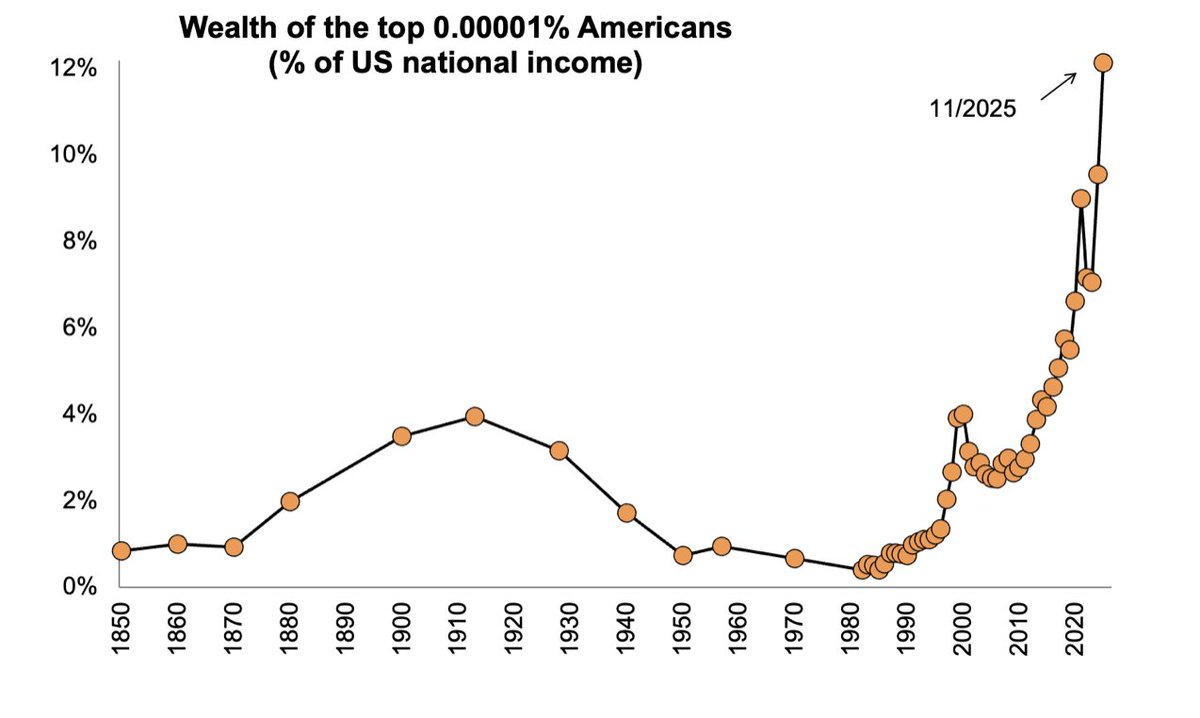
At the peak of the Gilded Age in 1910, the richest 0.00001% of the US population owned wealth equal to 4% of national income.
Now, the richest 0.00001% owns 12%.
US billionaire oligarchs today are even wealthier than the original robber barons.
Source: https://t.co/qOjOvUIRRc
@SteveNash you need to get Djokovic and LeBron on the pod and talk longevity!
2 GOATS and maybe their trainers to talk: diet, flexibility, sleep hacks, workout routine, pre match/game warmup, cool down routine
Chief Hodges: one man arrested does HVAC work and has been convicted twice for trying to solicit a prostitute… another man took an uber to meet what he thought would be a 17-year-girl.
4 days out from my life-changing surgery, @Aetna has denied the appeal for my brain surgery.
to be clear, when i signed up to aetna months ago, the coordinator had confirmed they would cover this surgery. then, a week ago, they said the surgery was too experimental/elective and denied coverage. we appealed. that appeal was just denied today.
now, my neurosurgeon is trying to do a peer-to-peer consult with someone at aetna to explain why i need it so we don’t lose the surgery date on monday morning. aetna is not being responsive.
this is sadistic and a violation of basic trust. please spread this so they can’t ignore it. they may not care if i live or die but people should know just what kind of company they’re dealing with. and please pray they are able to have a peer-to-peer consult with my neurosurgeon and have a change of heart.