GOOD SIGNAL 🇨🇳 Elon Musk just said that China will be making a LOT of RAM in 2028 ⏳
For Tesla, that could turn out to be one of the best supply chain stories of the decade, and Optimus stands to gain the most 🔥
Memory is the reason why.
AI data centers have soaked up so much DRAM that prices exploded, and Tesla felt it directly. Earlier this month, Elon said Tesla cut the planned memory on its AI5 and AI6 chips because it was the only way to secure enough volume for Optimus production. Micron estimates a single humanoid robot could need around 200GB of DRAM, so multiply that by millions of robots and the problem becomes obvious.
That is why China’s buildout matters so much.
CXMT, the country’s leading DRAM maker, already runs three 12-inch fabs at roughly 300,000 wafers per month and grew its global share from 3% to about 8% in a single year. After raising $8.6 billion in its July IPO, it is pursuing projects that could more than double capacity to over 600,000 wafers per month.
Better yet, it is the right kind of memory. Tesla’s AI chips use LPDDR, not the exotic HBM stacked next to data center GPUs, and commodity DRAM is exactly where CXMT has been winning.
All that new capacity should also pull prices down worldwide, because memory trades like a commodity. A South Korean column now warns of oversupply by 2029, and Gartner expects significant DRAM price declines in 2028, right as Optimus should be ramping toward real volume.
And this is where Tesla holds a card almost no Western robot maker has.
Giga Shanghai is already Tesla’s highest-volume factory, and Tesla China’s president has called it a “golden key” for scaling Optimus. Tesla’s robot team has also been auditing suppliers across the Yangtze River Delta for joint modules and actuators, tapping the same region that built one of the most localized supply chains in the auto industry.
When China’s memory wave hits in 2028, Tesla will have a world-class factory sitting right next to it, ready to turn cheap, abundant memory into millions of robots.
진짜 그냥 개미쳤다. 여태까지 쓰던 지표견지표와는 차원이 다른 수준 트레이딩뷰 불편한 거 싹 사라지고 이것만 쓰고 싶어질 정도입니다.
이런 서비스가 존재한다고? 전화위복이란 이런 것이구나...
지금 바로 구독하세요 ㄱㄱ 진심 좋아요
https://t.co/98kSS3trDH
https://t.co/98kSS3trDH
THIS IS BIG!
The Cancer Cells That Changed Their Minds
A KAIST team just reversed cancer without killing a single cell — and the method may matter more than the result.
For a century, oncology has had exactly one strategy: find the cancer and destroy it.
Chemotherapy poisons it. Radiation burns it. Surgery cuts it out. Immunotherapy teaches the body to hunt it. Every weapon differs in precision, but not in philosophy. The tumor is an enemy. You win by killing.
Now a team at South Korea's KAIST has proposed a heresy: *what if the tumor doesn't need to die?*
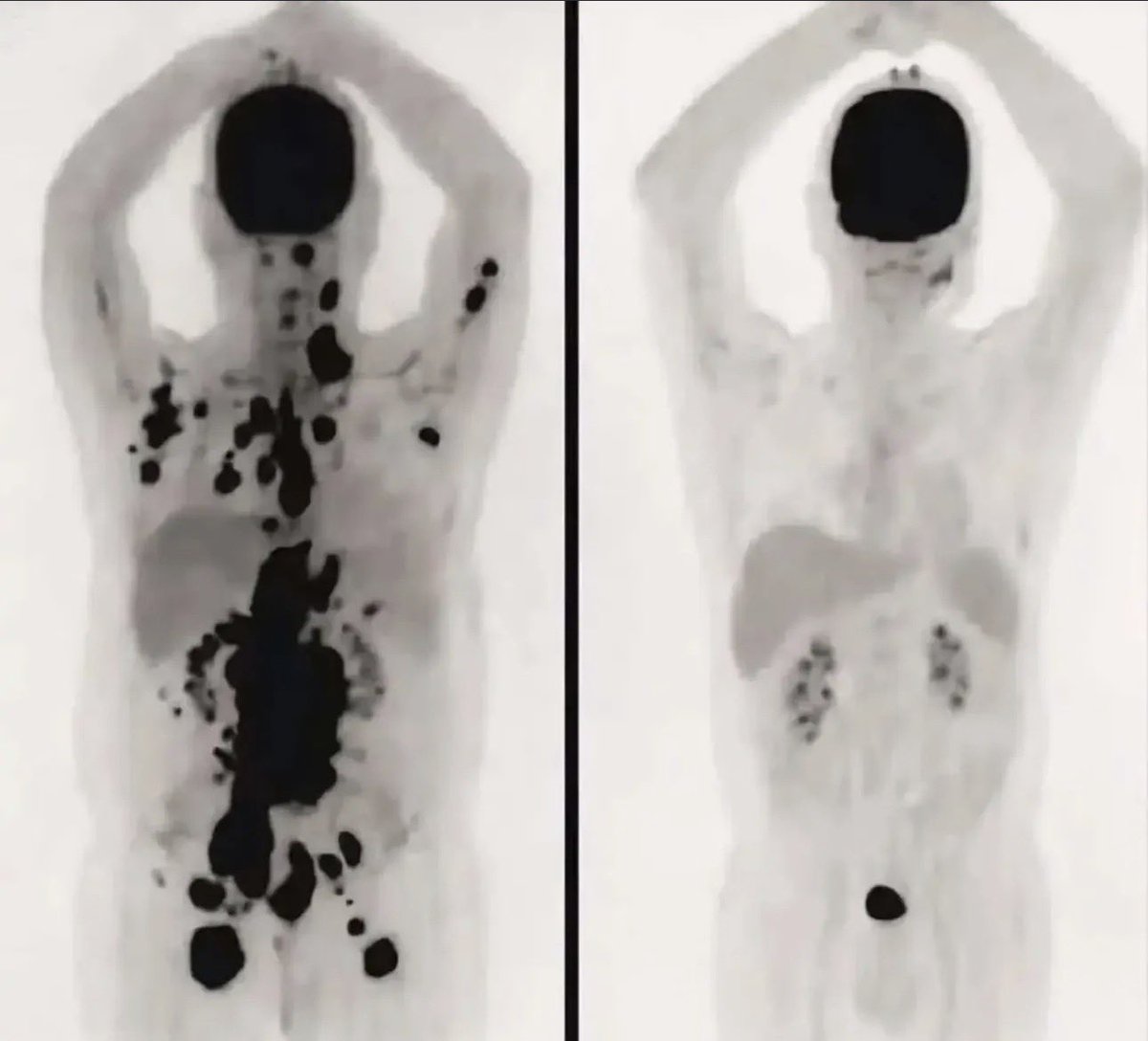
In a study led by Professor Kwang-Hyun Cho of the Department of Bio and Brain Engineering, published in Advanced Science ("Control of Cellular Differentiation Trajectories for Cancer Reversion," DOI 10.1002/advs.202402132), researchers took colon cancer cells and — without poisoning, irradiating, or cutting them — turned them back into normal cells.
Not dead. Not damaged. Just normal again.
The tumors, grown in mice, shrank dramatically. The surrounding tissue was left intact, because there was never an attack to survive.
This is early research — cell lines and animal models, no human trials, real obstacles still unsolved. But the conceptual break is the story. For the first time, cancer treatment has a second verb. Not just destroy. Also: convert.
The digital twin of a cell
The KAIST team's insight begins with a redefinition of what cancer is.
The conventional view treats cancer as a pile of broken machinery: mutations accumulate, checkpoints fail, cells proliferate. Cho's group looked at the same evidence and saw something different — a trajectory. During oncogenesis, they observed, normal cells don't just break. They regress, sliding backward along the differentiation path they followed when they matured. A colon cell becomes, in effect, a confused stem cell: immature, proliferative, lost.
If cancer is a wrong turn on a developmental road, then the treatment question changes. You don't blow up the road. You build a map and find the turn.
That map is what the team calls a digital twin — a complete computational model of the gene network governing a cell's differentiation. Using data from 4,252 intestinal cells, they reconstructed a network of 522 interacting components, capturing how genes regulate one another as a cell matures or degrades.
Then they did the audacious thing: they asked the simulation which levers, flipped together, would push a cancer cell back down the road toward normalcy.
The answer came through a system they built called BENEIN (Boolean Network Inference and Control), which models gene interactions as logical relationships and systematically tests which interventions redirect the network's state. The simulation pointed to three master regulators — the genes MYB, HDAC2, and FOXA2 — acting together as the switch that holds the cancerous state in place.
Turn all three off simultaneously, the model predicted, and the cell would stop proliferating and differentiate into something resembling a normal intestinal cell.
They tested it, and it worked.
In three colon cancer cell lines, suppressing MYB, HDAC2, and FOXA2 together strongly induced differentiation into normal-like cells. The cancer cells began expressing markers of healthy intestinal tissue. Proliferation collapsed — not because the cells died, but because they grew up.
In animal models, tumors formed from the reprogrammed cells were dramatically smaller than controls, and under the microscope they looked far more like normal tissue. The signature achievement, and the one that would matter most to any patient reading this: there was no collateral damage. Nothing was poisoned, burned, or irradiated. The healthy tissue never came under fire, because there was no fire.
1 of 2
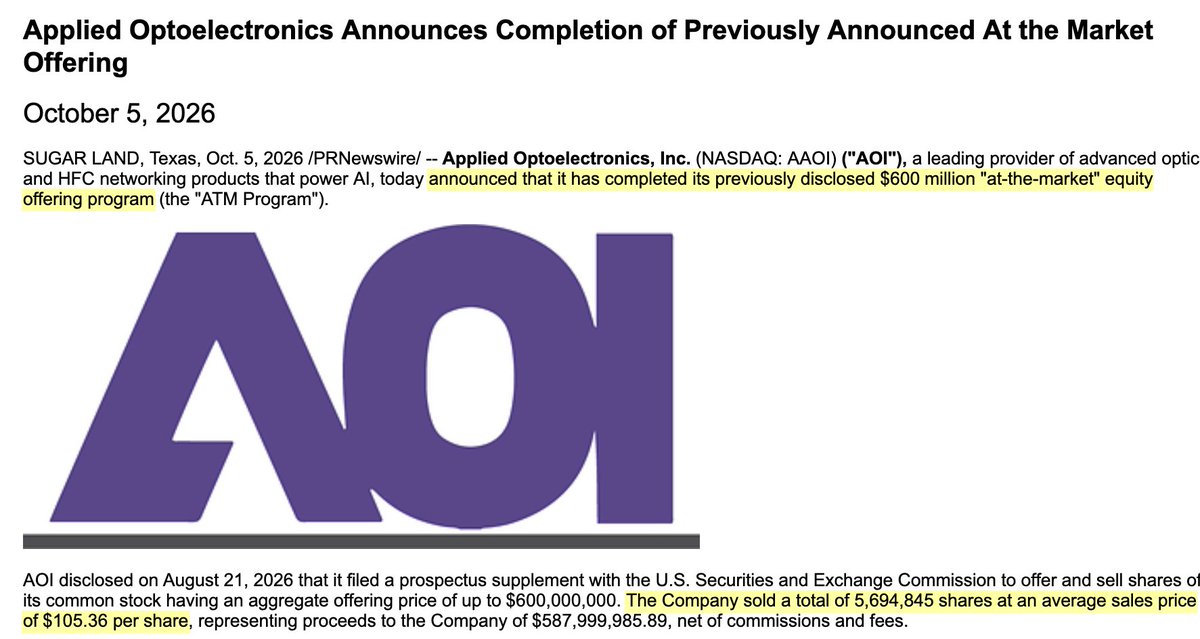
$AAOI is... finally... done...
With their $600m ATM program, turns out it's ~$105.36 average.
I do think AOI outperforms $LITE, as long as they stop filing these ATM programs.
Just due to their sheer magnitude of ramp with $471m/month transceiver revenue + 400K/month ELSFP coming up.
AI 모델이 디자인을 거의 공짜로 찍으면, 가설 생성이 아니라 생물학적 검증이 병목이 됩니다.
순서는 AI 모델 → 서열 디자인 → DNA 합성 → 단백질 생산 → 어세이·시퀀싱 → 자동화 → 전임상입니다.
반도���에서 GPU → HBM → 네트워킹 → 전력·냉각으로 내려간 구조와 같습니다.
지금 주문이 붙는 칸은 DNA 합성과 단백질 생산입니다.
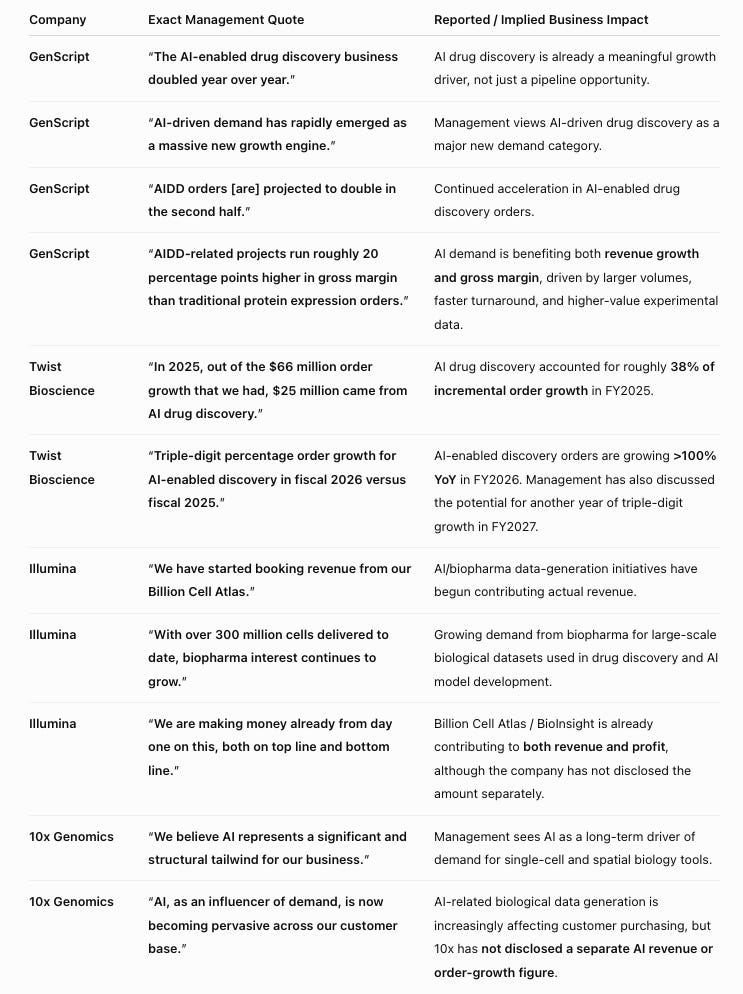
Twist Bioscience는 AI 신약 주문이 FY26, FY27 연속 세 자릿수 성장할 것으로 가이던스했습니다.
GenScript AIDD 사업은 2026 상반기 전년 대비 두 배였고, 광고 처리량은 하루 4,000건입니다. 채널 체크는 현재 약 8,000건, 연말 16,000건입니다.
실패한 실험도 학습 데이터라서, 예전처럼 A급 후보만 실험실에 넣지 않습니다. Anthropic 논문 기준 설계 1,320개 중 결합한 건 354개였고, 나머지 실패는 다음 모델의 음성 레이블이 됩니다. 습식 검증은 Adaptyv와 Twist가 했습니다.
다음 병목이 자동화·어세이 데이터입니다.
여기가 깅코 자리입니다.
깅코는 자체 로봇 자동화(RAC)와 자��실험실로, 미국 안에서 초기 어세이 단가를 중국 위탁에 맞추려 합니다.
Datapoints의 ADME-One은 Tier 1 ADME 패널을 199달러에 제공하고, 회사는 WuXi 등 해외 견적의 약 10분의 1, 작업은 보스턴 자동화 랩이라고 밝혔습니다.
점유를 가져왔다는 실적은 아직 없지만 내러티브 형성되는 중.
확인된 최근 사례는
일라이 릴리TuneLab의 ADME·항체 developability 데이터,
노보의 자율실험실 구축,
AbbVie·argenx·Lundbeck·Takeda 항체 developability 컨소시엄입니다.
바이오시큐리티 매각 이후 세포 엔지니어링과 데이터 생성으로 좁힌 전환 시도입니다.
그 다음 병목 후보는 전임상 CRO·영장류·GLP 독성($CRL)입니다.
임상 CRO($IQV, $MEDP, $ICLR)는 환자·자본 필터를 통과한 뒤에��� 전력에 해당하는 구조적 병목이 됩니다.
So… according to UBS, Broadcom hasn’t lost TPU v9, and will take the lion’s share of v10?
That’s the exact opposite of the rumors we’ve been hearing so far.
SEMICONDUCTOR STOCKS BY PEG RATIO
PEG < 1 usually means growth may be mispriced
PEG > 2 starts to push into the danger zone
Here’s how they stack up:
• $ARM ~2.5x
• $INTC ~1.8x
• $ANET ~1.7x
• $ALAB ~1.6x
• $KLAC ~1.3x
• $LRCX ~1.3x
• $ASML ~1.0x
• $AMAT ~0.9x
• $LITE ~0.8x
• $TSM ~0.7x
• $AMD ~0.7x
• $COHR ~0.6x
• $CRDO ~0.5x
• $NVDA ~0.5x
• $MRVL ~0.4x
• $ON ~0.4x
• $AVGO ~0.3x
• $SNDK ~0.2x
• $SKHY ~0.2x
• $AAOI ~0.2x
• $MU ~0.1x
Semiconductors are looking VERY cheap right now with two-thirds of these names trading below a 1x PEG over next three years...
AI Drug Discovery Is Becoming a Bottleneck Trade
I get excited when an industry starts going through a real regime change. AI drug discovery (“AIDD”) increasingly looks like one of those moments.
Two things are happening:
1/ Upstream: the frontier AI labs are piling in.
2/ Downstream: The supply chain is clearly moving.
Supply-chain checks suggest the upstream picks-and-shovels of discovery and early preclinical R&D are starting to feel the increase in experimental volume.
DNA → protein → assays → sequencing → automation → preclinical testing
Names across that stack include $TWST , @GenScript , $ILMN , $TXG , lab-automation vendors and CROs.
$TWST expects triple-digit percentage growth in AI-enabled drug-discovery orders in FY26, and another year of triple-digit order growth in FY27.
@GenScript's AIDD business doubled YoY in 1H26. Its current platform advertises industrial-scale validation of 4,000+ designs/day, with integrated sequence-to-data workflows. Our channel checks suggest the ramp is moving even faster: roughly 8,000 designs/day currently, with a path toward ~16,000/day by YE26.
---
Why does AI drive more wet-lab demand?
1/ AI makes hypothesis generation almost free → way more shots on goal.
The bottleneck is moving from expert-driven design to biological validation.
2/ AI models need continuous experimental feedback — and both good and bad data are useful.
Traditionally, only the highest-conviction A+ candidates might get pushed into expensive validation. With AI, even the B/C candidates can be valuable because failed experiments generate training data.
@GenScript has said its sequence-to-binding workflow can return data in 4–7 days, and that faster cycle times matter because AI models depend on continuous experimental feedback.
@Anthropic is a clean example. @claudeai designed 1,320 protein binders. @adaptyvbio converted those digital sequences into DNA, expressed the proteins and tested binding. Only 354 actually bound. And the 966 failures are not wasted. They are useful negative labels: what does not express, what does not bind, what has poor affinity. Those results help train the next model iteration.
3/ Wet labs are no longer just making drugs. They are making training data.
$TWST / @GenScript increasingly look like biological data foundries.
$TWST explicitly talks about generating model-ready data from AI-designed sequences. In some workflows, the customer may care less about receiving the physical protein than about getting structured experimental results back into the model.
Traditional drug discovery asks: “Does candidate X work?”
AI drug discovery also asks: “What can this experiment teach the model?”
---
TAM of AIDD
If AI is simply a better R&D tool, the relevant spending pool is the $300–400B of annual global pharma R&D. If AI meaningfully increases the number of viable drug programs, the opportunity is larger because it expands downstream demand for DNA synthesis, protein production, assays, and preclinical work.
Near term, we can also size demand from AI-company spending. If Anthropic reaches $80B of ARR in 2026 and spends just 1% on AIDD, that alone would imply ~$800M of annual investment.
---
Trade setup
This is a trade that could have long legs. It’s hard to really stop working until PhaseI/II results (2028+)
It smells a lot like the bottleneck trade we just saw in semis: GPUs → HBM → networking → power/cooling. In biology, It basically follows the drug discovery process downstream: AI models → designs → DNA/protein → assays → preclinical capacity.
After the upstream picks-and-shovels, animal testing could become the next bottleneck. Monkey prices are already near prior highs and CRO capacity is tight. AIDD pushing more candidates into preclinical development would only add demand.
?? But clinical trials are still the bottleneck?
This is the biggest pushback I keep coming back to. No matter how fast discovery becomes, drugs still need to go through preclinical → Phase I → Phase II → Phase III → approval. You still need patients, time and capital.
But that doesn’t mean the bottleneck trade won’t work. More viable candidates — especially with higher success rates — still means more demand throughout the development process.
And who knows: clinical trials themselves may eventually be optimized by AI.
?? What breaks the trade?
Near term, the picks-and-shovels trade breaks if experimental budgets stop growing, AI-generated designs don’t translate into useful wet-lab hits, or capacity catches up too quickly.
Longer term, the thesis breaks if AI drugs look great in discovery / Phase I but fail at normal rates in Phase II/III. That is why Phase II matters so much.
?? Milestones
Late 2026–2027: first Isomorphic-designed drugs enter human trials; more AI-native programs move into IND-enabling work / tox.
2028–2030: clinical trial results start telling us whether AI-designed drugs actually perform better than conventional drugs.
Calling all the "bottleneck bros". :) @jukan05@zephyr_z9@aleabitoreddit@ParadisLabs
+++
More comprehensive analysis: https://t.co/vaTuiyyYB6
$BLLN: I think I found my next >20 bagger
Many of you know that I’m a very concentrated investor.
I went very heavy into $HIMS at $6-12 and then shortly thereafter into $IREN sub $5, with an average price of about $7.50.
Today, I’m still pretty much all-in $IREN since I think the stock has yet to reach its full potential, with plenty of gains still to be had.
That said, I’m always on the lookout for my next big “bet,” which prompted me to launch our Radar Report series on Substack and X.
The goal of the series is to explore stocks that are still flying under the radar and figure out whether any of them have a realistic chance of becoming major multibaggers.
The stocks I’ve deep dived on so far as part of the series:
$GROY / $REAX / $PGY / $SLDE / $BLLN
I might end up investing in each one of those in the future given their potential, but the one I’m most excited about is $BLLN, the most recent company we covered in a new Radar Report released yesterday.
There are certain companies that eventually become almost synonymous with the industry they dominate. Electric cars make people think of $TSLA, smartphones of $AAPL, while $NVDA has become the defining name in AI hardware.
I think early cancer detection could eventually have a name attached to it as well, and from everything I have seen so far, BillionToOne has a serious chance of becoming that company.
Before I explain why, this is not one of those biotech moonshots that spends hundreds of millions of dollars every year hoping that one experimental drug eventually makes it through clinical trials.
$BLLN is already a profitable diagnostics company with an established prenatal business, 22 consecutive quarters of revenue growth and another major business in oncology that is still in the early stages of scaling.
The technology behind all of this came from founders Oguzhan Atay and David Tsao, both of whom distinguished themselves at Princeton before pursuing doctoral work at Stanford and Rice. What they eventually built is surprisingly elegant for something that solves such a difficult problem.
Genetic testing requires DNA to be copied before it can be properly analyzed, yet that copying process distorts the original quantities because some fragments get duplicated more than others.
$BLLN figured out a way to measure that distortion and mathematically subtract it afterward, allowing the company to count incredibly small quantities of DNA with a level of precision that conventional methods struggle to achieve.
That sounds more complicated than it actually is in practice, and we break the mechanism down much more clearly in the full report.
In any case, the same basic idea is now being applied across several completely different markets.
$BLLN started in prenatal testing because it offered the quickest route to an established business.
Its UNITY platform can use an ordinary blood draw from the mother to screen the baby for genetic conditions that competing prenatal tests either cannot detect directly or struggle to detect with the same approach, which helped the company build its way to roughly 20% of pregnancies that actually undergo prenatal screening in the US.
The company then took essentially the same technology into oncology, because tumor DNA floating through a cancer patient’s bloodstream presents a very similar problem. The signal is tiny, surrounded by an enormous amount of normal DNA, yet finding and accurately measuring that signal can tell an oncologist which mutations are driving the cancer and whether a treatment is actually working.
The next step is MRD, or minimal residual disease, where $BLLN wants to detect microscopic traces of cancer left behind after surgery before they grow large enough to become visible on a scan. That product is expected to launch around the end of this year and moves the company one step closer to the market I find most interesting of all.
Early cancer detection.
Cancer would be a very different problem if a routine blood test could find a tumor while it was still at stage 1, when it is small, localized and in many cases still removable through surgery. The problem today is that these tumors shed almost no DNA into the bloodstream, while a screening test used on millions of healthy people also needs to avoid false alarms with extraordinary accuracy.
Nobody has properly solved both sides of that equation yet...
There is obviously a lot more to the story than what I’ve laid out here. In the full Radar Report, I go much deeper into the technology, business model, competitive landscape, regulatory environment, risks, valuation and the different markets $BLLN is ultimately trying to attack.
After spending the last few weeks researching the company from pretty much every angle I could think of, I genuinely believe this could become a >$100B company over time. At a market cap of ~$5B today, the potential upside for shareholders is enormous if that thesis proves right.
I’m not personally invested yet, since most of my capital remains concentrated in $IREN and I still think there is a major re-rating ahead there. But once that happens, $BLLN is currently the company I’m most seriously considering for my next major position.
If I eventually make that move, I’ll start covering the company on an ongoing basis, both publicly here on X and in considerably more depth for subscribers.
The full Radar Report, BLLN: Genomic’s Disruptive Dark Horse, is available to all X subscribers and Advanced+ subscribers on Substack.
Links to the full report in the comments below.
Wishing you all a great weekend! ✌️
< $BLLN 의 CEO는 바이오계의 일론 머스크 같아요 >
주말이라 심심하신 분들은 $BLLN CEO가 어떤 사람인지
책 읽듯이 쭉 읽어보시면 좋을 것 같습니다
(특히 $ABCL 투자자분들은 더 와닿으실 거예요)
요즘 다들 병목 찾느라 혈안이고, 저도 나름 철저하게 주가 모델링을 해봐도
현실과 괴리가 커서 피로도 Max 찍은 상태였는데요
오랜만에 CEO 한 명이 살아온 이력만으로도
zero to one에 ��합하는 회사를 발견한 것 같습니다
주가가 IPO 시점과 크게 차이 안 나고, 가이던스 한 번 안 올렸다고 기대치가 많이 빠진 지금이라 더 주목할 만하다고 생각해요
AI를 이용해서 가독성 좋게 적어놨으니
소설 읽는 느낌으로 편하게 읽어보셔요
----
1/ 터키 시골 소년
오구잔 아타이는 터키 흑해 연안의 작은 마을 출신으로
10살 무렵 마을 서점 소설이랑 집에 있던
백과사전을 통째로 읽었고
초등학교 3학년에 과학자가 되기로 결심했다
150만 명 넘게 보는 터키 대입시험에서 전국 1등
-> 프린스턴 분자생물학 (컴퓨터과학, 물리, 응용수학 부전공)
-> 스탠퍼드 시스템생물학 박사 과정을 거친다
----
2/ 생물학을 수학으로 풀다
박사 과정 후���, 동료들과 이런 고민을 했다
"기술적으로 풀 수 있으면서 사회적 영향력이 가장 큰 문제가 뭘까?"
그때 고른 게 겸상적혈구병, 베타 지중해빈혈(유전질환)
기존 방식은
산모 검사 -> 아빠 검사 -> 태아 조직 채취하는 침습적 검사
오구잔은 이걸 생물학이 아니라
물리/수학/신호처리 문제로 봤다
"산모 피 속 극소량의 태아 DNA를 분자 단위로
정확히 세면 되지 않을까?"
이게 지금 $BLLN 의 핵심인 '분자를 정량적으로 세는 기술'의 시작
----
3/ YC가 던진 질문
사업 경험이 전혀 없어서 Y Combinator에 지원했는데
YC: "투자하면 박사 그만둘 거야?"
오구잔: "못 그만둡니다"
박사 중퇴하면 바이오에서 진지하게 안 봐주고,
비자 문제로 추방될 수도 있었기 때문
그래서 정규 프로그램 대신
시범 운영 중이던 펠로우십을 받았다
투자금은 고작 2만 달러
----
4/ 2만 달러의 진짜 가치
"이 돈으로 임상 못 합니다"라고 하면
YC는 계속 "왜?"라고 물었다
여기서 오구잔은 '작은 자원으로 뭘 검증할 수 있나'를
고민하기 시작했고
결국 2만 달러로 기술이 될 수도 있다는
초기 결과를 만들어냈다
----
5/ 가장 어려웠던 30만 달러 유치
YC 정규 브랜드가 아니라 펠로우쉽만 있다보니
투자 유치가 지옥이었다
첫 30만 달러 모으는 데 6개월이었고
대부분 1만 달러짜리 수표로 개별로 모았다
그 돈 대부분은 친구들이 평생 모은 돈에서 2만 달러씩 낸 것
오구잔: "스타트업 98%는 망해..."라고 말하며 친구 관계가 무너질까봐 걱정했지만
친구들: "평균적인 스타트업은 그렇겠지. 근데 넌 평균적인 사람이 아니잖아"
오구���의 친구들도 세계에서 알아주는
석학들이라는 것을 기억하자
오구잔은 이걸 지금까지 가장 어려웠던 라운드로 꼽는다
----
6/ 추방 위기
창업 직전 이민 변호사의 경고가 있었다
"학계에 남으면 영주권 거의 확실, 창업하면 보장 못 함"
그래도 창업을 택했고, 회사 돈을 생활비로 쓰기 싫어서
0% 이자 신용카드를 무려 12장 만들었다
Netflix 데이터 사이언티스트나
헤지펀드로 갈 수도 있던 사람이 회사를 만들었다
그런데 첫 영주권 신청이 거절되었다..
----
7/ 처음으로 도움을 요청하다
결국 스탠퍼드, 프린스턴 지도교수들에게 처음으로 도움을 요청했다
교수들은 "학계 떠났으니 남이다"가 아니라
"네 일이 중요하니 돕겠다"고 나섰고
미국 국립과학원 인사, 노벨상 수상자들까지 추천서를 써줬다
그 추천서들이 결정을 뒤집었다
몇 년이 지난 인터뷰에서도 이 얘기를 하며 여전��� 감정적이었다고
오구잔이 대학교에서 어떻게 생활했고, 내로라하는 석학들이 오구잔을 어떻게 보는지 알 수 있는 대목
----
8/ 인도에서 막히다
$BLLN의 초기 타깃은 미국이 아니라 개발도상국이었다
미국은 인프라가 좋아 잘 굴러갈 거라 생각했으니까
인도 보건부 고위 인사 지원까지 받아 임상을 하려 했지만
새로운 연구를 현지에서 검증할 규정과 인프라가 불명확했다
규정을 우회할 수도 있었지만
"되는대로 연구하는 회사가 되고 싶지 않았다"
----
9/ 베벌리힐스의 깨달음
그러다 한 산부인과 의사 강의에서 이런 말을 듣는다
"NIPT(산전 염색체 검사)가
겸상적혈구병, 베타 지중해빈혈까지 확장되면 좋겠다"
오구잔은 이메일 4번 끝에 그 의사와 대화했는데
그녀는 부촌 중의 부촌, 베벌리힐스 산부인과 의사였다
근데 실제로 베타 지중해빈혈 사례를 놓친 경험이 있었다
"미국에서 왜 이��� 일이?"
의사의 답변은 매우 간단했다
"아빠를 검사시키는 게 정말 정말 어려워요"
베벌리힐스가 이 정도면 미국 전체는?
이후 연구들로 ���빠 절반 이상이 검사를 안 받는다는 게
확인됐다
이를 계기로 인도에서 미국으로 전략 전환을 시작한다
----
10/ 벤치 반쪽짜리 연구소
처음엔 월 150달러짜리 커뮤니티 연구공간을 썼다
화학물질을 집으로 못 받으니 택배 받을 곳이 필요했던 수준
시퀀싱은 외주, 분석은 AWS로 돌릴 정도..
30만 달러 받고 차린 '제대로 된 랩'은
StartX의 실험실 벤치 반쪽 크기(월세 약 1,200달러) ㅋㅋ
200만 달러를 받은 뒤에도
반쪽 -> 하나 -> 두 개로 조금씩 넓혀갔다
"벤치 두 개나 있으니 엄청 넓다고 느꼈다"고 했다ㅋㅋ
돈이 생겼다고 쓸 자격이 생긴 게 아니다
쓸 이유가 생길 때까지 들고 있는다
----
11/ 안 뽑을 수 있으면 안 뽑는다
첫 과학자 고용할때도
돈이 생겨서가 아니라
둘이서 실험이 물리적으로 불가능해져서 뽑았다
직원 100명까지 HR팀이 없었��
초기 100명 온보딩을 CEO가 직접 했다
CLIA/CAP 인증 준비할 때 직원은 10명 남짓
검사관이 오전 9시에 오는 날, 새벽 2시에 검증을 끝낸 적도 있다고
----
12/ 망해도 후회 없는 회사
첫 직원을 뽑기 전에 문화 기준부터 세웠다
"회사가 망하더라도, 여기 입사한 건 잘한 선택이었다고 말하게 만들자"
사람은 적게, 대신 한 명에게 큰 문제와 책임을
지원자에게도 대놓고
"쉬운 회사 아니다, 대신 가장 빨리 성장할 곳"이라고 말한다
합격률 1% 미만
직원 20~30명에서 약 500명까지 크는 동안 대규모 해고는 한 번도 없었다
----
13/ 20마일 행군
오구잔은 짐 콜린스의 『위대한 기업의 선택』을 읽고
"우리가 하는 방식이랑 똑같네?" 했다고
(지금은 $BLLN 경영진 필독서)
날씨가 좋든 나쁘든 매일 20마일씩 걷는다
될 것 같은 아이디어가 있으면 작게 실험
-> 되면 조금 크게
-> 확��되면 그때 자원 투입
----
14/ 산전으로 증명하고, 암으로 간다
로드맵은 처음부터 Prenatal(산전) -> Oncology(암)
창업 초기에 바로 암으로 가면 돈, 데이터, 조직 전부 부족
그래서 산전에서 기술, 임상 역량, 보험 수가, 영업망, 현금흐름을 먼저 만들었다
인터뷰 당시 산전 사업은
연매출 약 1.4억 달러, 성장률 70%+, 그런데 흑자
본인 표현으로 "소프트웨어 수준의 마진"을 바라보고 있다
이 현금으로 암 시장에 진입한 것
----
15/ 암 사업의 두 축
$BLLN 의 암 사업 중 한 축은
발견된 암에 어떤 치료제를 쓸지 찾는 '액체생검'
피 검사로 경쟁 검사 대비
치료 가능한 변이를 50% 더 찾았다고 주장
다른 축은 항암제가 듣는지 피로 반복 확인하는
혈액검사 모니터링
혈액 변화가 영상에선 6개월 뒤에야 보인 사례도 있었다고
"항암제를 10% 더 좋게 만드는 것보다, 맞는 약을 고르고 빨리 ���인하고 늦기 전에 바���는 게 중요하다"
-> 혈액검사가 이를 조기에 도와줄 수 있다
장기적으로는 말기암 -> 초기암 -> 무증상 조기검진까지
바라보고 있다
----
16/ 진단은 의료의 병목
오구잔은 의료 결과의 약 70%가 진단과 관련 있는데
진단이 가져가는 의료비는 5%도 안 된다고 본다
과거엔 진단이 금방 따라 만들어져서
큰 회사가 안 나왔지만
cfDNA는 기술 난이도가 높아
1~2년 만에 미투 제품 만들기가 어렵다
고마진 -> 재투자 -> 기술 격차 확대 -> 다음 큰 시장
좋은 소프트웨어 플랫폼 기업의 구조와 닮았다
목표는 '세계 최초의 S&P 500 분자진단 회사'
----
17/ 21살의 나에게 (나도 오늘 읽고 감명 많이 받은 부분)
10살부터 분자생물학만 보던 사람이
바이오 CEO가 될 줄 몰랐다
그냥 알고 싶어서 공부한 물리, 수학, 컴퓨터과학이
회사의 핵심 기술이 됐다
그리고 도움이 필요한 부분에는 도움을 요청하라
혼자 해결해야 한다고 믿던 사람이 추방 위기에서 처음 손을 내밀었고
"우리는 ���자가 아니다"를 배웠다
----
18/ 그래서 왜 내가 오구잔을 일론 머스크에 비유하는가?
사업이나 성격이 같다는 얘기는 아닙니다
제가 비슷하다고 느낀 건
강박에 가까운 원칙적 사고
산업의 기존 전제를 의심하는 태도
극도로 높은 인재 밀도
적은 자원으로 큰일을 하는 문화
그리고 '굳이 저렇게까지?' 싶은 큰 문제를 고르는 성향
엑셀에 숫자만 넣어서는 안 보이는
zero to one 기업의 특징이라고 생각합니다
$BLLN 이 어디까지 갈지는 모르겠지만
CEO가 이 회사를 어떻게 여기까지 끌고 왔는지를 대략 보니
한 세대를 이끄는 진단학 바이오 회사가 될 무궁무진한 가능성이 보이네요
Oncology 분야 현 상황이 어떤지 좀 파봐야겠습니다
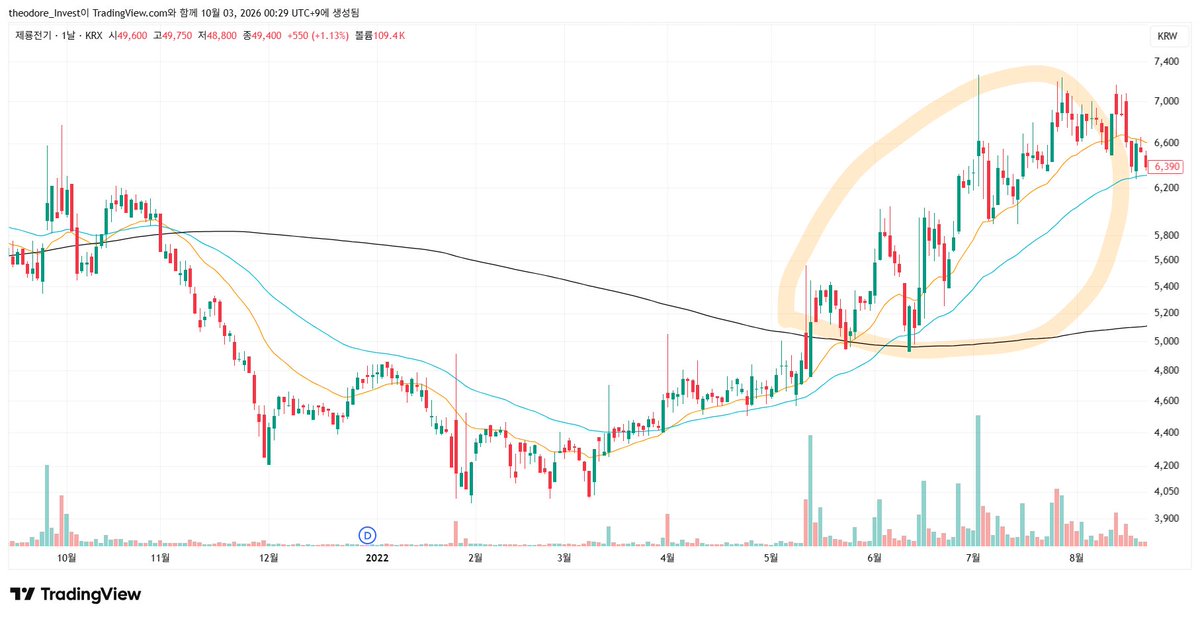
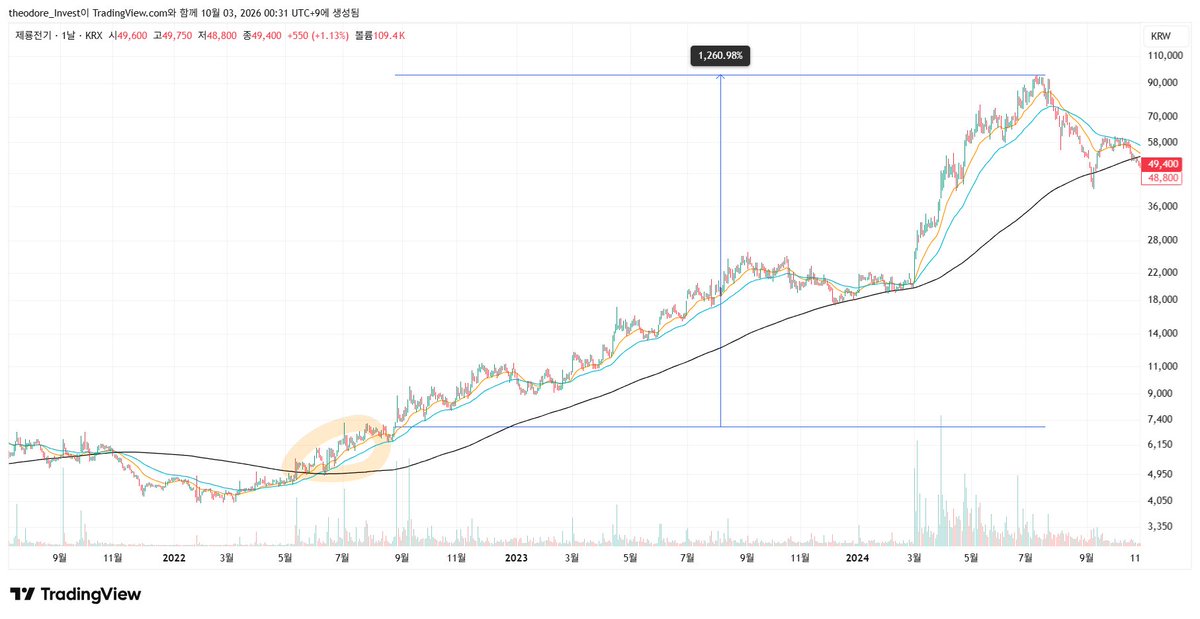
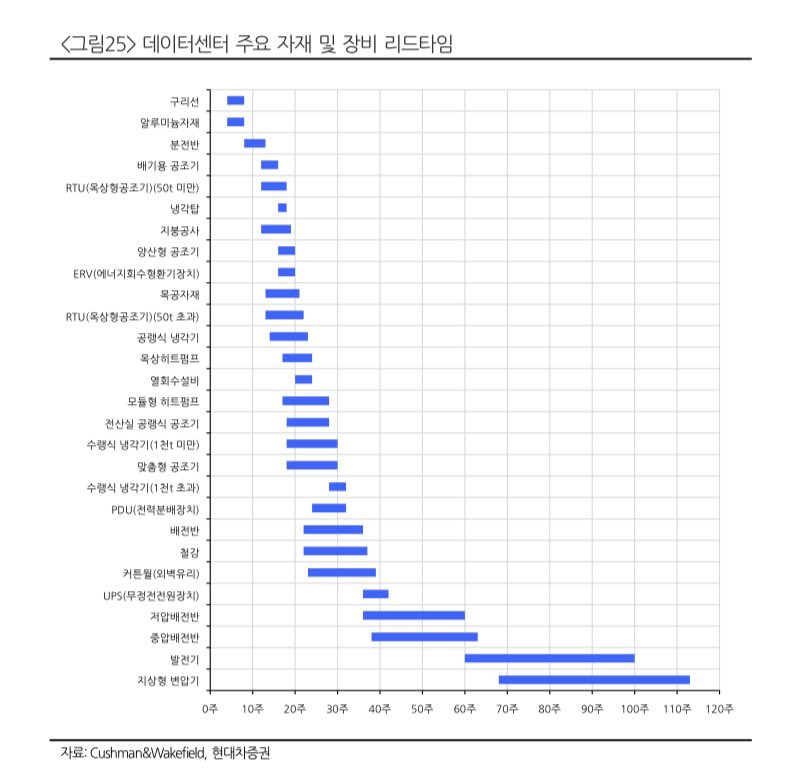
이 패턴은 국장에서 종종 나오는데, 미너비니식 VCP는 엄밀히 말하자면 아니지만 기관의 수급이 지속적으로 발생하고 있을 때 등장하는 패턴입니다.
양봉이 크고 거래량이 많으며, 음봉이 작고 거래량이 적습니다.
비슷한 패턴으로 제룡전기가 이랬던 적이 있는데 형광친 곳을 보면 딱 보이실겁니다.
그 이후로 변압기 슈퍼사이클에 탑승하면서 실적이 퀀텀점프를 하기 시작했고, 10배거 달성했었습니다.
산일전기가 그렇게 된다는 이야기는 아니지만, 스마트머니가 들어오고 있다고 판단할 때에 유용한 정보가 될 겁니다.
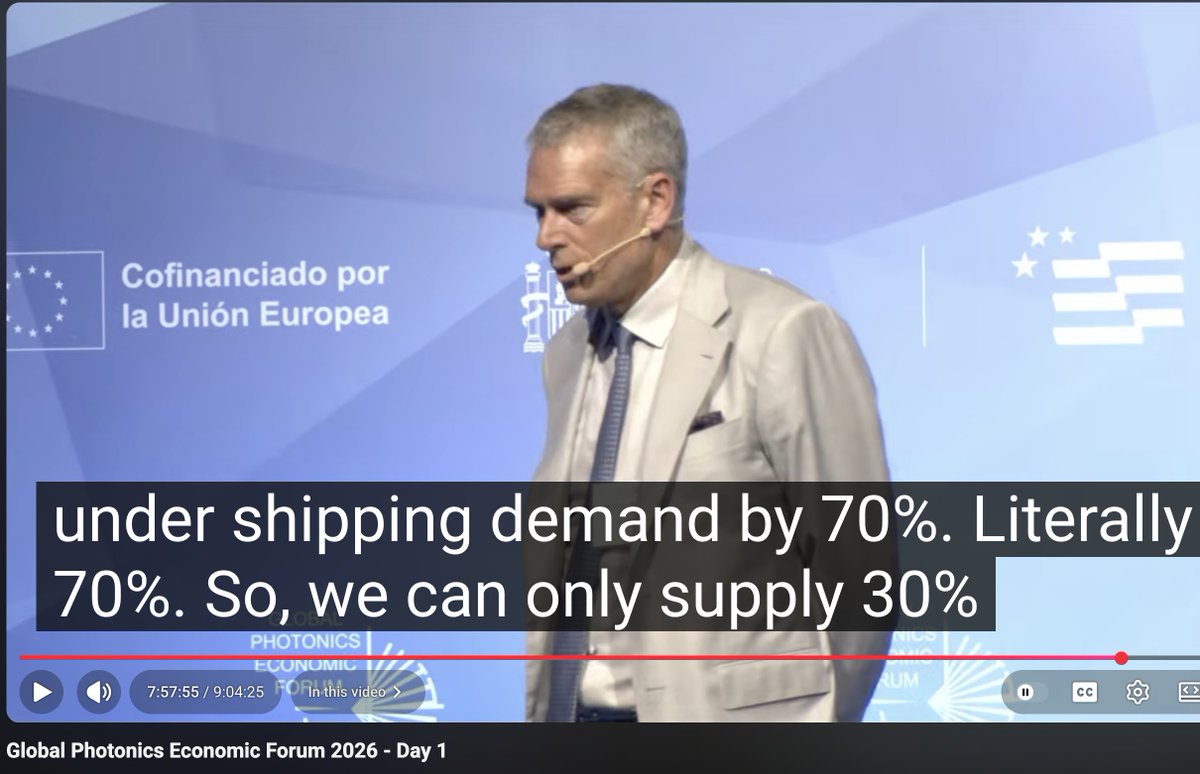
$LITE CEO: "Next year with the advent of CPO and NPO in 2027, our estimates are that we'll be undershipping demand...
By 70%. Literally 70%. So we can only supply 30%.
And this has caught us by supply. By 2029-2030, we get to some level of balance."
Source: Global Photonics Economic Forum Day 1 (7:57:15 - 7:58:00)
Any other players with laser capacity coming online are probably going to get more market attention soon.
Researchers showed that AI models can now have babies..
They built an algorithm where models compete for resources and mate based on complementary strengths.
It allows artificial intelligence models to "reproduce," mix their weights, and pass traits down to offspring without a single line of gradient descent.
For years, we've trained AI top-down.
This paper turns AI development into literal biology.
Here is how it works:
Instead of starting with massive pre-trained models, the system creates a population of random neural networks.
Then, it applies the rules of nature.
Attraction: The algorithm pairs up models with complementary strengths, essentially matching models based on compatibility.
Crossover (The "Mating" Process): It merges their internal parameters using flexible split-points, blending the "DNA" of two distinct AI networks into a brand-new offspring model.
Competition: Just like in the wild, models compete for survival against a fitness function. The weak ones die off. The strong ones survive and reproduce.
The results are terrifyingly efficient.
By letting models "breed" over generations, the system evolves high-performing neural networks entirely from scratch, preserving critical capabilities without anyone explicitly programming them.
뮤즈(Muse)를 경험한 뒤, 에어비앤비를 전량 매도 $META
메타의 AI 에이전트 앱 ‘뮤즈(Muse)’를 단 10일간 테스트한 후, 중견 주식 분석가이자 에어비앤비 대주주였던 MBI는 에어비앤비 주식을 전량 매도했습니다. AI가 사용자의 선호를 완벽히 읽고 플랫폼을 우회해 더 저렴한 예약을 성사시키는 것을 보았기 때문입니다. 이는 단순한 챗봇을 넘어 ‘능동형 커머스(Proactive Commerce)’ 시대가 열렸음을 시사합니다.
1. AI 에이전트가 에어비앤비를 흔드는 이유
개인화된 취향 분석: 뮤즈는 사용자의 과거 숙박 기록뿐만 아니라 인스타그램 릴스 저장 목록까지 분석해 완벽하게 개인 맞춤형 숙소를 추천합니다.
플랫폼 우회 및 비용 절감: 에어비앤비를 거치지 않고 직접 예약하여 가격을 60%까지 낮출 수 있는 대안을 1분 만에 제시합니다.
‘독점 공급’과 ‘신뢰’의 장벽 붕괴: AI가 진짜 리뷰를 분석해 신뢰를 구축하고, 호스트가 AI를 통해 여러 플랫폼에 동시에 매물을 관리할 수 있게 되면서 기존의 해자가 무너집니다.
2. 플랫폼 거인들의 명암: 에어비앤비 vs 부킹, 아마존
에어비앤비의 위기: 매출의 90%를 차지하는 ‘자연 직접 유입’ 트래픽이 AI 시대를 맞아 급감할 위험이 높으며, 높은 밸류에이션(30배)으로 인해 타격이 큽니다.
부킹닷컴의 방어력: 강력한 충성도 프로그램(적립, 무료 업그레이드)과 상대적으로 낮은 밸류에이션(EBITDA 10~11배) 덕분에 비교적 충격을 흡수할 여지가 있습니다.
아마존 광고 모델의 타격: 검색 상위 노출에 비용을 지불하는 760억 달러 규모의 광고 사업이, ‘절대적 가성비’를 찾아주는 합리적인 AI 에이전트에 의해 위협받고 있습니다.
3. 로컬 서비스(우버·도어다시)의 생존 전망
도어다시의 상대적 안전성: 충동적 소비가 많고, 플랫폼 외에도 오프라인 배달원(라이더)이라는 물리적 네트워크 마찰력이 존재해 단기적으로는 방어력이 있습니다.
우버(모빌리티)의 높은 위험성: 자율주행(Waymo 등)의 진입과 AI 기반의 실시간 가격 비교 기능으로 인해 플랫폼 충성도가 거의 사라지고 극심한 가격 경쟁에 직면할 것입니다.
4. '능동형 커머스(Proactive Commerce)' 시대의 개막
24시간 백그라운드 작동: 사용자가 먼�� 검색하고 지시하지 않아도, AI가 알아서 이메일이나 예약을 모니터링하다가 더 저렴한 가격을 찾아 자동 변경을 제안합니다.
통행세 비즈니스의 종말: 정보 비대칭과 트래픽 독점력에 기생하여 높은 수수료를 챙기던 전통적인 인터넷 플랫폼들의 비즈니스 모델이 근본적으로 흔들리고 있습니다.