@arthur_spirling@asdurso@DrDRMiller@keithschnak These studies come at it from a different perspective: leaving Facebook entirely versus just manipulating people's feeds.
But I think it's still fair to say these these are still looking at individual-level effects, not societal or global level effects.
@arthur_spirling@asdurso@DrDRMiller@keithschnak There was one in the US: https://t.co/9t9OVQsdRg
Bosnia-Herzegovina:
https://t.co/YaAuiGbPvE
Cyprus:
https://t.co/xoHATwRVs8
And I was part of a team that did one in France last year:
https://t.co/64jYv7WRBa
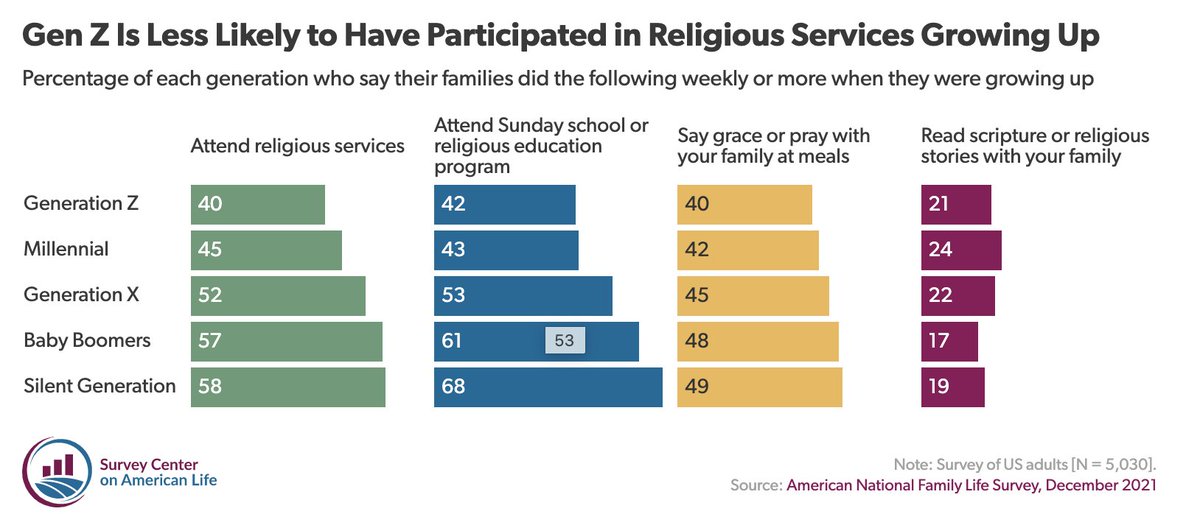
@profmusgrave@arthur_spirling The big gap between Gen X (i.e, my gen) and younger generations is in whether they ever attended Sunday School. https://t.co/U9kQyc8l2W
@profmusgrave@arthur_spirling Looks like the Boomer/Gen X divide doesn't really stand out in these data on attendance or prayer. It's more a steady decline by generation.
Still I think the point holds that the difference you are seeing is people who didn't even grow up practicing. https://t.co/2Hb6ultIii
@profmusgrave I'm glad you got something out of that! I am a big fan or Becker's writing but you always wonder if students will see it as too "meta." That was when I taught a PhD seminar that was an overview of research design. We had a really great group the year you were in that class!
@b_schaffner@JeffreyMBerry@sobieraj@TuftsUniversity@TuftsPoliSci You can't see it in this picture, but I'm wearing a brown and blue shirt/jacket combo.
I was given 5 minutes to talk and took about 10-15. I could have gone on for a few hours about how awesome Jeff is.
@pamela_herd @besttrousers Would Medicare or Obamacare have been re-passed if they were originally temporary programs that expired in, for instance, 1967 and 2011, respectively? Probably not.
@pamela_herd @besttrousers I think the convincing version of the policy-feedback claim that some social welfare policies are hard to repeal would say that both 1) an increase in public support, and 2) repeal requiring new government action are necessary conditions.
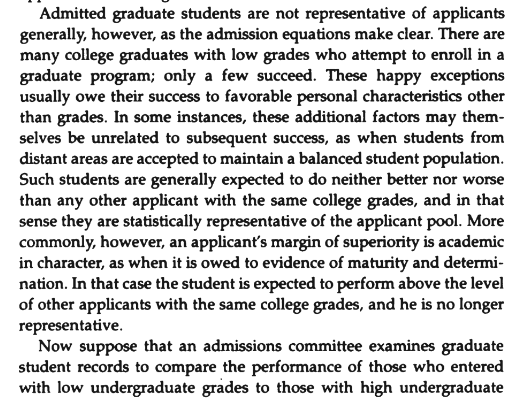
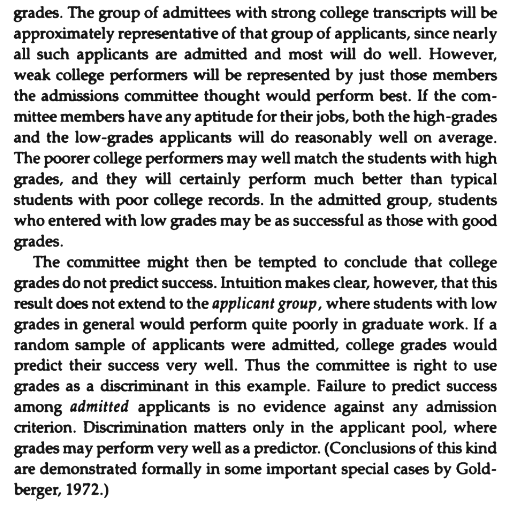
@namalhotra Yes, it's hard to explain. I actually like Achen's (1986) explanation, as applied to basically this set-up (the relationship between undergrad grades and grad school grades). But he's an unusually clear writer.
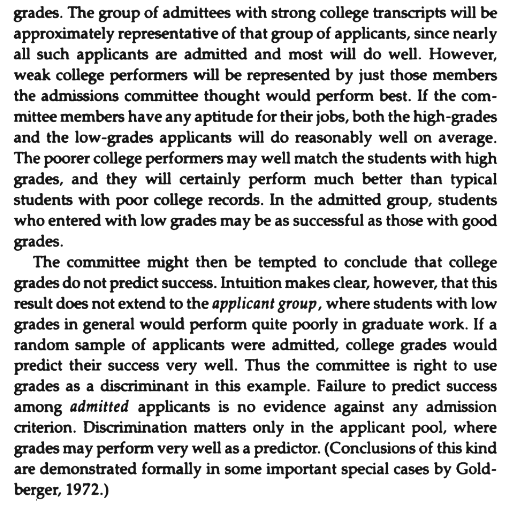
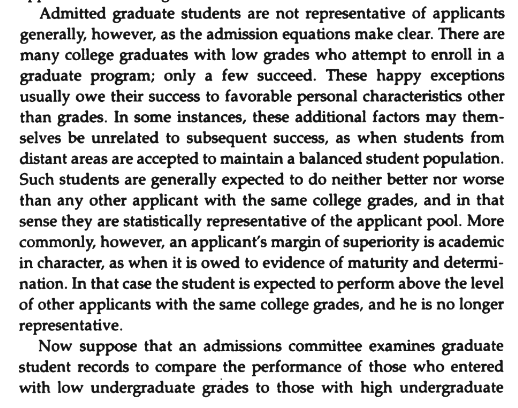
@sanford_gordon @gregsasso Achen (1986) on why you can't use the relationship between undergad grades and grad school grades as evidence of the effect of the former on the latter. The same logic applies to admissions test scores and grades among admitted students.
@sanford_gordon @gregsasso I'm not advocating for or against admissions tests, necessarily. There might be other evidence to consider. But there is just no convincing evidence either way that can come from research designs like this. This has been in our textbooks for decades. People should know better.
@emilythorson Indeed. All true. And the simple act of drawing correct conclusions from lots of research is hard, whether you are writing for an academic or broad audience.