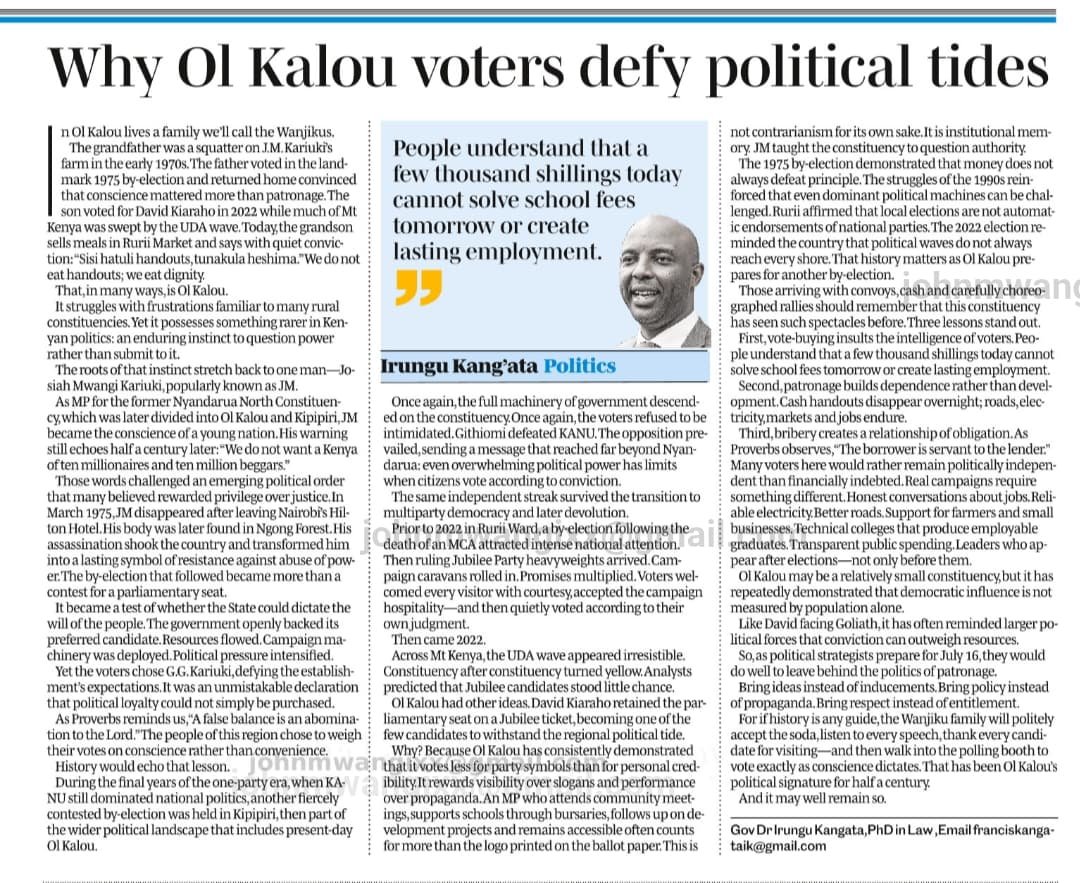
Populist nonsense that we have said we will not tolerate again in this country. We want to see you do your job as a legislator, this is just UDA behaviour in another outfit.
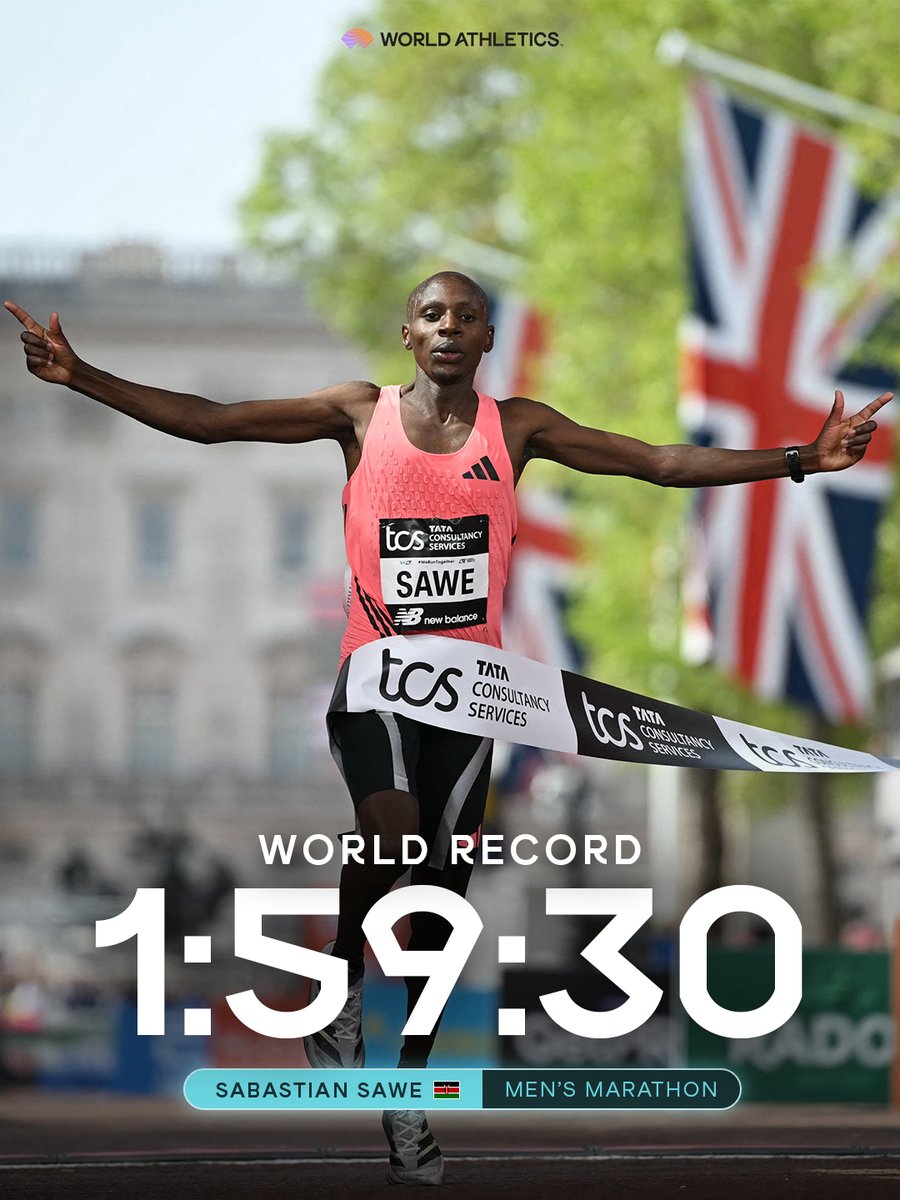
HISTORY HAS BEEN MADE 🫨
Sabastian Sawe becomes the first person ever to break the 2-hour barrier in official race conditions, storming to a historic 1:59:30‼️
@KejelchaYomif, on his marathon debut, also breaks 2 hours with a stunning 1:59:41 and @jacobkiplimo2 clocks 2:00:28, also faster than the previous world record 😤
When a MAN falls, don't celebrate.
Don't mock their struggles.
Sit. Pause. Learn.
Men learn through other men's experiences. Wins and losses are vital lessons.
Listen. Learn. Live.
"Erling was was amazing today!"
Bernardo Silva and Erling Haaland react to their huge victory over Arsenal and where that leaves them in the title race 🤝
In 2002, I bought my Safaricom line.
Ksh 2499.
I still use it.
It came in a metallic tin, with a booklet (a user manual), and a template for the SIM card.
It was preset on the Taifa Tariff.
Ksh 36 per minute billing during peak, and Ksh 27 per minute billing during off-peak.
Per-minute billing means that even if you talk for 32 seconds, you will be charged the per-minute rate.
At that time, KENCELL (later CELTEL, then ZAIN and now AIRTEL) was everyone's favourite carrier.
Safaricom was struggling to attract subscribers due to KENCELL's awkward commercials that portrayed Safaricom's network as sluggish and chaotic.
But, 2 months later, Safaricom reduced the price of its SIM cards to Ksh 99.
I almost went mad after spending KSH 2499 just two months earlier.
There were massive lines in Safaricom shops in Nairobi and Nakuru.
Nakuru, Kenyatta Avenue, next to Merica Hotel, was impassable for 1 week. There was a Safaricom shop there, and later a Samchi Telecom shop.
A lot of people had bought phones and kept them at home, especially Motorola T190 and Siemens C35, because they couldn't afford SIM cards or the cost of making calls.
A Motorola T190 was selling at KSH 17,999.
A Siemens C35 was selling at 11,499.
Safaricom immediately began selling locked mobile phones that could be used only with Safaricom SIM cards.
Later that year, Kibaki was overwhelmingly elected president, and his regime liberalised the telecommunications industry, and we began advancing in telecommunications technology.
We have come from far!