The Wooden Library paperback will be published on 11th September. This is Ikmen book no 27. To celebrate this milestone I am giving away 2 copies of the book. In order to get your hands on one RT and follow. Winners announced Wednesday 10 September.
Ancient Roman basilica uncovered in the City of London!
It was the size of St Paul's Cathedral and was destroyed by Rome as punishment for London supporting the rogue emperor Carausius.
https://t.co/0LfMttdCQR
We’re in #Pompeii this morning with @pompei79 and @GZuchtriegel where a spectacular once in a century discovery has been unveiled https://t.co/MWBNWt9NFe
The City of Saints
Delhi gets a bad reputation amongst travellers, who tend to see it as a grotty urban jungle.
But Delhi is also one of those handful of cities, along with Rome, Cairo and Istanbul, that is just infinite in the layers of architecture, history and culture.
'India was the epicentre of the ancient world.' William Dalrymple sat down with @ayocaesar to talk about the origins of algebra, Indian gems in Anglo-Saxon Britain and why Genghis Khan was scared of India.
Watch the full Downstream episode: https://t.co/O6TKBi2SgX
The discovery of a cave full of manuscripts on the edge of the Gobi Desert reveals the details of everyday life on the #SilkRoad.
🔓 If you're enjoying @DalrympleWill’s new book, you might enjoy this article from the archive
https://t.co/vM5wIITarT
Getting things for lunch. Let me show you around my Arabic supermarket. This is my favourite cuisine in the world, so I have tonnes to recommend for you! Let’s go!
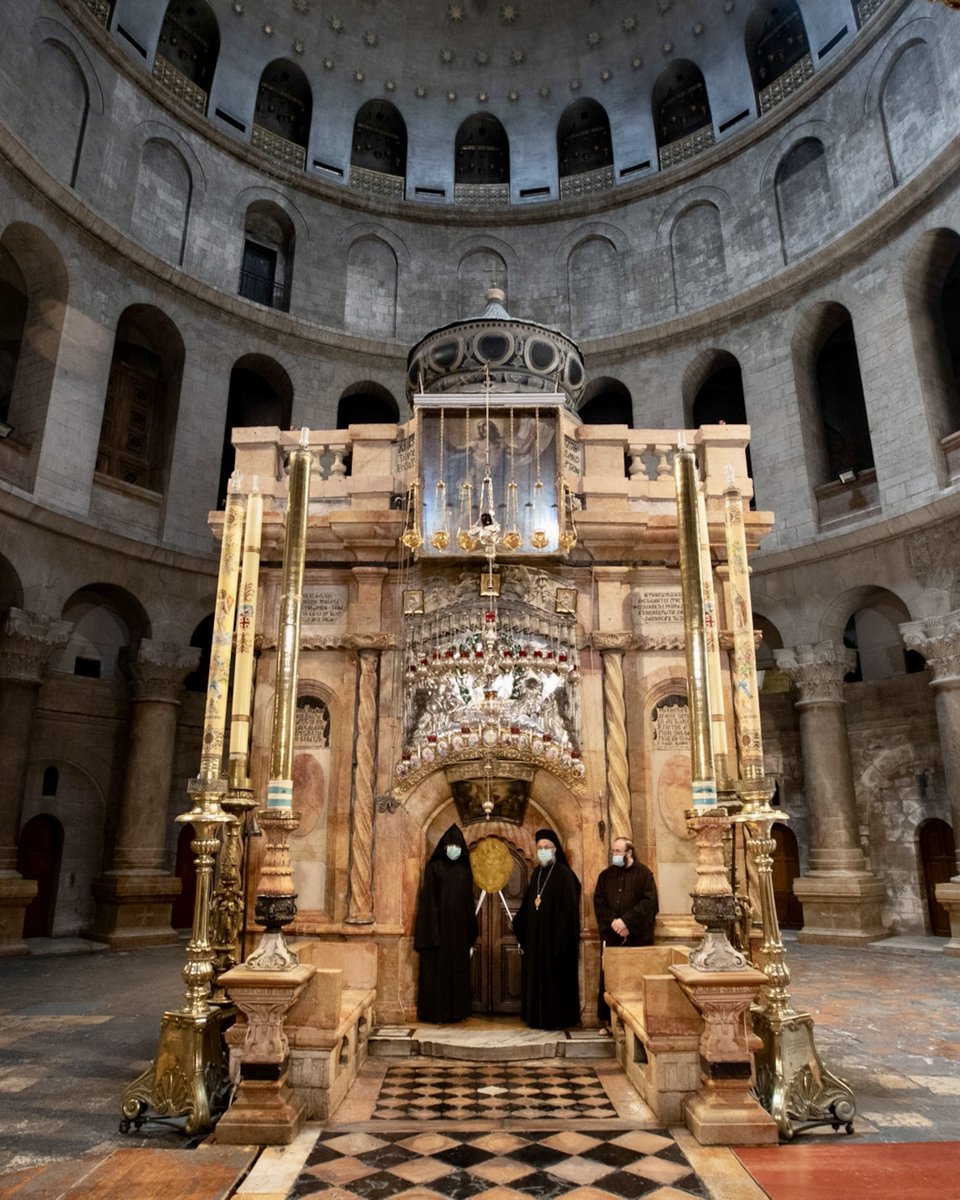
This is where Jesus is said to have been buried — and then resurrected.
But is it the real tomb? How do we know?
Well, in 2016 it was opened for the first time in centuries... (thread) 🧵
Ramadan Mubarak!
Ramadan, the month of fasting, begins today. We would therefore like to wish all Muslims who are celebrating a happy Ramadan! #RamadanMubarak
I dag presenterade regeringen den nya utrikeshandelsstrategin.
Strategin fokuserar på stärkt svensk konkurrenskraft, handel och investeringar.
Läs mer:⬇️ https://t.co/axvHxZ5lqY
I dag presenterade regeringen den nya strategin för Sveriges utrikeshandel, investeringar och globala konkurrenskraft.
@JohanForssell lyfte bland annat vikten av Sveriges roll som partner i den gröna och digitala omställningen.
Se hela pressträffen: https://t.co/2RrcxJzArH
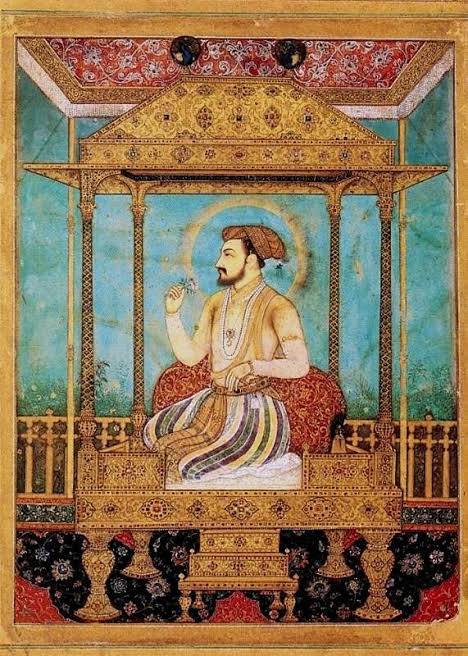
Peacock Throne - the symbol of 'Royalty' :
Peacock Throne, also known as Mayura Throne, was throne of Emperors or Padshahs, of Mughal Empire of India. It was located in Red Fort of Delhi, India; imperial capital of Mughal Empire. Over the centuries, many different Mughal emperors ruled their vast lands from throne.
Peacock Throne was a wonder to behold, a gilded platform, canopied in silk and encrusted in precious jewels. Built in 17th Century CE, for Mughal Emperor Shah Jahan (1592-1666 CE). Although the piece only lasted for a short while, its legacy lives on as one of most ornate and highly sought after pieces of royal property in region's history. A relic of Mughal Golden Age, piece was originally lost and recommissioned before being destroyed forever by rival dynasties and empires.
When Shah Jahan ruled the Mughal Empire (1628-1658 CE), it was at height of its Golden Age, a period of great prosperity and civil accord amongst Empire's people, covering most of India. Recently, capital had been re-established in Shahjahanabad in ornately decorated Red Fort, where Jahan held many decadent feasts and religious festivals. Red Fort, which served as core of Mughal government. Inside Red Fort was a chamber called Diwan-i-Khas or Hall of Private Audiences. There, emperor received guests and ambassadors. The focal point of the hall was the Peacock Throne, throne was completed earlier in reign of Shah Jahan after many years of work. It was inaugurated in 1635 CE, before beginning of construction of Shahjahanabad. Nevertheless, Peacock Throne was most important site in new imperial capital, as it symbolized Mughal Emperor's authority. However, emperor knew that in order to be, as Solomon had been, "Shadow of God" or arbiter of God's will on earth, he needed to have a throne like his.
Emperor Shah Jahan commissioned a jewel-encrusted gold throne to be built on a pedestal in courtroom, where he could then be seated above crowd, closer to God. Among hundreds of rubies, emeralds, pearls, and other jewels embedded in Peacock Throne was famed 186-carat Koh-i-Noor diamond, which was later taken by the British. Shah Jahan, his son Aurangzeb and later Mughal rulers of India sat on glorious seat until 1739 CE, when Nader Shah of Persia sacked Delhi and stole Peacock Throne.
Unfortunately, throne was destroyed before advent of modern photography, there are no photographs of Peacock Throne. However, many artists sketched throne during its existence. Furthermore, historians such as Abdul Hamid Lahori, Inayat Khan and Francois Bernier described the throne.
In 1747 CE, Nader Shah's bodyguards assassinated him, and Persia descended into chaos. Peacock Throne ended up being chopped to pieces for its gold and jewels, and used for Persian crown. Conceivably, it could have been split apart and sold or used for Iran's Sun Throne. Although, original was lost to history, some antiquities experts believe that legs of Qajar Throne (1836 CE), which was also called Peacock Throne, might have been taken from Mughal original. The 20th century Pahlavi dynasty in Iran also called their ceremonial seat "Peacock Throne," continuing this pillaged tradition.
Several other ornate thrones may have also been inspired by this extravagant piece, most notably the overexaggerated version King Ludwig II of Bavaria had made some time before 1870 CE, for his Moorish Kiosk in Linderhof Palace.
Metropolitan Museum of Art in New York City is said to also have potentially discovered a marble leg from pedestal of original throne. Similarly, Victoria and Albert Museum in London said to have discovered same years later.
However, neither of these have been confirmed. Indeed, glorious Peacock Throne may have been lost to all of history forever, all for want of power and control of India at turn of 18th-19th Centuries CE.
📷 : A 17th Century CE, Mughal Miniature Painting, depicts Emperor Shah Jahan on Peacock Throne.
#archaeohistories
My Books of the Year @spectator
"The Tree & Serpent exhibition at the Metropolitan Museum, New York was the year’s cultural highlight for me, along with its gorgeous accompanying catalogue by John Guy: Tree & Serpent: Early Buddhist Art in India (Metropolitan Museum of Art, £50). The art of southern India that the exhibition showcased opened a window on a sophisticated courtly and monastic world previously known only to a handful of historians. It was a world where bare-chested rajas in elaborate turbans and cockades set off on elephant-back pilgrimages as casually as we might jump in a taxi; and one of ecstatic devotion, where a glimpse of the Buddha’s relics could drive a palace full of dignified courtiers into the ancient Indian equivalent of weeping Beatlemania. All this was set in a sacred landscape where the jungles were alive with wonders: lotus buds that spilled priceless jewels with the abundance of magical cornucopias; and eagle-beaked gryphons and many-headed cobras that competed to protect the turban of the Buddha or the dust of his disciples.
Empire-building is usually envisaged as the concern of nation states, but as Philip J. Stern convincingly shows in Empire, Incorporated (Belknap, £30.95), his brilliant, ambitious and often surprising new study, it was initially more often the entirely privatised business of Tudor commercial corporations. With clarity and remarkable archival reach, Stern convincingly argues that it was joint-stock ‘venture colonialism’ that financed and drove the earliest attempts at establishing colonies from Ulster to Spitsbergen, Virginia to ‘Cathay’, and even a Puritan republic of the Bahamas, as ruthless and often violent slavers, privateers and merchant adventures sailed off to establish outposts that blurred the line between commerce and conquest. It was these trading posts, Stern argues, that eventually grew to be the ‘cornerstone of a British Empire’, made up of charters, concessions and contracts that were ‘never fully owned or operated by Britain itself’. Empire, Incorporated is a remarkable contribution to the current global debate about empire and a small masterpiece of research.
Born in Bengal, Nandini Das is a professor of Early Modern English Literature at Oxford and is as sure-footed and knowledgeable about the politics and arts of Jacobean London as she is about those of the Mughal court. As she puts it in her remarkable book about Sir Thomas Roe’s 1616 embassy to Jahangir, Courting India (Bloomsbury, £30) ‘in practical terms, Roe’s embassy achieved very little. To the Mughals, the English were hardly worth a mention.’ The embassy may have been a failure, but Das’s superb book about it is a triumph of writing and scholarship.
Finally, I loved Lloyd Llewellyn-Jones’s Persians: The Age of the Great Kings (Headline, £12.99) and Ancient Persia and the Book of Esther (I.B. Tauris £24.99). At a time when relations between Iran and Israel have never been worse, it is good to remember that Persians and Jews were once peacefully and productively intertwined in a single cultural world and that a book of the Old Testament provides one of our best sources for ancient Persian court culture."
https://t.co/1L58YM2wRm