@IceHash710@jonnyken Acho uma excelente ideia, mas acho que vai ser um problema a quantidade de acidentes na marginal da galera parando pra ver os pandas kkkkkkkkk
@formulalau Foi indescritível o que aconteceu naquele 1 de maio
Você saia na rua e estava vazio, tava todo mundo dentro de casa esperando uma noticia
E depois quando veio a notícia triste não tinha ninguém, absolutamente ninguém que não estava com um semblante péssimo e isso durou muito
@UFPR preciso de ajuda para entender uma mudança que vocês fizeram em janeiro para demonstrar interesse na lista de espera.
Basicamente fizemos o interesse no site da sisu todos os meses mas parece deveria ter feito na UFPR
Consiguem indicar algum contato pra me ajudar?
Matematicamente insustentável
1 Presidente da República
1 Vice-presidente da República
1 Presidente Câmara federal
1 Presidente Senado Federal
11 ministros do STF
81 Senadores
513 Deputados federais
27 Governadores
27 Vice-Governadores
27 Câmaras estaduais
1.049 Deputados estaduais
5.568 Prefeitos
5.568 Vice-prefeitos
5.568 Câmaras municipais
57.931 Vereadores
Total: 70.794 políticos (não estamos falando de nenhum partido de forma específica) + 11 do STF ("políticos" também).
12.825 - Assessores parlamentares Câmara Federal (sem concurso)
4.455 - Assessores parlamentares Senado (sem concurso)
27.000 – Assessores parlamentares Câmaras Estaduais (sem concurso – estimado/por falta de transparência)
600.000 – Assessores parlamentares Câmaras Municipais (sem concurso – estimado/por falta de transparência)
Total Geral: 715.074 funcionários não concursados
Gasto
248 mil por minuto;
14,9 milhões por hora;
357,5 milhões por dia;
10,7 bilhões por mês;
Gasto Total: acima de 128 BILHÕES por ano + 6 BILHÕES do FUNDO PARTIDÁRIO para 2023. Além disso, deve-se computar o rombo na previdência social com suas aposentadorias alienígenas.
35 Partidos registrados no TSE + 73 partidos em formação.
As perguntas cabíveis diante dessa situação são as seguintes:
Será que a reforma da Previdência é a única prioridade nacional?
- Como é que nós deixamos chegar a esse ponto?
- E até quando?
Olha a inflação de 1.75 do governo .
Fonte: Banco Mundial
"O Brasil tem a maior carga tributária do mundo, para pagar a
MAIOR CORRUPÇÃO DO MUNDO"
Tributos no Brasil - uma vergonha!!!
Medicamentos 36%
Luz. 45,81%
Telefone 47,87%
Gasolina 57,03%
Cigarro 81,68%
PRODUTOS ALIMENTÍCIOS BÁSICOS
Carne bovina 18,63%
Frango 17,91%
Peixe 18,02%
Sal 29,48%
Trigo 34,47%
Arroz 18,00%
Óleo de soja 37,18%
Farinha 34,47%
Feijão 18,00%
Açúcar 40,40%
Leite 33,63%
Café 36,52%
Macarrão 35,20%
Margarina 37,18%
Molho tomate 36,66%
Biscoito 38,50%
Chocolate 32,00%
Ovos 21,79%
Frutas 22,98%
Álcool 43,28%
Detergente 40,50%
Sabão em pó 42,27%
Desinfetante 37,84%
Água sanitária 37,84%
Esponja de aço 44,35%
PRODUTOS BÁSICOS DE HIGIENE
Sabonete 42%
Xampu 52,35%
Condicionador 47,01%
Desodorante 47,25%
Papel Higiênico 40,50%
Pasta de Dente 42,00%
MATERIAL ESCOLAR
Caneta 48,69%
Lápis 36,19%
Borracha 44,39%
Estojo 41,53%
Pastas plásticas 41,17%
Agenda 44,39%
Papel sulfite 38,97%
Livros 13,18%
Papel 38,97%
BEBIDAS
Refresco em pó 38,32%
Suco 37,84%
Água 45,11%
Cerveja 56,00%
Cachaça 83,07%
Refrigerante 47,00%
Sapatos 37,37%
Roupas 37,84%
Computador 38,00%
Telefone Celular 41,00%
Ventilador 43,16%
Liquidificador 43,64%
Refrigerador 47,06%
Microondas 56,99%
Tijolo 34,23%
Telha 34,47%
Móveis 37,56%
Tinta 45,77%
Casa popular 49,02%
Mensalidade Escolar 37,68% (ISS DE 5%)
*ALÉM DESTES IMPOSTOS, VOCÊ PAGA*
- DE 15% A 27,5% DO SEU SALÁRIO A TÍTULO DE IMPOSTO DE RENDA;
- PAGA O SEU PLANO DE SAÚDE,
- O COLÉGIO DOS SEUS FILHOS,
- IPVA,
- IPTU,
- INSS,
- FGTS
- ETC.
O Brasil precisa de atitude do povo!
Somos 208 milhões de Brasileiros....sendo sacaneados por 600 políticos de Brasília....
- Sem querer cortar seus próprios gastos e exagerados privilégios, o governo repassa o alto custo da sua corrupção e
11 System Design articles you can read over the weekend to boost your interview prep:
[1] How Rate Limiting Works?
https://t.co/aa7ENPVWMd
[2] HTTP/1.1 vs HTTP/2
https://t.co/haS4hywaFS
[3] Database Caching Strategies
https://t.co/oUAmzhh0Ek
[4] Load Balancers (Types, Algorithms, High Availability)
https://t.co/iumQMuUgef
[5] Cookies and Sessions
https://t.co/dzZiXewOp4
[6] Authentication with JWTs
https://t.co/LJgZ4iAtXg
[7] The Secret Trick to High Availability
https://t.co/6I4scK046b
[8] How to Scale a Component?
https://t.co/sL0rr7u4lC
[9] High Availability Database
https://t.co/jxLzWczasf
[10] Microservices Patterns
https://t.co/Fxs4nuHhW3
[11] Problems caused by Database Replication Lag and their possible solutions
https://t.co/leQYSwNERE
Thread of how a tourist can survive in China in 2023.
China doesn’t have Google Maps or Uber. China just has opened the borders, but if you go there, you need to integrate into their digital platforms.
Scaling a database is hard.
One of the ways to do so is Sharding.
However, it is a complex process.
Despite that, big products like Discord, Quora & Notion use Sharding to scale their databases.
What makes it so special?
Let's find out.
✅ What is Sharding?
It's a DB architecture pattern that evolves from horizontal partitioning.
You separate the rows of one table into multiple tables called partitions.
The aim is to reduce the data that needs to be searched for a query.
There are 2 types of sharding:
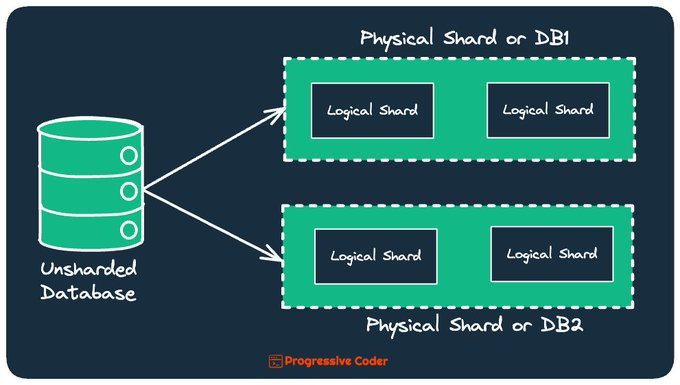
👉 Logical - Horizontal partitions of data sitting on the same DB instance or server.
👉 Physical - Each shard is hosted on a different node or server instance.
One physical shard contains one or more logical shards.
See below:
✅Sharding Strategies
There are also multiple sharding strategies:
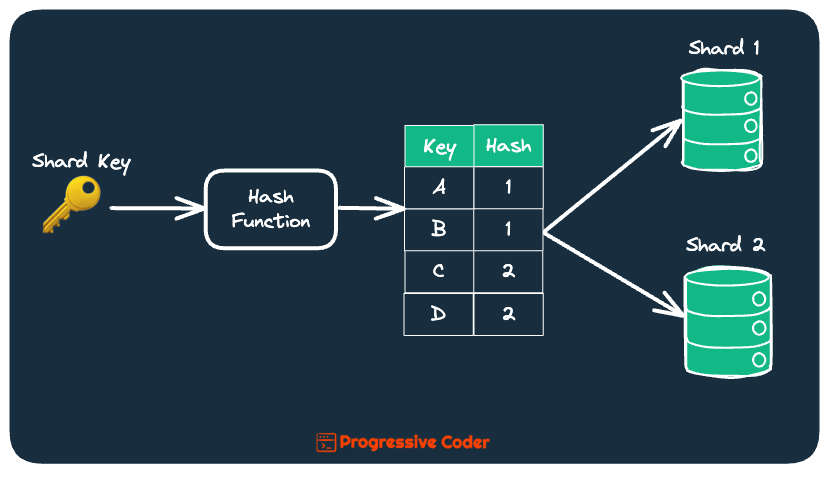
👉 Key or Hash-based Sharding
You partition the data based on a hash function applied to one or more columns in the table.
The hash function can use the primary key or a group of columns
Great choice if the key is monotonically changing and you want even distribution.
Here's what it looks like:
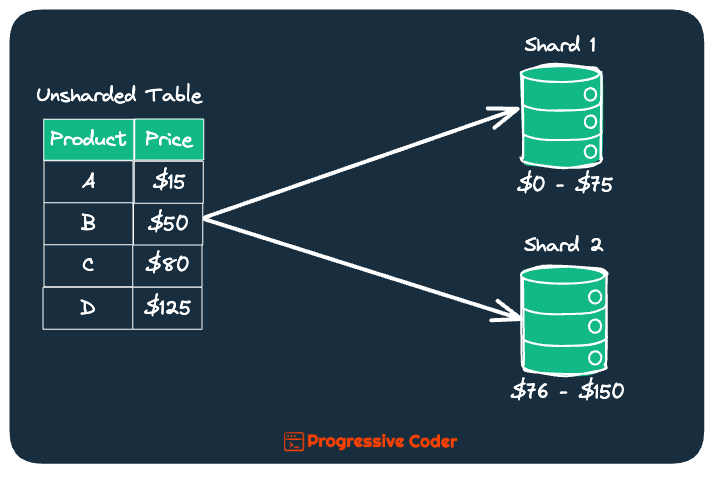
👉 Range-based Sharding
Partitioning is based on a specific range of values in a particular column.
Example - sharding products table based on price band.
Probably the easiest to implement.
Here's what it looks like:
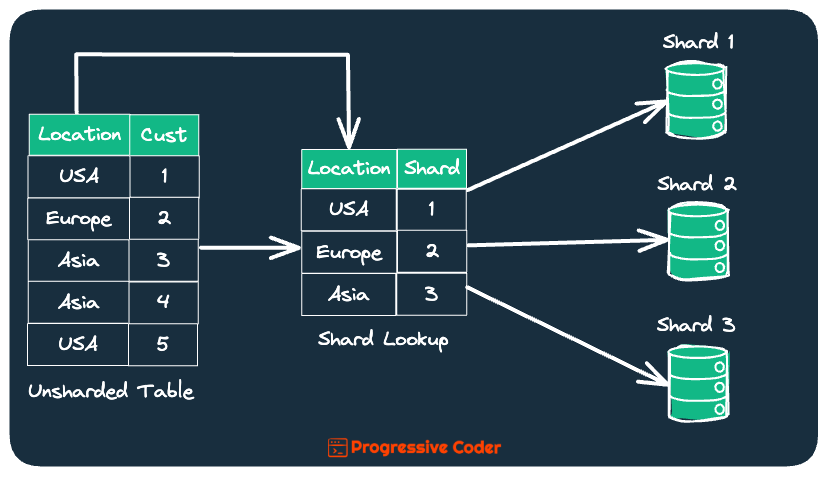
👉 Directory-Based Sharding
Sharding is based on a lookup table.
Think of this table as a directory or address book that tells you which shard contains a particular record.
For example, sharding is based on a field like the location of a customer.
Here's what it looks like👇
✅ Benefits of Sharding
- Helps you achieve horizontal scaling
- Reduces query response times
- Increases the reliability
✅Drawbacks of Sharding
- Increased complexity of data storage
- Shards can get unbalanced over time
- No joining of data across multiple shards.
✅ When to use Sharding?
Sharding is a complex business.
Don't use it as the first option as soon as your application faces scalability issues.
Consider it after you have exhausted other options like indexing, replication, and partitioning.
===
If you enjoyed this explanation of Database Sharding, what are you waiting for?
- Destroy the LIKE button
- REPOST because everyone must know about the various choices
- BOOKMARK for future reference
- Follow me for more stuff like this.
A handy cheat sheet for the most popular cloud services (2023 edition). The method to download the high-resolution PDF is available at the end.
What’s included?
- AWS, Azure, Google Cloud, Oracle Cloud, Alibaba Cloud
- Cloud servers
- Databases
- Message queues and streaming platforms
- Load balancing, DNS routing software
- Security
- Monitoring
Over to you - which company is the best at naming things?
Subscribe to our newsletter to download the 𝐡𝐢𝐠𝐡-𝐫𝐞𝐬𝐨𝐥𝐮𝐭𝐢𝐨𝐧 𝐜𝐡𝐞𝐚𝐭 𝐬𝐡𝐞𝐞𝐭. After signing up, find the download link on the success page: https://t.co/WTardhpI8I
𝗧𝗼𝗽 𝟮𝟬 𝗦𝗤𝗟 𝗾𝘂𝗲𝗿𝘆 𝗼𝗽𝘁𝗶𝗺𝗶𝘇𝗮𝘁𝗶𝗼𝗻 𝘁𝗲𝗰𝗵𝗻𝗶𝗾𝘂𝗲𝘀
Here is the list of the top 20 SQL query optimization techniques I found noteworthy:
1. Create an index on huge tables (>1.000.000) rows
2. Use EXIST() instead of COUNT() to find an element in the table
3. SELECT fields instead of using SELECT *
4. Avoid Subqueries in WHERE Clause
5. Avoid SELECT DISTINCT where possible
6. Use WHERE Clause instead of HAVING
7. Create joins with INNER JOIN (not WHERE)
8. Use LIMIT to sample query results
9. Use UNION ALL instead of UNION wherever possible
10. Use UNION where instead of WHERE ... or ... query.
11. Run your query during off-peak hours
12. Avoid using OR in join queries
14. Choose GROUP BY over window functions
15. Use derived and temporary tables
16. Drop the index before loading bulk data
16. Use materialized views instead of views
17. Avoid != or <> (not equal) operator
18. Minimize the number of subqueries
19. Use INNER join as little as possible when you can get the same output using LEFT/RIGHT join.
20. For retrieving the same dataset, frequently try to use temporary sources.
Do you know what is 𝗤𝘂𝗲𝗿𝘆 𝗢𝗽𝘁𝗶𝗺𝗶𝘇𝗲𝗿? Its primary function is to determine 𝘁𝗵𝗲 𝗺𝗼𝘀𝘁 𝗲𝗳𝗳𝗶𝗰𝗶𝗲𝗻𝘁 𝘄𝗮𝘆 to execute a given SQL query by finding the best execution plan. The query optimizer works by taking the SQL query as input and analyzing it to determine how best to execute it. The first step is to parse the SQL query and create a syntax tree. The optimizer then analyzes the syntax tree to determine how to run the query.
Next, the optimizer generates 𝗮𝗹𝘁𝗲𝗿𝗻𝗮𝘁𝗶𝘃𝗲 𝗲𝘅𝗲𝗰𝘂𝘁𝗶𝗼𝗻 𝗽𝗹𝗮𝗻𝘀, which are different ways of executing the same query. Each execution plan specifies the order in which the tables should be accessed, the join methods, and any filtering or sorting operations. The optimizer then assigns a 𝗰𝗼𝘀𝘁 to each execution plan based on the number of disk reads and the CPU time required to execute the query.
Finally, the optimizer 𝗰𝗵𝗼𝗼𝘀𝗲𝘀 𝘁𝗵𝗲 𝗲𝘅𝗲𝗰𝘂𝘁𝗶𝗼𝗻 𝗽𝗹𝗮𝗻 with the lowest cost as the optimal execution plan for the query. This plan is then used to execute the query.
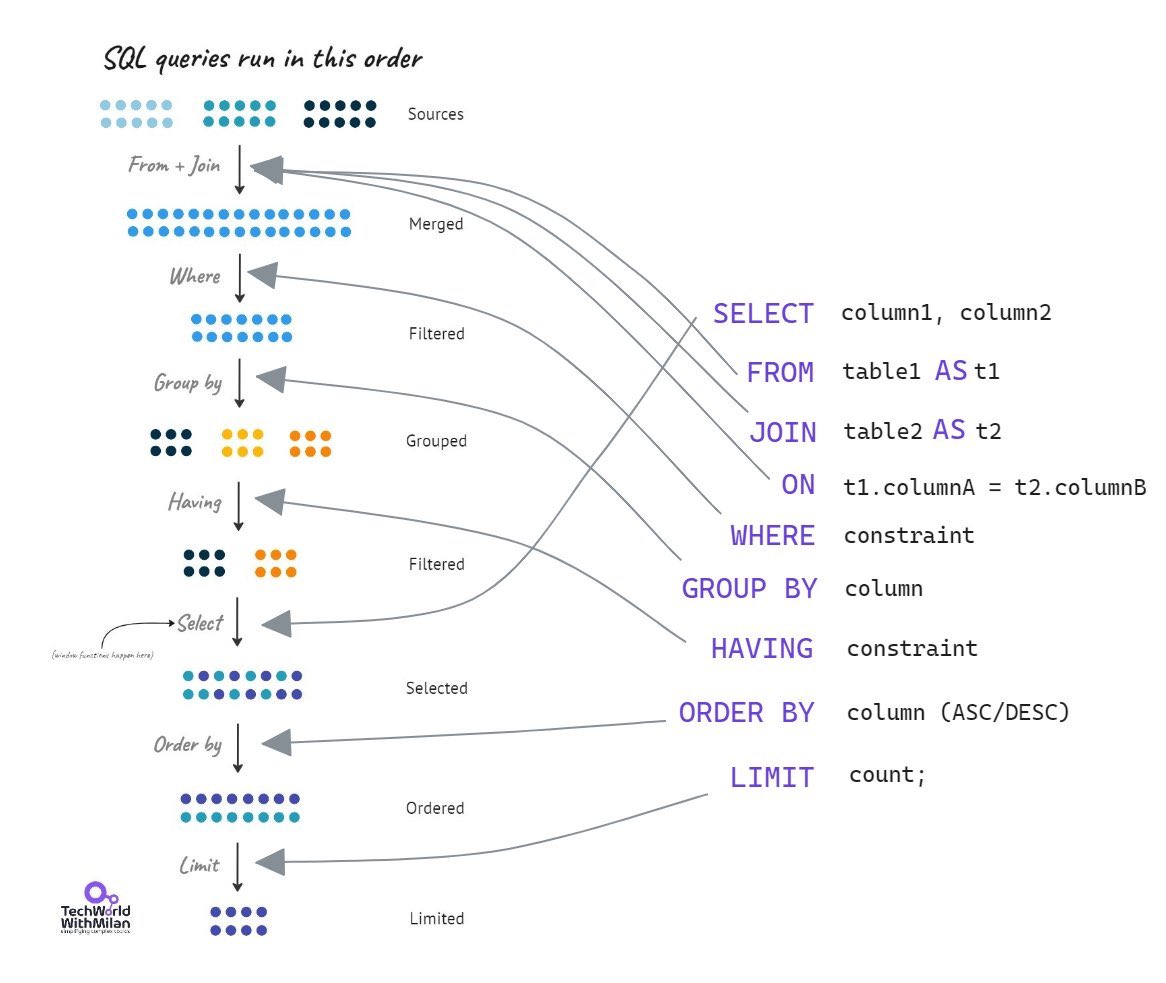
Check in the image the 𝗼𝗿𝗱𝗲𝗿 𝗶𝗻 𝘄𝗵𝗶𝗰𝗵 𝗦𝗤𝗟 𝗾𝘂𝗲𝗿𝗶𝗲𝘀 𝗿𝘂𝗻.
#technology #softwareengineering #programming #techworldwithmilan #sql
Say goodbye to PowerPoint and Google Slides.
They're outdated, complex, and lack automation.
I'll show you how to use AI for free to create beautiful video presentations: