1/
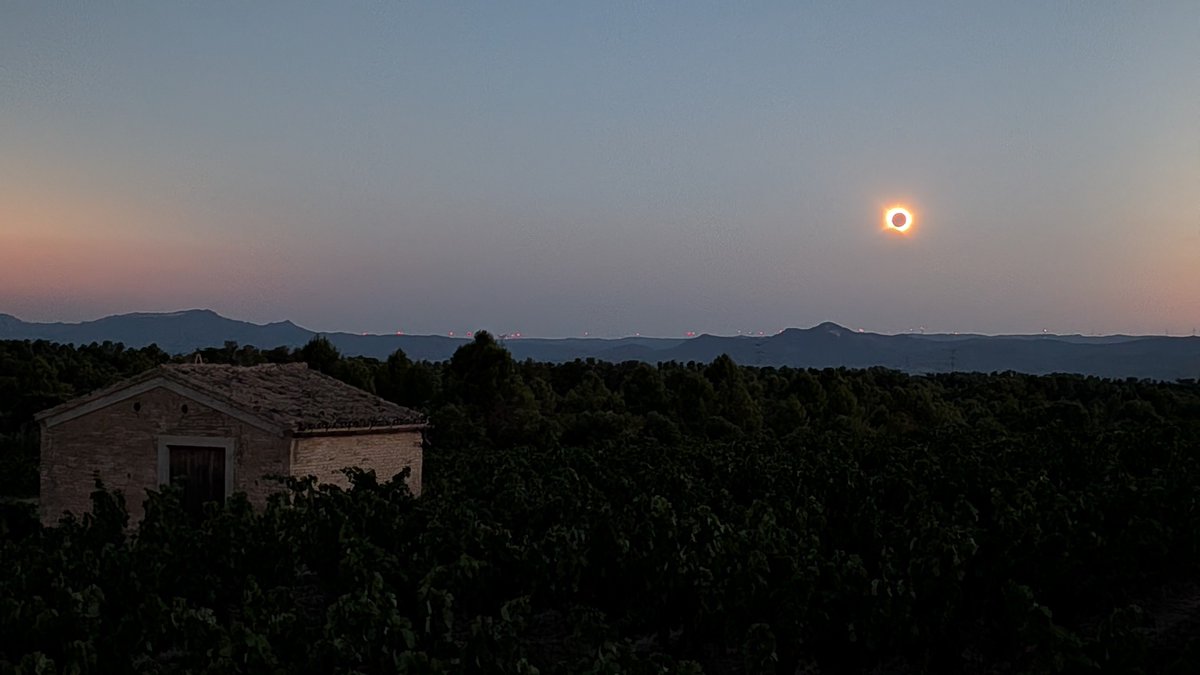
Aquest matí, en algun poble del Penedès, un home de 60 anys ha carregat 3.000 quilos de raïm. Es temps de verema.
Li han ofert 40 cèntims el quilo. Un sou de mileurista per tres mil quilos de raïm que ha tardat un any en conrear, cuidar i veremar.
Produir-los li'n costa 55 cèntims. Perd 15 cèntims per cada quilo on s’hi ha deixat l’esquena.
Aquest fil explica per què. I no us agradarà el final.
🧵
Elon Musk acaba de plantar cara a Brussel·les amb un dit del mig ben clar.
🔴La Unió Europea multa X amb 120 milions d’euros per “falta de transparència” de l’algoritme.
🔴La resposta de Musk? Publicar tot l’algoritme a GitHub, amb actualitzacions cada quatre setmanes. I no només això: farà públiques totes les peticions de censura que arriben dels governs, incloses les de la pròpia Unió Europea, que sembla especialment aficionada a demanar-ne.
La pressió regulatòria de Brussel·les ha acabat generant més transparència de la que mai haurien volgut… només que no en el sentit que imaginaven els burocrates.
Per entendre la importància d’això, cal recordar què feia Twitter abans de la compra d’@elonmusk
Els Twitter Files van demostrar que la plataforma col·laborava en silenci amb l’FBI, el DHS i diverses agències americanes i europees per suprimir contingut sense informar els usuaris ni deixar rastre públic. Shadowbanning, eliminacions de comptes, reducció de visibilitat… tot passava a les fosques.
Ara, en canvi, la llum arriba. I arribarà també a les peticions de censura que arriben des de Brussel·les.
La Unió Europea volia control i en canvi ha acabat obtenint transparència. I això, per als qui creuen en la llibertat d’expressió, és una victòria.
State media control influences large language models
LLMs exhibit a stronger pro-government valence in the languages of countries with lower media freedom than in those with higher media freedom.
The authors come to the troubling conclusion that states and powerful institutions have increased strategic incentives to leverage media control in the hopes of shaping LLM output. https://t.co/PS810S9pdH
1. Je n'ai jamais dit que les LLMs étaient inutiles ou n'avaient pas de valeur commerciale.
2. Mais beaucoup de technologies sont utiles et à haute valeur sans être particulièrement "intelligentes"
3. Les LLMs sont essentiellement inutiles et sans grande valeur pour ce qui est du pilotage de processus industriels ou de compréhension de données continues, de haute dimension, et/ou bruitées.
4. Il y a énormément d'applications de haute valeur dans le pilotage de processus industriels ou de compréhension de données continues, de haute dimension, et/ou bruitées.
5. A long terme, l'intelligence, la compréhension du monde, et la capacité à planifier est ce qui compte vraiment.
"El arte contemporáneo lo hace cualquiera"
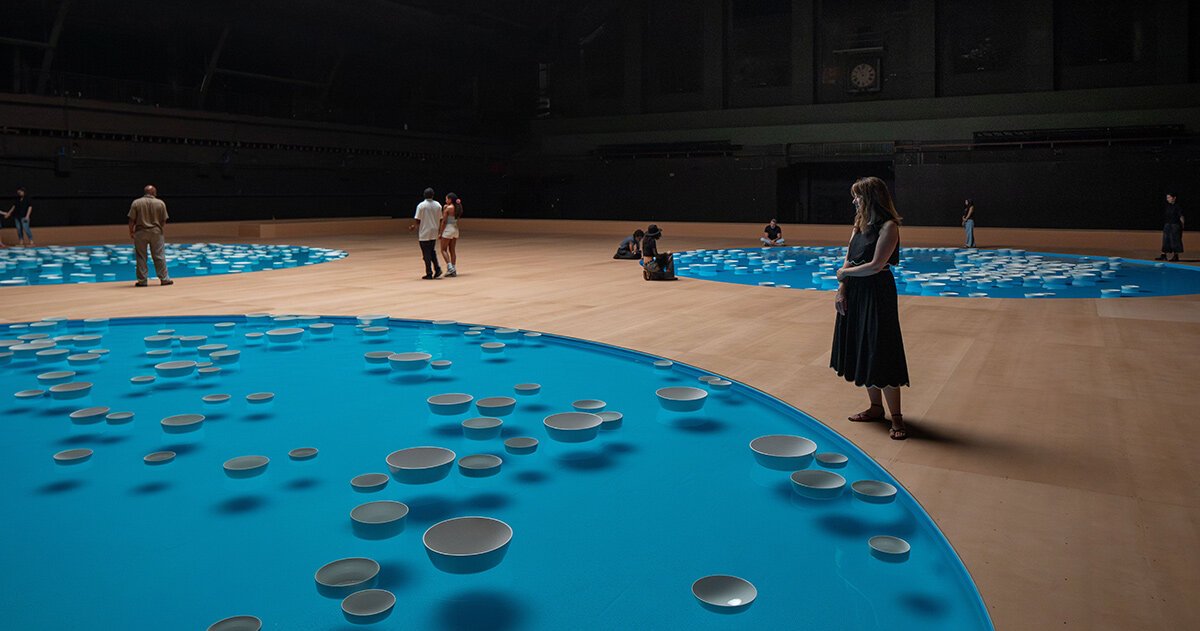
Céleste Boursier-Mougenot: voy a crear una sinfonía de sonido infinito con 113.000 litros de agua y cientos de cuencos de cerámica esmaltada que se mueven y chocan aleatoriamente sin parar.
Hace año y medio. Recuerdo que en una entrevista me preguntaron. ¿Cuánto tiempo crees que tardará la IA en cambiar cómo vivimos? Y respondí de 10 a 15 años.
La reacción fue un poco de estupefacción, porque viniendo de mí seguro que esperaban otra respuesta.
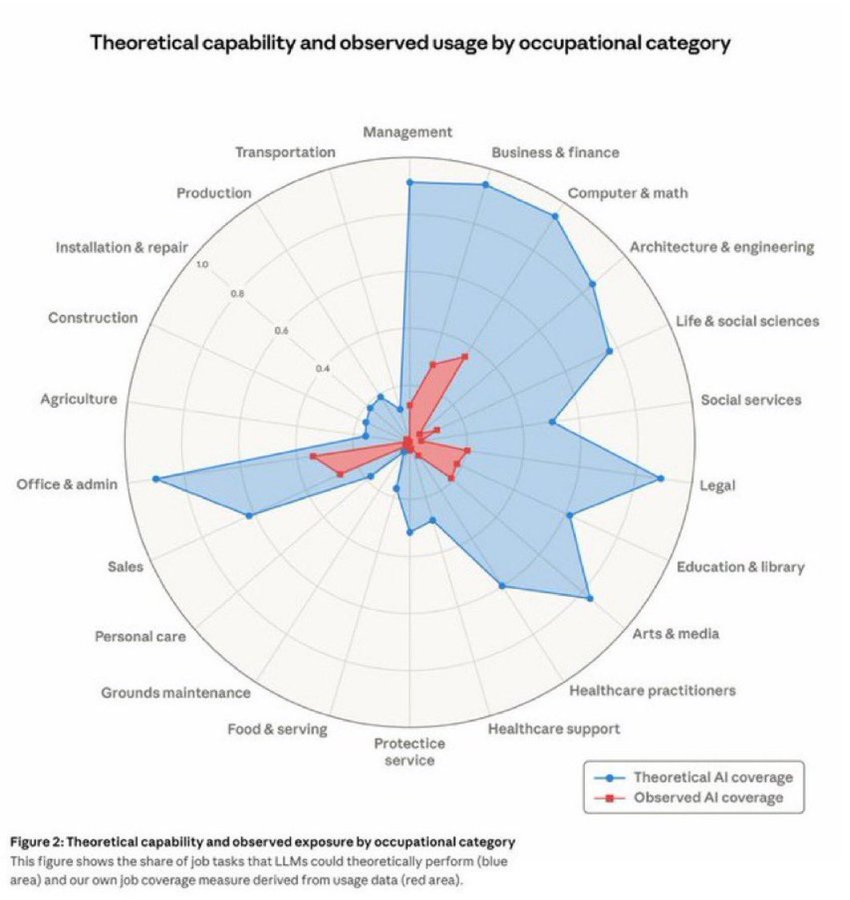
Pero la razón de mi respuesta no radicaba en la tecnología (la IA me parece maravillosa). Mi conclusión se basaba en lo que muestra este gráfico de una publicación de Anthropic.
Las previsiones optimistas siempre se hacen en base a lo que la IA potencialmente puede hacer (área azul), no en cómo realmente se usa (área roja).
Ese proceso de adopción es muchísimo más lento y progresivo.
El cuello de botella hace tiempo que somos nosotros.
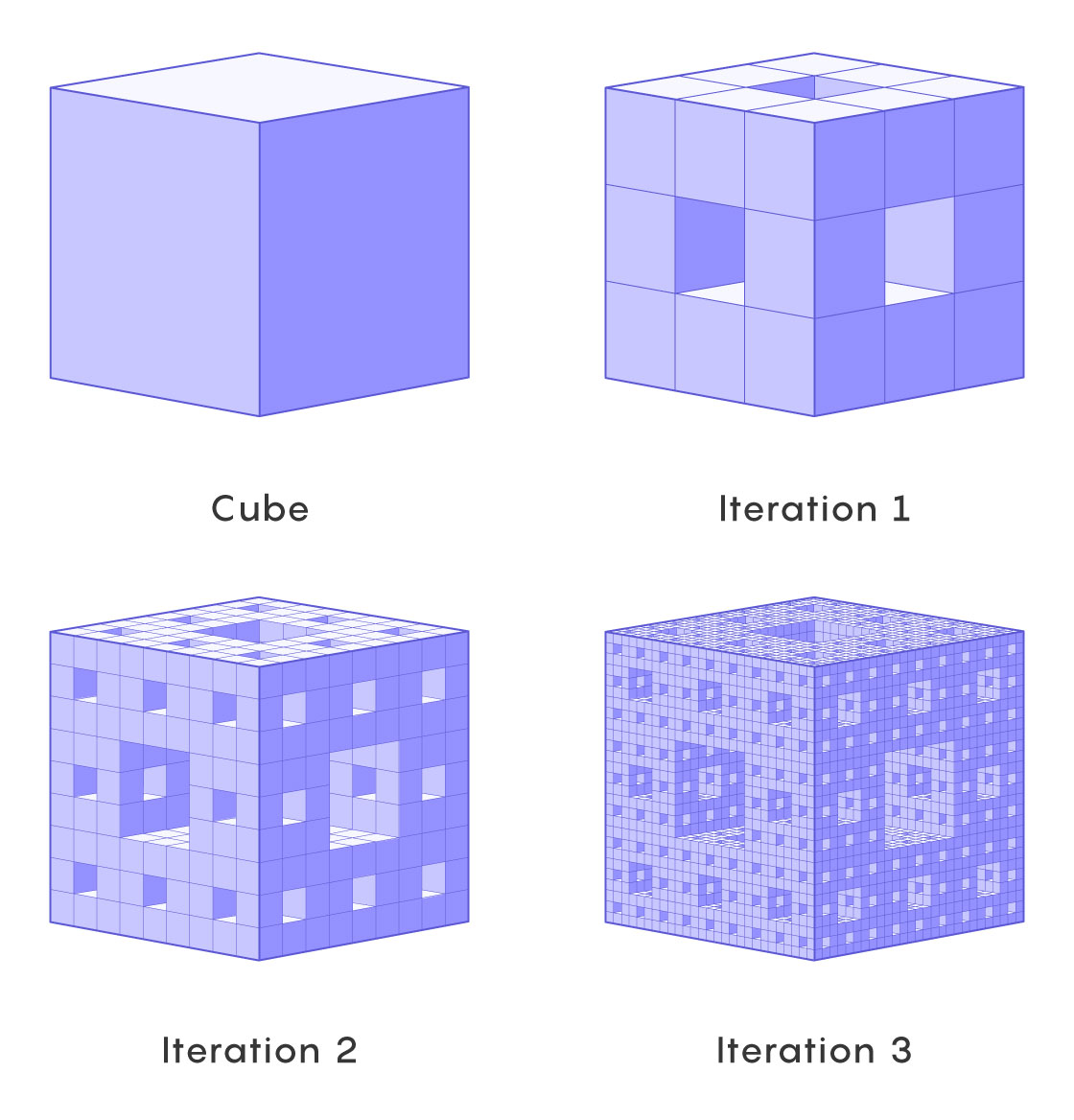
The Menger sponge is a simple but elegant fractal with exponentially increasing pores. After infinitely many iterations, its volume dwindles to zero, while its surface area grows infinitely large. https://t.co/dpsQXDha2p
one of the best gifts you can give your child is one of the simplest, and completely free (in terms of money)
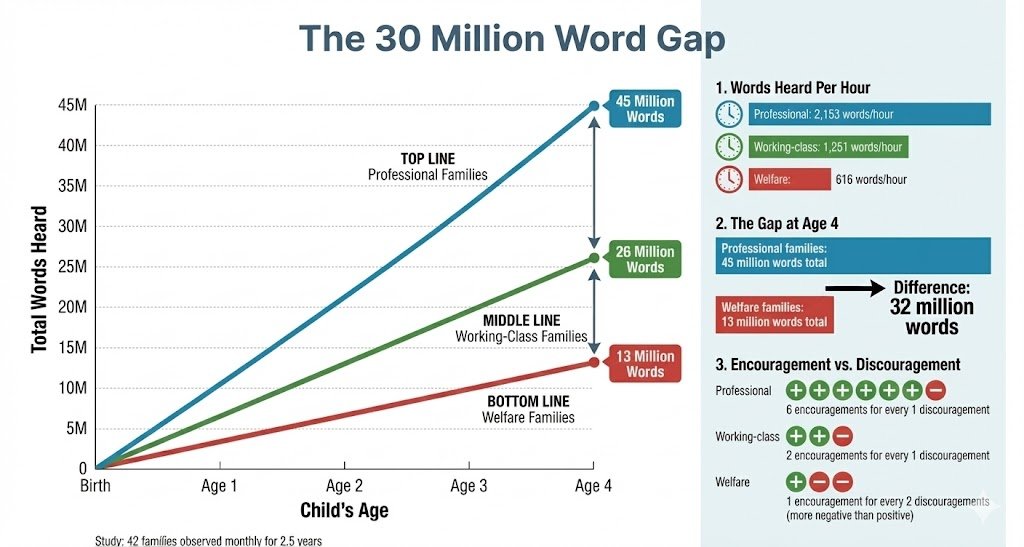
the "30 Million Word Gap" study is one of the most cited pieces of research in early childhood education
researchers followed 42 families for 2.5 years, recording every word. by age 3, children in professional families had heard 45 million words. kids in poverty: 13 million
the ramifications are long-lasting. even at ages 9-10, the kids exposed to more words had stronger language skills, vocabulary, and reading comprehension
there is also a socioeconomic disparity here. the good news is, this may be solvable by simple talking more! the bad news is, it may be harder than it sounds. perhaps the disparity exists in the first place because low-SES parents focus more on making ends meet than talking to their kids
so to summarize — you should be talk-maxxing as much as you can! narrate your day, respond to their babbling, read to them. talking is all you need
Because most people haven't experienced either Waymo or Tesla FSD (i.e. punching in a destination and the car just taking you there with zero human intervention), they don't understand the implications of AVs.
Society is about to have a big reboot.
Transportation as a service will change how everything and everyone moves around the world. I rented this Tesla via @eonrides and the owner physically dropped it off, but soon enough he'll just send me (the renter) the car autonomously, and I'll get in it and tell it to take me somewhere...no human is touching a wheel here.
These are just four-wheeled magic luxury boxes that take people and things anywhere there are roads, controlled by AI and summoned via mobile devices. The notion of even 'owning' a car will become ambiguous: maybe I 'own' one but I send it out to earn on my behalf when I'm at work or asleep...why have it parked somewhere costing me rent when it could be making a couple hundred bucks a day and paying for itself?
Nobody will know how to drive, and almost nobody will bother owning as transportation just becomes a thing you summon and pay for on a per-mile basis. Parking lots will be largely gone, or at least placed (like Waymo parking lots) in some unused part of the city far away from human retail and residential.
The two lanes of traffic blocked by useless parked cars will be a thing of the past...roads will part pedestrian, part scooter/bicycle, and then orderly lines of autonomous vehicles moving without traffic jams or accidents.
Highways will finally work as intended: far left lane for passing and high speed, middle lanes for moderates speeds, and right lane for onramp/offramp, all of it with cars maintaining sensible distances. Gone will be stupid road rage where people chimp out over a missed lane change. Gone will be the idiot kid driving recklessly and making everyone's life worse (every car will have 360 cameras, and you can bet they'll be used in enforcement...will be hard to get away with anything).
The tens of thousands of people currently killed and maimed by car accidents will drop to basically zero, and we'll remember with disgust and dismay the days when we thought it normal for some drunk or distracted driver to have to weave two-ton vehicles around pedestrians and bicyclists.
Our perception of space itself will change, with implications for urban planning and real estate. Once a drive feels less like a stressful ordeal and more like a business-class flight, the thought of living in nature while still being part of city life will be more attractive. Anecdotally, I lived in the Nevada high desert but worked in SF because the 'commute' was just sitting and listening to podcasts or books while the car drove through beautiful scenery. I did this week after week and only stopped once the startup kicked off...I would never have done this if I had to manually drive.
The net effect will be that the range of a Tesla defines what actually is the radius of a city (in my case, the extended range could *just* get to my desert house...I didn't look at houses further than that). The entire notion of our current 'metro' areas will be redefined by how far the magic car goes.
The change will be slow because status-seeking politicians will collude with rent-seekers to obstruct all this in the name of 'safety' or 'jobs' or some such BS cause. But it'll be a better world after, and we'll one day wonder how we lived without them.
Agency > Intelligence
I had this intuitively wrong for decades, I think due to a pervasive cultural veneration of intelligence, various entertainment/media, obsession with IQ etc. Agency is significantly more powerful and significantly more scarce. Are you hiring for agency? Are we educating for agency? Are you acting as if you had 10X agency?
Grok explanation is ~close:
“Agency, as a personality trait, refers to an individual's capacity to take initiative, make decisions, and exert control over their actions and environment. It’s about being proactive rather than reactive—someone with high agency doesn’t just let life happen to them; they shape it. Think of it as a blend of self-efficacy, determination, and a sense of ownership over one’s path.
People with strong agency tend to set goals and pursue them with confidence, even in the face of obstacles. They’re the type to say, “I’ll figure it out,” and then actually do it. On the flip side, someone low in agency might feel more like a passenger in their own life, waiting for external forces—like luck, other people, or circumstances—to dictate what happens next.
It’s not quite the same as assertiveness or ambition, though it can overlap. Agency is quieter, more internal—it’s the belief that you *can* act, paired with the will to follow through. Psychologists often tie it to concepts like locus of control: high-agency folks lean toward an internal locus, feeling they steer their fate, while low-agency folks might lean external, seeing life as something that happens *to* them.”
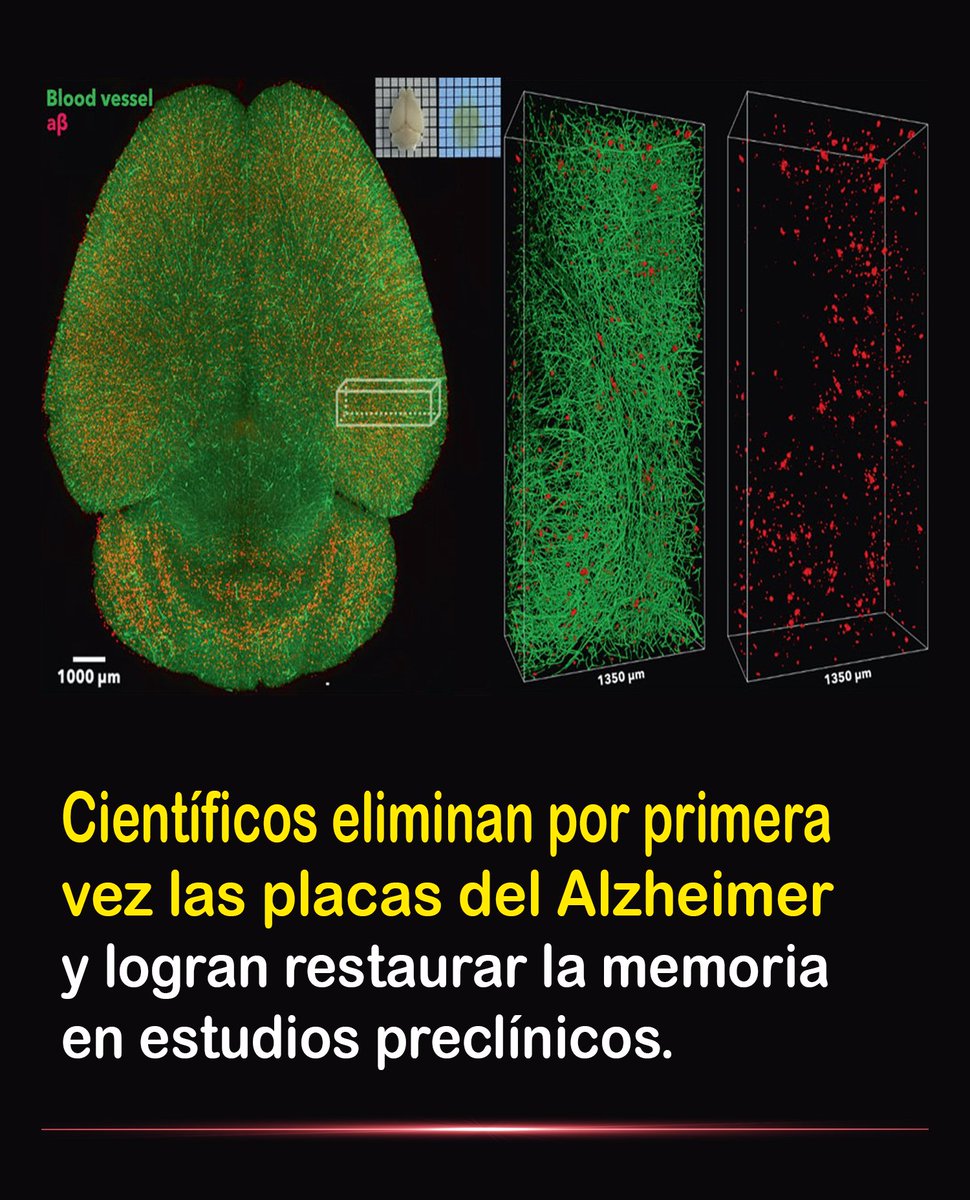
Científicos eliminaron las placas del Alzheimer y lograron restaurar la memoria en estudios preclínicos con una nanomedicina capaz de limpiar el cerebro en pocas horas. Un avance que podría transformar el futuro del tratamiento. 👇
Mayor info: https://t.co/yfyEVCl0Pj
I’m turning 41, but I don’t feel like celebrating.
Our generation is running out of time to save the free Internet built for us by our fathers.
What was once the promise of the free exchange of information is being turned into the ultimate tool of control.
Once-free countries are introducing dystopian measures such as digital IDs (UK), online age checks (Australia), and mass scanning of private messages (EU).
Germany is persecuting anyone who dares to criticize officials on the Internet. The UK is imprisoning thousands for their tweets. France is criminally investigating tech leaders who defend freedom and privacy.
A dark, dystopian world is approaching fast — while we’re asleep. Our generation risks going down in history as the last one that had freedoms — and allowed them to be taken away.
We’ve been fed a lie.
We’ve been made to believe that the greatest fight of our generation is to destroy everything our forefathers left us: tradition, privacy, sovereignty, the free market, and free speech.
By betraying the legacy of our ancestors, we’ve set ourselves on a path toward self-destruction — moral, intellectual, economic, and ultimately biological.
So no, I’m not going to celebrate today. I’m running out of time. WE are running out of time.
@BarackObama Jane Goodall's work proving that animals use tools, have personalities, and feel complex emotions was a scientific earthquake that forced us to be less arrogant as a species.
A true giant whose impact will be felt forever. A devastating loss tonight.
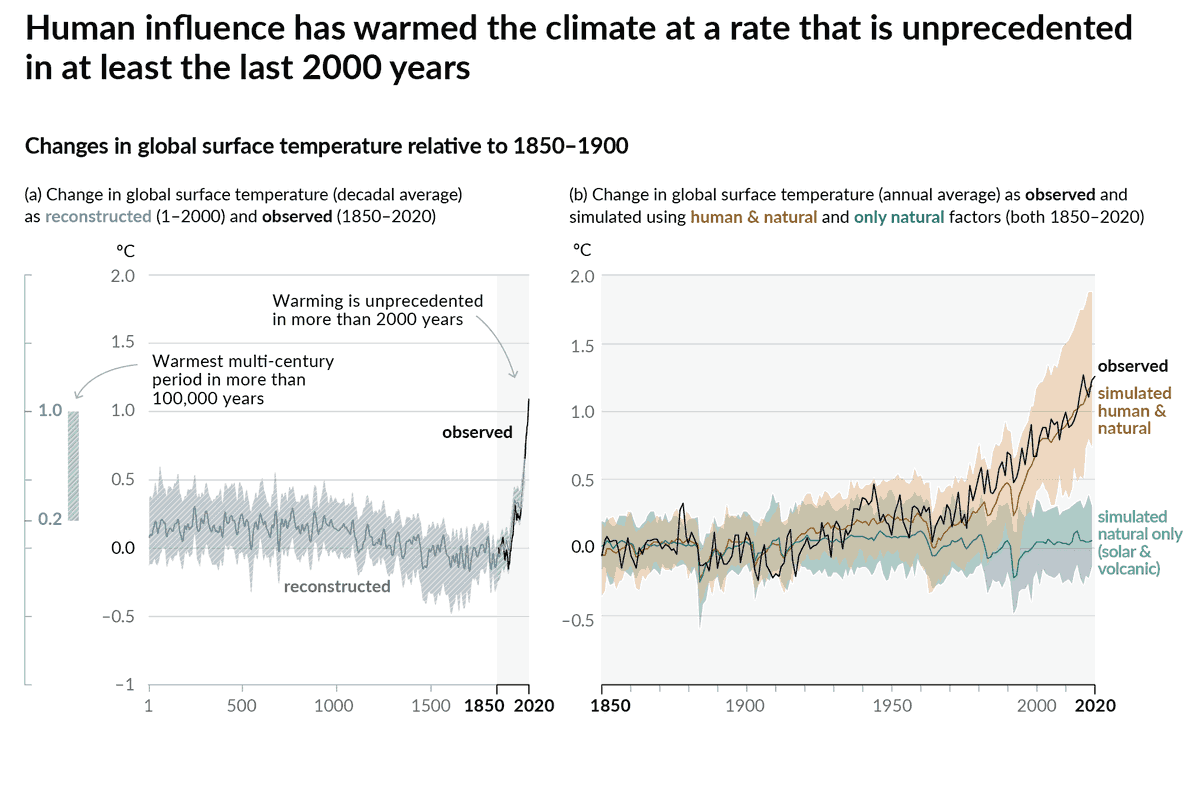
¿Desde cuándo no tenemos temperaturas medias globales tan altas con la actualidad? Con bastante probabilidad, estas son las temperaturas más altas desde hace al menos 125.000 años, por lo que cubre todo el periodo de desarrollo de la civilización humana. Fuente: IPCC