What evidence do we have on the Social Determinants of Dementia (SDOD)?
Delighted that this scoping review, a year or so in the making, is now published in @alzdemjournals. Expertly led by Anouk Geraets, we identified...
https://t.co/2Oxe9G2mx9
1/
“This year, I will walk for my grandmother.”
— Natasha Jacobs, Manager, Strategic Partnerships
"This year, I will walk for my grandmother – She cared for over 15 years for my grandfather who lived with young onset Alzheimer’s disease. He lived in Long Term Care for over 10 years and she would walk many kilometers to feed him, ensure he was totally comfortable but also to make sure he received the foods he loved from his culture.
I walk for caregivers, for the full family units that are impacted by Dementia.
I walk for spouses finding any means necessary to provide comfort, children checking in from all over the world to ensure safety is top priority, grandchildren scouring the internet for useful tips and resources and all the many types of caregivers in this journey.
We know that Dementia affects the whole family. I am walking for yours – and mine.”
On May 24 & 25, join Natasha — and thousands of others across Canada — in support of people living with dementia. 💙
Sign up today for the IG Walk for Alzheimer’s at https://t.co/QJI43I4waS
#IGWalkForAlz #WalkForAlzheimers #AlzheimerAwareness #WhyIWalk #TeamAlzheimerSociety
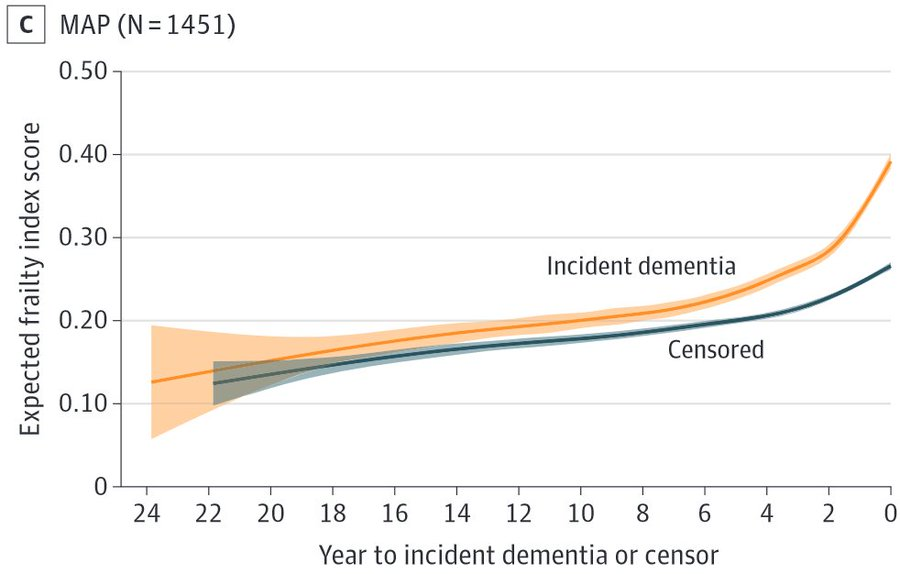
Excellent study led by @AusFrailty researcher @David_D_Ward. Reinforces how important it is to prevent/ slow progression of frailty in community dwellers! @DrEHGordon @Krockdoc https://t.co/eBPwkRklQk
Excited to see the Lancet 2024 Commission on Dementia - 14 modifiable factors account for 45% of dementia globally! huge potential for risk reduction to make a difference!
See our comment on the report:
https://t.co/udBvA1EaMK
hashtag#AAIC2024 @MiiaKivipelto@neuraustralia
🚨New Paper🚨
(When you’ve finished reading the Lancet commission!)
Also out today, led by @Naaheed_Mukadam and open access in @LancetLongevity
Economic modelling of population-level interventions for dementia risk reduction in England
1/
https://t.co/LkHzWSQFNX
Current projections estimate 153 million people will be living with dementia by 2050.
Nearly half of dementia cases could be prevented or delayed by tackling 14 risk factors starting in childhood, suggests new report from a standing Lancet Commission: https://t.co/ZFRBBbIfdZ
Many risk factors for dementia, identified from observational studies, are potentially modifiable. This raises the possibility that targeting key modifiable dem…
Source : SpringerLink https://t.co/9xDJj0xedR
A study from #UWaterloo researchers shows that loneliness has a greater negative impact on memory than social isolation, though both present a significant risk to the aging population.
More: https://t.co/vTMKvJxsv4 | #UWaterlooNews
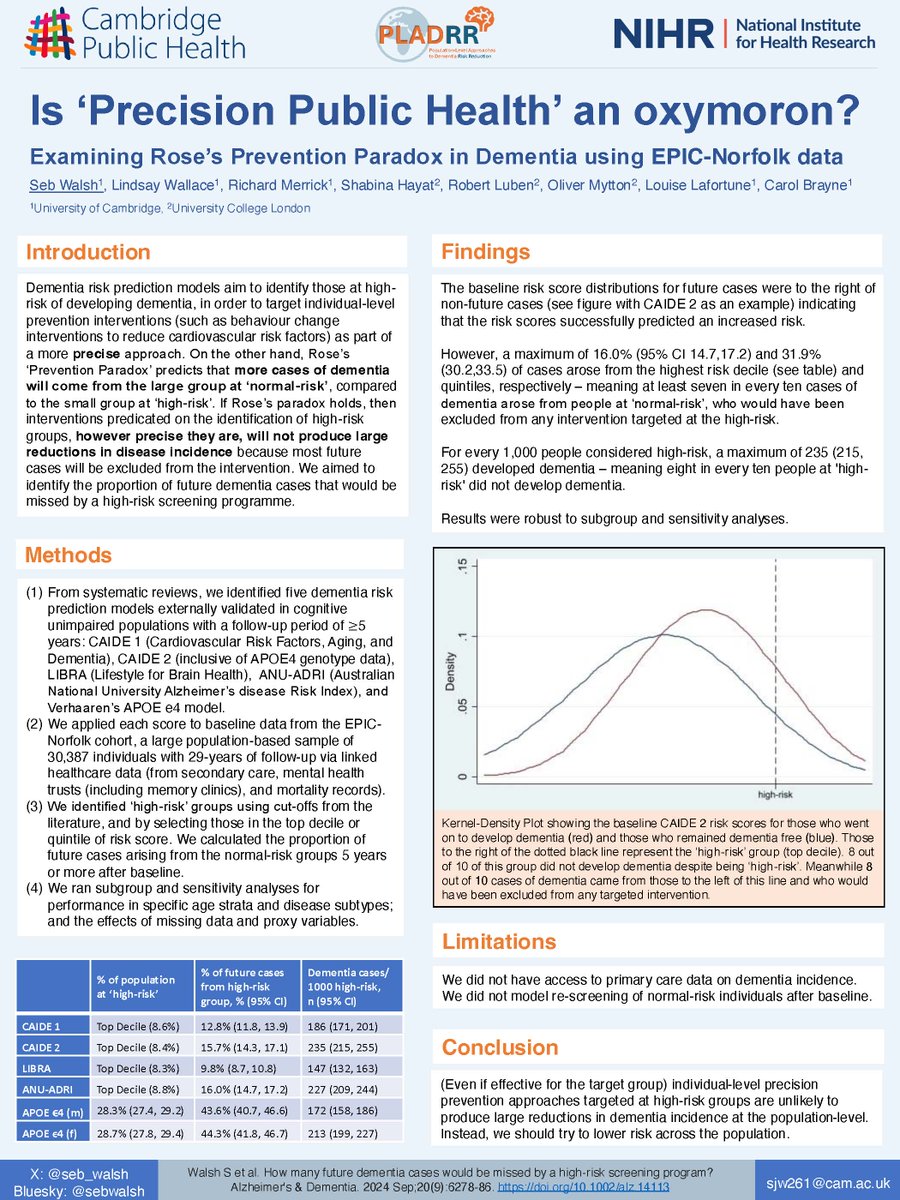
🚨 New paper, open access in @alzdemjournals 🚨
Key message: dementia prevention interventions targeted at high-risk groups WON’T produce large reductions in disease incidence, even if 100% effective
https://t.co/BSKQVgyx6x
1/
Great study on the challenges of studying dementia risk factors: Diabetes increases dementia risk by age 80, but diabetics have a lower lifetime risk due to shorter survival. @JiaqiHu20 @JoeCoresh
https://t.co/p67xe4gkb9
Each individual is unique, but we still look for answers in averages. This often doesn't work, as shown in a @NatureAging paper by @AgustinMIbanez: universal brain health models fall short in the face of the multimodal diversity of aging and dementia https://t.co/jQp9RJjRee
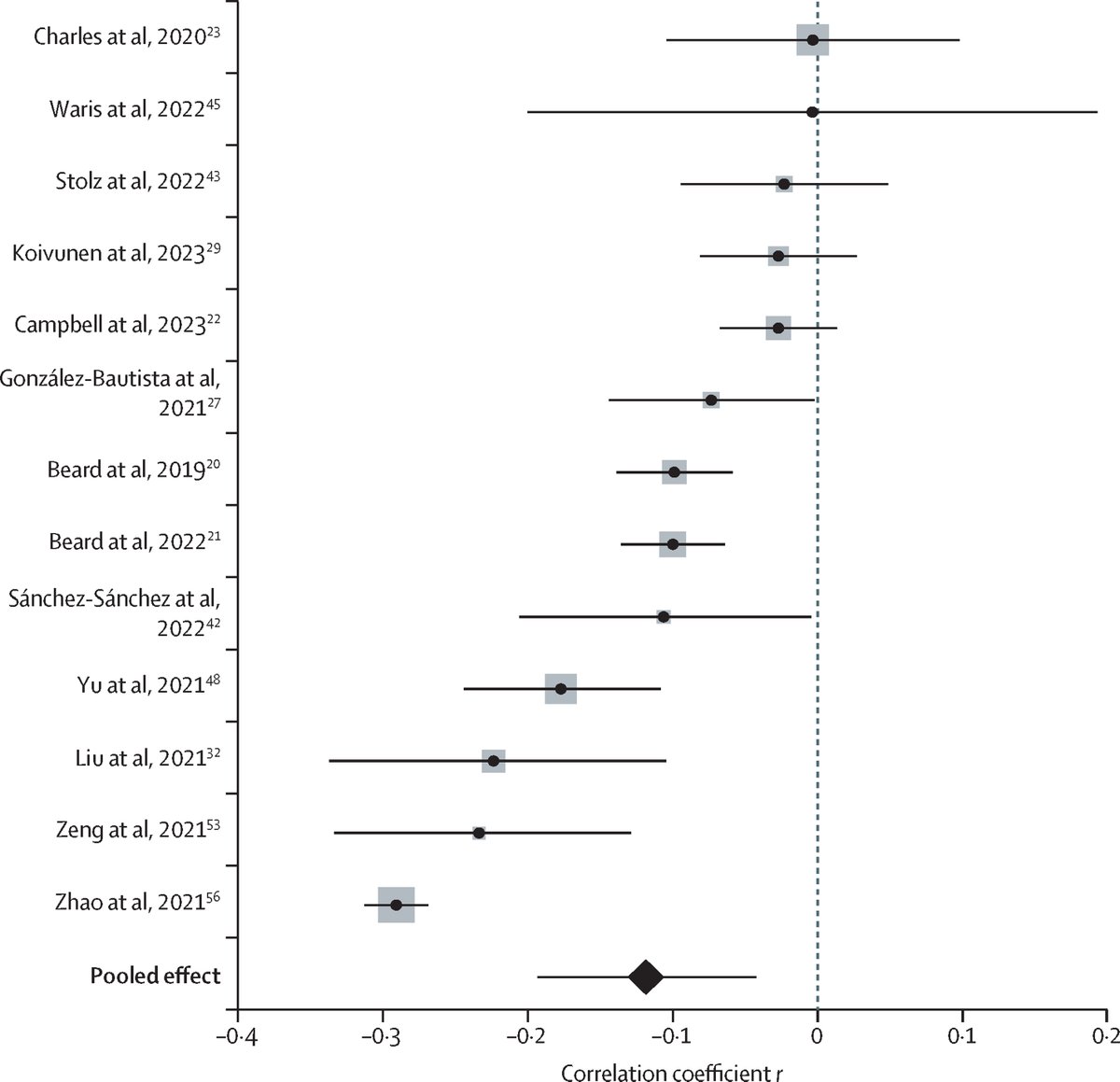
Association of intrinsic capacity with functional decline and mortality in older adults: a systematic review and meta-analysis of longitudinal studies by @JuanluSanchez5 and colleagues @pl_valenzuela https://t.co/9aYs34VhTm
Had fun contributing to Ep13 of @DefyDementia “Mind the Gap – Women’s Higher Dementia Risk” with @asek47 & Jay Ingram. Check it out 👇🏽
https://t.co/0xHB2TaKG7
A new study led by Dr @Naaheed_Mukadam @UCLPsychiatry finds that #dementia risk factors associated with #cardiovascular health may have increased over time compared to factors such as smoking and having less education. Read more in @Independent ⬇️ https://t.co/1sbCPnoF9T