The idea was never the hard part.
Finding the right one was.
For the ones who stopped guessing and started building with signal. Inspired by @ideabrowser, the tool that converts Reddit threads and search data into startup ideas with real demand.
🔗 https://t.co/cedL5dlfn2
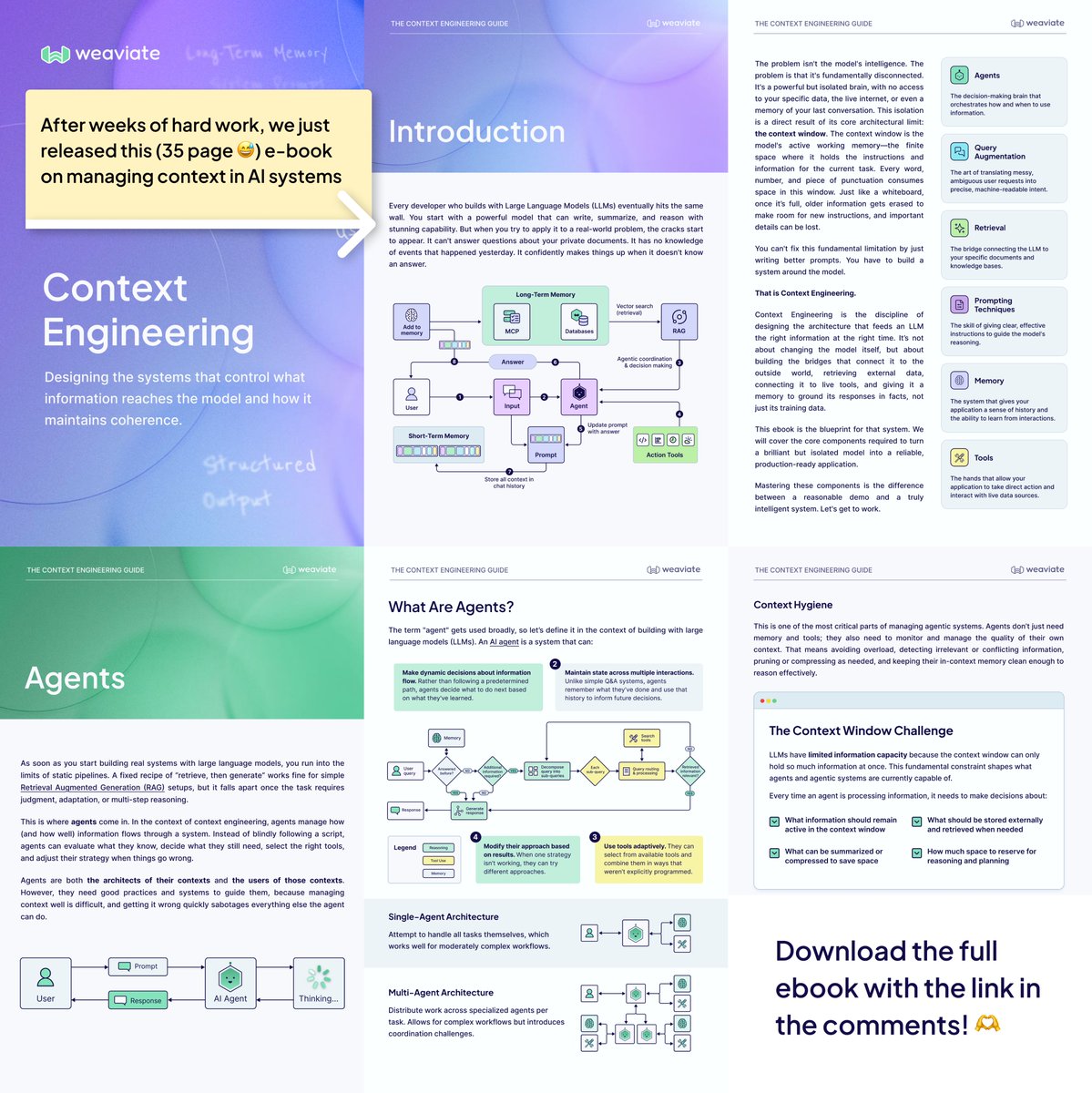
𝗖𝗼𝗻𝘁𝗲𝘅𝘁 𝗲𝗻𝗴𝗶𝗻𝗲𝗲𝗿𝗶𝗻𝗴 is not just stuffing data into prompts.
It's about designing 𝘢𝘤𝘵𝘶𝘢𝘭𝘭𝘺 smart systems that feed the right data at the right time in the right format.
And we just wrote an ebook telling you exactly how to do this 👀
The difficulty with 𝗰𝗼𝗻𝘁𝗲𝘅𝘁 𝗲𝗻𝗴𝗶𝗻𝗲𝗲𝗿𝗶𝗻𝗴 is it's not just about writing prompts in certain ways, or building RAG systems, or using this type of SLM as an agent over that LLM - it's about using all of these components together so that your system overcomes the innate limitations of models.
The goal isn't to shove more data into the prompt, but to design systems that make the most of the active context window.
(and no, just increasing the context window size is 𝘯𝘰𝘵 going to solve this)
So the core challenge really becomes 𝗼𝗿𝗰𝗵𝗲𝘀𝘁𝗿𝗮𝘁𝗶𝗼𝗻 - how do we make this system work together seamlessly, while also being robust to both human and LLM error?
This is why context engineering is going to become the number one complexity of building AI apps. You need systems that intelligently decide:
• What information remains in the active context window
• When to summarize or compress to save space
• What to store externally and retrieve when needed
• How to route queries to the right tools
• How agents coordinate across specialized tasks
We just released our complete ebook on Context Engineering, covering all the core components you need to turn a brilliant but isolated model into a production-ready application:
𝗔𝗴𝗲𝗻𝘁���� - The orchestrators that manage information flow and make dynamic decisions
𝗠𝗲𝗺𝗼𝗿𝘆 𝗦𝘆𝘀𝘁𝗲𝗺𝘀 - Short-term and long-term storage architectures
𝗤𝘂𝗲𝗿𝘆 𝗔𝘂𝗴𝗺𝗲𝗻𝘁𝗮𝘁𝗶𝗼𝗻 - Rewriting, expansion, and decomposition techniques
𝗥𝗲𝘁𝗿𝗶𝗲𝘃𝗮𝗹 - Chunking strategies and multi-source synthesis
𝗧𝗼𝗼𝗹𝘀 & 𝗣𝗿𝗼𝗺𝗽𝘁𝗶𝗻𝗴 - The Thought-Action-Observation cycle and effective tool use
The ebook includes practical examples, architectural diagrams, and real implementation strategies. No fluff, just the blueprint for building reliable AI systems that we've used ourselves in building our AI apps and frameworks.
Download it here: https://t.co/kLXjat6Cf2
Claude + n8n + Gamma = AI Investor Deck System that generated $127K last quarter...
(And it's being used by founders raising Series A rounds)
This system generates investor-grade pitch decks in 12 minutes with $15K+ worth of market research built-in...
→ No more 3 weeks trapped building PowerPoint decks manually
→ No more $3K-$5K agency fees for generic templates
→ No more designer dependencies killing your fundraising speed
→ No more recycled decks that VCs have seen 50 times already
Just company brief → autonomous intelligence pipeline that builds Fortune 500-grade investor decks.
Here's how it works:
→ Company Form Trigger (collects 5 strategic inputs, activates workflow)
→ Market Research Agent (TAM/SAM/SOM analysis + competitive intelligence)
→ GTM Strategy Builder (actionable growth roadmap with ICP definition)
→ Gamma Deck Generation (renders investor-grade presentation automatically)
→ Auto-Export System (Drive delivery + investor email generation)
→ Tracking Database (logs every output for iteration management)
Built with investor psychology standards.
Runs 24/7 without supervision.
12-minute deck generation. $0.87 cost per deck.
Want the complete system?
Like + comment "GAMMA" + repost, and I'll DM it to you.
(must be following)
Very useful tips on tool use and memory from Manus's context engineering blog post.
Key takeaways.
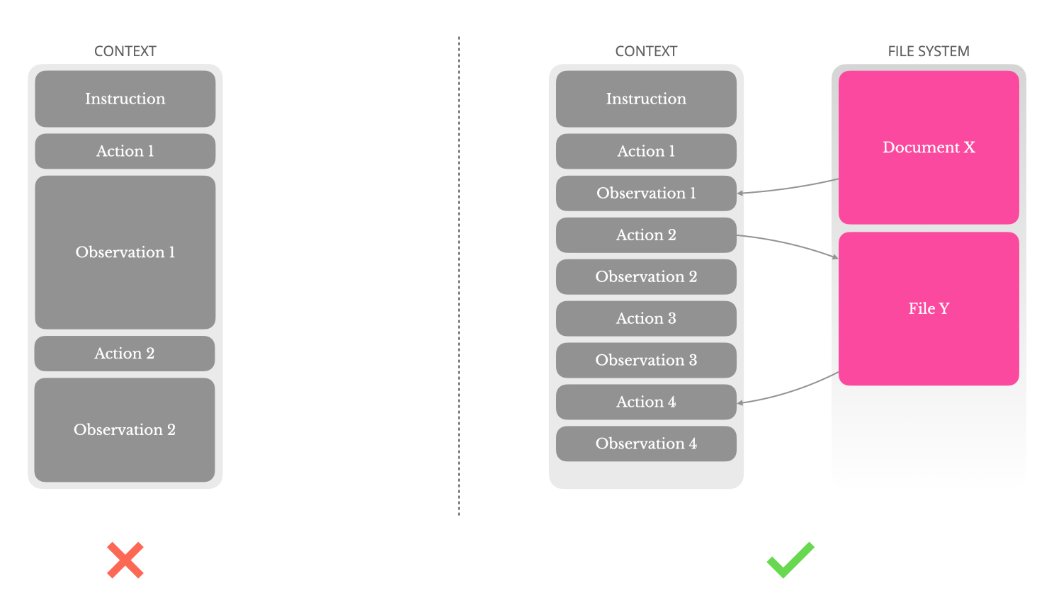
1. Reversible compact summary
Most models allow 128K context, which can easily fill up after a few turns when working with data like PDFs or web pages.
When the context gets full, they have to compact it. It’s important to compact the context so that it’s reversible. Eg, removing the content of a file/web page if the path/URL is kept.
Get started with Gemini Embedding using @weaviate_io, which supports over 100+ languages and flexible dimensions for performance and storage needs.
Check out the notebook.
https://t.co/YaBgqC5Fry
@awakenjake@weaviate_io Hi @awakenjake Im Josh one of the SA’s at Weaviate
If you want to come join our slack community we are happy to help look into this for you
https://t.co/ZMGYGLufmk
One vector is not enough to capture meaning.
Multi-vector embeddings are changing vector search forever. Here’s how:
If you're familiar with vector embeddings, you know how they're used to transform data (like text or images) into a numerical format that machine learning models can process.
But have you heard of multi-vector embeddings?
Let's search using each method and see how they compare.
𝗦𝗶𝗻𝗴𝗹𝗲-𝘃𝗲𝗰𝘁𝗼𝗿 𝗲𝗺𝗯𝗲𝗱𝗱𝗶𝗻𝗴𝘀:
• Take the entire search query or document: "You're a wizard, Harry!"
• Process all words together
• Output one vector: [0.1, 0.4, 0.7, ...]
• Find matches by calculating similarity scores between query and document vectors
𝗠𝘂𝗹𝘁𝗶-𝘃𝗲𝗰𝘁𝗼𝗿 𝗲𝗺𝗯𝗲𝗱𝗱𝗶𝗻𝗴𝘀:
• Split query/document into parts: ["You"] ["'re"] … ["!"]
• Process each part separately
• Create multiple vectors for each part:
Vector1: [0.2, 0.5, ...]
Vector2: [0.3, 0.1, ...]
Vector3: [0.4, 0.8, ...]
• During search, calculate multiple similarity scores between corresponding parts
𝗧𝗵𝗲 𝗸𝗲𝘆 𝗱𝗶𝗳𝗳𝗲𝗿𝗲𝗻𝗰𝗲?
Multi-vector embeddings enable "late interaction," - meaning they match individual parts of texts rather than comparing them as whole units and combine these scores 𝘭𝘢𝘵𝘦𝘳.
𝗕𝗲𝗻𝗲𝗳𝗶𝘁𝘀 𝗼𝗳 𝗺𝘂𝗹𝘁𝗶-𝘃𝗲𝗰𝘁𝗼𝗿 𝗲𝗺𝗯𝗲𝗱𝗱𝗶𝗻𝗴𝘀:
• Captures nuanced meanings by preserving context for each text segment.
• When searching, each query part finds its best match, leading to more precise results.
𝗧𝗿𝗮𝗱𝗲-𝗼𝗳𝗳𝘀 𝘁𝗼 𝗰𝗼𝗻𝘀𝗶𝗱𝗲𝗿:
• More storage needed (can be 4x+ larger)
• Higher computational costs for distance calculations
• Longer processing time
𝗜𝗺𝗽𝗹𝗲𝗺𝗲𝗻𝘁𝗮𝘁𝗶𝗼𝗻:
@weaviate_io v1.29 now supports multi-vector embeddings through:
• ColBERT model integration (via @JinaAI_)
• Custom multi-vector embeddings
Full tutorial: https://t.co/yvfGtVECDb
Or join this hands-on enablement session with @_jphwang on how to use Jina's multi-vector ColBERT model in Weaviate: https://t.co/MPVcC9S1J4
📣 We’re excited to be at @MLOpsWorld Toronto 9-10 June!!🙌
➕Our Solutions Engineer Josh is hosting a virtual workshop on 'Deploying and Managing Machine Learning Models at Scale' at 10AM EDT on 8 June.
Don't miss out, get 20% off your ticket on us➡️ https://t.co/tDprPPfWmO
A surreal moment to see @Olo go public on the NYSE. Truly proud to be part of this team. The last 4 yrs have been some of the most rewarding. Huge congrats to @nhglass for this milestone. The future is bright. Now, time to celebrate 🎉
Join Chief Architect @thelabdude & Director of Product @_A_squared for Lucidworks Fusion 5.0 webinar, Sept 26, 10 AM PT / 1PM ET! Learn how to spin up/scale apps, extend #ML with native Python support, & use the Predictive Merchandiser solution. Register: https://t.co/PLphIYa4nJ
Lucidworks raises $100M to continue building the next generation of search. Francisco Partners, TPG Sixth Street Partners, and @TTCP_SF's investment furthers our mission to augment human intelligence with AI-powered search solutions. More here: https://t.co/fSd1FfwvVk
Ever thought about the possibility of repurposing #Kubernetes (via etcd) to handle service discovery for #Solr instead of using #ZooKeeper? Check out @MarcusForPeace new post, he wants your advice! https://t.co/zF0YwFBk6f
Starting your new search application? Enhancing the old one? @Lucidworks Solution Architects @calispqr and @joshSgoldstein discuss on the dos and don'ts of deploying a search application utilizing the Lucidworks Fusion stack: https://t.co/urL6O1XUKe #activatesearch
We are really proud to become the first European Platinum Partner for #Lucidworks and be awarded as the "Partner of the Year 2018 EMEA" - Thanks to the whole Team who made this possible.
https://t.co/fIbvwqNwtj
The story continues: learn how to make Lucidworks Fusion and Apache Superset work together to create helpful visuals of your search at scale, part 2: https://t.co/71osAZm5Wf