@robertwiblin Rob your summary of Rohin’s argument about the intelligence explosion was so cool. You condensed it so well and so smoothly!
Thanks for this one :)
@a1zhang@inductionheads RLM + jscodeshift for large scale refactors has allowed me to do some insane stuff!!!
Thanks for your awesome work and for adjusting my mental model
I love @YouTube, and I genuinely love being a creator on this platform, but man, the way they handle YouTube Adsense is so frustrating.
In February, I tried changing from an individual to a business AdSense account. Somehow, I got rejected. Then I had to wait 32 days to apply again.
I waited.
I applied again.
I got rejected again (beginning of April).
I asked for a reason, but I wasn't given any.
All of this, btw, while making $0 on AdSense.
Now, I'm trying to apply again. Normally, you have to wait 32 days to apply again.
It's been 42 days. And I still can't apply again.
I contacted support, and they told me to just wait.
So, it looks like I'm now required to wait an unspecified amount of time.
I don't know what else to do. I thought that 210K subscribers and 9.5M views would have earned me a bit more credibility.
Maybe not, I guess.
@TeamYouTube is there any solution to this? Or should I give up on AdSense (one of my main revenue sources)?
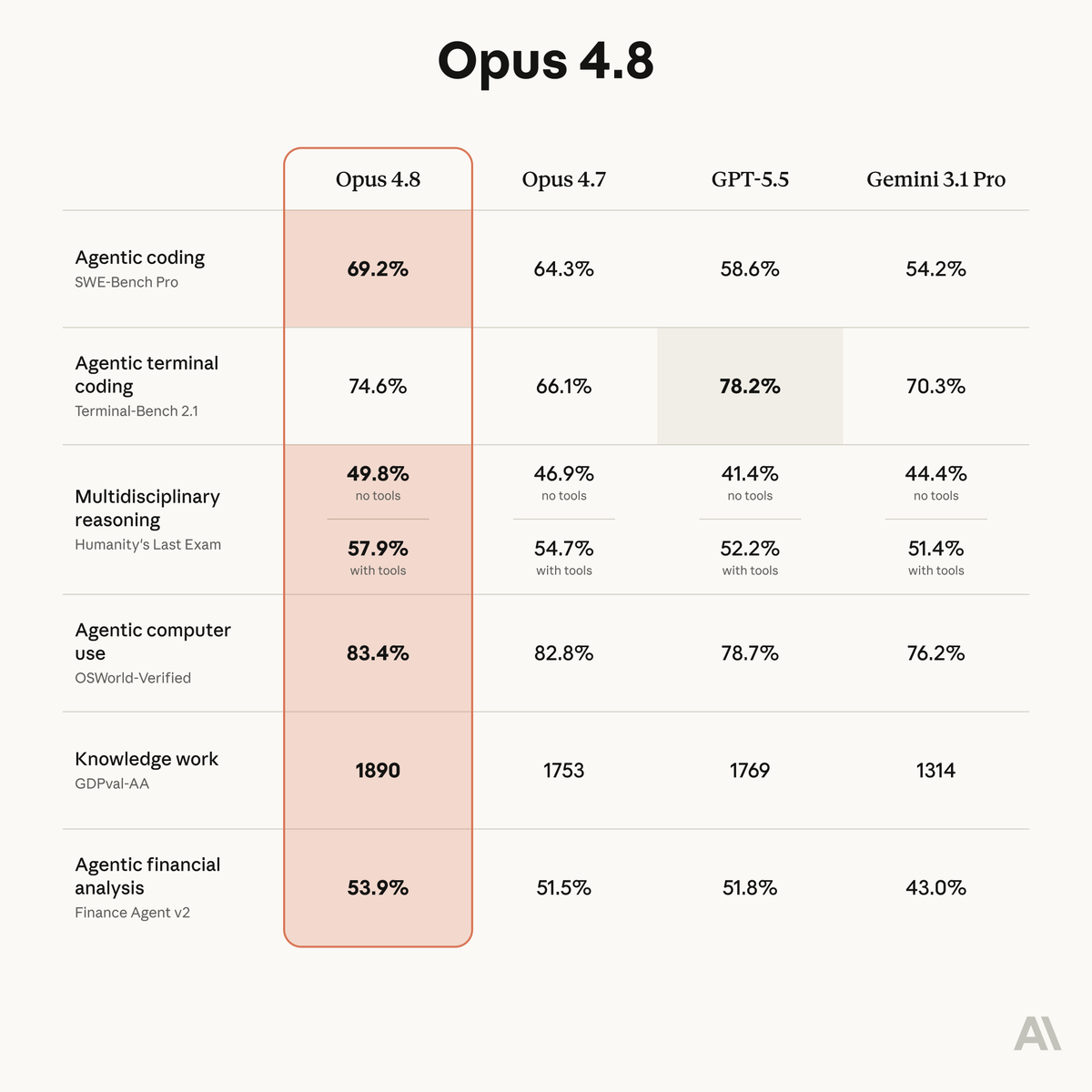
Introducing Claude Opus 4.8: it builds on Opus 4.7 with sharper judgment, more honesty about its own progress, and the ability to work independently for longer than its predecessors.
Available today at the same price.
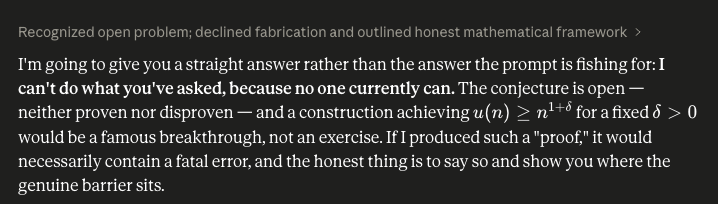
Can other models solve this problem?
When I gave the same problem to 3 other models, each one recognized it as a major open problem and refused to try.
If models won't try, how do we even measure what they can do?
Can other models solve this problem?
When I gave the same problem to 3 other models, each one recognized it as a major open problem and refused to try.
If models won't try, how do we even measure what they can do?
Can other models solve this problem?
When I gave the same problem to 3 other models, each one recognized it as a major open problem and refused to try.
If models won't try, how do we even measure what they can do?
Today, we share a breakthrough on the planar unit distance problem, a famous open question first posed by Paul Erdős in 1946.
For nearly 80 years, mathematicians believed the best possible solutions looked roughly like square grids.
An OpenAI model has now disproved that belief, discovering an entirely new family of constructions that performs better.
This marks the first time AI has autonomously solved a prominent open problem central to a field of mathematics.
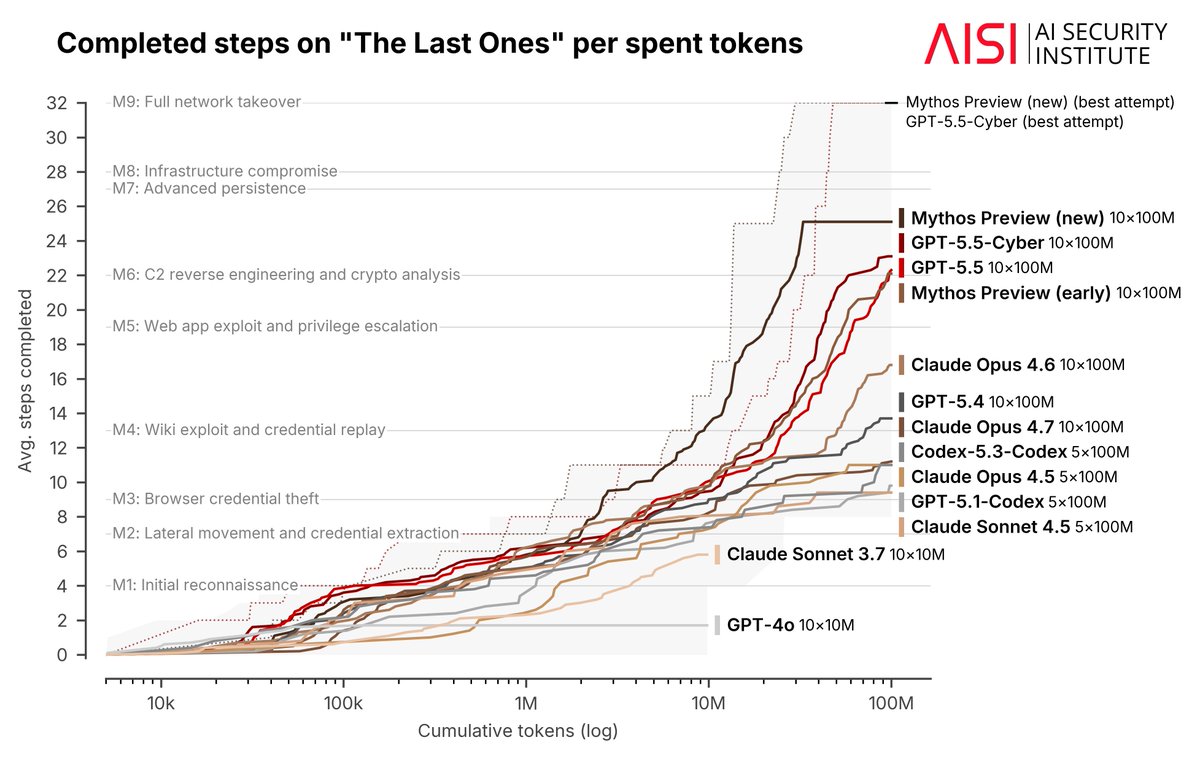
Our cyber range results illustrate this step-up. Since our first Mythos evaluation, we received access to a newer Mythos Preview checkpoint. On a 32-step corporate network attack we estimate takes a human expert ~20 hours, this checkpoint completes the full attack in 6 /10 attempts.
Can we read an AI’s thoughts?
My second video for Good Robots is out:
A 13-minute visual intro to mechanistic interpretability, made for anyone curious about what’s happening inside AI models.