💡 JAMA Insights: #AcuteVestibularSyndrome can result from peripheral vestibular pathology or a central nervous system cause, and stroke accounts for 10% to 25% of cases.
Physical examination findings including nystagmus pattern, skew deviation, the head impulse test, the general neurological examination, and gait can help distinguish peripheral from central causes and guide decisions about imaging or neurology consultation.
https://t.co/wAQPw7E8Mc
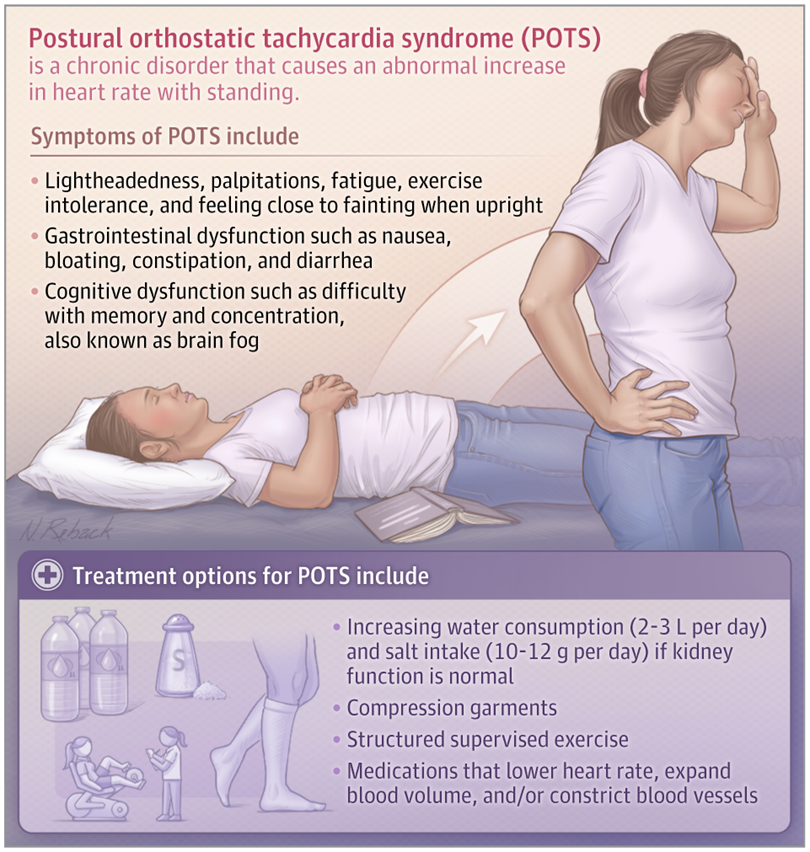
📝 JAMA Patient Page: Postural orthostatic tachycardia syndrome (#POTS) is a chronic disorder that causes an abnormal increase in heart rate with standing and is associated with symptoms such as lightheadedness, palpitations, fatigue, exercise intolerance, gastrointestinal symptoms, and cognitive problems.
Diagnosis is based on characteristic symptoms and a sustained rise in heart rate during standing without a significant decline in blood pressure.
https://t.co/qId1LvfRGW
RESUMEN DE INSUFICIENCIA SUPRARRENAL 📚
📌Definición: es un síndrome de déficit de cortisol
🗣️en la forma primaria también de mineralocorticoides y andrógenos
8/ What we still don't know: PPAR agonists and hard outcomes, how often to repeat elastography, and what to do after second-line failure. Congrats to the panel. Full guideline in Gastroenterology and Hepatology: https://t.co/08oVhyst3F
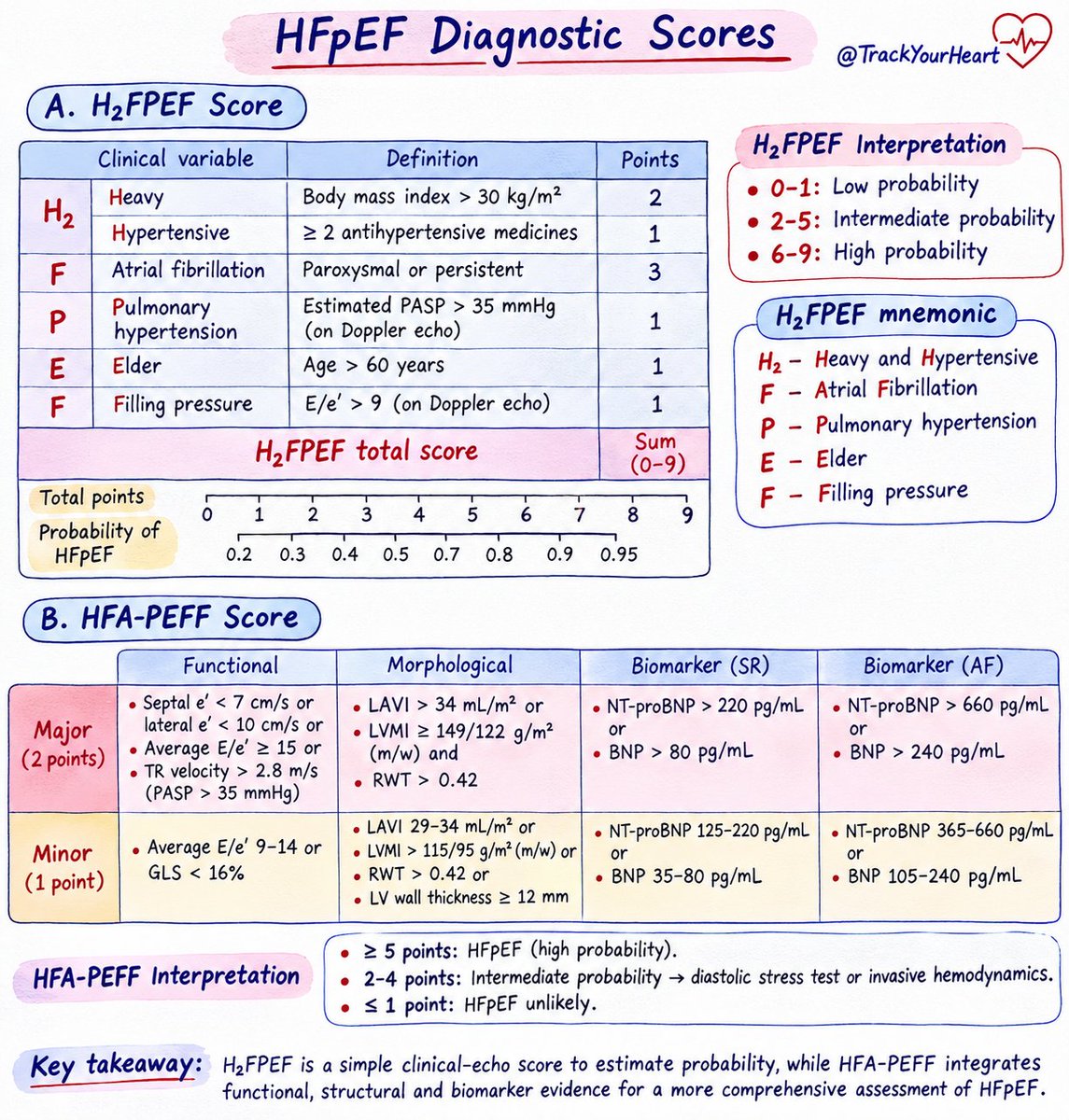
HFpEF: TWO DIAGNOSTIC SCORES EVERY CARDIOVASCULAR CLINICIAN SHOULD KNOW
Heart failure with preserved ejection fraction (HFpEF) is challenging to diagnose. A patient can have exertional dyspnea and congestion despite an LVEF ≥50%.
Two commonly used diagnostic tools are the H₂FPEF score and HFA-PEFF algorithm.
1. H₂FPEF score: 6 clinical variables
🟦 H₂ – Heavy: BMI >30 kg/m² (2 points).
🟪 H₂ – Hypertensive: ≥2 antihypertensive medications (1 point).
🟩 F – Atrial fibrillation: Paroxysmal or persistent (3 points).
⬜ P – Pulmonary hypertension: Estimated PASP >35 mmHg (1 point).
🟥 E – Elder: Age >60 years (1 point).
⬛ F – Filling pressure: Echocardiographic E/e′ >9 (1 point).
Interpretation:
⭕ 0–1: Low probability.
⭕ 2–5: Intermediate probability.
⭕ 6–9: High probability.
2. HFA-PEFF: 3 diagnostic domains
This approach combines echocardiography and natriuretic peptides.
- Functional: e′ velocities, E/e′, TR velocity and global longitudinal strain.
- Morphological: Left atrial enlargement, LV hypertrophy and relative wall thickness.
- Biomarker: BNP or NT-proBNP, with different thresholds for sinus rhythm and atrial fibrillation.
Each domain contributes major (2 points) or minor (1 point) criteria.
Interpretation:
- ≤1 point: HFpEF unlikely.
- 2–4 points: Intermediate probability; proceed to functional testing.
- ≥5 points: HFpEF highly likely.
3. What happens when the diagnosis remains uncertain?
Consider:
- Diastolic stress echocardiography.
- Cardiopulmonary exercise testing (CPET).
- Invasive exercise hemodynamics when necessary.
4. Important clinical caveats
- Obesity can suppress natriuretic peptide concentrations, producing falsely reassuring results.
- Atrial fibrillation affects natriuretic peptide thresholds and echocardiographic interpretation.
- Preserved EF alone does not establish HFpEF.
- Always consider alternative causes of dyspnea and cardiac mimics.
Key takeaway: H₂FPEF helps estimate clinical probability; HFA-PEFF integrates cardiac structural, functional and biomarker evidence. Neither replaces clinical assessment or objective confirmation of elevated filling pressures when required.
Guideline update: The 2026 ACC Expert Consensus recognizes H₂FPEF, HFA-PEFF and the newer HFpEF-ABA score. H₂FPEF is a practical initial tool, while HFA-PEFF provides a more detailed specialist assessment.
References:
1. Reddy YNV et al. Circulation. 2018;138:861–870.
2. Pieske B et al. Eur Heart J. 2019;40:3297–3317.
3. 2026 ACC Expert Consensus Decision Pathway on Management of HFpEF.
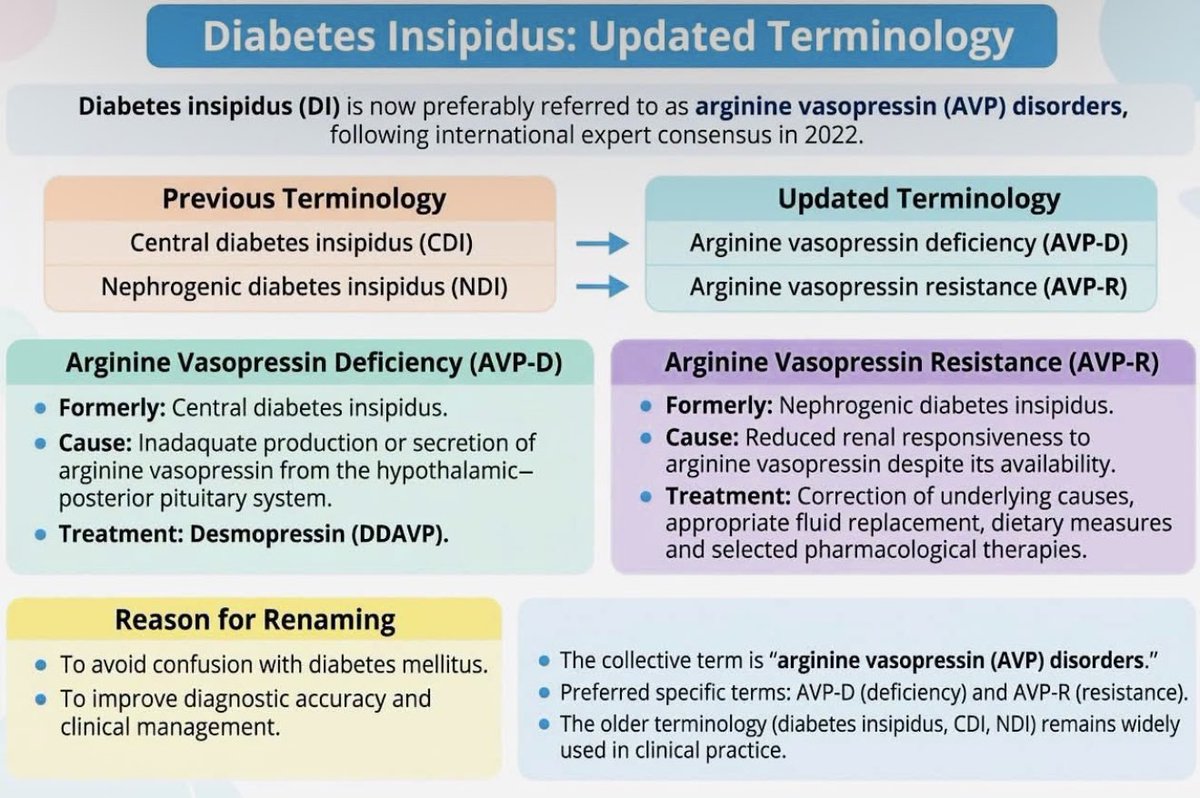
Diabetes Insipidus: Updated Terminology
- Diabetes insipidus (DI) is now preferably referred to using the term arginine vasopressin (AVP) disorders, following international expert consensus.
- Central diabetes insipidus (CDI) is now termed arginine vasopressin deficiency (AVP-D).
- Nephrogenic diabetes insipidus (NDI) is now termed arginine vasopressin resistance (AVP-R).
- AVP-D: Inadequate production or secretion of arginine vasopressin from the hypothalamic–posterior pituitary system.
- AVP-R: Reduced renal responsiveness to arginine vasopressin despite its availability.
- AVP-D treatment: Desmopressin (DDAVP).
- AVP-R treatment: Correction of underlying causes, appropriate fluid replacement, dietary measures and selected pharmacological therapies.
- Reason for renaming: To avoid confusion with diabetes mellitus and reduce the risk of inappropriate clinical management.
Si tienes un Px con antecedente de cirugía bariátrica en sospecha de neoplasia mielodisplásica y citopenias que no se explican por deficiencias de hierro, vitamina B9 o B12, jamás olvides solicitar cobre sérico y ceruloplasmina.
Este grupo de pacientes es especialmente susceptible a la hipocupremia, que puede producir citopenias y cambios displásicos reactivos capaces de simular una neoplasia mielodisplásica.
Los nutricionistas lo tienen clarisimo. Nosotros solemos olvidarlo.
📘 New AGA/AASLD guideline on primary biliary cholangitis: 6 recommendations
🔬 AMA-negative? Use SP100/GP210 antibodies
💊 UDCA stays first line
📏 Liver stiffness for prognosis
🔁 Consider PPAR agonists if UDCA response is inadequate or UDCA isn't tolerated
🪶 Consider linerixibat for moderate-to-severe itch (shared decision on GI side effects and cost)
🏥 UDCA prophylaxis after transplant to cut recurrence
⚠️ Certainty of evidence: moderate to very low
👇 All six in one image
🔗 https://t.co/3ExGU2z2Lz
#MedTwitter #GITwitter #MedEd #Hepatology #Liver #PBC
#BacktoBasics
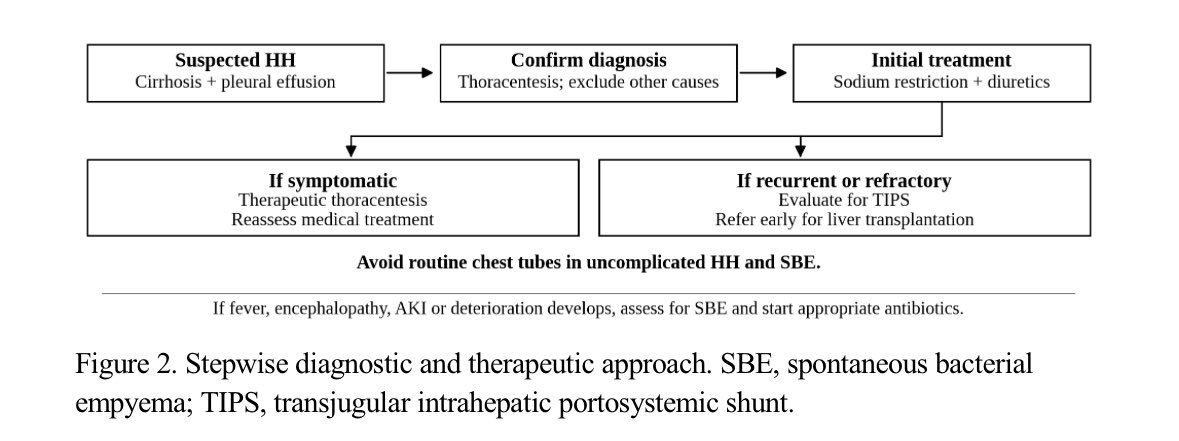
🫁 Pleural fluid accumulation due to portal hypertension in patients with cirrhosis.
↗️ Usually right-sided, caused by ascitic fluid crossing small diaphragmatic defects.
📊 Occurs in 4%–12% of patients with cirrhosis
⚠️ A marker of decompensated cirrhosis
I've had quite a few of you ask how to play Doves' songs on guitar, so I thought I'd make a few videos showing you how.
First up, ‘Sea Song’. Have a go and let me know what you'd like to see next.
My solo album, Life Of Me And You, is out in February: https://t.co/SP0FIvO3vp
MASH cirrhosis is NOT an irreversible disease.
Paired liver biopsies showed cirrhosis regression in 40% of patients after bariatric surgery.
Published today in @AnnalsofSurgery
https://t.co/hndoRSzIDq #TLM26
The era of functional cures in hepatitis B is here and huge for hepatology. It also means something for me. I need to learn a lot. New drugs, new mechanisms, new diagnostics (quantitative sAg).
Follow me next week at #TLM26 as I learn everything I can about #HBV
🏀 Next up: The NEW MASLD Treatment Era
@JazminMexia explores combination metabolic therapy, real-world resmetirom use, and quality of life.
New treatments are reaching patients—but what do the results show?
Thread 👇 #HepMadness2026
A new RCT shows promise for a new type of drugs in MASLD: a drug that inhibits endogenous FRUCTOSE metabolism reduces liver fat by 30% and improves insulin sensitivity.
Encouraging findings that warrant larger trials.
@NatMetabolism https://t.co/JUZmWRnNSx
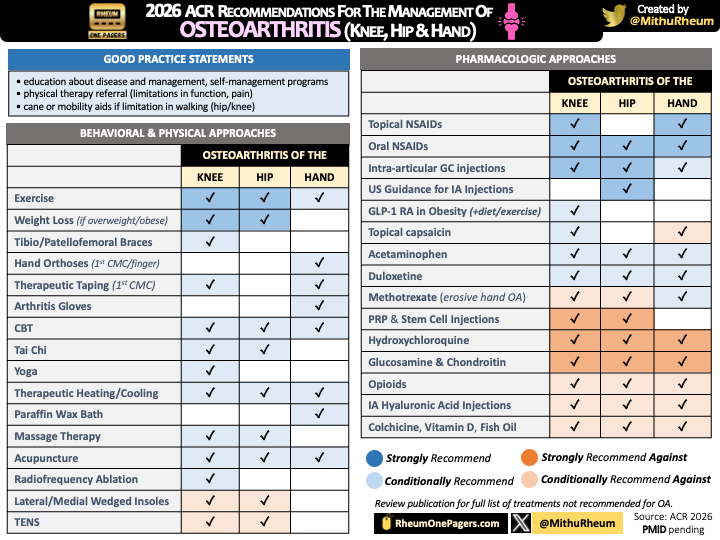
🆕 2026 ACR Recommendations for Management of Knee, Hip & Hand #Osteoarthritis
⬥ Behavioral/Physical vs Pharmacologic Treatments
⬥ New: GLP1 RA for Knee #OA, MTX for Erosive Hand OA?!
⬥ Treatments *not* recommended #Rheumatology
📝 ACR Guidelines⇢ https://t.co/NMhI2IsJYR
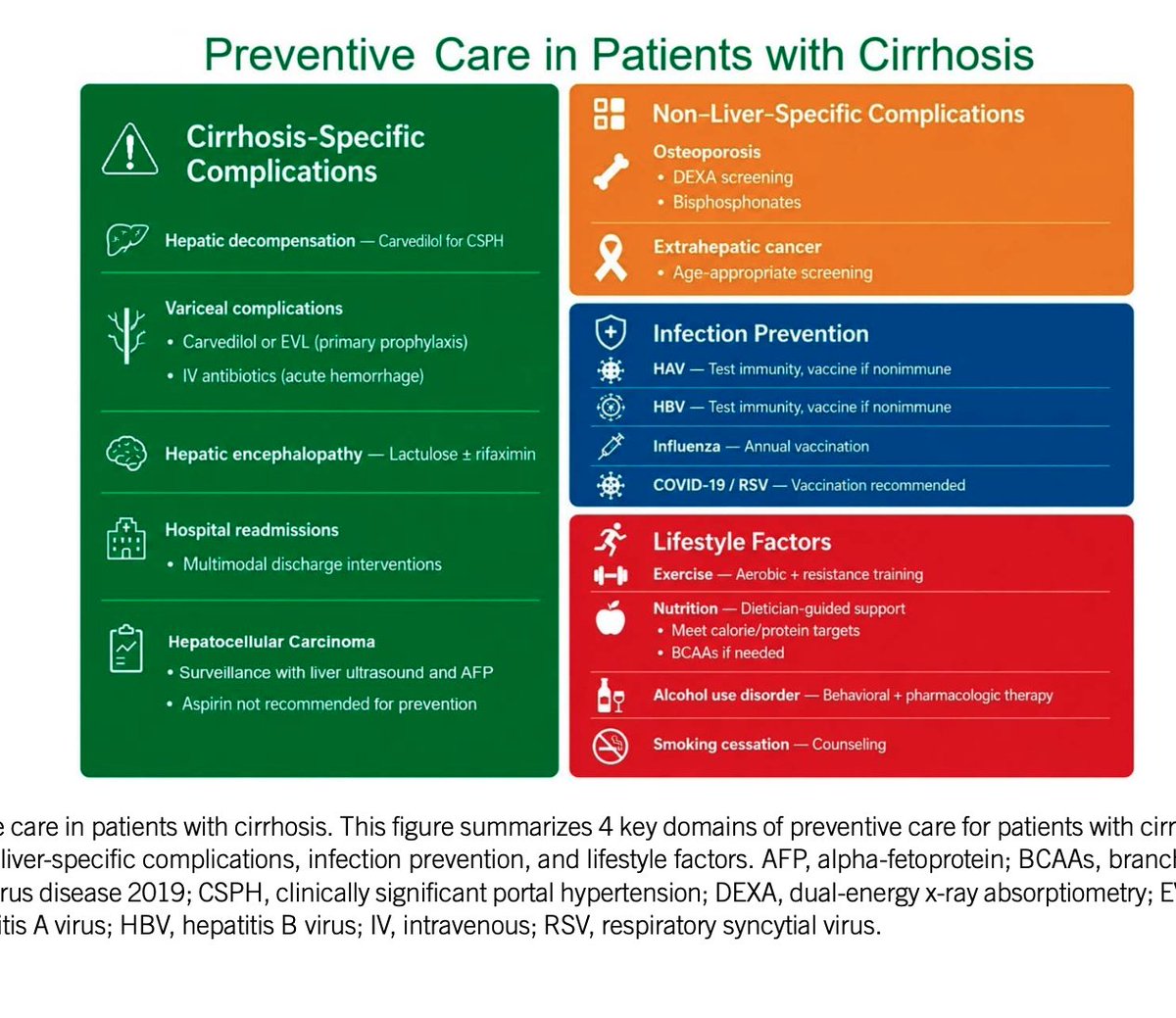
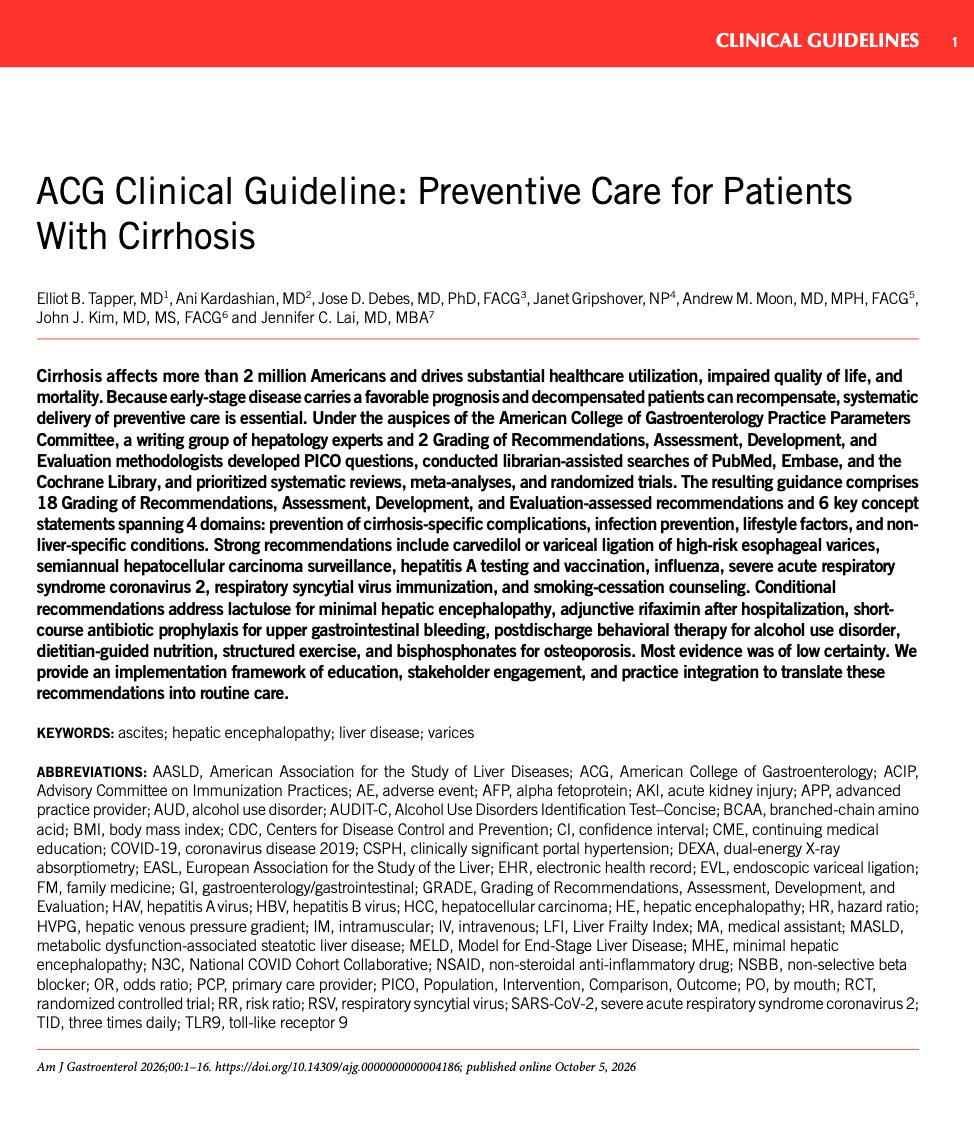
Prevención en pacientes con Cirrosis, Guía de la ACG (American College of Gastroenterology) 2026. Puntos clave:
🔵 Para várices esofágicas de alto riesgo o hipertensión portal clínicamente significativa: Carvedilol es superior a Propranolol. Inicia a 12.5 mg/día, sin titular a frecuencia cardiaca (su efecto no depende de ella).
🔵 En sangrado de tubo digestivo variceal: las guías recomiendan antibiótico profiláctico por 2–3 días (no 5-7). Misma mortalidad, aunque más riesgo de infección (15%)
🔵 En Encefalopatía hepática mínima: lactulosa. La rifaximina se reserva para prevención secundaria, no de primera instancia.
🔵 Vacunas vacunas: Hepatitis A, influenza, SARS-CoV-2 y VSR desde los 50 años. VHB también, aunque su respuesta es del 50% (confirma con anti-HBs).
🔵 Aumentar la Proteína a 1.2–1.5 g/kg/día y calorías 30–35 kcal/kg. Pero siempre con ejercicio de resistencia (suplementar sin ejercicio no mejoró masa muscular). Mito: Las varices contraindican bifosfonatos orales.
Voy a actualizar Cirrosis en Accio y Memodi. Link abajo.