Tried something new and although I didn't win any prizes, it was a fun experience besides doing science!
PS - the 2nd half of the video is (unedited) done purely using command-line with a lot of programming tweaks.
https://t.co/PyNG02vRKT
#visualizeyourthesis#vyt2020#shrimp
Instead of watching an hour of Netflix, watch this 2 hour hour Stanford lecture will teach you more about how LLMs like ChatGPT and Claude are built than most people working at top AI companies learn in their entire careers.
最近在带入组的本科实习生,发现怎么读论文其实是科研训练里最容易被忽略的一步。
推荐一篇每个科研新人都该读的经典短文:S. Keshav 的 How to Read a Paper。
文章提出了非常实用的“三遍读论文法”:
第一遍,5 到 10 分钟快速扫读:标题、摘要、引言、章节标题、结论和参考文献。
目标是回答 5C:
Category, Context, Correctness, Contributions, Clarity。
也就是判断这篇论文是什么、和谁相关、假设是否合理、贡献是什么、写得清不清楚。
第二遍,认真读论文主线,但先跳过证明细节。重点看图表、实验设置、结果是否清楚、引用了哪些关键工作。
第三遍才进入深度理解:尝试像复现一样重建作者的思路,检查假设、方法、创新点和潜在漏洞。
放在今天看,这个方法和 AI 辅助读论文其实很契合。
第一遍可以让 AI 帮忙快速总结论文的研究问题、核心贡献和主要结论,但自己一定要判断这篇文章是否真的值得继续读。
第二遍可以让 AI 帮忙解释方法、实验设置、图表和不熟悉的概念,但不能只看 AI 总结。关键图表、实验设计和结果数字一定要回到原文核对。
第三遍可以让 AI 扮演 reviewer,帮你追问:这篇文章的假设是否成立?实验是否支持结论?有没有 missing baseline?有没有潜在的数据泄漏、评价偏差或过度 claim?
读论文不是“读完”就行。真正重要的是知道什么时候快速跳过,什么时候认真理解。
尤其在 AI 工具越来越强的情况下,科研新人更需要训练自己的判断力。
AI 可以帮你压缩信息,但不能替你决定一篇论文是否重要、是否可信、是否值得借鉴。
https://t.co/8gUc4HbLwR
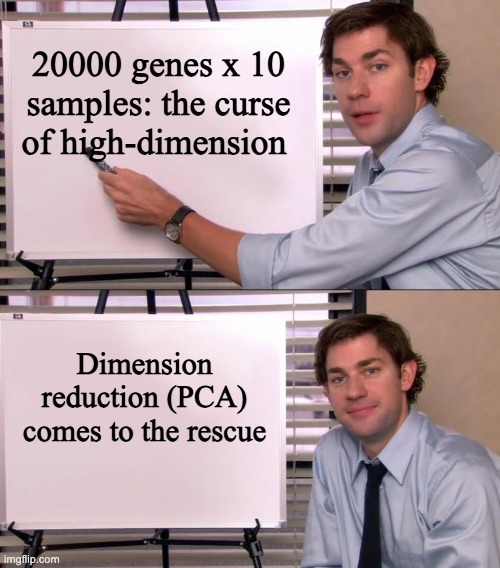
Ever wondered why analyzing RNA-seq data feels like walking through a fog with 20,000 dimensions?
Let’s talk about the curse of dimensionality in bioinformatics—and why it’s not just a math problem, it’s a biological one. 🧵
We just launched full genome sequencing for $599.
Not a panel.
Not a fraction.
All 3 billion base pairs.
30× coverage.
This changes what “DNA testing” actually means. 🧵
I sequenced my genome at home, on my kitchen table.
I wrote up exactly how I did it - the equipment, protocol, theory, and cost:
https://t.co/Nkjqaho2zm
Most RNA-seq pipelines are doing this wrong.
They run differential expression…
and stop there.
You’re leaving biological signal on the table.
I built pygage to fix that 👇
pip install pygage
#Bioinformatics#rnaseq#computation#computationalbiology
10 courses for my dream bioinformatics curriculum:
1. Unix Commands with Greg Wilson https://t.co/83VHvTqbMt
2. statistics and R with Rafael Irizarry https://t.co/ofYSIiChoW
Super excited to be launching two things today: #RustQC 🦀🧬 and https://t.co/3TQD6dpWTr 🚀
I used AI to rewrite 15 RNA-seq QC tools into a single Rust binary (I've never written any Rust). It ended up being over 60x faster. Here's the story 🧵
https://t.co/B6zYK6JX0g
It’s well known that inflammation increases cancer risk, but how?
The answer: the epigenome "remembers" inflammation and primes stem cells for cancer.
Here is our paper: https://t.co/FcnkLdpiKZ
And a special shoutout to the lead author @snaga13
A 🧵
[RNA-Seq Data Analysis Software]
We have released RNA-Seq Data Analysis Software. With our software, you won't need to outsource or rely on collaborators. You can start analyzing data yourself right away, without the need for high-spec computers or knowledge of Linux commands.







![OlvTools_en's tweet photo. [RNA-Seq Data Analysis Software]
We have released RNA-Seq Data Analysis Software. With our software, you won't need to outsource or rely on collaborators. You can start analyzing data yourself right away, without the need for high-spec computers or knowledge of Linux commands.](https://pbs.twimg.com/media/GSxr8I0aMAE6-CV.png)