@RealAmVoice@P_McCulloughMD@jsolomonReports Some pediatricians may be influenced by the pharmaceutical system, which naturally has financial interests in ongoing prescriptions.
@NowJust_G@craigbrockie Agreed. And some recipes say use a rock as weight but that's not good either as never know what heavy metals the rock might contain, i.e. lead, iron, etc.
@HighWireTalk@SecKennedy@MartyMakary@JeffereyJaxen@bpajer@drpaulmd Bayer-Monsanto Glyphosate go die in a corner. Quit trying to kill us with your stupidity and poisons. Manufacturer of Agent Orange wants the government to protect them from their products and evils
🚨 DYE HARD | EP 421 HHS’ @SecKennedy., FDA’s @MartyMakary to nix toxic food dyes. @JeffereyJaxen on the lab leak & rising cancer risk and COVID shots. @bpajer champions TN health freedom law. @drpaulmd speaks out with new book ‘Vax Facts.’ https://t.co/Vh5Sx0ok7y
Yes, it should absolutely be banned.
In 2010, Monsanto patented glyphosate as an antibiotic (U.S. Patent No. 7,771,736).
It disrupts the shikimate pathway, which exists in bacteria, fungi, and plants (but not human cells).
While this is how it kills weeds, it may also impact beneficial gut bacteria in animals and humans, especially since some microbes are more sensitive to glyphosate than others.
Additionally it is a Chelator
Glyphosate was originally patented in 1964 by Stauffer Chemical Co. as a metal chelator, not an herbicide.
Chelators bind to minerals (like calcium, magnesium, manganese, zinc, iron), which can make them unavailable to plants and soil microbes.
This raises concerns about nutrient depletion in soil and possible downstream effects on crop health and human nutrition.
Hi @Bill Mosler, I appreciate your perspective and agree that there’s a lot of confusion and misinformation out there about glyphosate. That said, I wanted to gently clarify one point: while glyphosate is indeed an herbicide and commonly used to clear fields of weeds, it is also sprayed directly on certain non-GMO crops—like oats, wheat, barley, and legumes—as a pre-harvest desiccant. In these cases, it’s used to intentionally kill and dry the crop to make harvesting easier.
This practice is well-documented in North America and parts of Europe, especially in regions with shorter growing seasons. It’s a different use case than weed control and does result in glyphosate residue on some food crops, which is why many consumers (myself included) have concerns and choose organic when possible.
I think we all want safe food and honest dialogue, and I appreciate hearing your viewpoint. Just wanted to share this nuance for clarity.
Crops Glyphosate is Sprayed (GMO)
These are typically genetically modified (GMO) cropsthat are engineered to survive glyphosate, so the weeds die but the crop doesn’t. However, when a non-GMO version of the crop is grown, glyphosate might be used to kill the entire plant before replanting or to terminate a cover crop.
Common GMO crops sprayed with glyphosate to kill weeds (not the crop):
Soybeans (especially Roundup Ready soy)
Corn
Canola
Cotton
Sugar beets
Alfalfa
In non-GMO rotations, glyphosate is used to clear the field before planting or to kill cover crops.
Crops Sprayed with Glyphosate to Dry (Desiccate) Before Harvest
Here, glyphosate is sprayed just before harvest to kill and dry out the crop, making harvesting easier and preventing mold or uneven drying.
This is called pre-harvest desiccation and is often used on:
Wheat
Barley
Oats
Rye
Lentils
Chickpeas
Peas
Flax
Canola (non-GMO varieties)
Sunflowers
Potatoes (sometimes)
These are not GMO glyphosate-resistant crops; glyphosate is used to kill the crop on purpose, and the concern is that residues can remain on the harvested product.
Where Glyphosate is Used as a Pre-Harvest Drying Agent
Glyphosate is used in the U.S., Canada, and parts of Europe, it's used as a pre-harvest desiccant.
Canada: Very common on wheat, barley, oats, and pulses.
U.S.: Used more selectively—primarily in the Northern Plains, Pacific Northwest, and Midwest on wheat and oats.
UK & EU: Still used on cereals and legumes, though its use is under more scrutiny.
Australia: Also used as a desiccant on cereal crops and pulses.
@P_McCulloughMD Arizona is trying to remove sodas. And I’m getting text messages about how they are trying to take away individual rights. And of course, sponsored by the American beverage Association.
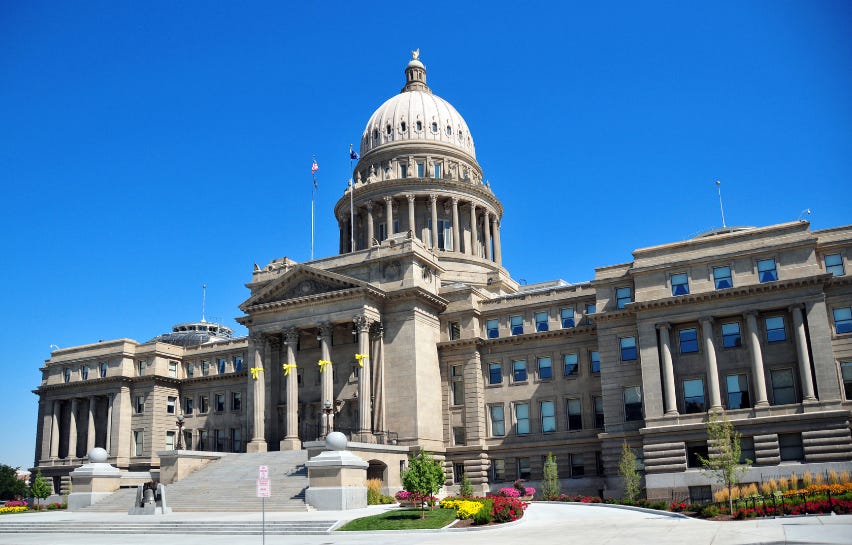
HUGE news out of Idaho, where the legislature just passed the Medical Freedom Act, banning discrimination on the basis of personal medial decisions. Special thanks to @LeslieManookian, who was instrumental in getting it passed. Read more here: https://t.co/78wsymrNM6