Ordinarily, I do not respond to statements like this because, being Igbo and Opeyemi being Yoruba, it is the perfect opportunity for the Ronu dog whistlers to crawl out and accuse me of tribalism. But for the sake of historical accuracy, I will indulge this one.
The claim that Igbo cuisine is less than a hundred years old is simply false. It is not merely false; it is embarrassingly false, especially when you consider that he says he arrived at this “fact” through his travels rather than through any empirical evidence. Even if that were enough to establish historical truth, the conclusion would still be wrong. Igbo as a civilization has existed for centuries. There is simply no plausible way our cuisine suddenly sprang into existence less than a hundred years ago.
What he can argue for, and what is no doubt true, is that ingredients, recipes and methods of preparation have changed over time. Cassava was introduced to West Africa centuries ago. Maize was introduced centuries ago. Tomatoes, certain varieties of peppers and groundnuts all came from elsewhere. That did not suddenly make Yoruba, Hausa, Efik or Igbo cuisines “new.” It simply meant those cuisines adapted, as all living traditions do.
If his standard is that the introduction of new ingredients resets the age of a cuisine, then there are hardly any ancient cuisines left on earth. Italian cuisine would cease to be ancient because tomatoes arrived from the Americas. Indian cuisine would lose much of what we associate with it because chilli peppers are not native to India. The logic collapses under its own weight.
Igbo food traditions long predate the World Wars. Yam, palm oil, cocoyam, vegetables, fermented foods, fish and game formed the backbone of Igbo diets centuries before the 20th century. Recipes evolved, certainly, but evolution is not the same thing as invention.
The problem with conversations like these is that Opeyemi, who should know better, has confused the history of an ingredient with the history of a cuisine. They are not the same thing. A cuisine is a cultural tradition. It grows, borrows, adapts and refines. That is precisely why it survives.
This is now their 28th Night in the den of terrorists!! 28 Nights! That’s 4 weeks! One Month!!! Ahhh!!!!!!!!!! God!!!!!! No shelter, no change of clothes, poor feeding, no safety, anxiety, molestation and abuse and different forms of emotional torture! God!!!😭😭
Mrs. Alamu Folawe – Principal
Mr. Ojo Jonathan – Vice Principal
Mr. Olatunde Zacchaeus – Teacher
Mr. John Olaleye – Teacher
Mr. Michael Oyedokun – Teacher RIP
Mrs. Oladeji – Teacher
Mary Akanbi – Teacher
Mr Adesiyan Adegboye - RIP
@officialABAT#BringBackOurTeachers
The man in this flyer is the father of one of my classmates.
A surgeon. A teacher. A mentor to thousands of doctors.
Today, he is in captivity.
If you can help, please donate.
If you can’t, please repost.
Let’s bring Dr. Uche Aguocha home. 🙏🏽
Last year, the US government said some African governments refused to participate in its forced deportation programme for illegal migrants. Ghana volunteered to collect them and help dump them.
In 2022, the British government decided it no longer wished to host asylum seekers on its own territory and needed somewhere to offload them. Rwanda raised its hand.
In 2016, the United States decided it could not keep certain Guantanamo Bay prisoners in its own facilities. Ghana openly agreed to receive them on African soil.
And now the United States has decided it cannot repatriate its own Ebola patients to its own vastly superior medical infrastructure. Kenya has offered to build them a treatment centre.
Every time a Western government identifies something it considers too dangerous, too embarrassing, too legally complicated or too politically inconvenient to keep on its own territory, there is always an African government somewhere ready to collect it.
Deportees, asylum seekers, terror suspects, infectious disease patients. The willingness of certain African leaders to position their countries as the world’s surrogate waste management service, in exchange for whatever diplomatic or financial token has no visible floor.
There will always be morally bankrupt opportunists in government who will not look at the safety of their people, the dignity of their flag or the solidarity owed to the oppressed, and will instead compete to be the most useful to the powerful.
When I advocate for seed sovereignty in Kenya, this example from Nigeria illustrates it perfectly.
Communities must always control,breed,share,sell and exchange their indigenous seeds.
Indigenous seeds have been tested and tried through generations and our climate.
Nigeria’s ginger export collapsed from a staggering N26 billion($47.5 million) to absolute zero in a span of just three years, wiping out the livelihoods of thousands of families.
The official excuse is being branded as a mere "fungal" disease, which is ridiculously funny, insulting, and misleading.
A mere disease can kill a handful of crops, but it can never systematically wipe out an entire agricultural belt spanning hundreds of thousands of acres. When a disaster of this magnitude destroys crops across multiple communities in Kaduna and neighboring states, we can be rest assured that this is a man-made, policy-driven disaster without a single shred of doubt.
Indeed, the N26 billion export figure quoted was not from 2024. Nigeria’s export of ginger in 2024 had already plummeted to a pathetic N6.2 billion, roughly 4.7 million dollars, which forces us to ask what actually happened between 2023 and 2024 to pave the way for this historic, sudden decline.
Everything began in 2017, when the World Bank sent their economic hitmen to Nigeria to convince the federal government that our agricultural output was poor.
They claimed the issue was not because the predatory terms of the World Trade Organisation banned the government from subsidizing local farmers, providing modern tractors, building secure storage facilities, or protecting domestic markets from heavily subsidized Western imports.
Instead, they deceitfully concluded that Nigerian farmers were doing poorly simply because they lacked access to modern, high-yielding, corporate-patented seeds.
As usual, the incompetent Nigerian government under the Buhari administration rolled over, spread their laps, and eagerly accepted a 200 million dollar loan from the World Bank to kickstart the APPEALS project.
Nigeria historically grew two traditional, highly resilient, non-genetically modified varieties of ginger known as UG1, locally called "Tafin Giwa," and UG2, locally called "Yatsun Biri."
Under this APPEALS program championed by the World Bank, ginger farmers in Northern Nigeria were instructed to abandon their local, highly resilient seeds. Instead, they were forced to source new, delicate foundation seeds from the National Root Crops Research Institute in Umudike, Abia State.
The NRCRI does not operate in a vacuum: it functions within a complex global network of funding, corporate interests, and academic research heavily bankrolled by the Bill and Melinda Gates Foundation and the agro-chemical giant Monsanto.
Under this collaborative framework, the Gates-funded institute provided the laboratory methodology and the modified parent seeds, while the World Bank’s APPEALS project supplied the logistics, the demonstration farms, and the training to force farmers into growing these highly dependent seeds. .
Traditionally, farming ginger is not rocket science. All a farmer had to do was make a small hole in the soil, drop the seed rhizome inside, cover it up, and let nature do the rest.
But because the farmers were forced to abandon their traditional seedlings and adopt the genetically fragile, volatile, lab-grown tissue cultures from the Gates-funded institute, they no longer had that luxury. The institute's labs simply lacked the capacity to mass-produce these delicate seeds at the industrial scale required for nationwide agriculture.
This is where the World Bank's economic traps clicked shut. Under the APPEALS program, farmers were trained to cut the healthy foundation rhizomes into tiny, microscopic pieces weighing a mere 4 to 5 grams. These tiny buds were then dipped in a specialized, highly expensive chemical fungicide wash, placed into artificial nursery trays, and kept under protective, climate-controlled shade nets. The farmers had to baby these nurseries, watering them with meticulous care just to get the single buds to sprout into disease-free green seedlings over a thirty-to-forty-day period.
Once these fragile green shoots reached a height of 10 to 15 centimeters and developed a weak, independent root system, the farmers had to carefully transplant them directly into pre-prepared ridges in the open fields.
At first, it looked like a miracle. The farmers saw a temporary 67% surge in their ginger yields, which was paraded by World Bank PR teams as a massive success. But the APPEALS program was only scheduled to last for six years. In 2023, the World Bank packed up their bags, collected their interest, and quietly left the country.
Naturally, the farmers attempted to continue farming on their own to maintain their profit margins, but they ran into a fatal wall. It is not enough to train farmers to use delicate, laboratory-engineered seeds: you must also fund the highly specific chemical inputs those seeds require to survive in the wild. As soon as the farmers tried to buy the specialized fungicides and chemical washes needed to protect these hyper-sensitive crops, they realized the prices had skyrocketed by over 300%, making them completely unaffordable for the average rural farmer.
Desperate, the farmers tried to source cheaper, local alternatives, but these fragile seeds are so biologically delicate that the slightest deviation in chemical treatment or soil temperature renders them sterile and highly vulnerable to pathogens. This is how Nigeria's ginger output collapsed from 47 million dollars in 2023, to a pathetic 4.7 million dollars in 2024, and finally to absolute zero by 2025.
There are many performative reforms currently ongoing to supposedly rescue the Nigerian ginger market. But the cold truth is that the World Bank and Bill Gates successfully destroyed a thriving, self-sufficient local industry that fed millions of homes, and this is not the first time this economic sabotage has occurred in Nigeria.
Look at what they did to our cocoa industry in the late 1980s. Under the brutal dictates of the World Bank's Structural Adjustment Program, the federal government was forced to dissolve the Nigerian Cocoa Board, which had historically guaranteed price stability, provided free high-quality seedlings, and subsidized essential pesticides for local farmers.
Once the market was liberalized, our local farmers were left completely defenseless against the volatile swings of the global commodities market and the predatory pricing of Western buying cartels like Cargill and Barry Callebaut, systematically crashing Nigeria's dominance in global cocoa and reducing our once-proud farmers to low-wage laborers for multinational corporations.
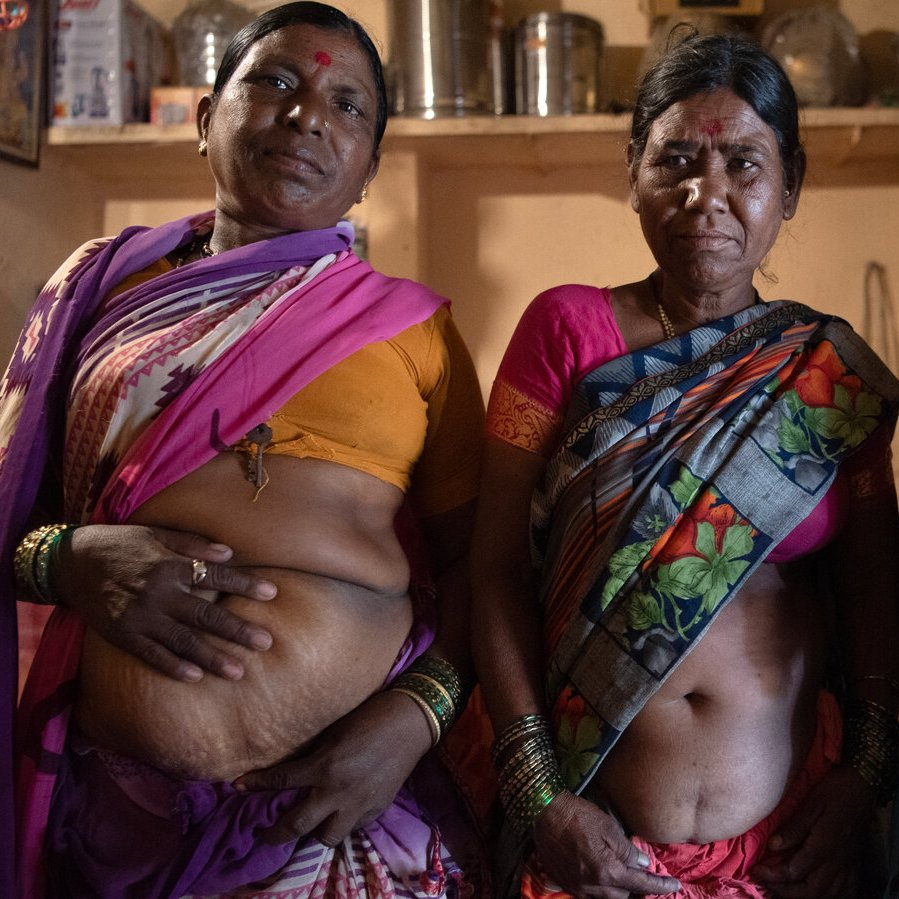
🇮🇳🩸👩🏽🌾Les travailleuses de la canne à sucre en Inde SE FONT RETIRER l’utérus pour ne plus manquer une journée de travail.
Dans le district de Beed (Maharashtra), des ouvrières de la canne à sucre subissent des hystérectomies pour ÉVITER LES ABSENCES liées aux règles, aux grossesses ou aux fausses couches. Dans le système de travail « jodi », les couples sont surendettés et TRAVAILLENT jusqu’à 14 HEURES PAR JOUR, sans congés ni protections, poussant certaines femmes à voir cette opération comme une solution pour continuer à travailler.
Malgré des enquêtes menées en 2019 révélant plus de 13 000 HYSTÉRECTOMIES dans le district de Beed et des promesses de réformes, les militants dénoncent un manque de changements concrets. Les conditions de travail extrêmes, le MANQUE D’HYGIÈNE et la pression de certains médecins FAVORISENT ces opérations.
Les autorités locales, sous pression médiatique, ont lancé de nouvelles enquêtes et PROMETTENT DES MESURES, mais les activistes estiment que le système reste inchangé.
(The Guardian)
There is also a conversation we need to have with Christian men.
Because some of you speak about women with an underhanded disdain that is deeply un-Christlike, then hide behind “biblical order” to justify it.
You cannot simply look at every Christian woman who resonates with feminism and dismiss her as rebellious. History has shown women have had reasons to fight. The Church is not entirely innocent in the abuse and silencing of women. We have sometimes weaponized Scripture instead of rightly dividing it.
Some women did not become angry because they hate God. They became angry because people used God against them.
There are women who have been talked down to, ignored, diminished, spiritually manipulated, and emotionally controlled in church spaces while men quoted “submission” at them like a threat.
And when women begin to push back against that, you cannot automatically label them rebellious without enough humility to ask:
“What exactly are they reacting to?”
Because even in Scripture, God did not condemn women who challenged systems.
The daughters of Zelophehad fought.
They contended.
They challenged a structure that disadvantaged them.
And God said:
“The daughters of Zelophehad speak right.” (Numbers 27:7)
Not rebellious.
Not dishonorable.
Not with the spirit of Jezebel…
Right.
Some of you need to realize that being male does not automatically make your interpretation superior.
Statements like:
“Woman was created later, therefore she is lesser,”
“Eve was deceived, therefore women are inferior,”
“Men are naturally superior because Adam came first,”
do not make you sound spiritually mature. They make you sound biblically unintelligent.
Genesis 1 says:
“Male and female created he them.”
God did not create woman as an afterthought. He had both genders in mind from the beginning.
And Genesis 2 is not about superiority.
It is about order.
Order does not mean value.
Christ and the Church have order.
The Father and the Son have order.
Order is not inferiority.
In fact, biblical leadership is not domination.
Christ never used His position to belittle the Church, He died for her.
So how did some Christian men become more arrogant than Christ?
You brandish submission like a weapon.
You speak about masculinity like it is superiority.
You talk about women as though leadership means lordship.
News flash, you are not a biblical male. You are carnally minded and we all know what that means.
To lead in our Kingdom is to serve. Where is your service?!
And if creation order is your argument for superiority, then goats should be greater than men because animals were created before Adam.
The logic collapses immediately.
The truth is many women are angry because they encountered distortion disguised as doctrine.
Male ego preached as theology.
Misogyny defended with proof texts.
And instead of constantly rushing to call women rebellious, maybe Christian men need enough self-awareness to ask:
“Have we represented Christ properly?”
Because many women are not rejecting Christ.
They are reacting to men who looked nothing like Him.
Love and Light… with a sprinkle of Holy Ghost Fire.
The husband, wife, and their unborn child who were killed by terrorists have been laid to rest.
A beautiful family destroyed right in front of their home 😔💔