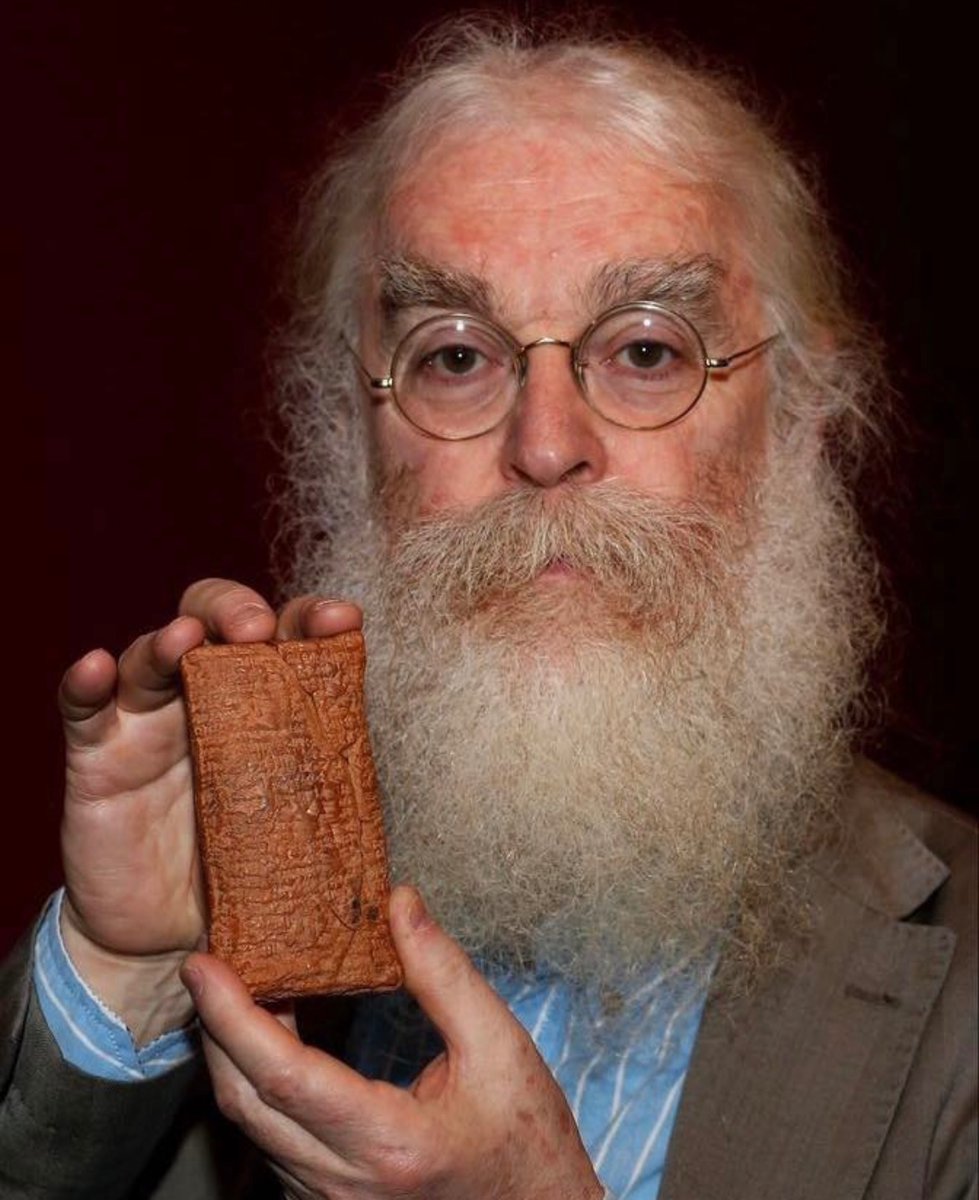
Dr. Irving Finkel with a 3,770-year-old tablet containing instructions from the god Enki to Sumerian King Atram-Hasis (Noah figure in earlier versions of the flood story) to build a 220 ft diameter round ark coracle
Hummingbird changes colors with every turn
It's an Anna's hummingbird, and technically, the bird's feathers never change color. It's the angle, not the feathers, that determine what color we see.
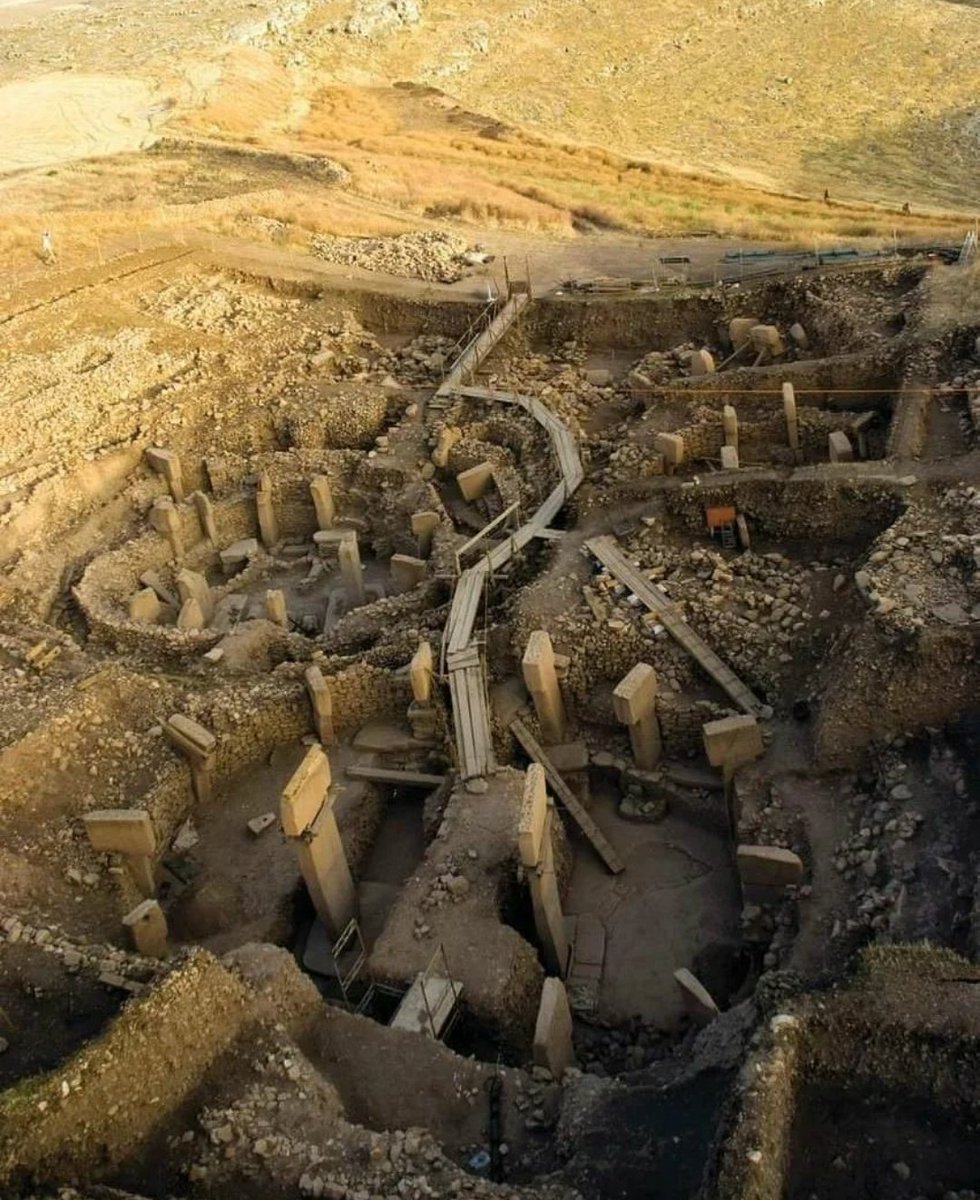
The mystery of Göbekli Tepe: humanity's first temple intrigues researchers !!!
Archaeologists still don't know how to solve the riddle of a place that predates Earth's great civilizations by thousands of years.
Göbekli Tepe is one of the great mysteries of the world. Few archaeological discoveries intrigue researchers as much as this one, which may be humanity's first temple. The structure (located on the territory of present-day Turkey) was erected around 10,000 years before Christ by nomadic societies of hunter-gatherers from the Neolithic period.
Alignment with Constellations :
Everything in Göbekli Tepe is mysterious. From the techniques used to erect the monoliths without the help of animals to the fact that no human settlements were found near this temple. The site is believed to be a shrine due to its configuration and alignment with different constellations, and thus it is deduced that there was a cult that looked to the sky.
The discoveries made in the region suggest that this was the exact point at which the revolution in agriculture, religion and even society began. It is possible that the complex of temples or shrines at Göbekli Tepe represented fertility, life or abundance, as reliefs found there depict animals.
Göbekli Tepe is a challenge for archaeologists, as it completely rejects the idea that only sedentary communities erected monumental buildings. That's because the temple was possibly built by nomads more than 5,000 years before Stonehenge or the pyramids of Egypt.
- Subscribe for Weekly Newsletter -
https://t.co/QSjn4yGpeh
#archaeohistories
It’s already common knowledge that beer was first brewed in ancient Egypt. There is evidence that ancient Egyptian society as a whole was willing to experiment with mind-altering substances.
But the ancient Egyptians didn’t stop at just beer. Archaeological discoveries, mythological tales, and even human remains show evidence that drugs like opium, cannabis, and the esoteric blue lotus were consumed by ancient Egyptians.
What is most interesting about these findings is that in several cases, modern pharmacological science backs up what the ancient Egyptians were saying about their drugs. For instance, the Ebers Papyrus describes the use of cannabis to treat menstrual cramps and hemorrhoids — something which even present-day medical researchers are looking into.
A second example would be the blue lotus, Nymphaea caerulea. It was considered an aphrodisiac as well as a relaxant. The extract of this plant in modern times has been used in erectile dysfunction drugs as well as sleep-inducing teas.
Even the ancient Egyptian deities were not above indulging in drugs from time to time.
The venerable Thoth, considered the patron god of science and knowledge, was credited with discovering opium. In a legend that shows the ancients understood its pain-relieving properties, the goddess Isis is said to have cured the Sun god Ra’s headache with an offering of opium.
This divine association may be one of the reasons why the use of opium was popular among priests and the elite of ancient Egyptian society.
Cannabis is another drug that has been used in rituals in many cultures, including ancient Egypt.
The plant’s distinctive form can be spotted in imagery associated with Seshat, the deity of wisdom, and Bastet, the feline goddess of war.
Since the Pharaohs considered themselves gods made flesh, they were not to be left out. Cannabis pollen was found on the mummy of Pharaoh Ramses II who died circa 1213 BC.
The adoption of cannabis as a recreational drug in ancient Egyptian society can be inferred from all the historical evidence, as well as the fact that the plant itself originated in the Middle East.
Simulação de incêndio em Shaanxi, na China, mostra a ação de 3 drones ajudando no processo de exterminar o fogo, essa simulação mostra também um grande avanço na tecnologia e como ela pode ser usada pro bem, numa situação dessas você evita por exemplo expor o ser humano as chamas entre outras coisas!!