He’s typing in a search bar, quick show him the search option he’s looking for.
Perfect. He typed the next letter that is also the next letter in the option we just showed him so take that option away and show him an option that doesn’t match at all
@Mandrik@DavidFBailey@TheBitcoinConf Honestly, your baklava was probably the tipping point in getting me to go again this year.
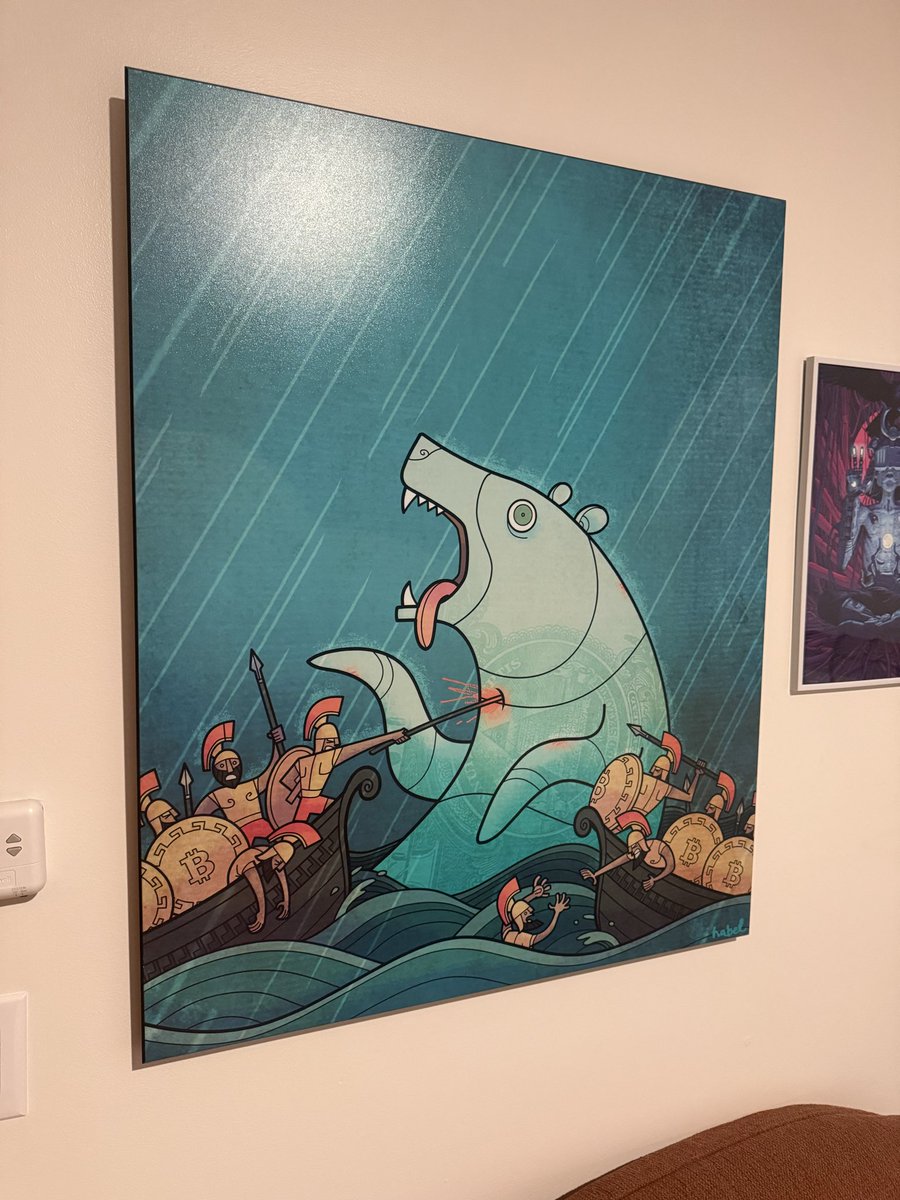
Thanks for sharing your art!
@nlw thank you!!! for every episode you made of The Breakdown! I've barely missed an episode since 2018, and deeply appreciate the daily knowledge you brought me, and anyone insightful enough to listen
I'm sincerely sad its over, and appreciative of the work you put in
These men created tools of freedom and financial independence. They wrote code and ran businesses. They are good people.
They were rewarded with federal prison sentences.
Keonne Rodriguez
William Hill
Ian Freeman
Roman Sterlingov
Roman Storm
Free the crypto prisoners.
Please help us get this over the line. Every signature helps.
Sign and share this petition asking @realDonaldTrump to pardon me and Bill
https://t.co/XxA7gSEntv
In 2021 federal agents raided the host of our radio show, Ian Freeman, in Keene, New Hampshire.
They swept his studio and church, seized gear, froze accounts, and turned a community hub into a crime scene.
That morning began the case that now keeps a peaceful community member in a federal cell and will keep him behind bars for 6 more years unless we do something about it.
Ian spent years running a public-facing exchange in New Hampshire and a daily call-in show that preached peaceful living and voluntary exchange.
He helped the unbanked, the elderly locked out by “de-risking,” and anyone burned by paperwork walls move their money into digital cash. No violence. No stick-ups. Buyers brought dollars, received bitcoin, and walked out. That was the service.
The case was built on a theory that treats peer-to-peer exchange as crime when it escapes bank control. Old statutes were stretched over new rails, then the stretch was called fraud.
Customers who got exactly what they paid for were recast as “victims” because the trades avoided gatekeepers. The “harm” was hypothetical. The punishment is real. A community lost a builder. A family lost support. And a roadmap was written for prosecutors to use against anyone who keeps value flowing outside legacy rails.
You do not have to love crypto to see the danger here. When process drifts this far, it does not stop with one man. It lands on church treasurers who help parishioners wire money, on small remitters who serve immigrants, on local kiosks that keep cash alive when banks close accounts. It chills lawful exchange, it freezes innovation, and it tells every small operator to shut the door and leave people to the mercy of institutions that already failed them.
This is the moment to correct it. Say the quiet part out loud. Peaceful swapping of money between consenting adults is not a public menace. Treating it like one breeds more overreach, more fear, and less trust. Ian built something useful in daylight. He deserves to come home.
Help us make noise. Share his name. Share this post. Call your people.
We ask the White House for clemency. We ask the Department of Justice to revisit a case that punishes process rather than harm.
If liberty means anything, it means letting neighbors trade with each other without being caged for it.
Free Ian Freeman.