SHE REPORTED CHILD ABUSE 181 TIMES. BRITAIN SAID NOT NOW, THANKS.
Sara Rowbotham was an NHS sexual health coordinator in Rochdale. Between 2005 and 2011 she filed 181 detailed referrals to Greater Manchester Police and social services.
Each one named victims. Each one described systematic rape and trafficking of girls as young as 11. Each one went nowhere.
She was not ignored because the evidence was weak. She was ignored because the evidence was inconvenient.
Authorities labelled her not credible. Her team was dismissed. The official reason given for inaction was community cohesion.
Read that again.
Community cohesion. While children were being passed between men like property, the priority was keeping things quiet.
She was made redundant in 2014.
A 2024 independent review confirmed every referral she filed was credible, substantive and appropriately communicated. The same review identified 96 men still considered an active risk to children. Still out there. In 2024. Because the original response scraped only the surface and called it a job done.
Five police officers refused to cooperate with the review. They were not charged. They were not recalled. They retired on pensions.
Sara Rowbotham got an MBE.
The system that failed 181 times got a press release about lessons learned.
If this does not alarm you, you have not understood it yet.
@BBC@guardian@AndyBurnhamGM
So you say there's no money in the pot for Free Travel for Disabled People, yet there you are getting free charging for your electric cars whilst double dipping by claiming travel expenses. Beyond belief 🤷♂️@ImtacNI
Do you hear a new Government announcement and wonder, 'Is that a lot?'
Enjoy the news but get frustrated when things are presented out of context?
Here are 50 facts to help put things in perspective.
https://t.co/kpcKU5wqDt
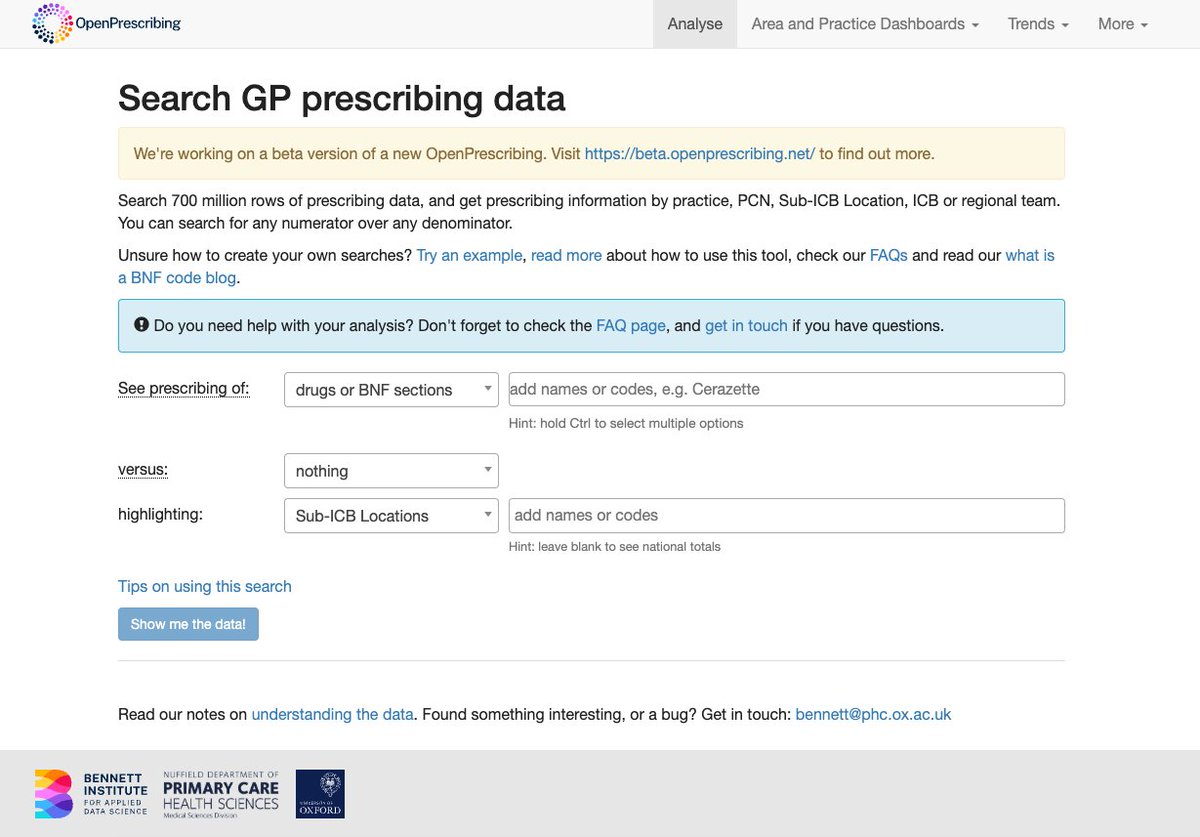
A team at Oxford built a search engine for every drug the NHS prescribes, and it has quietly saved the health service millions.
It's called OpenPrescribing.
The NHS publishes its full prescribing dataset every month. It's 700 million rows of raw numbers nobody could actually read. So Oxford built a tool that turns it into live charts in seconds.
You type a drug name. It shows you which practices over-prescribe it, which regions are slow to follow new guidelines, and where the money is being wasted.
→ Search any drug across any GP practice in England
→ Find safety and cost outliers instantly
→ 70+ ready-made quality measures
→ Updates monthly, automatically
→ Free, open source, MIT licensed
20,000 people use it every month. Doctors. Researchers. Journalists.
Public data that sat unreadable for years is now one search away.
https://t.co/U9KI0mUCAp
Illegal tobacco is costing HMRC £4.5bn a year, according to a new report by @KPMG. That means that around one in three cigarettes in Britain today is illicit, fake, or smuggled.
The £4.5bn is funnelled into human smuggling, drug trafficking, crime gangs, and terrorism. This is entirely the government's fault, and they have been happy to carry on taxing and regulating despite the effects on the market.
The black market trade in tobacco doesn't just fuel crime though. What makes up black market cigarettes kills much more quickly and painfully than regulated tobacco - we're talking about rat droppings, heavy metals, pesticides, you name it.
Government has under-resourced trading standards and ignored calls from retail, economists, and the industry, to cut tobacco duty and fund trading standards properly. But, it doesn't seem that the government cares enough, so we will see more gang violence, fewer jobs in retail, and more health problems from illicit consumption.
Want to browse the new Mandelson documents without wading through 500-page PDFs?
We’ve built a custom search engine for the whole release.
Extracts individual documents. Search by sender, recipient, subject, date, or any text - instantly.
Hello, we are Jonathan and Abigail - unashamed pedants who want to bring this affliction to bear on all things public policy and practice.
We believe that details matter, especially in public administration. This is why today we are founding quibble: a campaign to fix the small stuff.
Think, for example, about the cookie banner that we click on every webpage. Each instance is not a big deal, so we just put up with it. But its cumulative impact adds up - on average we press it 5 times per day. The European Commission estimates that it costs EU citizens 343 million hours per year.
And who is there to represent the impacts of seemingly minor issues like this in a systematic way? We want quibble to be the answer. In the case of the cookie banner, lots of advocacy has rightly focused on privacy, but has this meant that user experience has taken a backseat? We believe there are ways to improve user experience without compromising on privacy. We will share more about this soon.
Consider another example. Did you know that in some government-run car parks you can be fined for a minor keying error, such as accidentally typing a zero instead of an “o”? Again, we will come to the detail of this quibble in the coming weeks, but for now just consider again the question: who? Who is there currently to systematically represent the interests of the parker who is given an unfair ticket?
An inherent feature of consumer interests is that those who have them rarely have enough other things in common to make collective organisation and representation feasible. This is the gap that quibble seeks to fill. Now of course excellent consumer interest groups exist. But understandably quibbles might not be at the top of their lists. Our hope is that quibble will be complementary; picking up the bottom-of-the-list issues faced by various groups - the stuff they are almost too embarrassed to raise because they are too small.
We are not embarrassed about detail. If you’ve ever had a splinter, you know small things can have a big impact. This is what quibble is committed to tackling, and our wider hope is that by doing so we will also incentivise policy makers to be even more careful about detail.
Check out our website here, including our first four campaigns: https://t.co/gZiqqHbhIL
This is a political failure of the current & last govt, and a regulatory one. The solution is simple... BAN (ABOVE INFLATION) MID CONTRACT PRICE HIKES.
- They took too long to tackle mid-contract above inflation price rises
- When Ofcom did, it just said 'mid contract rises are ok, if you say in £s at sign-up what it'll be'. This has resulted in even bigger % above inflation hikes.
Some possibilities here:
1 nobody in finance/management at the SNP understood this balance sheet. They thought rental cars were “fixed assets” (a basic error)
2 they understood it, but thought the SNP actually owned vehicles.
3. Willful blindness/covering for Murrell
Mr Polanski wants billions of £ to fund his spending plans. He'll have to borrow most of this from the bond markets, because that's how world governments borrow money. If you vote for Mr Polanski's party, you will in fact be voting, de facto, for the bond markets.