Esta división que tenemos como sociedad va a ser nuestro fin si no aprendemos a escucharnos con empatia. Andamos en bandos como si fueramos a una batalla pero la única guerra es la que tenemos adentro. Izquierda o derecha, creyente o no creyente, somos todos hermanos.
@OrganikRobot@MarioNawfal Spoken like someone who is able-bodied. Try living a day with muscular dystrophy plus no available assistive devices to help you plus no available treatments.
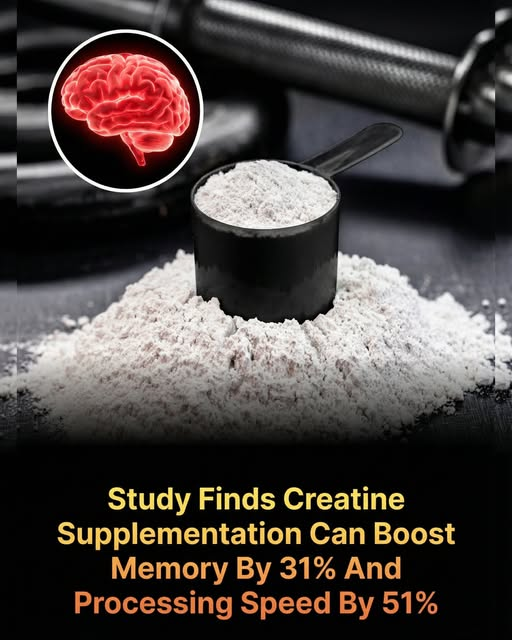
Creatine, long celebrated for supporting muscle growth and athletic performance, is gaining recognition in neuroscience as a powerful aid for brain energy management—especially under demanding conditions like mental stress, intense cognitive effort, or sleep deprivation.
As the brain's primary energy currency, adenosine triphosphate (ATP) gets rapidly depleted during high-demand tasks. Creatine helps by facilitating the quick recycling of ATP through the phosphocreatine system, providing neurons with a more reliable energy buffer to sustain performance when demands spike.
Recent systematic reviews and meta-analyses of randomized controlled trials have quantified these effects. A 2024 meta-analysis (Xu et al., Frontiers in Nutrition) found that creatine monohydrate supplementation significantly improved memory performance, with a standardized mean difference (SMD) of 0.31 (95% CI: 0.17–0.44; equivalent to Hedges' g ≈ 0.30), alongside benefits in information processing speed and attention time in some measures. An earlier 2023 meta-analysis (Prokopidis et al., Nutrition Reviews) reported an overall SMD of 0.29 for memory enhancement in healthy individuals, with particularly strong effects in older adults (SMD = 0.88 in those aged 66–76 years).
While this 0.31 SMD reflects a modest-to-moderate standardized effect size (not a literal 31% raw improvement in every person or task), it indicates meaningful gains in memory, mental clarity, and processing efficiency—especially when the brain is challenged.
Benefits tend to be most evident in specific groups: older adults (who may have lower baseline brain creatine), vegetarians/vegans (with naturally reduced dietary intake), females, and those experiencing sleep deprivation or high mental fatigue. Emerging research is also exploring creatine's therapeutic potential for neurological conditions such as Alzheimer's disease, traumatic brain injury, depression, and mild cognitive impairment, though evidence remains preliminary and strongest for memory support.
Creatine isn't a miracle cure or standalone fix—it's best viewed as a supportive nutrient that bolsters brain resilience. Experts stress the need for more large-scale, long-term studies to clarify optimal dosing, duration, and broader impacts on neurological health.
[Xu C, et al. (2024). The effects of creatine supplementation on cognitive function in adults: a systematic review and meta-analysis. Frontiers in Nutrition, 11:1424972. doi:10.3389/fnut.2024.1424972]
El propagandista de Tomás Rivera y cabilderito light de Esencia @LeninPR se cree que es periodista 🥹
Periodista es Bianca, Carmen Enid, Barbara Figueroa, Valeria Collazo, el CPI…
Si estás molesto porque te dijeron la verdad en la cara, V al C Lenín
[ESCUCHE, VEA Y DISFRUTE] Este es el hermoso amanecer 🌅 de #Barranquitas. Una sinfonía de sonidos de pájaros y animales, y una vista incomparable del cielo con la neblina y nuestras montañas. Puerto Rico…realmente…es otra cosa.
♥️⛰️🇵🇷☁️ Comparte este post a todo el que necesite ver y escuchar nuestra isla del encanto.
📸 Rivera Marilyn #puertorico
An MIT Media Lab study used EEG to track what happens in the brain when people write with ChatGPT rather than on their own. Fifty four students completed essay tasks while wearing electrode caps. One group used ChatGPT, one used a search engine, and one used no tools. Across sessions, the ChatGPT group showed the weakest neural connectivity in networks linked to memory, attention, and analytical work. They also had more trouble recalling what they had just written and produced more generic prose. The authors describe this as a kind of cognitive debt: the tool does the synthesizing, and the brain stays quieter [1].
The same experiment points to a better order of use. Students who first wrote unaided and only later switched to ChatGPT showed stronger recall and more widespread brain activity than students who started with the model and then had to work alone. In other words, the model helped more when it scaffolded thinking that was already underway than when it replaced that thinking from the start. The practical lesson is not that large language models should be banned. It is that they work best as a second pass, after the writer has already done the hard part of forming and remembering an argument [1].
[Kosmyna, N., Hauptmann, E., Yuan, Y. T., Situ, J., Liao, X. H., Beresnitzky, A. V., Braunstein, I., & Maes, P. (2025). Your Brain on ChatGPT: Accumulation of Cognitive Debt when Using an AI Assistant for Essay Writing Task. arXiv. DOI: 10.48550/arXiv.2506.08872]
Tesla now has a dedicated live Virtual Power Plant dashboard for multiple regions: California, Texas, New England, Australia and Puerto Rico.
In total, Tesla has 226,158 homes participating with a total capacity of 2.3 GW.
You can even go back in time to a specific grid event/date and see how many Powerwall units dispatched, energy output for that event, etc. Pretty cool.
Link: https://t.co/MaVeRz9O3Z
The Fibonacci sequence (0,1,1,2,3,5,8,13…) isn’t just math — it’s a universal pattern. As it grows, ratios of terms approach the Golden Ratio (Φ ≈1.618), a harmony found in spirals, plants, shells, galaxies & even DNA.
[🎞️ thevisualalchemy]