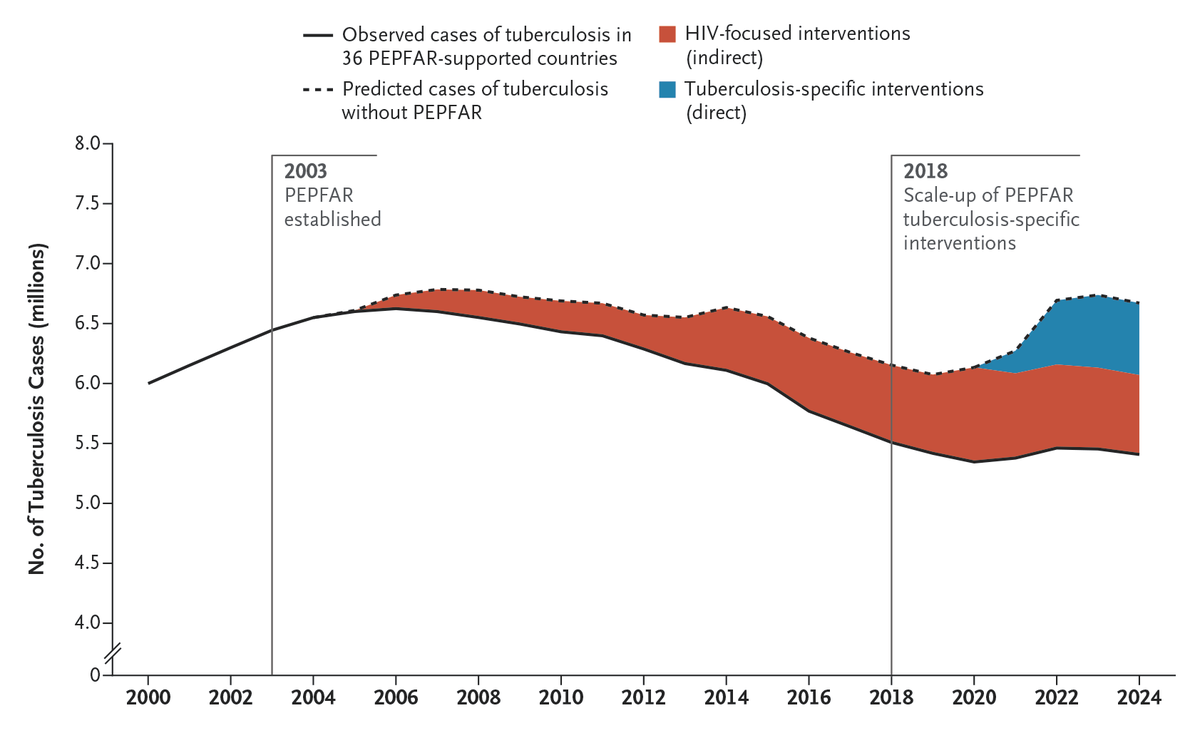
Tuberculosis remains a leading cause of death worldwide among persons with HIV. In this report, the effect of the PEPFAR program on incident cases of tuberculosis and related deaths is presented. Read the full report: https://t.co/qmpnYA45W7
@CDCgov | #WorldTBDay
Lab-confirmed #TB diagnoses in young kids often require invasive procedures that cause severe physical and mental distress. In @PLOSDigiHealth we show #MachineLearning can help clinicians decide if these costly, invasive procedures should be ordered #EndTB https://t.co/oB8GYwkr3h
In this @CDCMMWR, we demonstrate a collection of interventions improved #MDR#TB treatment retention among highly mobile migrant patients during the #COVID19 in India. It will take a lot of hard work, but #YesWeCanEndTB#WorldTBDay#EndTB https://t.co/mS2oD2Ioms
Our study on isolation and quarantine behaviors in the US during the #COVID19 pandemic found that most infected individuals chose to isolate. Contact tracing helped, but the proportion of adults engaging with the public health system was suboptimal https://t.co/CFOIUfOEEZ
Congrats to @kennyguna and team for spearheading important work in guiding sensible and clinically appropriate decision making in pediatric #TB - one of the leading causes of death for children worldwide. An enormous step forward to #EndTB https://t.co/SdfmkDoY5D
We used whole genome sequencing from a population-based cohort and 2 decades of clinical encounter data to identify nosocomial transmission of #tuberculosis in Botswana: odds were over 6x in rural vs urban facilities. Read more @AmJEpi#EndTB#StopTB#TB https://t.co/edyWegbYrX
In a recent study, scientists searched for population-based analysis in which #WGS was used to estimate #TB transmission and clusters. Identifying geographic sources may have a considerable impact on controlling and mitigating TB transmission.
https://t.co/IqTzHjnVGp
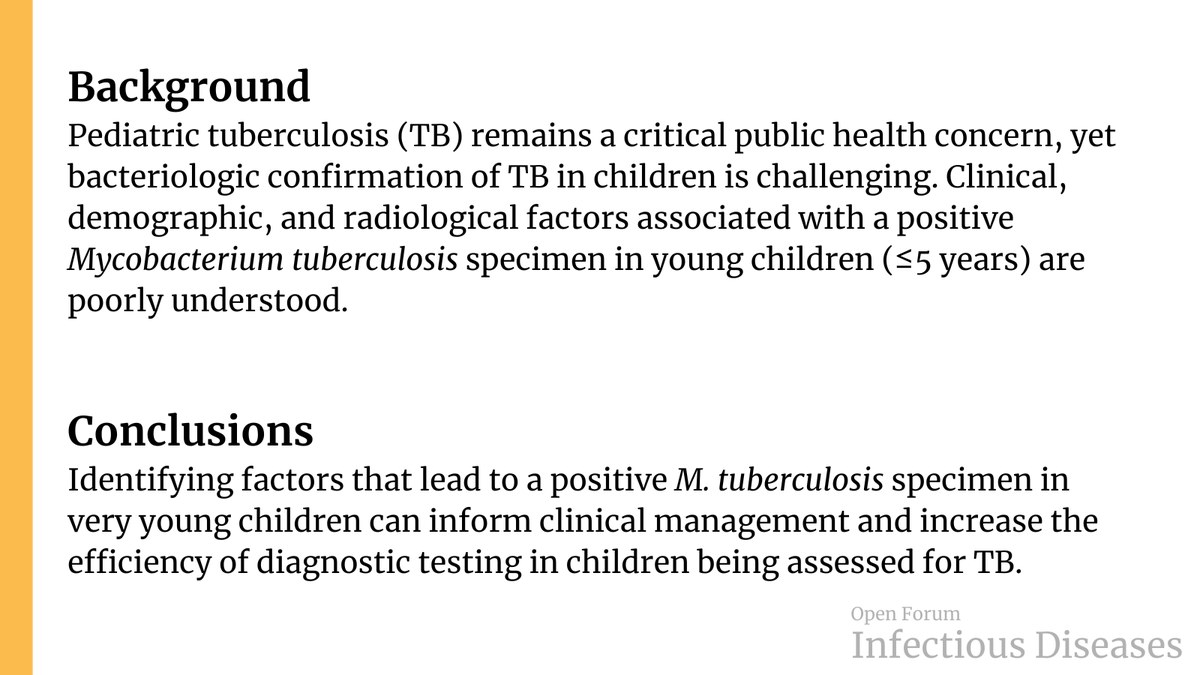
Clinical and radiologic factors associated with detection of Mycobacterium tuberculosis in children under 5 years old using invasive and noninvasive sample collection techniques - Kenya
✅ Just Accepted
🔓 Open Access
🔗 https://t.co/jYGmf2EVmE
@BryanDJames Hi @BryanDJames - thanks! I uploaded the reproducible code I used to create this GIF on GitHub for you: https://t.co/csQ4YmQVCF Basically made 1000 pngs and stitched them together. Hope you have a great day!
Diagnosing kids with #TB is among the greatest ongoing challenges to #EndTB - 96% of kids who die of TB are undiagnosed. Here, we examine clinical/CXR factors associated w/ lab-confirmed TB in young kids across multiple sample techniques @OFIDJournal#tb https://t.co/ztjD5fU2Lk
New in AJE:
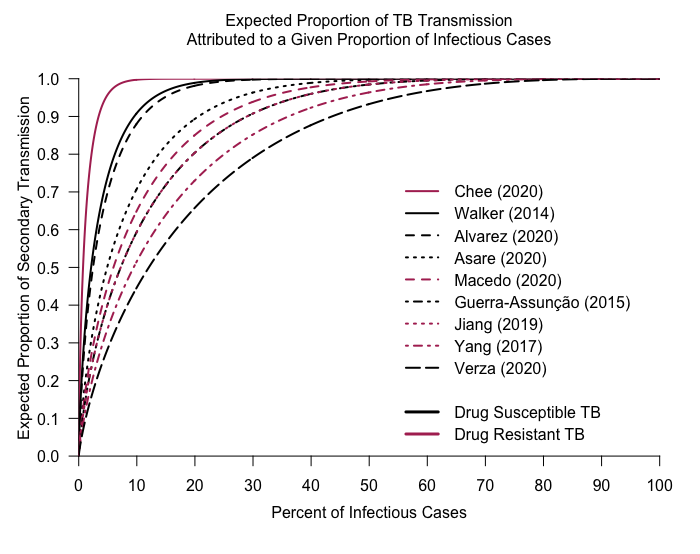
Interested in #TB transmission dynamics? This systematic analysis of whole genome sequencing data estimates that 80% of TB transmission occurs from less than 30% of cases
@jpsmithuga@neelrgandhi@ted_h_cohen@soustha@davidwdowdy
https://t.co/by8JE5BGZG
New systematic analysis in @AmJEpi using whole genome sequencing to identify #TB transmission clusters suggests 2-31% of cases drive >80% of TB transmission across global settings. @jpsmithuga@ted_h_cohen@soustha@davidwdowdy@neelrgandhi https://t.co/2Qn4CAtRR1”
Understanding TB transmission dynamics in high-burden settings is notoriously challenging. Here we use geospatial, genotypic, & clinical data of #TB cases in Botswana and find transmission dynamics vary markedly between high-burden subpopulations #endTB https://t.co/LhjXWFWuS4
A recent CDC study of tuberculosis (TB) transmission in Botswana shows little risk from healthcare settings and highlights the need for targeted interventions aimed at community spread of #TB. Learn more about the findings: https://t.co/NnbtxaCRCj
Healthcare facilities are high-risk for TB transmission, but how do they contribute to the overall TB epidemic? We combined detailed cohort and 2 decades of clinical encounter data to find ~5% of all TB transmission is attributed to HCFs in Botswana @iche https://t.co/eZIreSCvAd