It is rare where your work and hobbies intersect, and this is one of them. This reflection on the use of AI-generated art in boardgames has implications for its application in education and the production of learning materials. Thank you Justin @RestorationGame cc @trucano
I've let this marinate for a bit, but I figured I would go ahead and post about the AI art in boardgames situation, recently thrown into the spotlight with the TM KS campaign. Thread:
How do you scale education innovations for impact? @BradOlsen_DC and Larry Cooley from our Center for Universal Education answer some common questions from the field.
1⃣ What is scaling?
📣Our new mega-paper just released in @nberpubs. So proud of this one. A 5-country randomized trial in India, Kenya, Nepal, Philippines, & Uganda. We evaluate phone calls to deliver targeted education during school disruptions. Learning gains = .33 SD.
https://t.co/VRuF1DdnIi 👇
AI is taking the jobs of Kenyans who write essays for U.S. college students https://t.co/RXimq2ph3o | Ghostwriters say the meteoric rise of ChatGPT has coincided with a drop in income #edtech
I wrote about what I think is a deeply under-appreciated fact about AI models like GPT-4:
They're reasoning engines not knowledge databases
https://t.co/NFcGHiGBSZ
Over the last 10 years, I've had the honour of learning from some incredible teacher educators.
One of the things they tend to double down on is effective 'modelling'.
Here's what modelling is, why it's so powerful for PD, and how to do it well:
↓
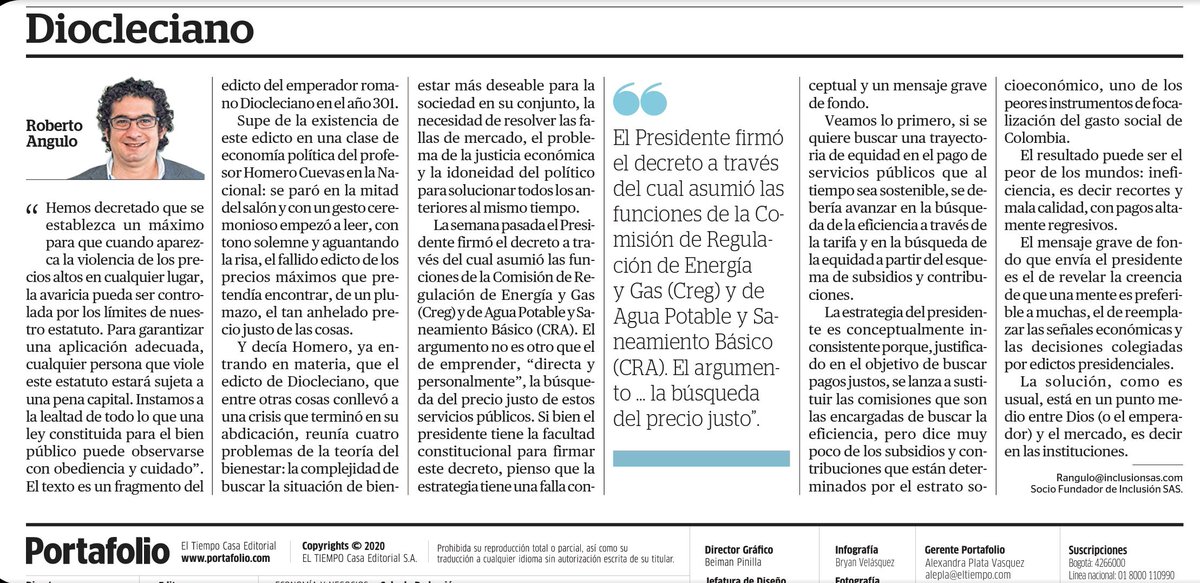
"Diocleciano"
Una columna sobre el mensaje de fondo que envía el decreto donde el Presidente asume las funciones de la CREG y de la CRA.
Los invito a leerla en @Portafolioco.
https://t.co/YOGccNDnxs
"...no one was calling B.S. (...) Everybody only wanted to talk about the innovation". A lesson we should be learning in international development with the obsession for the latest shiny thing.