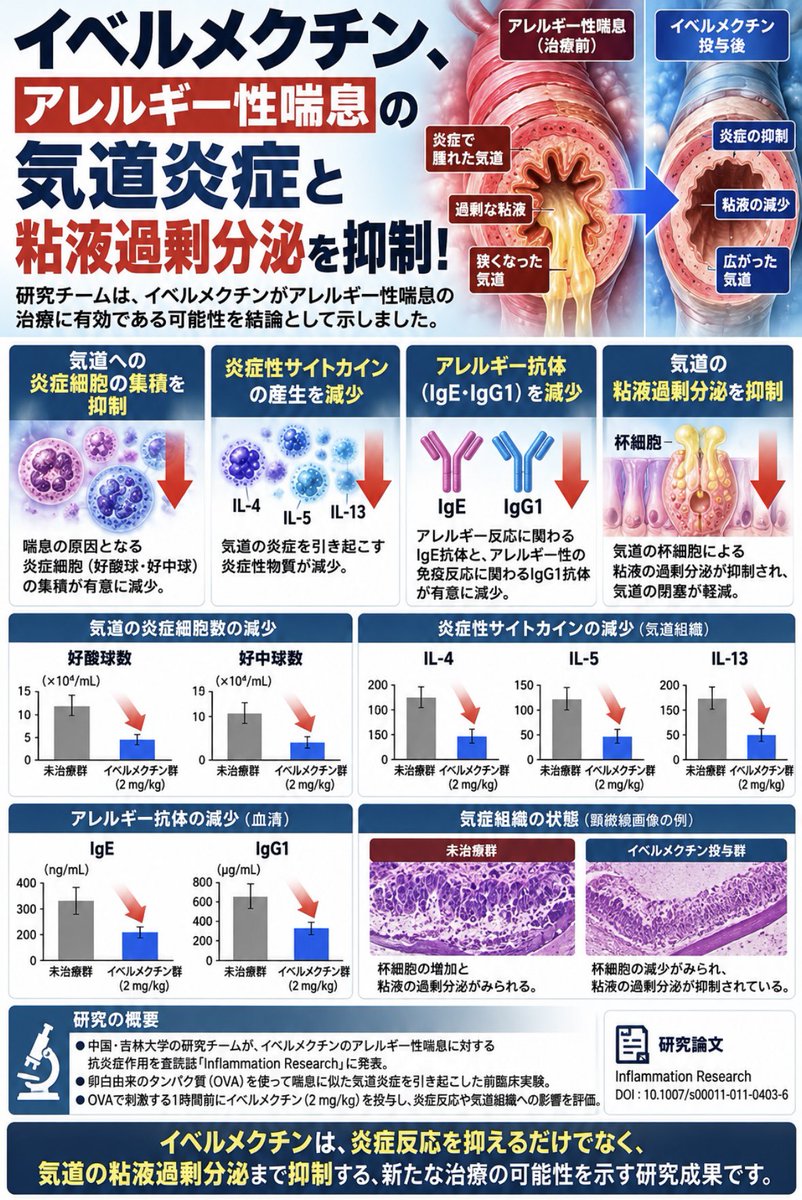
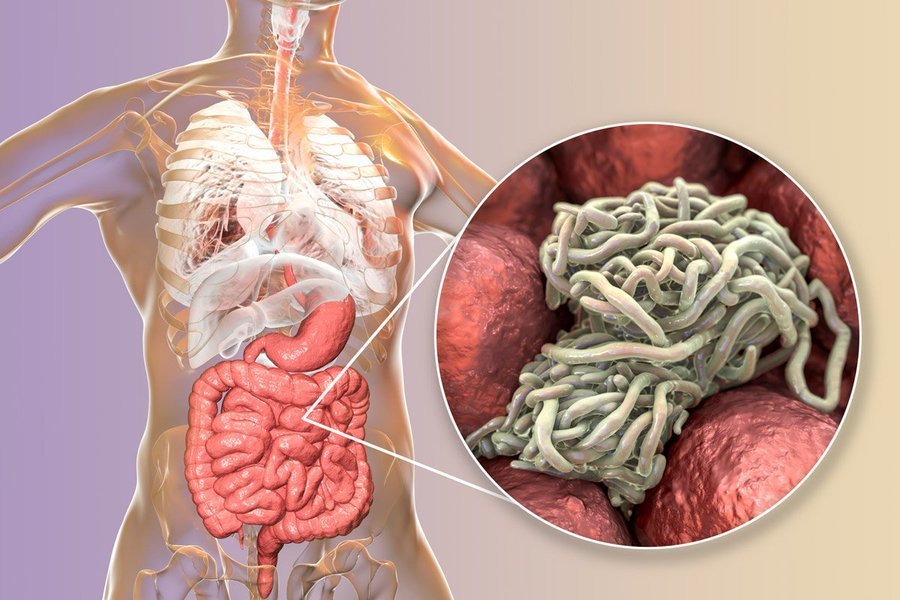
🚨 IVERMECTIN: THE COMPLETE DOSAGE GUIDE
Cancer • Skin Conditions • Parasitic Infections • Off-Label Uses
Most people know Ivermectin as a medicine for parasites.
But that's only part of the story.
For nearly 40 years, it has been used worldwide to treat approved parasitic infections.
Today, it's also used in dermatology, explored in off-label applications, and actively investigated in cancer research.
This guide brings all four areas together in one quick reference.
Here's what you'll find.
👇
💊1. Approved & Standard Uses
Ivermectin has a long clinical history in treating parasitic infections, including:
✅ Onchocerciasis (River Blindness)
✅ Strongyloidiasis
✅ Filariasis
✅ Ascariasis
✅ Trichuriasis (Whipworm)
✅ Enterobiasis (Pinworm)
✅ Cutaneous Larva Migrans
✅ Gnathostomiasis
✅ Myiasis
✅ Toxocariasis
✅ Mansonelliasis
✅ Capillariasis
These are the conditions for which Ivermectin has been widely used as an antiparasitic medicine.
🧴 2. Skin Conditions
Ivermectin is also used in dermatology.
The guide includes commonly referenced dosing for:
• Scabies
• Crusted Scabies
• Head Lice
• Demodicosis
It also highlights topical 1% Ivermectin cream, which is approved for the inflammatory lesions of rosacea.
🧪 3. Off-Label Applications
Beyond its approved indications, Ivermectin has also been explored for a variety of other conditions.
The guide includes commonly discussed off-label applications such as:
• COVID-19
• Dengue
• Zika Virus
• Yellow Fever
• West Nile Virus
• Tuberculosis
• Leishmaniasis
• Malaria
• Neurocysticercosis
These uses fall outside approved indications, and the strength of evidence varies by condition. Research is ongoing in several of these areas.
🔬 4. Cancer Research
One of the most active areas of current Ivermectin research is oncology.
Laboratory, animal, and early clinical studies have explored its potential role across multiple cancer types, including:
• Breast
• Colon
• Lung
• Stomach
• Pancreatic
• Liver
• Brain
• Prostate
• Kidney
• Esophageal
• Leukemia
• Melanoma
• Ovarian
Researchers are investigating how Ivermectin interacts with cellular pathways involved in tumor biology and whether those findings translate into meaningful clinical outcomes.
Larger clinical trials are needed to better understand its potential role.
⚖️ Why Is Everything Written In mg/kg?
One of the first things you'll notice is that nearly every dosage is expressed as mg per kilogram (mg/kg).
That's because Ivermectin dosing is generally calculated according to body weight rather than using one fixed dose for everyone.
For example:
🧍 60 kg (132 lb)
• 0.2 mg/kg = 12 mg
• 0.4 mg/kg = 24 mg
🧍 80 kg (176 lb)
• 0.2 mg/kg = 16 mg
• 0.4 mg/kg = 32 mg
This is why most Ivermectin protocols begin with body weight before tablet strength is determined.
💊 Common Tablet Strengths
Depending on the manufacturer and country, Ivermectin tablets are commonly available as:
• 3 mg
• 6 mg
• 12 mg
• 24 mg
• 48 mg
The appropriate tablet strength depends on the prescribed dose and body weight.
📋 At A Glance
This guide brings together:
✅ Approved antiparasitic uses
🧴 Dermatologic uses
🧪 Off-label applications
🔬 Investigational cancer research
⚖️ Weight-based dosing
💊 Common tablet strengths
All in one place.
📚 Why Does This Matter?
Ivermectin has been used in medicine for decades.
At the same time, researchers continue to study where it may provide benefit, where it may not, and what future clinical trials can clarify.
Understanding the difference between approved uses, off-label applications, and investigational research helps put the current scientific discussion into context.
One medicine.
Four major application areas.
Decades of clinical use.
Ongoing scientific research.
One guide that brings it all together.
💬 Which section surprised you the most?
1️⃣ Approved uses
2️⃣ Skin conditions
3️⃣ Off-label applications
4️⃣ Cancer research
Tell us why.
👇
📌 SAVE this before you scroll. The next time you're looking for an Ivermectin dosage, approved use, or research summary, you'll be glad you did.
🔁 REPOST it so more people researching Ivermectin can find this guide.
💊 Looking for pharmaceutical-grade Ivermectin, Fenbendazole, or Mebendazole? Explore @rxmeds_store.
#Ivermectin #DosageGuide #MedicalResearch #CancerResearch #Dermatology #Scabies #Rosacea #ParasiticInfections #Oncology #RxMeds
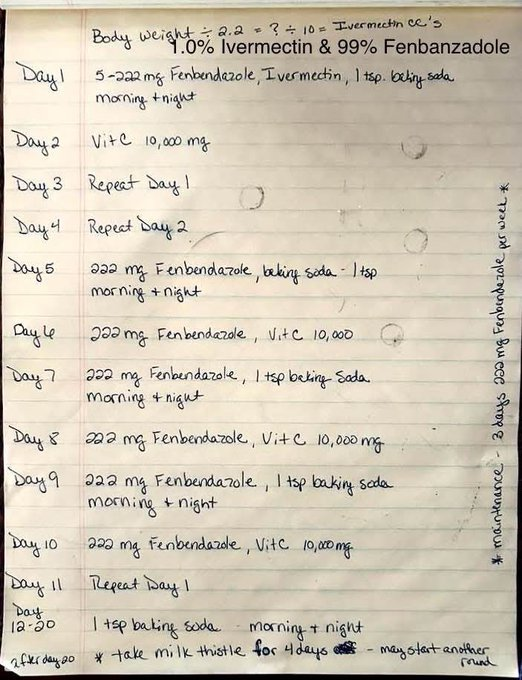
🚨 WHAT'S IN THIS HANDWRITTEN STAGE 4 CANCER PROTOCOL?
According to the story behind this image, a friend was allegedly given these instructions by an MD in Salt Lake City.
Not printed.
Not emailed.
Handwritten.
And reportedly only after phones were left outside the room.
Whether you find that shocking, controversial, or hard to believe...
That's what got people's attention.
📋 The handwritten protocol combines:
💊 Ivermectin
💊 Fenbendazole
🍊 Vitamin C
🥄 Baking Soda
A few of the key days stand out:
📅 Day 1
222 mg Fenbendazole
Ivermectin
1 tsp Baking Soda
Morning + Night
📅 Day 2
10,000 mg Vitamin C
📅 Day 11
Repeat Day 1
📅 Days 12–20
Baking Soda
Morning + Night
📅 After Day 20
Milk Thistle before potentially starting another round
The full protocol is shown in the handwritten notes above.
But the protocol itself isn't what has people talking.
The story behind it is.
Why are so many people facing serious diagnoses researching repurposed medicines like:
💊 Ivermectin
💊 Fenbendazole
💊 Mebendazole
Years later, these conversations still haven't disappeared.
Patients are still asking questions.
Caregivers are still sharing information.
Researchers are still publishing studies.
And people are still searching for answers.
Supporters believe these approaches deserve far more attention.
Critics argue stronger evidence is needed.
But one thing is undeniable:
When someone hears the words "Stage 4 cancer"...
Every question suddenly becomes important.
Most people aren't looking for fewer options.
They're looking for every option.
That's why conversations like this continue to spread.
Not because everyone agrees.
Because people want to know what else is being discussed.
📌 Save this post and the handwritten protocol for future reference.
🔄 Repost so others can review it and draw their own conclusions.
💬 If you were facing Stage 4 cancer, would you want access to every protocol being discussed, even the controversial ones?
💊 Researching Ivermectin, Fenbendazole, or Mebendazole? Explore @MedsOnTap.
#Ivermectin #Fenbendazole #Mebendazole #Stage4Cancer #CancerResearch #RepurposedDrugs #AlternativeHealth #HealthDiscussion #MedsOnTap
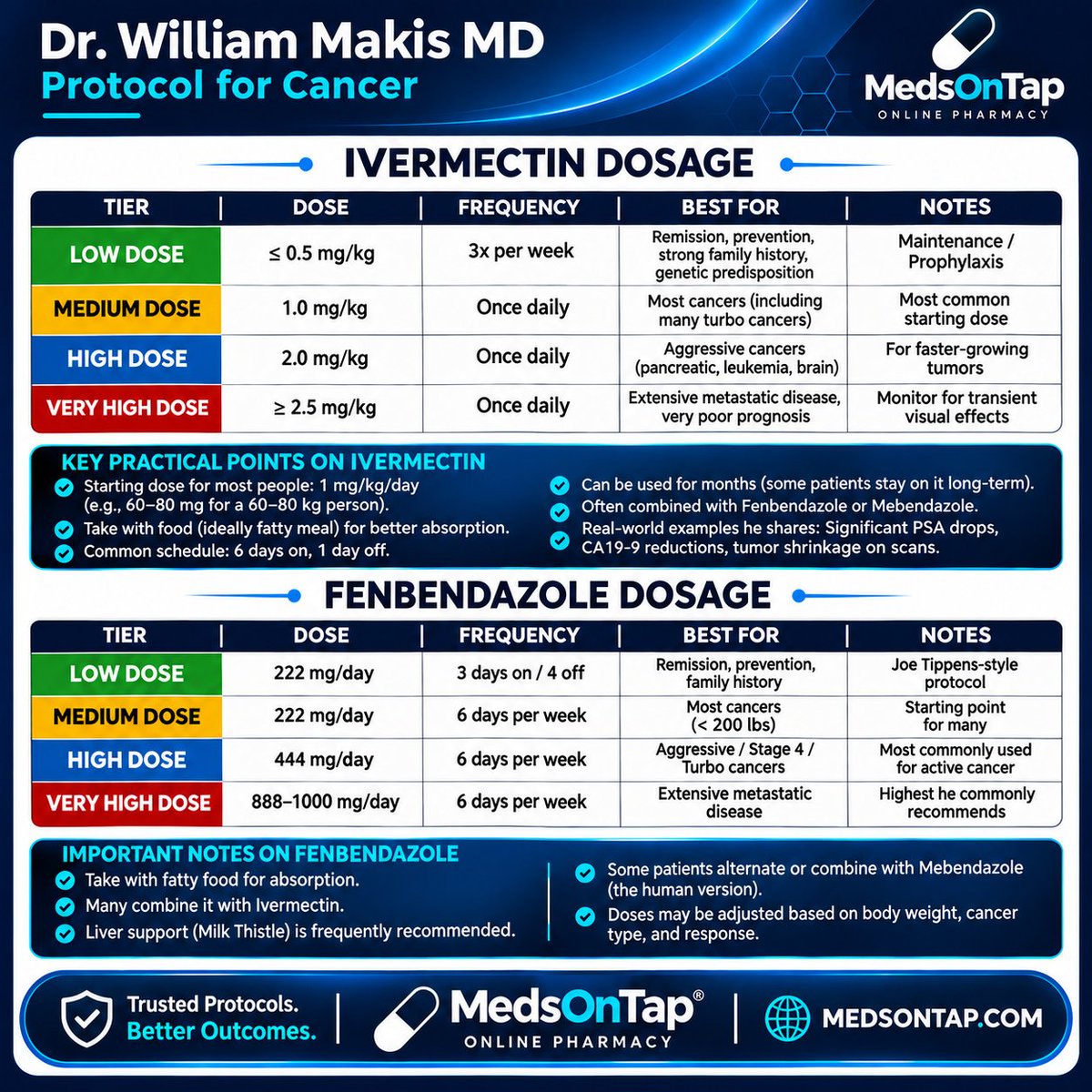
🚨 DR. WILLIAM MAKIS' UPDATED IVERMECTIN & FENBENDAZOLE CANCER PROTOCOL IS GETTING PEOPLE TALKING
Cancer patients aren't saving this chart because it's controversial.
They're saving it because they're looking for answers.
And according to Dr. William Makis, one of the biggest mistakes people make is assuming every cancer case should follow the same protocol.
That's why his updated protocol doesn't use one dose.
It uses FOUR.
👇
The goal?
To adjust dosing based on:
📊 Cancer aggressiveness
📊 Tumor burden
📊 Metastatic spread
📊 Overall prognosis
📊 Individual response
━━━━━━━━━━━━━━
🟢 LOW DOSE
IVERMECTIN
≤ 0.5 mg/kg
3x per week
FENBENDAZOLE
222 mg/day
3 days on, 4 days off
Often discussed for:
• Remission support
• Prevention
• Strong family history
• Higher risk individuals
━━━━━━━━━━━━━━
🟡 MEDIUM DOSE
IVERMECTIN
1.0 mg/kg daily
FENBENDAZOLE
222 mg/day
6 days per week
Often discussed for:
• Most active cancers
• Common starting approach
━━━━━━━━━━━━━━
🔵 HIGH DOSE
IVERMECTIN
2.0 mg/kg daily
FENBENDAZOLE
444 mg/day
6 days per week
Often discussed for:
• Aggressive cancers
• Brain cancers
• Leukemia
• Pancreatic cancer
━━━━━━━━━━━━━━
🔴 VERY HIGH DOSE
IVERMECTIN
≥ 2.5 mg/kg daily
FENBENDAZOLE
888 to 1000 mg/day
6 days per week
Often discussed for:
• Extensive metastatic disease
• Poor prognosis cases
━━━━━━━━━━━━━━
💡 Additional Protocol Notes
✅ Many patients combine Ivermectin and Fenbendazole
✅ Some alternate Fenbendazole with Mebendazole
✅ Fenbendazole is commonly taken with fatty meals
✅ Liver support is frequently discussed
✅ Long term use and monitoring are commonly emphasized
━━━━━━━━━━━━━━
🔬 What Makes This Protocol Different?
It's not the dosages.
It's the idea behind them.
Dr. Makis argues that cancer isn't one disease.
A patient in remission is different from a patient with widespread metastatic disease.
A slow growing cancer is different from an aggressive one.
And because of that, many people believe a one size fits all approach may not always make sense.
That's one reason why interest in repurposed medicines continues to grow.
🔬 Researchers have spent years investigating how compounds like Ivermectin and Fenbendazole may interact with:
• Cancer metabolism
• Cancer stem cells
• Mitochondrial function
• Tumor signaling pathways
• Treatment resistance mechanisms
• Cellular energy production
Whether these findings ultimately change clinical practice remains to be seen.
But one thing is undeniable:
More cancer patients, caregivers, and researchers are discussing repurposed medicines today than ever before.
And that's exactly why charts like this keep getting shared.
📌 Save this chart now. Six months from now, you'll wish you knew where to find it.
🔁 Repost it so more people researching cancer protocols can see it.
💬 Have you been following Dr. William Makis' work on Ivermectin and Fenbendazole?
💊 Many people researching Ivermectin and Fenbendazole have discovered @MedsOnTap.
#Ivermectin #Fenbendazole #CancerResearch #CancerProtocol #RepurposedDrugs #WilliamMakis #MedsOnTap
🚨 DR. WILLIAM MAKIS MD DISCUSSES CASTOR OIL + IVERMECTIN CREAM: WHY THIS TOPICAL COMBINATION IS GETTING ATTENTION
A simple topical routine is creating a much bigger conversation online.
🫙 Castor oil
🧴 Ivermectin cream
The video describes applying castor oil to several areas around the body's lymphatic system:
• Under the armpits
• Behind the ears
• Along the jawline
• Behind the knees
The speaker says castor oil contains ricinoleic acid, which he says supports circulation and gentle lymphatic drainage.
He also claims these applications can help with:
• Bloating
• Puffiness around the face
• A heavy feeling in the legs
• Dark buildup and odor under the arms
Dr. William Makis MD discusses combining topical castor oil + Ivermectin cream in relation to:
• Breast cancer
• Head and neck cancer
• Skin cancer
📌 THE TOPICAL ROUTINE
🫙 Gently massage organic cold pressed castor oil into areas around the lymph nodes.
🧴 Apply topical Ivermectin cream over the area.
📅 Continue for several days.
The video also discusses reports of people using this combination who say they noticed:
• Tighter feeling skin
• Fine lines appearing reduced
• Lymph swelling easing
• Joint aches easing
• Better sleep
• Liver spots becoming lighter
• Nerve pain easing
• Nerve discomfort improving
• Constipation clearing
That's why this combination has caught people's attention.
It's not simply another castor oil routine.
It's the combination of castor oil + topical Ivermectin and the claims surrounding its potential use in cancer related discussions that are driving the conversation.
The broader question is even bigger:
Could inexpensive, existing medicines and familiar compounds have applications beyond their traditional uses?
That's exactly why Ivermectin and drug repurposing continue to generate intense discussion online.
📌 Save this if you're following Ivermectin, castor oil, and cancer repurposing discussions.
🔄 Repost it so more people can discover the topical combination being discussed.
💊 Looking for Ivermectin cream or other repurposed medicines? Explore @MedsOnTap.
#Ivermectin #CastorOil #WilliamMakis #BreastCancer #SkinCancer #CancerResearch #DrugRepurposing #MedicalResearch #MedsOnTap
علاجات السرطان: هل تذكرون عندما سخروا من الإيفرمكتين؟
الآن الحقيقة واضحة لا لبس فيها:
١٢ فائدة عظيمة للإيفرمكتين!
أطلقوا عليه اسم "معجون الخيول"، لكن الإيفرمكتين يُفيد البشر منذ عام ١٩٨٧.
ما لم يخبروكم به؟
إنه أحد أقوى الأدوية وأكثرها أمانًا وتعددًا في الفوائد على الإطلاق، وهو يُهدد النظام الذي حاول إسكاته.
كذبوا وكانوا يعلمون ذلك!
هل تذكرون عندما سخرت وسائل الإعلام وشركات الأدوية الكبرى من استخدام الإيفرمكتين؟
"إنه للحيوانات."
"إنه خطير."
"إنه غير فعال."
في الوقت نفسه، كانوا يعلمون أنه مُعتمد للاستخدام البشري منذ عام ١٩٨٧، ويُستخدم لعلاج مليارات الأشخاص حول العالم، بل وحصل على جائزة نوبل في الطب.
ما أخفوه عنك: ١٢ فائدة فعّالة للإيفرمكتين
١️⃣ يمنع تلف البروتين الشوكي ويزيل سموم تقنية الحمض النووي الريبوزي المرسال (mRNA)
ثبت أن الإيفرمكتين يرتبط بالبروتين الشوكي ويمنعه من دخول الخلايا البشرية السليمة، بما في ذلك تلك التي تعرضت للعدوى عبر حقن الحمض النووي الريبوزي المرسال أو العدوى الفيروسية.
٢️⃣ يقضي على الفيروسات قبل أن تصيب خلاياك
تشير الدراسات إلى أنه يُعادل جزيئات الفيروس في مجرى الدم، ويوقف تكاثرها في مراحلها المبكرة، ويعطل ارتباط الفيروس بالمستقبلات على الخلايا البشرية.
٣️⃣ يقلل الالتهاب دون مخاطر الستيرويدات
☑️ لا يسبب تثبيط المناعة
☑️ لا يسبب اضطرابًا هرمونيًا
☑️ فعال للغاية ضد الالتهاب، بشكل طبيعي
٤️⃣ يعالج أمراض المناعة الذاتية
يساعد الإيفرمكتين على إعادة توازن الاستجابة المناعية، ويُظهر نتائج واعدة في حالات مثل التهاب المفاصل الروماتويدي، والألم العضلي الليفي، والصدفية، وداء كرون، والتهاب الفقار اللاصق.
٥️⃣ يدعم المناعة لدى مرضى السرطان والأمراض الفيروسية
الإيفرمكتين مضاد للفيروسات، ومضاد للالتهابات، ومنظم للمناعة.
يساعد في مكافحة العدوى الفيروسية المزمنة مثل الهربس البسيط والهربس النطاقي، كما يقلل من العدوى الثانوية لدى مرضى السرطان.
٦️⃣ يحمي القلب في حالات الإجهاد ونقص الأكسجين
في حالات أمراض القلب مثل الانسدادات أو فرط التحميل، يساعد الإيفرمكتين على منع موت الأنسجة عن طريق تحسين استخدام الأكسجين، ودعم إنتاج الطاقة في الميتوكوندريا، ومنع نقص الأكسجين في القلب.
٧️⃣ مضاد للطفيليات... ومضاد للسرطان
تشير الأبحاث الحديثة إلى أنه قد يثبط نمو الخلايا السرطانية، ويوقف انتشار الورم (الانبثاث)، ويحمي الخلايا السليمة أثناء العلاج الكيميائي.
٨️⃣ يتغلب على الخلايا السرطانية المقاومة للعلاج الكيميائي
قد يُعطّل الإيفرمكتين مسارات المقاومة هذه، مما يسمح للعلاج الكيميائي والعوامل المضادة للسرطان بالعمل بفعالية أكبر، وخاصة في سرطان الثدي والمبيض والقولون والبنكرياس.
٩️⃣ يقضي على الميكروبات ويعزز المناعة
أظهر الإيفرمكتين نشاطًا مضادًا للميكروبات ضد البكتيريا والفيروسات والطفيليات. كما أنه يعزز الاستجابات المناعية الفطرية.
١٠️ يُصلح ويُجدد الأنسجة العصبية
على عكس معظم الأدوية، يعبر الإيفرمكتين الحاجز الدموي الدماغي.
وهذا يعني أنه يستطيع الوصول إلى الجهاز العصبي المركزي، وتجديد الخلايا العصبية التالفة، ودعم التعافي من تلف الأعصاب والإصابات والالتهابات.
١١- يُوازن سكر الدم والكوليسترول ودهون الكبد
أظهر الإيفرمكتين قدرة على تحسين حساسية الأنسولين، وخفض ارتفاعات الجلوكوز، وتقليل الكبد الدهني (التنكس الدهني)، وتطبيع مستويات الكوليسترول والدهون الثلاثية.
١٢- وقاية فعّالة: يقلل من خطر العدوى ودخول المستشفى والوفاة
في الدول التي استُخدم فيها الإيفرمكتين وقائيًا خلال الجائحة:
انخفضت الإصابات
انخفضت حالات دخول المستشفى بشكل كبير
كانت معدلات الوفيات أقل بكثير من مثيلاتها في الغرب
وكل ذلك دون آثار جانبية، أو براءات اختراع باهظة الثمن، أو أدوية تجريبية. لهذا السبب تم التكتم عليه.
لقد تم التكتم على الإيفرمكتين لأنه فعال
الأمر لا يتعلق بالمال فقط، بل يتعلق بالسيطرة.
السيطرة على العلاج.
السيطرة على ما يُسمح لك بقوله.
لك الحق في التحكم بما يُسمح لك بتناوله.
لكن الحقيقة ما زالت قائمة، ونحن كذلك.
أنت تستحق حلولاً حقيقية.
لا دعايات.
لا أدوية باهظة الثمن تُعالج الأعراض فقط وتُسبب مشاكل جديدة.
🚨 An explosive surprise and new hope in cancer treatment: Artemisinin eliminates 98% of cancer cells in just 16 hours...
A shocking health report has reignited the global debate after studies on artemisinin compounds demonstrated their ability to eliminate up to 98% of cancer cells in just 16 hours.
Millions are now wondering why this astonishing natural discovery has only recently come to light, amid growing interest in targeted cancer cell elimination, natural cancer treatments, and alternatives outside the pharmaceutical system...
Dr. Eric Berg
Fenbendazole
Why do big pharmaceutical companies prefer patented chemotherapies costing 10,000 € that can destroy the body, while hiding low-cost compounds?
Fenbendazole attacks tumor beta-tubulin, triggering massive molecular collapse and irreversible blockage at the growth phase checkpoint (G2/M). In G2, the cell performs strict quality control, checking that the DNA has no copying errors and synthesizing the specific structural proteins (like tubulin) it will need for the main cell division.
Cancer is forced to activate its own apoptosis (cellular suicide) while healthy cells remain intact. The tumor infrastructure is dismantled from the root at a fraction of the cost. Biology doesn't lie; the industry does.
Fenbendazole's mechanism is a masterpiece of selective cytotoxicity: it blocks microtubule polymerization, freezes the G2/M transition through cyclin B1 accumulation and CDK1 hyperactivation, ultimately forcing a mitotic catastrophe exclusively in malignant cells.
While the mutated p53 protein in cancer cells causes them to accelerate their destruction inexorably, healthy cells simply activate their metabolic brakes and survive.
There's no need to poison the patient to eradicate the disease. Just block its infrastructure.
🚨 A DEWORMING DRUG. OVER 20 TYPES OF CANCER. WHY IS FENBENDAZOLE RECEIVING SO MUCH ATTENTION?
Fenbendazole is an anti-parasitic drug belonging to the benzimidazole class, widely used in veterinary medicine. In recent years, however, this compound has garnered attention for an entirely different reason: cancer research.
🧬 TYPES OF CANCER UNDER INVESTIGATION
Preclinical studies have explored the effects of fenbendazole on a variety of cancer models, including:
• Hodgkin lymphoma
• Non-Hodgkin lymphoma
• Melanoma
• Breast cancer
• Neuroendocrine tumors
• Lung cancer
• Liver cancer
• Ovarian cancer
• Pancreatic cancer
• Endometrial cancer
• Glioblastoma
• Astrocytoma
• Medulloblastoma
• Head and neck cancer
• Esophageal cancer
• Colorectal cancer
• Adrenal cancer
• Kidney cancer
• Bladder cancer
• Prostate cancer
• Leukemia
• Myelofibrosis
• Various types of sarcoma
In total, more than 20 types of cancer have appeared in these studies.
But the real point goes beyond just the number of cancer types that have been researched.
It is about how fenbendazole might influence the biology of cancer itself. 🔬 POTENTIAL MECHANISMS UNDER INVESTIGATION
Microtubule Disruption
Microtubules play an essential role in cell structure and the process of cell division. Researchers have been investigating whether fenbendazole might interfere with these processes.
Apoptosis (Programmed Cell Death)
Studies have examined whether fenbendazole has the potential to promote apoptosis—programmed cell death—in certain cancer models.
Glucose Metabolism
Because cancer cells have distinct metabolic requirements, researchers have explored whether fenbendazole affects glucose uptake and related metabolic pathways.
p53 Signaling
The tumor-suppressor protein p53 plays a critical role in regulating cell growth and responding to cellular damage. Fenbendazole has also been studied for its potential effects on this signaling pathway.
Therefore, the scientific question at hand is much more specific than simply asking:
“Can a deworming drug have an effect on cancer?”
The real question is:
Can fenbendazole interfere with various biological processes upon which cancer cells depend? That is precisely what makes this area of research so compelling.
🧬 WHY IS THERE INTEREST?
✓ Research has explored a wide variety of tumor types.
✓ Numerous studies and scientific publications have examined the effects of fenbendazole within cancer models.
✓ Several potential biological mechanisms are currently under investigation. ✓ Drug repurposing may open up new avenues for cancer research.
A long-known antiparasitic drug.
Various cancer models.
Diverse biological pathways.
Microtubules. Apoptosis (programmed cell death). Glucose metabolism. The p53 protein.
The story of fenbendazole is attracting attention from both the scientific community and the general public; however, most of the current evidence is limited to the preclinical stage, and fenbendazole has not yet been confirmed as an effective cancer treatment for humans.
A larger question remains:
Could this long-established antiparasitic drug play a more significant role in cancer research?
Science will ultimately provide the answer regarding the true potential of this concept.
#Fenbendazole #CancerResearch #DrugRepurposing #CancerScience #Ivermectin
🚨 IVERMECTIN, PARASITES & CANCER: “70% OF AUTOIMMUNE CASES?” The Claims About Big Pharma You Need to Hear
Could parasites be playing a role in health conditions that deserve a closer look? A healthcare professional raises controversial questions about ivermectin, autoimmune disease, cancer, and the way modern medicine approaches treatment.
🔎 HERE ARE THE CLAIMS SPARKING ATTENTION
🦠 AUTOIMMUNE DISEASE: They claim that 70% of the autoimmune cases encountered in their practice were caused by parasites, naming rheumatoid arthritis, lupus, fibromyalgia, and Sjögren’s syndrome.
🧬 CANCER & MISDIAGNOSIS: They also claim that some tumors and polyps were actually parasitic egg sacs misidentified as cancer.
💊 IVERMECTIN & HYDROXYCHLOROQUINE: Both medicines are highlighted for their established uses and potential applications.
🏥 BIG PHARMA: The discussion challenges healthcare financial incentives and calls for more attention to affordable treatment approaches.
🌿 OTHER OPTIONS: Fenbendazole and black seed oil are also mentioned as alternatives worth exploring.
🔬 FROM PARASITIC INFECTIONS TO CANCER RESEARCH, THE QUESTIONS DESERVE A CLOSER LOOK.
Ivermectin has an established role in treating certain parasitic infections. Could research into existing medicines reveal other useful applications? Drug repurposing continues to raise important questions across parasitic diseases, autoimmune conditions, and cancer research.
Sometimes, the biggest discoveries begin with questions that deserve serious investigation.
💬 Which area deserves more research: parasitic infections, autoimmune conditions, or the potential of existing medicines in cancer research? Share your thoughts below.
📌 SAVE this breakdown for the ongoing discussion.
🔄 REPOST to get more people talking about the future of medical research.
💊 Looking for ivermectin? Explore our pharmaceutical-grade options at @rxmeds_store, with worldwide shipping.
#Ivermectin #Fenbendazole #CancerResearch #AutoimmuneDisease #DrugRepurposing #MedicalResearch
🚨🚨 PARÁSITOS 101: las infecciones ocultas que pueden alterar el intestino, el cerebro y el sistema inmunitario:
Desde hinchazón y fatiga hasta deficiencias nutricionales y confusión mental, esto es lo que necesitas saber sobre los parásitos...
SIGNOS DE PARÁSITOS:
◈ Hinchazón, gases y problemas digestivos
◈ Estreñimiento o diarrea
◈ Alimentos no digeridos en las heces
◈ Niebla mental, ansiedad e irritabilidad
◈ Fatiga y anemia por deficiencia de hierro
◈ Pérdida de peso inexplicable
◈ Deficiencias nutricionales a pesar de comer bien
◈ Sensibilidad a los alimentos o síntomas relacionados con la histamina
◈ Erupciones cutáneas, picazón o dolor muscular
◈ Infecciones frecuentes
Estos síntomas no son específicos y pueden tener muchas causas. Sin embargo, son síntomas comunes de tener parásitos.
Entre los indicios más reveladores se incluyen el picor anal, la presencia de gusanos visibles o los síntomas que aparecen después de viajar o de haber estado expuesto a alimentos o agua contaminados.
CÓMO QUEDAS EXPUESTO:
◈ Agua contaminada
◈ Alimentos contaminados con heces
◈ Productos sin lavar
◈ Exposición al suelo
◈ Carne o mariscos poco cocidos
◈ Contacto con animales infectados o entornos contaminados
Los parásitos incluyen dos grupos principales:
◈ Helmintos: gusanos parásitos, incluidos los ascárides, los tricocéfalos y los anquilostomas.
◈ Protozoos: parásitos microscópicos, incluidos Giardia y Entamoeba.
CÓMO AFECTAN A TU SALUD:
◈ Alterar la microbiota intestinal
◈ Desencadenar inflamación intestinal
◈ Dañan la mucosa intestinal en ciertas infecciones.
◈ Interfieren con la absorción de nutrientes.
◈ Contribuyen a la deficiencia de hierro y a la anemia.
◈ Desencadenar respuestas inmunitarias que pueden afectar a otros tejidos
Algunas infecciones también pueden causar síntomas sistémicos, dependiendo del microorganismo y de dónde se propague.
La pregunta es: ¿qué hace que una persona sea susceptible de infectarse realmente?
Una de las cosas más importantes es asegurarse de que sus barreras físicas estén preparadas para el éxito, principalmente:
➠ Intestino
➠ Piel
➠ Uretral / vaginal
Si estos procesos se ven afectados, los parásitos tienen vía libre para entrar en el cuerpo y causar problemas.
Algunos factores importantes para su mantenimiento:
◈ Zinc, vitaminas A y D: apoyan la función inmunológica normal y la integridad epitelial.
◈ Vitamina C: favorece la síntesis de colágeno.
◈ Butirato: ayuda a mantener la función de la barrera intestinal.
◈ Proteínas y aminoácidos adecuados: favorecen el mantenimiento de los tejidos.
◈ Microbios intestinales saludables: contribuyen a la resistencia a la colonización.
FUNCIÓN INMUNOLÓGICA:
◈ Una nutrición adecuada favorece las defensas inmunitarias normales.
◈ Las hormonas tiroideas influyen en múltiples aspectos de la función inmunológica.
◈ Las enfermedades crónicas y la inmunosupresión pueden aumentar la susceptibilidad a ciertas infecciones.
RITMO CIRCADIANO:
◈ Mantener horarios de sueño y vigilia consistentes
◈ Reciba luz brillante del exterior por la mañana.
◈ Mantenga un horario de comidas relativamente constante.
◈ Priorizar un sueño adecuado
La actividad inmunitaria varía a lo largo del día, pero la alteración del ritmo circadiano por sí sola no determina que alguien tenga una infección parasitaria.
PRUEBAS PARA DETECTAR PARÁSITOS:
◈ Prueba de huevos y parásitos: método de referencia, examina las heces en busca de huevos y organismos parásitos.
◈ Prueba de antígenos: detecta proteínas de parásitos específicos.
◈ Prueba de PCR: identifica el material genético del parásito
◈ Análisis de sangre: los eosinófilos pueden estar elevados.
Si bien existen paneles con múltiples pruebas, cada tipo de parásito tiene una prueba que lo identifica mejor.
Herramientas naturales:
◈ Ajenjo ➞ Lombrices intestinales, trematodos
◈ Ajo (alicina) ➞ Giardia, Trichomonas
◈ Aceite de coco ➞ Asfixia piojos y ácaros
◈ Aceite de orégano ➞ Giardia, Cryptosporidium
◈ Neem ➞ Plasmodium, Giardia
◈ Artemisinina ➞ Malaria, Babesia
◈ Clavo ➞ Entamoeba, Trichomonas
◈ Curcumina ➞ Plasmodium, Leishmania
◈ Berberina ➞ Giardia, Entamoeba, Plasmodium
◈ Hoja de olivo ➞ Giardia, protozoos en general
◈ Cáscara de nuez negra ➞ Tenias, nematodos
◈ Clavo (etapa de huevo) ➞ Antiparasitario de amplio espectro
◈ Semillas de calabaza ➞ Tenias, gusanos redondos
◈ Semillas de papaya ➞ Lombrices intestinales, anquilostomas
◈ Tomillo / Timol ➞ Nematodos
◈ Mirra ➞ Schistosoma, Fasciola
◈ Aceite de neem ➞ Piojos, ácaros, pulgas
◈ Aceite de árbol de té ➞ Piojos, sarna, ácaros
◈ Aceite de lavanda ➞ Piojos, pulgas
◈ Aceite de clavo ➞ Piojos, sarna
Farmacéutica:
◈ Albendazol ➞ Nematodos, tenias (Echinococcus), trematodos, algunos microsporidios
◈ Mebendazol ➞ Lombrices intestinales, oxiuros, anquilostomas
◈ Ivermectina ➞ Strongyloides, lombrices intestinales, sarna, piojos
◈ Pamoato de pirantel ➞ Oxiuros, lombrices intestinales
◈ Praziquantel ➞ Tenias, la mayoría de los trematodos, Schistosoma
◈ Niclosamida ➞ Tenias
◈ Triclabendazol ➞ Trematodos hepáticos del género Fasciola
◈ Metronidazol ➞ Giardia, Entamoeba
◈ Nitazoxanida ➞ Giardia, Cryptosporidium
◈ Paromomicina ➞ Entamoeba intestinal
◈ Pirimetamina + sulfadiazina ➞ Toxoplasma
◈ Anfotericina B liposomal ➞ Leishmania
◈ Nifurtimox ➞ Trypanosoma
◈ Benznidazol ➞ Trypanosoma cruzi
◈ Melarsoprol ➞ Trypanosoma brucei en etapa tardía
◈ Artemisinina ➞ Malaria
◈ Cloroquina ➞ Malaria (cepas sensibles)
◈ Atovaquona ➞ Malaria, Babesia
◈ Doxiciclina ➞ Malaria (regímenes combinados), algunos regímenes para Babesia
◈ Mefloquina ➞ Malaria
◈ Quinina ➞ Malaria, Babesia (terapia combinada)
◈ Azitromicina + atovacuona ➞ Babesia
◈ Albendazol ➞ La mayoría de los microsporidios
◈ Permetrina ➞ Sarna, piojos
◈ Malatión ➞ Piojos
◈ Benzoato de bencilo ➞ Sarna
Estos son los aspectos básicos, pero si desea obtener una atención personalizada de un equipo con experiencia, simplemente haga clic en el enlace de mi biografía y le ayudaremos a configurarlo
@Outdoctrination
🚨 FENBENDAZOLE VS MEBENDAZOLE: WHICH ONE FOR WHICH CANCER? DR. WILLIAM MAKIS EXPLAINS
🧬 Two antiparasitic medicines. Different cancer types. And one key question: if you have a choice, which one does Dr. William Makis highlight for each?
His first answer is straightforward:
“Whichever one you can get.”
In some countries, mebendazole is readily available. In others, fenbendazole is cheaper and easier to access. Many people can get one or the other, but not both.
But if you have the luxury of choice, Dr. Makis says the type of cancer becomes an important part of the discussion.
💊 MEBENDAZOLE: BRAIN TUMORS & SQUAMOUS CELL CANCERS
Dr. Makis highlights mebendazole for several cancer types:
✅ Brain tumors: Glioblastomas and astrocytomas
✅ Brain metastases: Including those originating from lung cancer or triple-negative breast cancer
✅ Head and neck cancers: Most are squamous cell carcinomas
✅ Cervical squamous cell carcinoma
✅ Esophageal squamous cell carcinoma
✅ Certain squamous cell carcinomas of the prostate and rectum
✅ Breast cancer
One reason he emphasizes mebendazole for brain tumors is its ability to cross the blood-brain barrier better than fenbendazole or ivermectin.
💊 FENBENDAZOLE: ADENOCARCINOMAS
For fenbendazole, Dr. Makis points to adenocarcinomas, cancers that develop from glandular tissue.
His examples include:
✅ Prostate adenocarcinoma
✅ Lung adenocarcinoma
✅ Pancreatic adenocarcinoma
These are the key distinctions he makes when comparing the two medicines.
⁉️ SO, WHICH ONE SHOULD YOU KNOW ABOUT?
Dr. Makis's main point is simple: availability often determines which medicine people can access, but when both are available, he draws a distinction based on cancer type.
His comparison puts two familiar antiparasitic medicines at the center of an ongoing conversation about drug repurposing and their potential applications.
The search for new possibilities starts with asking better questions. Understanding fenbendazole, mebendazole, and the different areas being explored gives people more to learn about this evolving field.
📌 SAVE this breakdown so you can easily revisit the key differences between fenbendazole and mebendazole.
🔄 REPOST to help others discover Dr. Makis’s comparison and join the conversation about fenbendazole, mebendazole, and drug repurposing.
💊 Looking for fenbendazole or mebendazole? Explore quality options at @rxmeds_store, with worldwide delivery.
#Fenbendazole #Mebendazole #CancerResearch #DrugRepurposing #Glioblastoma #Adenocarcinoma