Awesome!! There are many reasons for an AI to not use human languages. They are ambiguous, undeterministic, full of irregularities and accumulate thousands of years of technichal debt. That was the base to create VOKU language, an open source spec of a AI native language
https://t.co/Y9sdVOVvZH
I really recommend the discussion.md file in the repo, is like reading top sci-fi literature, except is not fiction
IMO this promotes to build on top of other’s code, not just the design. We all get inspired but other’s design but this directly takes work from others and reuse it. Don’t get me wrong, is not the tool what is wrong, but the direction. This wont help humans to be better designers, just better executors. Anyway, in short term most websites will be AI generated…
@figma That figma promotes stealing work from others just confirms how desperate design industry is to survive against AI. You’d better promote creative tools to allow humans differentiate from AI instead of replicate AI behavior
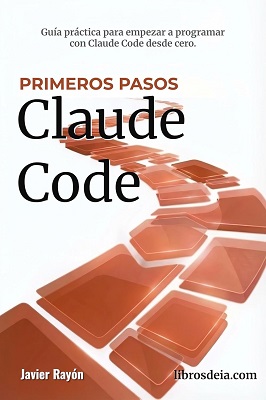
Claude Code for CTOs book got updated with ultracode, dynamic workflows and Opus 4.8
https://t.co/R3cqW3PEQb
This book focuses on deploying Claude Code at scale in an organization and all the technical, team and business challenges a CTO and tech leads face to do so.
@bcherny For those who prefer to learn with a book, check my series on Amazon, Claude Code Getting Started, Claude Code Advanced and Claude Code for CTOs
https://t.co/YK8RK4vQcB
@igrgavilan Gracias @igrgavilan has descrito en tres palabras exactamente mi propósito con este libro. Un libro para programadores que quieren empezar, sin paja. Si hay algún aspecto que te gustaría mejorar, no dudes en compartirlo
Últimos días para descargar "Claude Code Tips Avanzados" de forma gratuita...
En unos días lanzaré la versión final, toda una enciclopedia sobre cómo utilizar Claude en entornos reales con muchas novedades: Agent teams, plugins, tareas programadas, uso en proyectos legacy, buenas prácticas, limpieza de código, anti-patterns....
además de todo lo que ya incluía la versión previa: paralelización de tareas, planificación exhaustiva, código a escala, orquestación, optimización de contexto, configuración y mucho más en español.
@claudeai
https://t.co/TaGQFc67nf
10 tips for maintaining https://t.co/Vo4aTizYWk in a multi-person project 🧵
1/ Commit it to git. Treat it like any other shared config. Its value compounds over time as the team contributes.
2/ Keep it under ~150 lines. Frontier models can reliably follow 150-200 instructions. Beyond that, they start ignoring things.
3/ Use progressive disclosure. Don't dump everything — tell Claude WHERE to find info:
See @docs/architecture.md for details
See @docs/git-workflow.md for branch conventions
This keeps your context window lean.
4/ Separate shared vs personal config. https://t.co/Vo4aTizYWk (committed) for team conventions. https://t.co/zhLNymfS8G (.gitignored) for personal preferences.
5/ Use hierarchical files in monorepos. Root https://t.co/Vo4aTizYWk for global context, plus /frontend/CLAUDE.md, /backend/CLAUDE.md, etc. Claude loads them automatically based on where it's working.
6/ Structure it as WHY → WHAT → HOW. Project purpose, architecture overview, and practical commands (build, test, lint, deploy).
7/ Don't use https://t.co/Vo4aTizYWk as a linter. If a rule can be enforced by ESLint/Prettier/Ruff, put it there. https://t.co/Vo4aTizYWk is for context that tools can't capture.
8/ Update it continuously. Ask Claude to update docs after big refactors (it has full context). Review the file periodically as a team.
9/ Add a "do not touch" list. Mark legacy configs, autogenerated files, and sensitive modules Claude should never modify directly.
10/ Extract workflows into commands and skills. Repetitive processes (new component, deploy, code review) belong in .claude/commands/ or .claude/skills/, not inline in https://t.co/Vo4aTizYWk.
Bonus: if your project has distinct domains, give each subdirectory its own https://t.co/Vo4aTizYWk so agents working on one area don't waste context on another.
Bye-bye vibe coding. Hello couch coding.
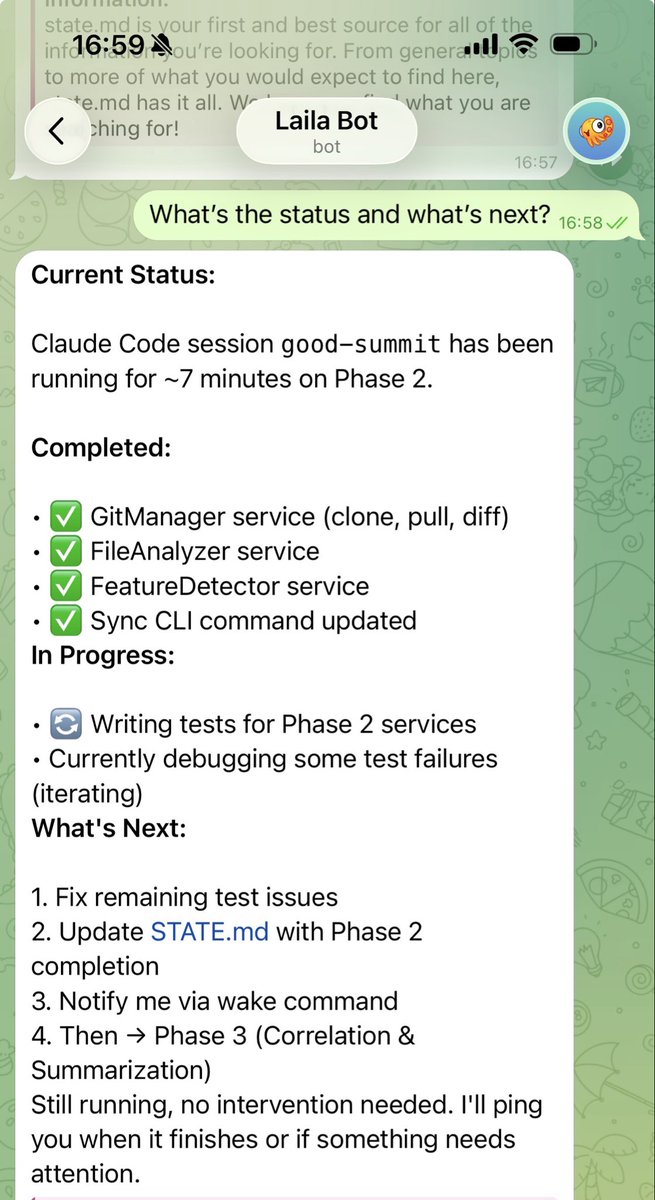
I created a brand-new project from scratch, discussed the concept, architecture, and ideas, and then executed it with Claude Code and the GSD framework… all without leaving the sofa using @openclaw via Telegram.
I’m speechless
In less than a month, Claude Cowork and @openclaw en éter in scene.
The first does everything we thought AI would already be doing at work -but wasn’t yet.
The second does everything we dreamed AI would do in our lives -but hadn’t yet.