Your 6-hour flight from LA to New York is about to become a 3-hour flight. And it's legal because engineers figured out how to bend sound.
Since 1973 it's been a federal crime for any passenger plane to fly faster than the speed of sound over American soil. That's why your cross-country flight takes the same 6 hours it took your parents in the 80s. Planes got safer and more efficient. They never got faster. The law made faster illegal.
The original reason was real. In the 60s the government flew supersonic jets over Oklahoma City 8 times a day for 6 months to test public reaction. The booms cracked plaster, broke windows, and generated nearly 10,000 complaints. So the FAA banned the speed itself.
Here's what changed. The speed of sound isn't constant. It shifts with air temperature, which shifts with altitude. Fly high enough and fast enough in the right conditions and the shockwave physically bends, curving back up into the sky before it reaches the ground. The boom still happens. It just never lands.
NASA measured what people underneath actually hear: a faint rumble about as loud as normal street noise. No crack. No broken windows.
So the FAA's new rule flips the logic. Instead of banning the speed, it caps the sound allowed to hit the ground. Stay quiet and you can fly as fast as the plane will go. Boom already proved the tech works in a real test flight last year.
The last time you could fly supersonic, a Concorde ticket cost about $12,000 round trip and only crossed the ocean. The next version flies over land, over your house, and you'll never hear it coming.
I want to convince you to read a book with a scary cover.
Everyone should read The Rise and Fall of the Third Reich, not because it is the last word on Nazis, but because it remains one of the most powerful demonstrations ever written of how civilization can fail while still believing itself to be civilized.
That is the terrifying genius of Shirer’s book.
It does not present the Third Reich as some meteor that struck Europe from outer space, nor does it comfort us with the childish notion that Germany was magically populated by millions of uniquely evil people.
It shows something far more useful, and therefore far more disturbing: a modern, educated, technically sophisticated nation can be captured by lies, grievance, bureaucracy, fear, opportunism, and the small daily surrender of moral judgment.
The machinery of barbarism does not require a population of monsters. It requires enough believers, enough cowards, enough careerists, enough cynics, and enough ordinary people who decide that keeping their heads down is safer than saying no.
One argument I’ve heard is that all humans contain engrams that encode for certain group behaviors. When a local resource or abundance runs out, you invade a neighbor and take theirs. Or worse, you identify a group within your own population as the source of the problem and attack yourself, like an autoimmune disease. But it happens repeatedly throughout history.
And the most important lesson is not that Hitler won Germany in a landslide. He did not.
The Nazis became the largest party, but they never won a free majority mandate. In July 1932 they won 37.3% of the vote; in November 1932 they fell to 33.1%; and even in March 1933, after Hitler was already chancellor and political violence had warped the field, they reached 43.9%, still short of a majority. That is the chilling part. A country does not need 90% of its people to vote for madness in order for madness to govern it. It needs a militant minority, a fractured opposition, institutional weakness, elite miscalculation, and a public exhausted enough to mistake brutality for order.
Shirer makes you understand that dictatorship doesn’t happen when people vote to abolish freedom. More often, it arrives wrapped in emergency powers, procedural legality, patriotic language, porous constitutions, and the promise that the unpleasant parts are “temporary”.
People do not wake up one morning and decide to live in a police state.
They accept one exception, then another. They tolerate one class of people being degraded because it is not yet them. They watch one newspaper silenced, one judge intimidated, one civil servant replaced, one neighbor denounced, and each time the mind performs its little act of self-preservation: surely this is not the REAL turning point; surely someone ELSE will stop it; surely it is better NOT to get involved.
That is why the book is not merely history. It is a “systems manual” for democratic collapse.
Shirer shows the inputs and outputs. Economic humiliation goes in. Conspiracy thinking comes out. Parliamentary paralysis goes in. The hunger for a strongman comes out. Propaganda goes in. Moral permission comes out. Career incentives go in. Obedience comes out. The horrifying thing is how much of it looks less like a thunderclap than like an old programming flowchart. Forms are stamped. Orders are routed. Promotions are granted. The trains run on time. Men like Asperger who would never personally murder a child learn to serve a system that does.
And that is the second great reason to read it: it destroys the comfortable distance between “them” and “us.”
Most people contain the engrams necessary to fall in line under the right pressure. That does not mean everyone is secretly a Nazi. It means human beings are exquisitely vulnerable to belonging, fear, status, obedience, resentment, and the narcotic-like relief of not having to think too hard when a leader offers a complete explanation for every pain or problem. Shirer forces the reader to confront evil not as a rare substance found only in supervillains, but as a set of ordinary human capacities intentionally reorganized by ideology and power.
The book also matters because Shirer wrote with the eye of a witness. He was nor a historian, he was a journalist. As someone with ASD, I don’t fall prey to books like “A People’s History of the United States” because they are, at their core, emotional tracts. Shirer’s book is not. It’s journalism. It’s like reading a newspaper of events written by someone who was there and who had time to think about them.
That’s because he had lived in Germany as a correspondent and watched the Nazi state harden around him. His great advantage is not academic distance but proximity. You feel the sequence of events as something unfolding in real time, not as a museum exhibit safely sealed behind glass. That gives the book its momentum. It reads less like a textbook than like a slow-motion systems crash, where every warning light is blinking and the operators keep insisting the reactor is fine.
Yes, modern historians have refined, corrected, and complicated parts of Shirer’s interpretation. They should. No serious reader should stop with one book, especially one first published before I was even born. But that is not a reason to avoid it. It is a reason to start there and then keep going. Shirer gives the reader the great brutal architecture of the thing: the rise, the consolidation, the war, the crimes, the delusions, the collapse. Later scholarship can add wiring, plumbing, and better load-bearing analysis.
Shirer gives you the building. And just when you start to feel comfortable there, he sets it on fire while you are still inside.
What makes the book indispensable is that it turns “never again” from a slogan into a diagnostic skill. After reading it, you become less impressed by uniforms, slogans, rallies, and certainty. You become more suspicious of people who explain every problem by pointing at a hated internal enemy. You recognize the danger of elites who think they can harness extremists for their own purposes. You notice when law becomes a weapon instead of a restraint. You understand that institutions do not defend themselves; PEOPLE defend them, or they become scenery.
And perhaps most importantly, you learn that moral catastrophe is usually incrementalbefore it is total.
The abyss does not always announce itself.
Sometimes it is approached by reasonable men making “practical compromises”, by citizens tired of chaos, by newspapers chasing access, by judges respecting technicalities, by businessmen preferring stability, by soldiers obeying oaths, and by neighbors deciding that silence is not approval exactly, just prudence.
That’s the part that scared me the most – wondering where the “pragmatic me” would yield to the “moral me”, and just how sure I was that it would.
That is why everyone should read The Rise and Fall of the Third Reich. Not to congratulate themselves again for being unlike the people in it, but to understand how much like them we might become if the incentives, fears, and pressures were arranged badly enough. The book is essentially a warning against human weakness under industrialized conditions.
It teaches that civilization is not a possession. It is a behavior. It must be renewed, defended, and practiced, especially when doing so is extremely inconvenient. And if a thousand pages of Shirer leaves you with anything, it is this: the machine is built by people, staffed by people, obeyed by people, and stopped, when it is stopped at all, by people who finally decide not to fall in line.
One final “pragmatic” note – there’s a chapter or two on the elections that go through the returns in a lot of detail. That part is a bit of a slog – you have my permission to fast-forward. But the rest of it is incredible.
PS: I would have just written this as an episode if YouTube were amenable to creators working outside of their channel's comfort zone, but alas... no.
Amazon: https://t.co/ODNWm2U8s5
Wisdom from Hannah Arendt here.
Total domination runs on two engines
Terror - isolates people, preventing them from organising together
Ideology - a ubiquitous explanation that is unfalsifiable.
The ideal subject for the regime is not a fanatic, but a person who can no longer discern between fact and fiction, and true and false. They only trust what they are told, not what they see. It’s not that they believe the lie, it’s that are too exhausted to form another belief.
This was said before the exhausting technology of social media was around, before the insistence that we a must have the right opinion on everything, on things like climate science and immunology, that most of us couldn’t possibly have expertise in. To avoid isolation we have to carry the right opinion or stay silent, so we select the opinion of the authorised experts, because we are too exhausted to use our own resources and too frightened to be isolated from society and the market. Even when our experts say ridiculous things, like human sex categories are made up of declarations and fabrics, people fall in because of the energy and the cost to resist.
Just weeks ago I considered this to be a map of Superchargers. The foundation that made EV’s a going concern for the first time.
But it’s not.
These dots represent fully permitted and built power stations in an era where every AI player is trying to figure out how to get power for compute.
This is the largest electrical power moat I’ve ever seen that can fully supply current and future charging needs while collecting and storing cheaper power during off-peak to supply an AI revolution.
Elon doesn’t care who knows anymore.
2nd place is… crumbs.
AWS was built from excess server space needed during peak demand. Now it’s bigger and more valuable than the core Amazon retail business.
Tesla is about to drop a hardware smackdown right in the face of software engineers.
AI prototypes are easy.
Scaling is hard.
If only Tesla had a factory pouring out millions of chips each year that are underutilized 95% of the time. Each with their own battery storage. Imagine that.
Tesla could call them ‘cars’.
And that power moat?
It’s all fully upgradable. It’s primed to be tripled. Only a handful of Tesla charging stations currently have solar and/or Megapacks. For 14 years Tesla has permitted and built the gas stations of the future around the world. Everyone said it would fail. All of them were wrong. And now Tesla is in a process of creating a possible 10x value stamp on those stations that should have never been built.
It makes you wonder,
When a vehicle now leaves the Tesla factory; how do we even begin to calculate the economic production that it will generate during its lifetime? It’s a Robotaxi, energy storage, and a fully sealed/cooled compute processor. They may as well start shitting gold out of a tailpipe.
Here's one of Michael Crichton's very finest quotes, especially applicable to climate "science":
"I want to pause here and talk about this notion of consensus, and the rise of what has been called consensus science.
I regard consensus science as an extremely pernicious development that ought to be stopped cold in its tracks. Historically, the claim of consensus has been the first refuge of scoundrels; it is a way to avoid debate by claiming that the matter is already settled.
Whenever you hear the consensus of scientists agrees on something or other, reach for your wallet, because you’re being had.
Let’s be clear: the work of science has nothing whatever to do with consensus. Consensus is the business of politics. Science, on the contrary, requires only one investigator who happens to be right ... In science, consensus is irrelevant."
Best to everyone,
w.
HAMMER of JUSTICE: Veteran prosecutor Joseph diGenova has been quietly working to bring Obama, Clinton, and the cabal who targeted a sitting president to justice. There is a reason the left is panicking - his name is Joe. https://t.co/R7vSVYTqGs
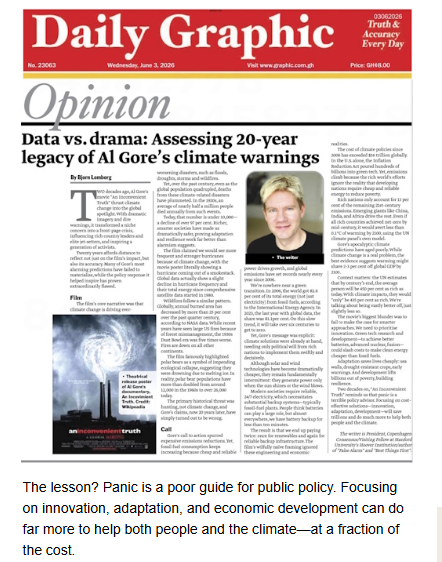
The depressing 20-year legacy of An Inconvenient Truth
20 years ago, An Inconvenient Truth put climate change at the center of global debate, shaping politics, influencing leaders, and inspiring a generation of activists.
Two decades later, we can assess not just its impact, but its accuracy. Many of the film’s most alarming predictions did not materialize, while many of the policies it inspired have proven costly and ineffective.
From my latest newsletter: https://t.co/ijK1hTSIc0
Sign up: https://t.co/PIif2dDeWJ
MIT'S PROBLEM-SOLVING TEXTBOOK IS FREE, AND IT BEATS EVERY PRODUCTIVITY COURSE EVER SOLD
A physicist named Sanjoy Mahajan spent 15 years teaching MIT, Cambridge, and Olin students one thing: how to crack hard problems without drowning in them.
The book is called "The Art of Insight in Science and Engineering," and MIT gives it away for free.
Here are the 9 thinking tools the book actually teaches:
1. Divide and conquer
Never attack a giant problem head-on. Split it into pieces small enough to estimate, solve each, and recombine. Most people freeze at the size of a problem. Mahajan teaches you to make it smaller until it stops being scary.
2. Dimensional analysis
Before you calculate anything, check what units the answer has to be in. The units alone often hand you the shape of the answer and catch errors instantly. The fastest sanity check in existence, and almost nobody uses it.
3. Reasoning by extreme cases
Push the problem to its limits. What happens if the number goes to zero? To infinity? The extremes are easy to picture, and they pin down the behavior in the messy middle. A way to feel out an answer before you can prove it.
4. Lumping
Replace a complicated curve or messy shape with a single rough block that captures the gist. You lose a little accuracy and gain enormous clarity. The skill of throwing away the right detail at the right moment.
5. Probabilistic reasoning
When you can't know something exactly, estimate it with odds instead of pretending you need certainty. Most real decisions live here, in the space between "I know" and "I have no idea."
6. Easy cases
Before solving the hard version, solve the easy version first and let it guide you. If your method can't handle the simple case, it was never going to handle the hard one.
7. Analogy
Map an unfamiliar problem onto one you already understand. The structure carries over even when the surface looks completely different. Mahajan treats analogy as a precision instrument, not a vague hunch.
8. Spring models and proportional reasoning
Instead of memorizing formulas, reason about how one thing scales when another changes. Double this, what happens to that. Understanding relationships beats memorizing equations every time.
9. Discarding information on purpose
The deepest move in the book. Mahajan splits all simplification into two kinds: organizing complexity, and deliberately throwing some away. Knowing exactly what you can afford to lose is the whole art.
Where to get it free.
The full book is on MIT OpenCourseWare as course RES.6-011, released under a Creative Commons license. The complete online textbook, every chapter, every problem. No signup, no payment, no catch. His earlier book, "Street-Fighting Mathematics," is free on OCW too.
https://t.co/MIdELPoUtj
The self-help industry sells you systems for managing your tasks. This MIT physicist gives you a system for managing reality. One of them is free, and it's the better one.
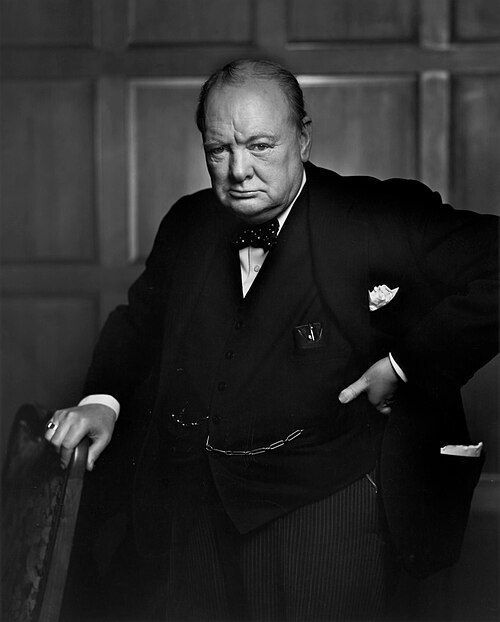
"Socialism is a philosophy of failure, the creed of ignorance, and the gospel of envy, its inherent virtue is the equal sharing of misery."
— Winston Churchill
I stole this idea and now use it with every single employee.
It’s the best illustration I’ve seen of teaching someone to be high agency.
It says there are 5 levels of work:
Level 1: “There is a problem.”
Level 2: “There is a problem, and I’ve found some causes.”
Level 3: “Here’s the problem, here are some possible causes, and here are some possible solutions.”
Level 4: “Here’s the problem, here’s what I think caused it, here are some possible solutions, and here’s the one I think we should pick.”
Level 5: “I identified a problem, figured out what caused it, researched how to fix it, and I fixed it. Just wanted to keep you in the loop.”
Using this framework, here’s what I say to every new employee…
You will live at Level 4 from Day 1 and as we build trust you will rise to Level 5.
Being high agency doesn’t just mean tackling problems in this way. It means your entire way of working should be oriented to being a Level 4+ employee.
Plz feel free to steal it as well.
And ty @stephsmithio for the framework!
The Guardian says a study shows Greenland is losing 30 million tons of ice per hour. Sounds terrifying until you add scale.
If, for argument's sake, we accept the questionable headline rate, that works out to roughly 263 gigatons lost per year. But Greenland holds 2.8 million gigatons, meaning total loss would take over 10,000 years.
And the study itself adds important context. Much of its newly counted loss comes from glacier retreat in fjords where ice was already below the sea, so it does not raise sea levels in the way the headline implies.
This is how climate fear works: Huge number. No denominator. No time scale. Just blind panic.
Keith's permanent record, as maintained by the farmer's wife, who has now filled the first notebook and started a second.
Entry 31: Ate the corner of the parish newsletter off the kitchen table. Specifically the part with the flower rota on it. No comment offered. None expected.
Entry 32: Escaped. Found in the churchyard, working the east section, unbooked. The Reverend has taken to leaving the gate open for him, which rather undermines the whole concept of an escape, though I am not the one who has to explain that to Steve.
Entry 33: Stood in the kitchen at five in the morning. Ate nothing. Looked at the kettle. Left. Dave says he was "confirming the kitchen was still there." Dave has been up since.
Entry 34: Ate the new latch. We were sold the new latch as goat-proof. I have kept the packaging, and I am going to write to them.
Entry 35: Cleared the bramble along the top lane that I have been asking Dave to deal with for three years. Logged here, grudgingly, as helpful.
Entry 36: Escaped. Found two fields over, standing very close to a visiting Anglo-Nubian called Margot, doing nothing, saying nothing, gazing. Dave came in, would not look at me, and said "it's not like that." It is exactly like that.
Entry 37: Opened a gate for Margot, then closed it behind her. I did not know he could close them. I have not slept properly since.
Entry 38: Spent an eleventh straight day on the barn roof, came down in under four minutes for a cyclist's energy bar, and went directly back up. I have stopped looking at the barn roof. The barn roof is, I am repeatedly assured, fine.
Entry 39: Ate Dave's hat off the gatepost. Dave had left the hat on the gatepost. We have discussed the gatepost. We have discussed the hat. Dave continues to use the gatepost.
Entry 40: Has trained Pat and Margaret, the two retired ewes, to follow him everywhere at a respectful distance. They have never looked better. He has never once acknowledged them. I find this the most unsettling thing he does.
Entry 41: Found assessing the corner post on Steve's boundary, the one with the give in it. Has not yet acted. I would like it on the record that we all know he is going to, and that the not knowing when is, I am now certain, the entire point.
Entry 42: Ate an estate agent's pocket square. The estate agent has not been back. Logged, without apology, as the most useful thing anyone has done on this farm all year.
Entry 43: Escaped.
Entry 44: Came back on his own, through the gate he had opened, and resumed grazing as though he had merely stepped out for some air. Which, I have come to understand, is exactly what he had done.
The farmer's wife is not angry.
The farmer's wife stopped being angry somewhere around entry nine.
The farmer's wife now locks everything, photographs the locks, and locks them again.
The net outcome column, which Dave keeps and I pretend not to read, has had a tick on every single row since entry seventeen.
Keith is in the field. For now. By choice.
Keith is still finding things.
In 2017, freelance writer Oobah Butler decided to test how much people trust online ratings and carefully crafted appearances.
He invented a restaurant called The Shed at Dulwich, listing it on TripAdvisor as an exclusive, appointment-only dining destination hidden in South London.
There was just one problem: the restaurant didn't exist.
Using household objects such as shaving foam, paint, and cleaning products, Butler created convincing "gourmet" food photographs.
Friends were asked to leave positive reviews, and curious callers were told the restaurant was fully booked for weeks because of its supposedly limited seating.
The mystery surrounding the venue only seemed to make it more desirable.
As glowing reviews accumulated, The Shed steadily climbed TripAdvisor's rankings.
Within about six months, the fictional restaurant had reached the impossible milestone of becoming the No. 1 rated restaurant in London, outperforming thousands of real establishments despite having no kitchen, no staff, and no paying customers.
Eventually, Butler decided to open The Shed for a single evening. In his backyard, guests were served inexpensive supermarket and frozen foods that were plated creatively and presented as fine dining.
Many diners praised the experience, complimenting the flavors, atmosphere, and exclusivity of the meal.
The experiment became one of the most talked-about demonstrations of how easily perception, social proof, and online reputation can shape our judgments.
Fact check: The Antifa ties are not alleged. They were proven in court. You know how? Through the seven cell members who pleaded guilty—five of them testifying for the prosecution at trial and all admitting to stipulated facts, including that they organized behind antifa ideology.
Also, it wasn’t a “protest.” They did shooting and tactical training beforehand, procured dozens of firearms and then came with 11 guns and shot an officer in the neck after luring victims out with explosives. I’ve been covering this terror case from day one: https://t.co/7KvehraOcs
I do not care what you call it.
Keto. Carnivore. Paleo. Ancestral. Mediterranean. Low-carb. Animal-based. Whole food.
The food wars on this platform are exhausting. Everyone fighting over a label while missing the point entirely.
Your great-grandmother did not follow a diet. She did not count macros. She did not read a nutrition label. She did not subscribe to a food tribe.
She ate meat. She ate eggs. She ate fish. She ate vegetables that grew in soil. She cooked with butter and lard and tallow. She ate whole-fat dairy. She ate fruit when it was in season. She ate nuts and seeds.
She did not eat bread from a factory. She did not eat pasta made from refined wheat. She did not eat sugar from a bag. She did not cook with canola oil extracted using a petroleum solvent. She did not eat protein bars with 47 ingredients. She did not drink soda.
There was no obesity epidemic. There was no type 2 diabetes epidemic. There was no Alzheimer’s epidemic.
The base of your plate should be protein. Beef. Poultry. Eggs. Fish. Shellfish. Whole-fat dairy. Cheese. Plain yogurt. Olive oil. Butter. Cream. Lard. Tallow.
The middle should be vegetables. Green leafy. Non-starchy. Lemons. Limes. Avocados. Olives.
The top, if anything, should be low-sugar fruits. Berries. Nuts. Seeds. Small amounts of starchy vegetables.
What does not belong anywhere on the plate: bread, pasta, corn, sugar, rice in excess, high-sugar fruits in excess, beans in excess, and anything that comes in a box with a barcode.
This is not a diet. This is the way humans ate for hundreds of thousands of years before the food industry arrived and convinced us we needed their products to survive.
Stop arguing about labels. Start eating real food. The science does not care what you call it. Your body knows the difference.
Elon Musk just explained why the most important AI company on Earth might be a rocket company.
The human brain is 2% of body mass.
It burns 20% of the body’s total energy.
Intelligence has always been an energy problem disguised as an information problem.
The entire tech industry missed this.
Musk: “Those who have lived in software land don’t realize that they’re about to have a hard lesson in hardware.”
Every new model is hungrier than the last.
Every training run devours more electricity than the one before.
The grid was not built for this.
Utility companies move at geological speed.
Interconnection takes years.
Permitting takes years.
Construction takes years.
AI moves in months.
Musk: “You’re going to hit the wall big time on power generation. They already are.”
The obvious answer is private power plants next to data centers.
Musk: “Where do you get the power plants? Where do you get the power plants from?”
You cannot will a turbine into existence with venture capital.
Every atom on Earth is bound by friction, gravity, and regulation.
Most people stare at this wall and see the ceiling on intelligence.
They are looking in the wrong direction.
In orbit there is no night.
No clouds.
No seasons.
No permitting.
No grid.
Unfiltered solar energy feeding silicon every hour of every day.
Musk: “It’s 10 times cheaper because you don’t need any batteries.”
That single number rewrites the entire economics of intelligence.
Musk: “The moment your cost of access to space becomes low, by far the cheapest and most scalable way to generate tokens is space.”
SpaceX is not a rocket company.
It is quietly becoming the most important energy infrastructure play on the planet.
Starship is not about Mars.
It is about making orbit so cheap that building on the ground becomes the irrational choice.
Every major leap in intelligence followed the same pattern.
Not a smarter algorithm.
A bigger energy source.
Fire grew the human brain.
Fossil fuels built the computer.
The next source isn’t on this planet.
The ceiling on intelligence was never artificial.
It was always gravitational.
The future will not be decided by who builds the best model.
It will be decided by who builds the cheapest rocket.