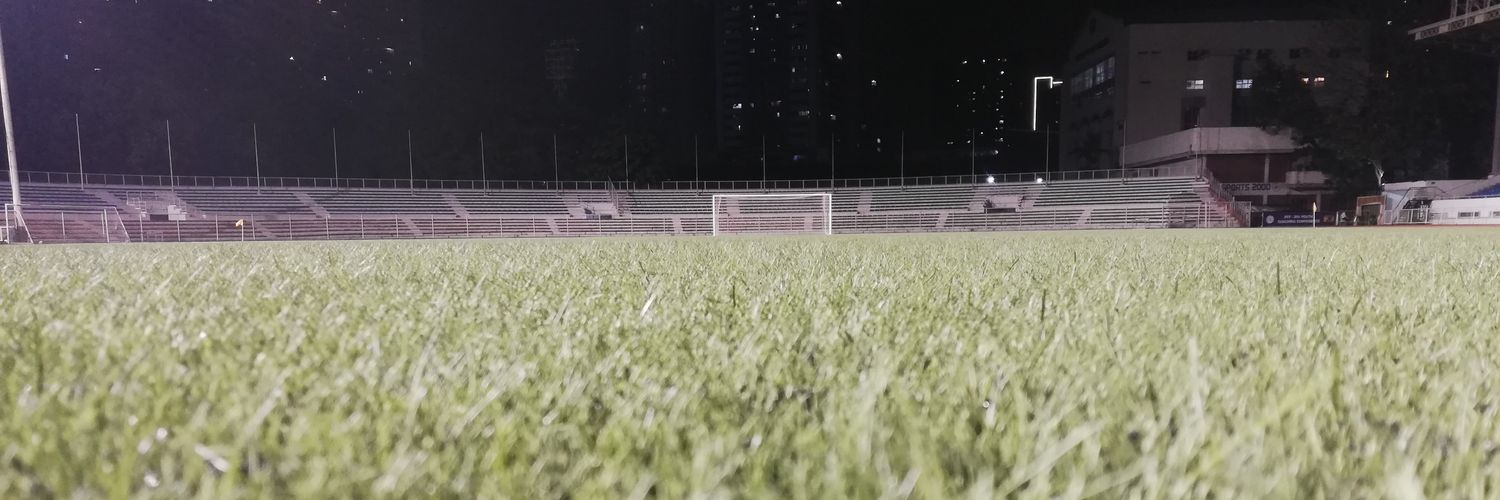
Saan na kaya kayo matapos noong huli tayong nagkita? Kumusta na kaya tayo matapos maghiwalay ang atinng mga landas? Ang iba ay gustong sumampa. Ang iba ay nakikipagsapalaran sa iba't-ibang linya. Ang iba'y naglilingkod sa oras ng karimlan.
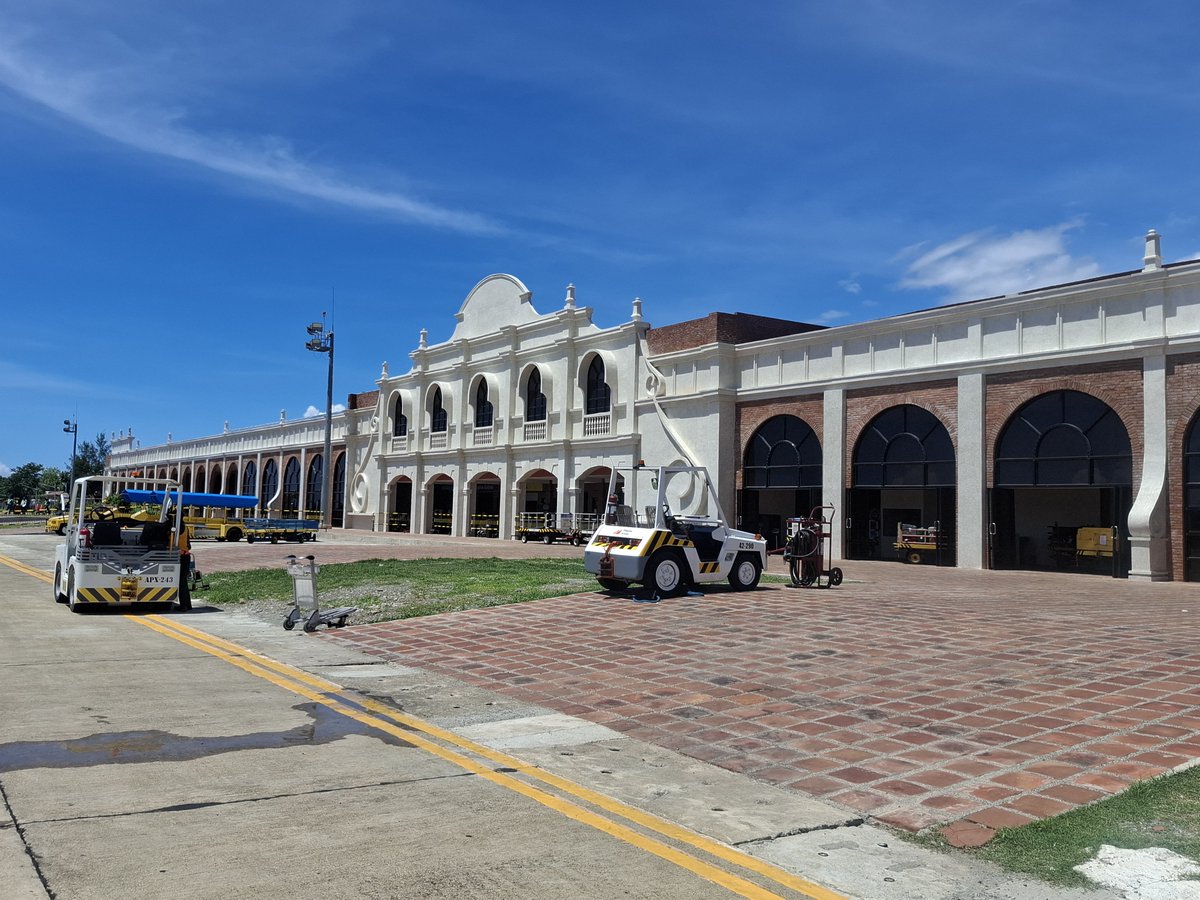
Laoag, Ilocos Norte has such a pretty airport. They should make more of our smaller airports look historical like this to promote our cultural heritage.
Was fun spending 2 days in the 'Solid North' on a bussiness trip.
@flyPAL's cabin crew service has been great as always. Makes me proud to be a shareholder of the national carrier.
Sometimes we try to over-analyze our struggles, but the most solid foundations for a strong, resilient mindset is found in Christ alone.
Pick up your cross.
Sister Eva Fidela Maamo, a Catholic nun and surgeon known across the Philippines as the “Healing Nun” for her decades of free medical care to the poor, has died at age 85.
She died on April 14, according to Our Lady of Peace Hospital, which announced her passing the following day.
In the 1970s, Sister Eva performed surgery on an Indigenous woman using a bamboo table and coconut water to keep the patient alive in Lake Sebu, southern Philippines. The urgent action was necessary because reaching the nearest hospital required hours on foot and crossing multiple rivers.
Her life of service and sacrifice made a deep impact on people, particularly the poor who most availed themselves of the nunʼs medical and pastoral care.
“I remember her vividly during my years as an intern and resident at Manila Doctors Hospital, attending to her patients,” said Dr. Anthony Leachon, a physician.
“Her quiet strength, her devotion to the sick and the poor, and her example of servant leadership shaped not only the lives of those she treated but also the young physicians who learned under her guidance,” he added.
Sister Eva was born on Sept. 17, 1940, in Liloan, Southern Leyte. She studied at the Velez College of Medicine in Cebu, central Philippines, and practiced at her familyʼs clinic in Liloan for a while.
Later, she entered the Sisters of St. Paul of Chartres to be a nun and missionary in 1974, serving as a physician in Lake Sebu and later in other parts of the country.
One of her steadfast beliefs was that health is a right for all, not a privilege for a few.
Being a surgeon, she did not limit herself to an operating room. She visited public hospitals, communities, and places with very limited access to health care.
Sister Evaʼs role went beyond that of a physician who is meant to treat illnesses; she made sure to work for peopleʼs dignity — interacting with patients where they lived, seeing their existential realities.
“In this way, she showed the human face of healing and care while witnessing Godʼs mercy,” Maria Martineze, a volunteer, told EWTN News.
The nunʼs quiet and consistent commitment tried to abridge the existing gap — need and access to health but also working for inclusion and peopleʼs right to access health, Martineze explained.
She trained “barefoot doctors” — men and women skilled to treat common illnesses and provide basic care in remote and rural areas where accessing health care has always remained a challenge.
According to Sister Eva, the “barefoot doctors” are not physicians, but they are skilled at treating common diseases.
Sister Eva trained 17 barefoot doctors in Lake Sebu in 1974. Over the years, she expanded the initiative across the country, training 274 barefoot doctors from 110 Indigenous communities.
Sister Eva had a distinctive character — going to the peripheries — as a missionary and a doctor. In her heart, she had special love for Indigenous peoples and geographically and socially isolated communities in the country, including the Tʼboli, Aeta, and Manobo.
She trained them in basic medical skills like CPR, physical exams, and minor surgery, empowering them to become health providers for their tribes.
One of the Indigenous peoples, the Aeta, displaced by the Mount Pinatubo eruption in 1991, was cared for by the nun.
The nun worked with them for years, capacitating the leaders and community, strengthening their dignity, resilience, and physical well-being.
With her efforts, as many as 146 families with 500 persons were able to resettle. Some eventually converted to Catholicism.
“She spent her life in healing and service with compassion and love for Indigenous people,” Lourdes Balinta, an Aeta teacher, told EWTN News.
The Foundation of Our Lady of Peace Mission was established in 1984 by Sister Eva and American Jesuit Father James Reuter to address the needs of the poor.
Additionally, in 1992, Our Lady of Peace Hospital, Parañaque, Metro Manila, was built to provide the poor with affordable access to quality health care, including feeding and livelihood programs for the poor in Metro Manila and other areas.
“Through her foundation and hospital, she brought healing, dignity, and hope to countless marginalized communities across the Philippines, offering free medical care, shelter, and livelihood opportunities,” a message from Ramon Magsaysay Award Foundation said.
“Small in stature but immense in spirit, Sister Evaʼs life stands as a powerful witness to Gospel compassion lived out in action,” it added.
Sister Evaʼs life was marked by extraordinary compassion and service to the poor, embodying the Christian spirit of selfless love and dedication, Bishop Precioso D. Cantillas of Maasin said.
Her tireless work as a healer and advocate for the marginalized was a profound witness to her faith in Christ and love for humanity, he added. The remarkable legacy she leaves behind — her ministry and compassion — touched countless lives.
“May her example keep motivating us to live lives of service and faithfulness to Godʼs mission,” the prelate said.
In 1997, Sister Eva received the Ramon Magsaysay Award, often considered Asiaʼs Nobel Prize, for her dedicated service to the poor communities through medicine.
In 1992, she received the Mother Teresa Award of the Philippines. In 2006, the nun was recognized as a Lasallian Star of Faith awardee, recognizing her decades of dedicated service as a nun and surgeon whose life epitomized faith in service.
Though Sister Eva has passed, her legacy remains in the hearts of people.
“She was a hardworking, humble, and caring woman of God — a physician-leader whose hands healed and whose heart uplifted countless lives,” Leachon said. “Multi-awarded yet always grounded, she embodied the true spirit of service.”
“Her life reminds us that medicine is not only science but also love in action,” he added. “May her memory continue to inspire generations of healers and advocates. Her light endures in the lives she touched.”
https://t.co/EjwMiraiam
The four marks of the Catholic Church, as professed in the Nicene Creed, identify the essential characteristics of the one true Church founded by Jesus Christ. They are that His Church is one, holy, Catholic, and apostolic.
The Church is one because it possesses a visible and invisible unity. It has one Lord, one faith, one baptism, and one visible head on earth, the Pope, the successor of Saint Peter. Though it includes many members, rites, and cultures, it maintains a single body of doctrine, a single sacramental life, and a unified governance under the bishops in communion with the Pope. This unity reflects the oneness of the Trinity and the prayer of Christ that all may be one.
The Church is holy because it was founded by the all-holy Christ and is continually sanctified by the Holy Spirit. It teaches the fullness of truth, offers the sacraments as channels of divine grace, and has produced countless saints throughout the centuries. While individual members, including clergy and laity, remain sinners in need of conversion, the Church itself is holy in its origin, in its constitution, in its means of salvation, and its purpose, which is to make all people holy.
The Church is Catholic, a word that means universal. It is not limited to any particular time, place, or people. Christ commanded the Apostles to make disciples of all nations, and the Catholic Church fulfills this mission by preaching the Gospel to every culture and generation. It possesses the complete means of salvation, including all seven sacraments and the entirety of revealed truth, and it remains open to all who seek God with sincere hearts.
Finally, the Church is apostolic because it continues the mission and teaching of the Apostles in an unbroken line. It was built on the foundation of the Apostles, preserves their doctrine without alteration, and maintains apostolic succession through the bishops, who are the legitimate successors of the Apostles. The Pope, as the successor of Saint Peter, serves as the visible center of this apostolic authority.
These four marks together distinguish the Catholic Church as the one true Church founded by Jesus Christ. They are not merely ideals but visible realities that have endured for two thousand years, guiding the faithful to the fullness of truth and salvation.