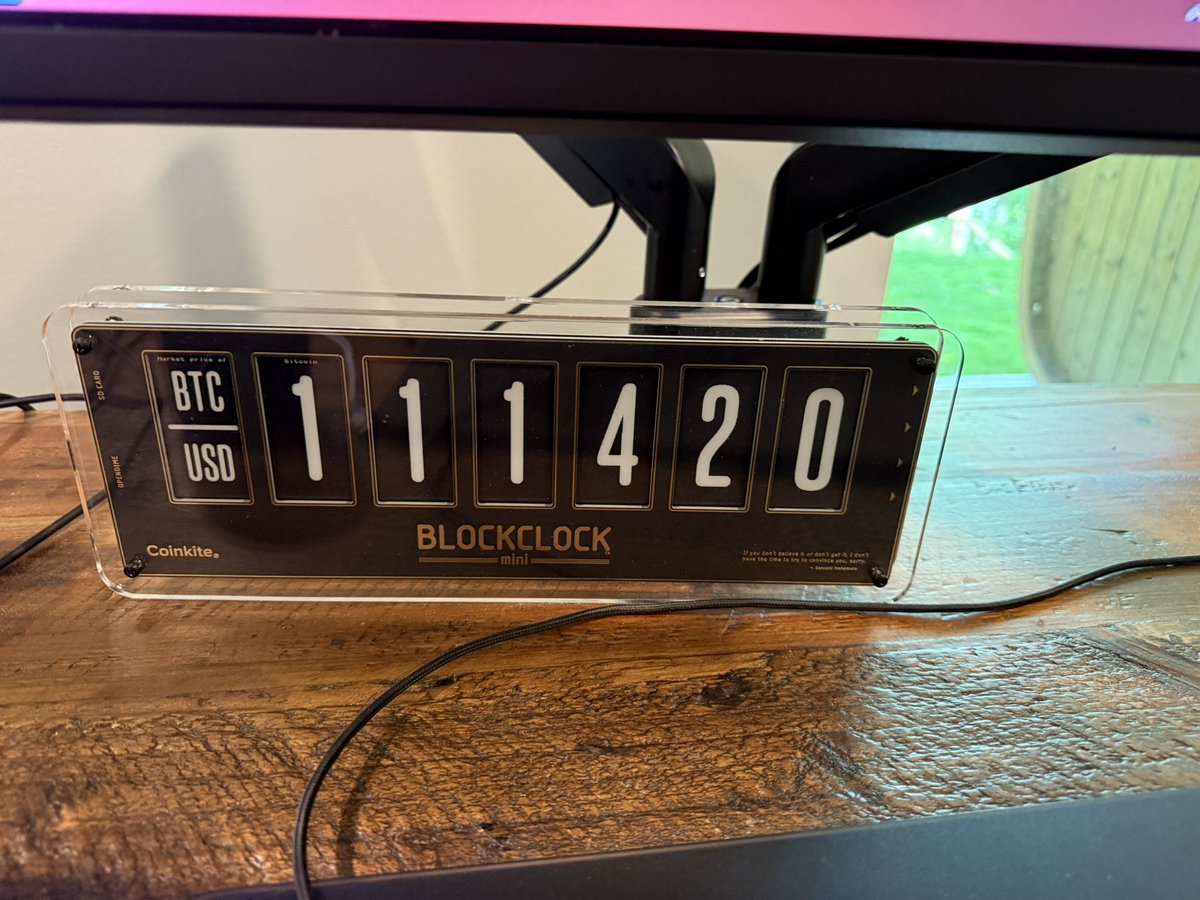
Harvard ramped its bitcoin investment in Q3 from $117m ot $443m. It also boosted its gold ETF allocation from $102m to $235m.
Think about that for a second: Harvard decided to put on a debasement trade and it allocated to bitcoin 2-to-1 over gold.
Because Bitcoin has appreciated = 66 % per year since July 2020 while U.S. wages have grown only = 4 % per year, the gap between price and pay is widening far faster than pay can catch up. If both trends simply rolled forward unchanged, the hours of work an "average American" would need to buy one BTC would explode from about 3.5K~ hours today to more than 33K hours in just five years—well over 16 years of full-time labour. Even if a worker saved every penny of an average full-time wage, the compounding price would outrun those savings indefinitely; mathematically, they would never catch up.
btw a (CAGR) of 66% puts us at 1.53m per coin in 5 years. #Bitcoin
Friends and I play BO6 Warzone a bit differently than others. Play it like old school carmageddon. I made this for my squad. Also two of us play as t-800s.
OneSig Deep Dive
LayerZero Labs CEO @PrimordialAA and VP of Engineering @0xroban walk through OneSig -- an open-source solution for executing any number of transactions across any number of chains with a single signature.
Timestamps:
00:23 – Why we open-sourced OneSig
07:18 – How OneSig works
12:55 – Implications for industry
Today we are introducing OneSig, an open-source solution for executing any number of transactions across any number of blockchains with a single signature.
Security has always been one of the defining issues in crypto and on the back of the recent ByBit hack and Safe front-end exploit, we are releasing this framework so teams can minimize reliance on any third parties.
One of the biggest questions with ZKPs is "where will the demand come beyond ZK rollups"? vApps are the answer. What is "vApp"?
• A Rust SDK that lets devs write application logic in normal code but get verifiability out of the box (with SP1) + interop (with LZ)
• Lets devs transcend constraints of the EVM (no more Solidity! no more EVM overheads) and traditional blockchain throughput limitations
• Built applications that can tab into web3 liquidity with good web3 properties (verifiability, no trust assumptions), with a web2 developer experience
To make this concrete, applications like a verifiable orderbook exchange, verifiable perp-dex or verifiable ad exchange cannot be built on any existing EVM blockchain today (including rollups). But all of these can be easily built as a vApp.
vApps are how we will move crypto applications beyond the cycle of copy-paste EVM forks and into building something real.
A real pleasure working with the cracked @LayerZero_Core team on this one.