Work's out of distribution for foundation models. Think of meetings, for example. They're core to everyday work, but rarely show up in the data models learn from.
Bringing work into distribution is hard. It requires new kinds of data, new training approaches, and new metrics.
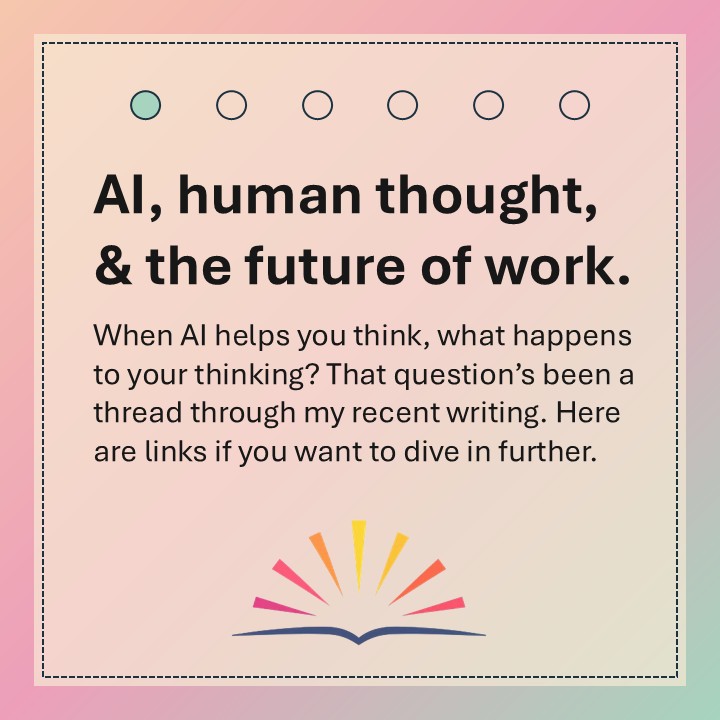
When AI helps you think, what happens to your thinking? A lot of my recent writing pulls on this question, so I thought I’d bring the pieces together. 1/
So the ? isn’t only whether we exercise judgment, but how AI shapes our capacity to do so. I explored this at King Charles's AI Summit (https://t.co/NAzmGtwkNc) & shared an essay (https://t.co/OB45CseBZj) with the Vatican shortly before the publication of Magnifica Humanitas. 10/
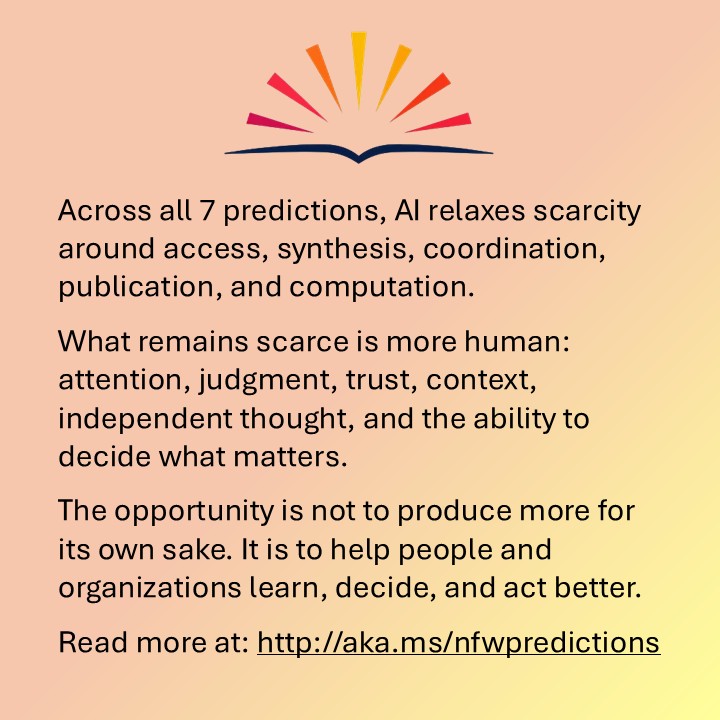
Across predictions, the 1st-order change is how AI helps a person read, write, meet, think. We’re all already starting to feel its impact. The 2nd-order change will be how those new patterns become signals that groups and organizations can learn from. (9/9)
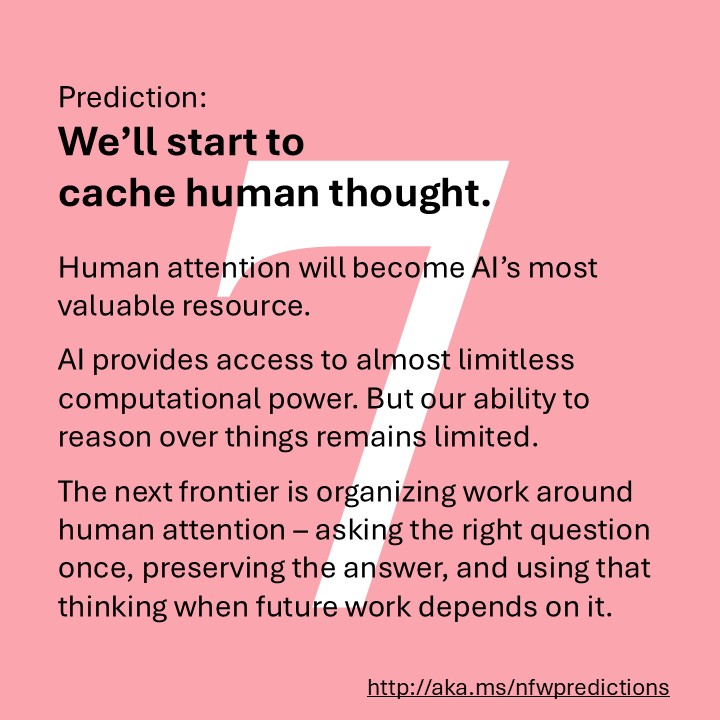
Sharing 7 predictions about the future of work with AI. I’m not a futurist, I’m a scientist, meaning speculation doesn't come naturally. But there's a lot we can already see in how people create, collaborate, and learn differently with AI. Follow that lead with me! (1/9)