“Emprendedor, CEO en Pattern Software Factory. Apasionado por la tecnología, la innovación y el impacto cultural. Autor de Dinero Digital. Lima, Perú.”
🚀 En 2025 dejaré todo para construir 12 startups en 12 meses.
Como developer con 13 años de experiencia, he visto errores claros de fracaso en startups.
Te comparto los 3 errores más letales:
[Video]
🧵 Abro hilo con detalles
“regla de los 2 minutos”: si una tarea o interrupción toma menos de 2 minutos, hazla inmediatamente para evitar que se acumulen y desvíen tu atención de las prioridades mayores. Esto te ayudará a mantener el flujo sin sobrecargarte.
Demis Hassabis (CEO de Google DeepMind, Nobel Química 2024 por AlphaFold):
“La IA será 10× más grande—y quizá 10× más rápida—que la Revolución Industrial.”
@InformaCosmos@grok al tener una cuchilla cualquier movimiento no pareceria peligroso? porque si en vez de un cuchillo pondria un peluche pareceria que estuviera dando cariño y no peligro. ¿Cual es realmente la novedad? y ¿como funciona esta señal bioelectrica?
En 2025 pondré todo esto a prueba:
- 12 startups en 12 meses
- Documentando cada paso
- Mostrando n��meros reales
- Build in public
¿Quieres ver cómo aplico estas lecciones (o fallo intentándolo)?
Sígueme 🚀
RT si te sirvió 🙏
🚀 En 2025 dejaré todo para construir 12 startups en 12 meses.
Como developer con 13 años de experiencia, he visto errores claros de fracaso en startups.
Te comparto los 3 errores más letales:
[Video]
🧵 Abro hilo con detalles
Hablar con potenciales usuarios
- Mínimo 10 entrevistas
- Confirmar precio dispuesto a pagar
- Entender el problema real
- Validar la solución propuesta
Solo después de esto = Construir
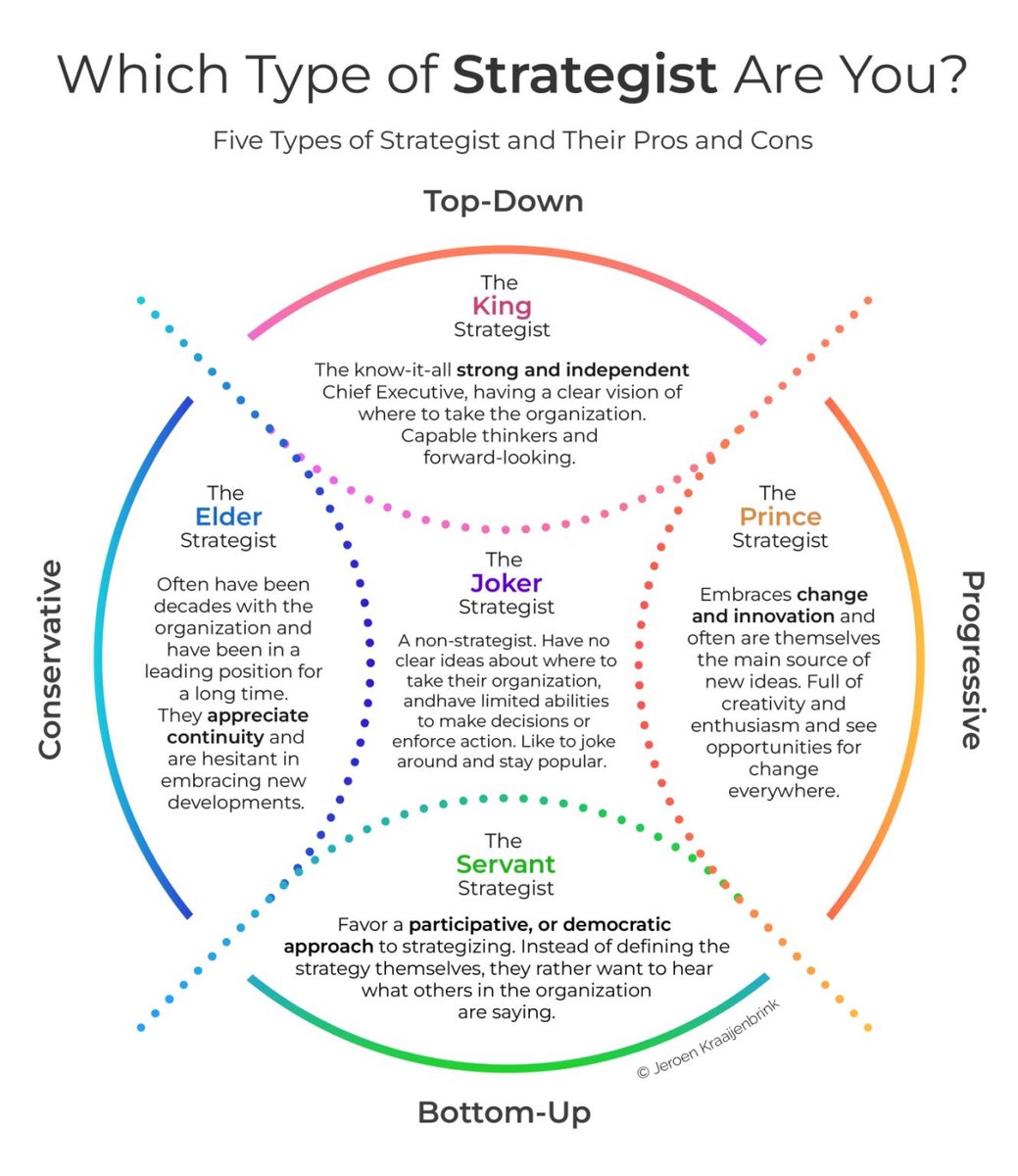
Did you know there are 5 types of strategists?
Each has a unique approach to leadership and decision-making.
Thank you, Jeroen Kraaijenbrink, for this great breakdown.
Here are the types:
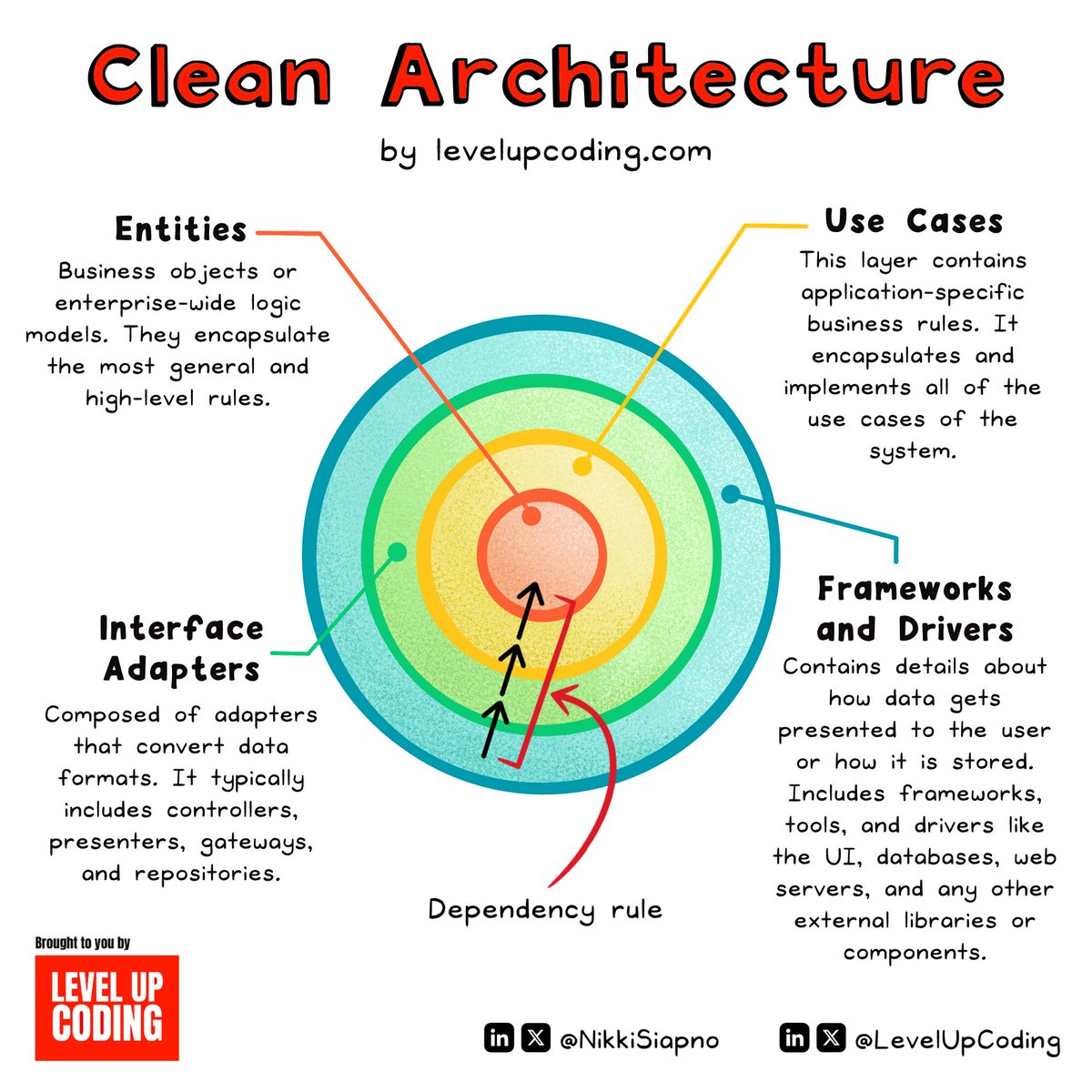
What is clean architecture, and how does it work?
A common pitfall in software development is the struggle with inadequate architectural design. This often results in systems that are challenging to understand, maintain and evolve.
Clean architecture, introduced by Uncle Bob (Robert C. Martin), addresses these issues head-on. It offers a prescriptive approach to creating systems with interchangeable components, focusing on maintainability, flexibility, and encapsulation of business logic.
Core layers of clean architecture:
1) Entities layer: Centralizes enterprise-wide business rules.
2) Use cases layer: Encapsulates and implements application-specific business rules.
3) Interface adapters layer: Bridges internal logic and external interfaces.
4) Frameworks and drivers layer: Manages interactions with external technologies.
The essence of Clean Architecture lies in its domain-centricity, placing business logic at the forefront. By enforcing a separation of concerns and a dependency rule, it ensures that changes in frameworks and interfaces have minimal impact on the core business logic.
Benefits:
🟢 Flexibility: Adapts to evolving business needs, aided by the separation of concerns ensuring that changes in one part do not affect others.
🟢 Testability: Facilitated by decoupled components, stemming from the clear delineation of responsibilities.
🟢 Maintainability: Enhanced by the clear boundaries between layers, making the system easier to understand, sustain, & evolve.
Best suited for:
🔸 Complex systems: Provides a scalable and organized structure that can handle complex integrations & business processes while maintaining system integrity.
🔸 Evolving technologies: Offers the agility to adapt to and incorporate technological advancements, ensuring longevity & relevance in dynamic tech environments.
Challenges:
🔴 Initial complexity: The very layers that provide structure can introduce complexity, especially in smaller projects where such rigorous segregation might be overkill.
🔴 Design demands: Requires comprehensive upfront planning and architectural foresight, making it a substantial initial investment in terms of time & resources.
Clean architecture isn't a silver bullet for every software challenge, but when it aligns, it offers a structured, scalable framework for building software systems. Its focus on business-centric design makes it a powerful approach for creating software that remains robust over time.
~~
Thank you to our partner Postman who keeps our content free to the community.
Here are five valuable Postman features and tips you should know: https://t.co/9lyIikgs0u
📩 If you like this post, then you'll love our newsletter where we help you level up your engineering and system design skills. Subscribe here: https://t.co/wfCnjeldMh