24/04/2025
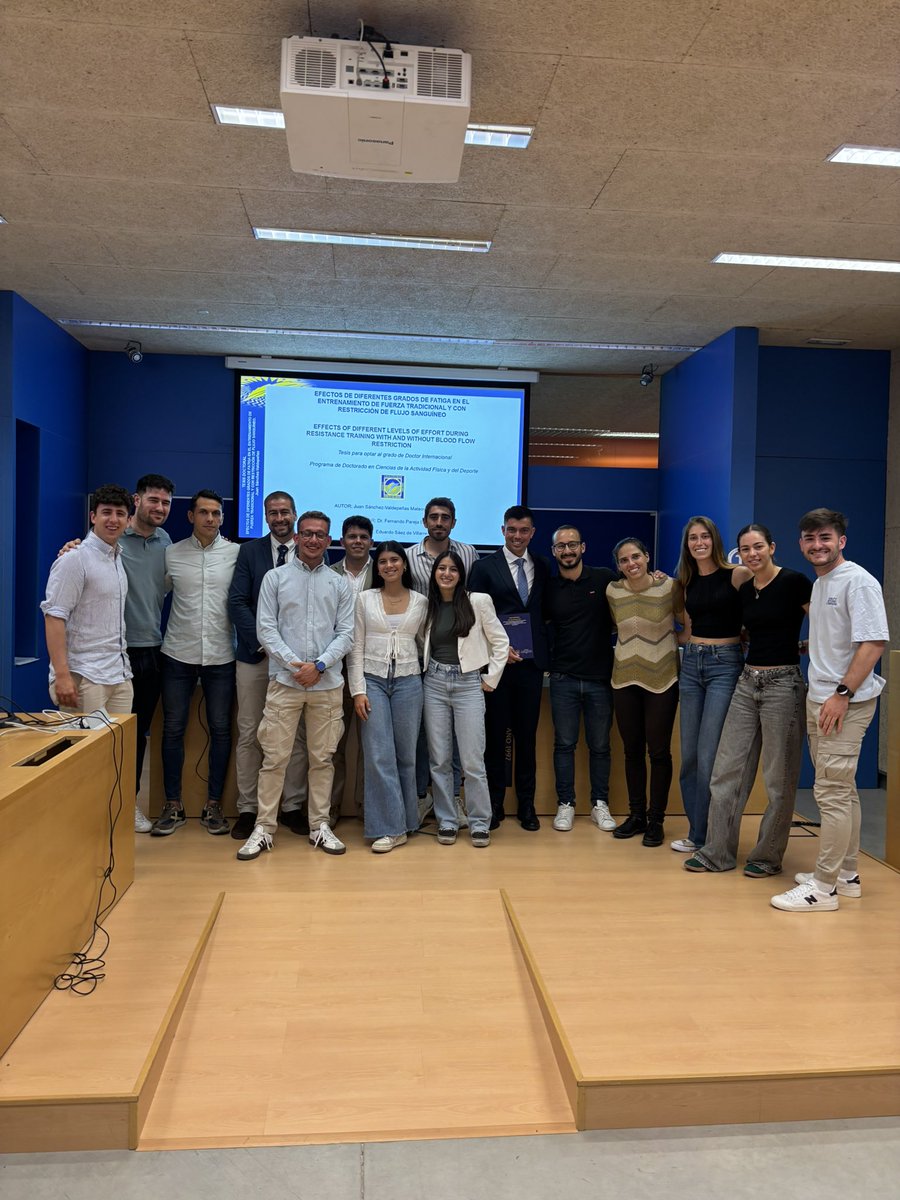
International PhD in Physical Activity and Sport Sciences.
The greatest achievement has been sharing this journey with incredible people.
Thanks to friends, colleagues, tutors, and the committee for your support and dedication.
The show must go on.
¿Quieres optimizar el entrenamiento de fuerza de tus atletas? Ya puedes descargar gratis esta hoja de cálculo para VBRT que hemos desarrollado @JuanSanchezVal, @rodilesguerrer1, @pjcornejodaza
💻👇https://t.co/K5GbuT8GBr
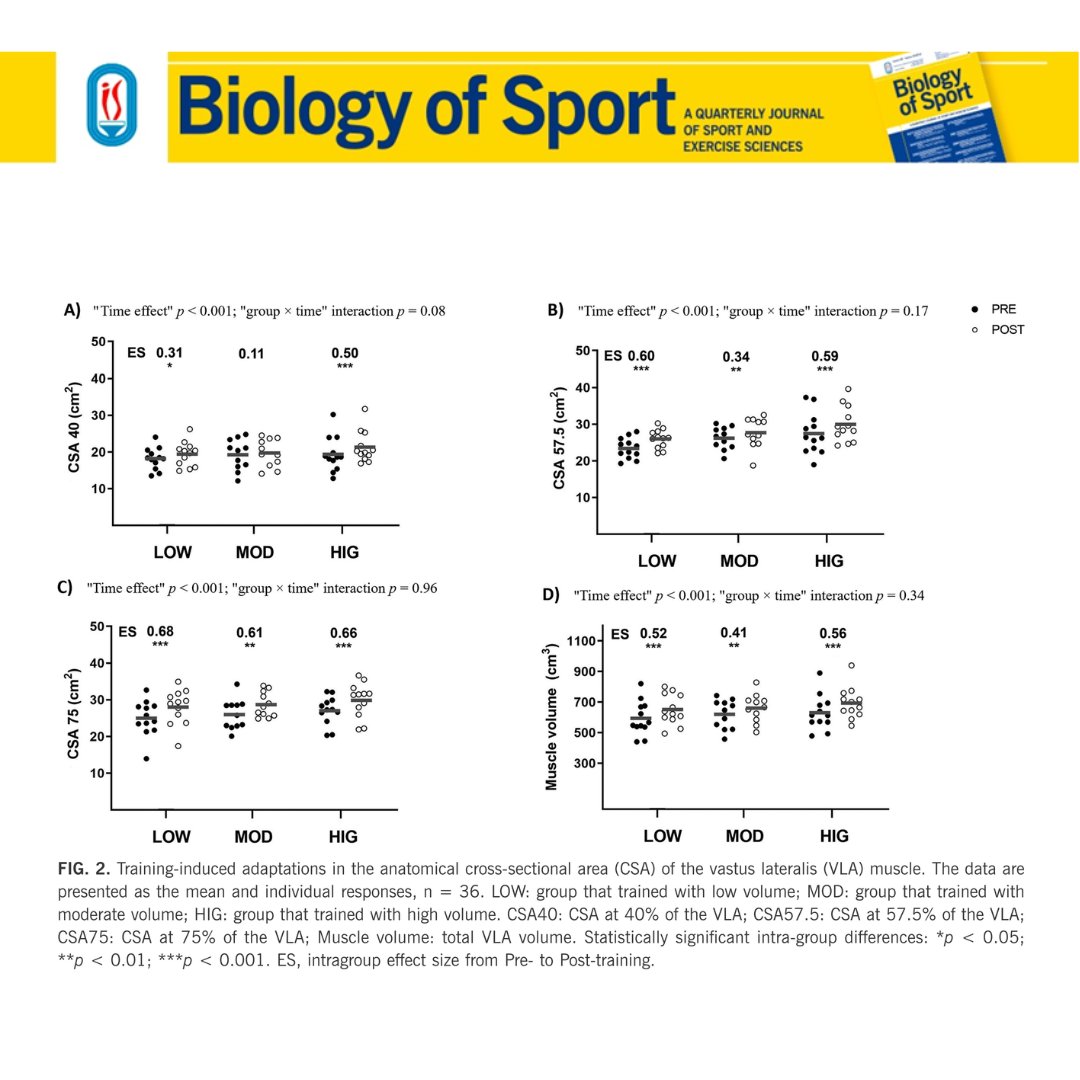
Consistent with the broader body of research, this study found that training with a moderate proximity to failure (20% velocity loss) produced the greatest strength gains, whereas training closer to failure (40% velocity loss) elicited the largest increases in muscle size.
Take-home message: Proximity to failure appears to be goal-dependent. Training closer to failure becomes increasingly important when the primary objective is maximizing hypertrophy, whereas strength development may be optimized by stopping sets somewhat further from failure.
https://t.co/v7OmQSlFO3
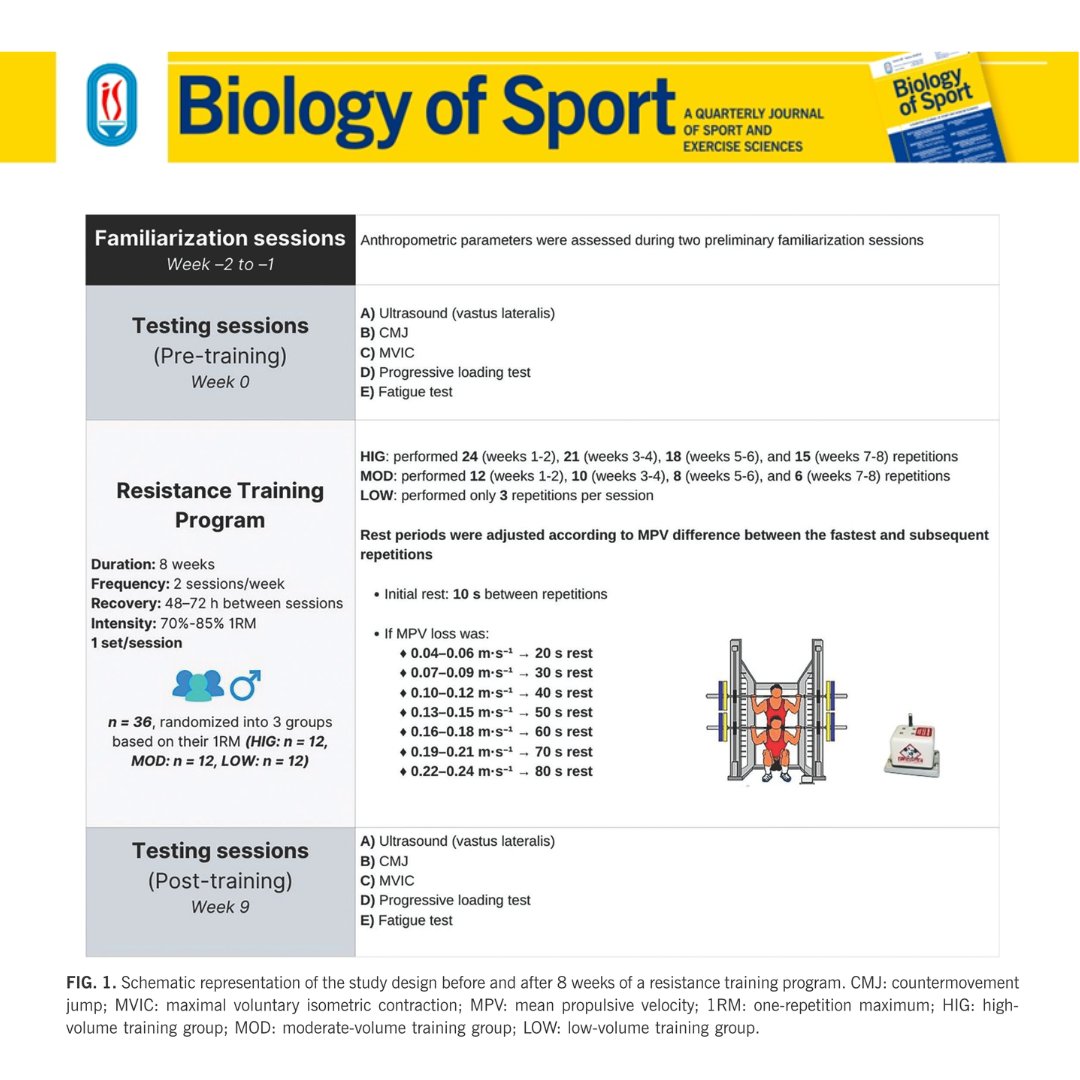
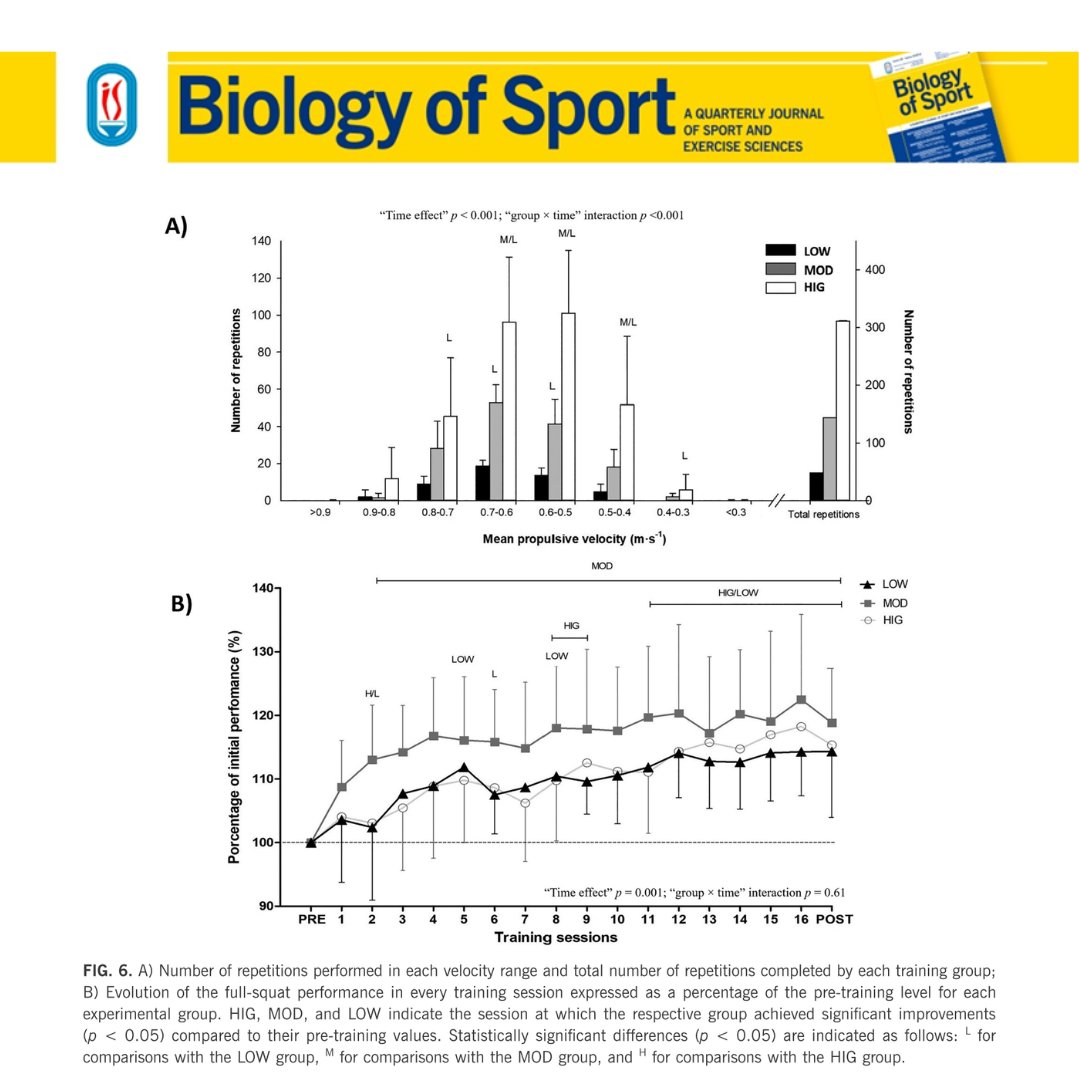
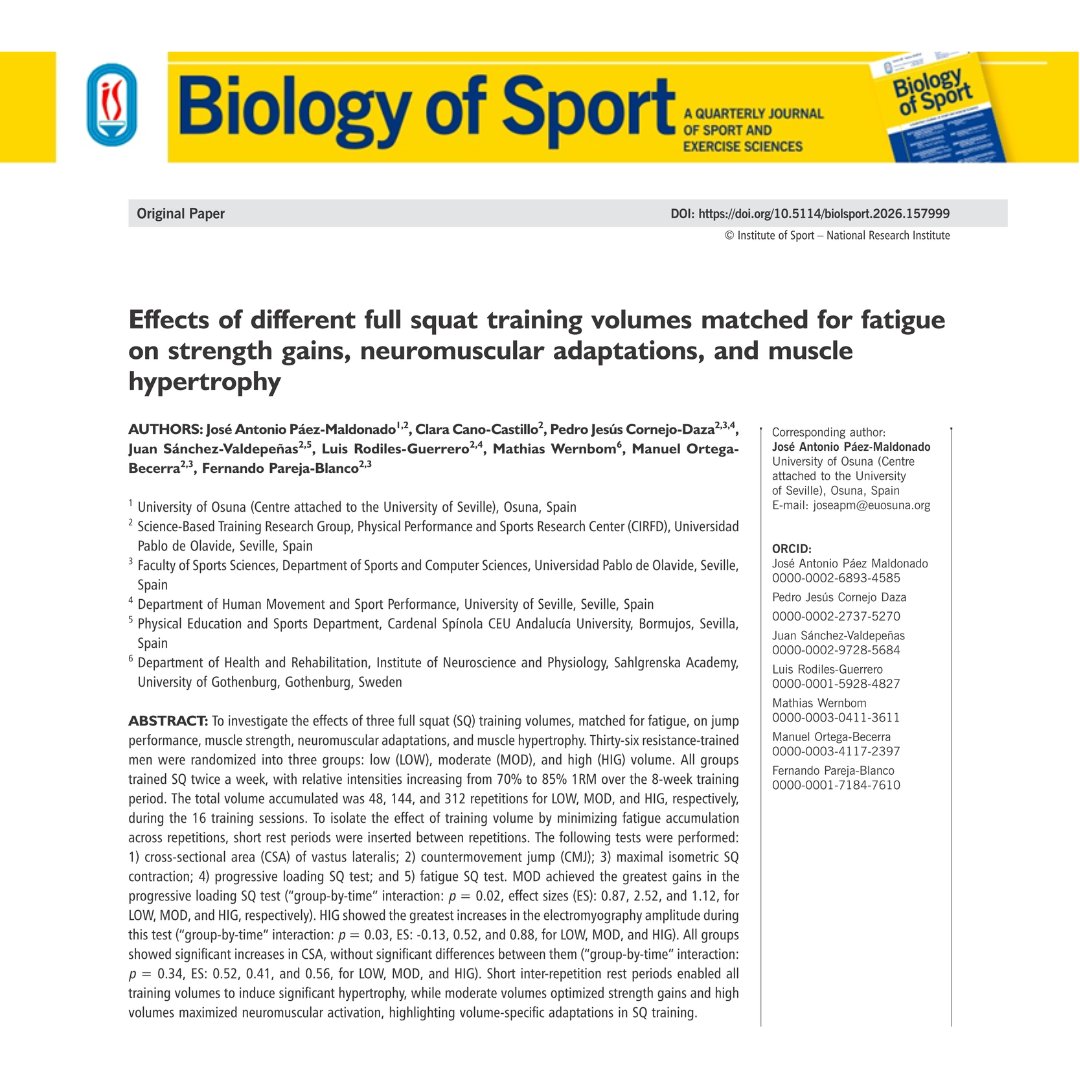
Here we go again. For the first time analyzing the effect of training volume in lower limbs, matching fatigue induced by different volumes using velocity loss 🔥🔥
🚨NewPaper: Effects of different full squat training volumes matched for fatigue on strength gains, neuromuscular adaptations, and muscle hypertrophy 🏋️♀️
✍️José Antonio Páez-Maldonado, Clara Cano-Castillo, Pedro Jesús Cornejo-Daza et al.
🔓🔗DOI: https://t.co/HcVKoTOY1V
👀 Movimiento olímpicos, dinamometría electromecánica, suelo pélvico, entrenamiento basado en velocidad, BFR, corredor de resistencia, plataformas de fuerzas, evaluación en deportes colectivos…¿te lo vas a perder? ‼️
🗓️ 7-8 noviembre
📍 Universidad de Almería
⏰ÚLTIMAS PLAZAS🚨
If you want to explore VBT in more depth from an informative angle, check out the latest posts in Vitruve’s blog.
@VitruveFit#VBT
In this thread, I share the titles of the published posts.
1/💪🚨 New Study Alert: Cluster sets (CS) Vs. traditional sets (TS).
CS maintaining performance and reducing fatigue during training sessions.
@FrontiersIn
https://t.co/Ul6Ri8rhPn
🏋️♂️ Here’s what you need to know:
🚨Published Today🚨
Comment on: “Explosive is not a Term Defined in the International System of Units and Should not be Used to Describe Neuromuscular Performance”
By Moritz Schumann, Joshua F Feuerbacher, Julian Alcazar, David G. Behm, Urs Granacher, Keijo Häkkinen and Simon Walker
📲Click the link below to read the full article for 🆓👇
🔗https://t.co/qD35R4iq7k
Effects of Training Volume in the BPress Exercise Performed With Interrepetition Rest Periods on Strength Gains & Neuromuscular Adaptations by Páez-Maldonado, Cano, @pjcornejodaza, @JuanSanchezVal, Rodiles-Guerrero, Wernbom, Ortega-Becerra, @fparejablanco https://t.co/XMtAATLwVd
🚨Previous studies analyzing effects of velocity loss accumulate different fatigue and volume. Thus, the findings were the result of the interaction between these them. In our last study we isolated the effect, for the first time, of training volume https://t.co/oZ6pfTswLr
Ahead of print: Impact of Generalized vs Individualized Load–Velocity Equations on Velocity-Loss Magnitude in Bench-Press Exercise: Mixed-Model and Equivalence Analysis by @MiguelMsanmor, B. Bachero-Mena, @JuanSanchezVal, @Fabio_sportsci, @fparejablanco https://t.co/MuqadZgZww