This is an older video showing the brutality with which Chinese soldiers pursue, bind, and gag Tibetan monks.
However, the video remains highly relevant because nothing has changed; China continues to persecute Tibetan monks with extreme brutality.
Video by Wang Hui @wanghui90
#BrutalChina #Tibet
"Make of us the hero warriors we aspire to become. May we fight successfully the great battle of the future that is to be born, against the past that seeks to endure; so that the new things may manifest and we may be ready to receive them." #TheMother#Yoga#SriAurobindo#India
HORRIBLE
In Bangladesh 🇧🇩, a Muslim Imam from a mosque is mistreating non-Muslim women, treating them worse than animals on the streets. This is real Islam.
Why Bhojshala became personal to me?
Until last year, Bhojshala was just another unfamiliar name to me, despite being a native of Madhya Pradesh. That changed when I visited the site on a reporting assignment for Organiser. What I encountered there was not merely a disputed monument, but a living wound of history. As I read more and walked through the complex, I felt a strange mix of shock, shame, and anger. Shock at what had been done to the site, shame at how little I had known about it, and anger at how casually its history had been altered, negotiated, and denied.
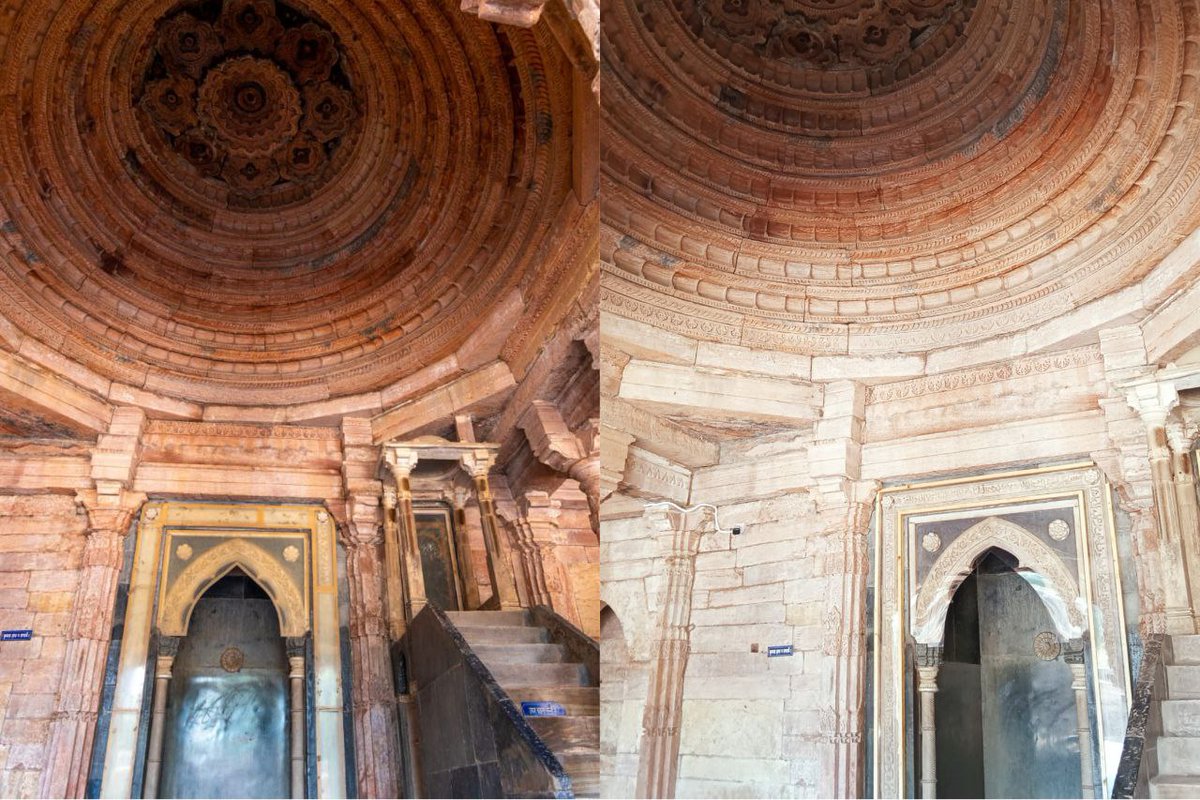
Standing inside the Bhojshala complex, it was impossible to ignore its origins. Every pillar, inscription, and architectural detail spoke the language of a Hindu centre of learning established by Raja Bhoj, a ruler whose vision turned Dhar into a global hub of Sanskrit. The Saraswati mantras carved into stone, references to Bhagwan Ram, and grammatical inscriptions in Sanskrit and Prakrit were not just relics, they were evidence. Evidence that this place was once a thriving Saraswati temple and a seat of knowledge, later damaged and reduced through repeated invasions beginning with Alauddin Khilji in 1305 AD.
What disturbed me deeply was not only the medieval destruction but the modern political decisions that followed. In the late 1990s and early 2000s, administrative orders backed by the Congress government allowed Muslim prayers inside the complex while restricting Hindu worship. Hindus were lathi-charged, jailed, and even killed in police firing for demanding access to what they believe is their own sacred space.
Walking through Bhojshala, knowing that people had died simply for wanting to pray here, made the silence of the stone feel unbearably heavy.
What Hindus recognise as the havan kund becomes a wuzu khana.
What we know as Saraswati Koop is referred to as Akkal Kua.
The garbha griha is the very spot where preachers sit.
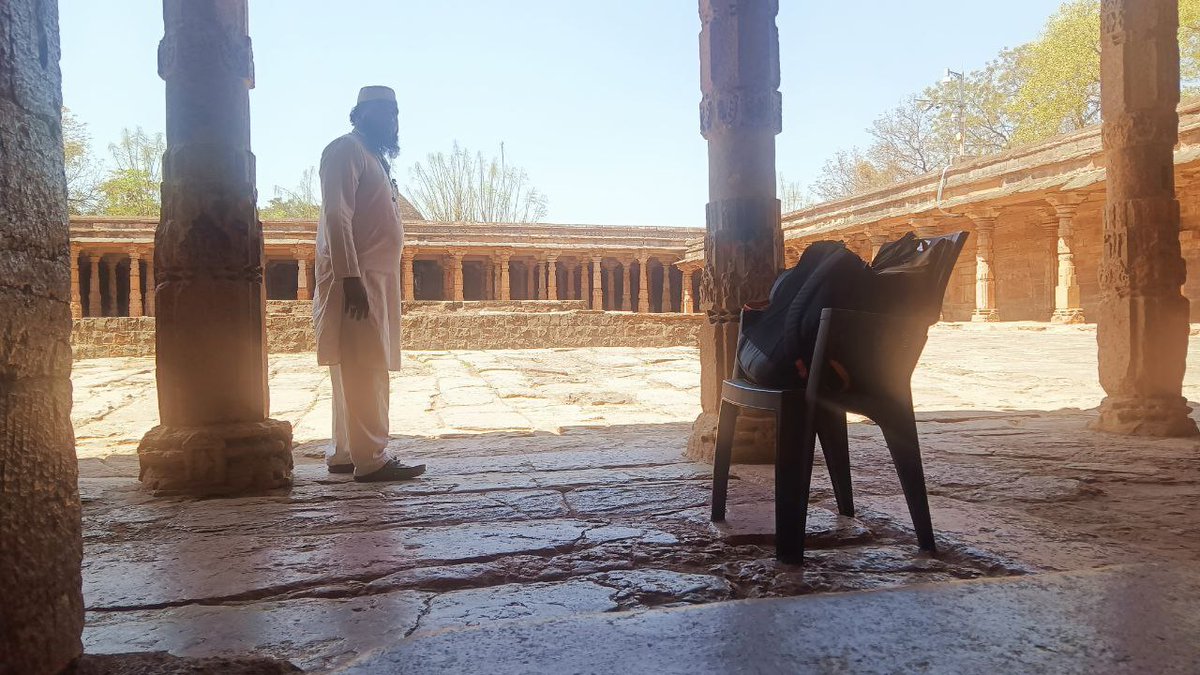
While I had my shoes left outside, I found a man with them on inside the campus, when asked, he ignored and moved away.
Apart from the regular Tuesday worship, Bhojshala witnesses a massive gathering every Basant Panchami, the day dedicated to Maa Saraswati. Several times in the past, this pooja has clashed with Friday prayers, turning the site into a flashpoint.
During my visit, I met representatives from both sides. The Hindu side spoke through history, inscriptions, and archaeological records. The Muslim side relied largely on belief and continued usage. I visited the Kamal Maula Mazar and spoke to its caretaker, who claimed the structure as a mosque but avoided engaging with the historical contradictions visible just a few steps away. What struck me was this: there already exists a separate mosque, Rehmat Masjid, built on land historically granted to Muslims. Bhojshala, however, carries no such continuity for Islamic worship. The structure, its core, its carvings, its very grammar, belong unmistakably to a temple.
Perhaps the most haunting symbol of this struggle lies a few meters outside Bhojshala, the Akhand Jyoti burning since 2005 at the Sankalp Jyoti Mandir. Lit by devotees who walked barefoot from Maihar to Dhar, this flame waits for the return of Maa Vaghdevi, whose original idol still remains in London. That unbroken flame is not an act of defiance, but of patience. It burns quietly, carrying a promise that history, however delayed, will one day be corrected.
But when? Only Maa Vaghdevi knows, sharing some pictures:
@yogiraj_arun No proportion. Why are we stuck in this loop for 1000 years of sculpting. See lions head and her waist. Just the paw of the lion is the size of a man's head
One mother forbade medicines to the dying, converted them, then laughed at the death count; the other mother has provided free treatment to 5.9 million, built 13 million sqft, 95 OT, 101 speciality, 4050 bed hospitals employing 1540 doctors.
The first mother got the Nobel Prize.
At once she was the stillness and the word,
A continent of self-diffusing peace,
An ocean of untrembling virgin fire;
The strength, the silence of the gods were hers.
#Savitri#SriAurobindo
https://t.co/42HB84wVq6
A deep of compassion, a hushed sanctuary,
Her inward help unbarred a gate in heaven;
Love in her was wider than the universe,
The whole world could take refuge in her single heart.
https://t.co/5OR1LORJGM #Savitri#SriAurobindo#TheMother
The great unsatisfied godhead here could dwell:
Vacant of the dwarf self’s imprisoned air,
Her mood could harbour his sublimer breath
Spiritual that can make all things divine.
https://t.co/DBxaChBVnA
#Savitri#SriAurobindo#TheMother