Tesla is posting job openings for memory process engineers for its Terafab.
@GavinSBaker said that Elon is currently prioritizing DRAM above all else for the Terafab.
According to Korean media reports, Kioxia began mass production of its 10th-generation 3D NAND, BiCS10, at the K2 fab in Kitakami, Iwate Prefecture, in early July.
This could be one reason both Kioxia and SanDisk missed expectations.
$SNDK
https://t.co/paC8F824BH
To summarize GFHK's note:
Rubin's SOCAMM2 has been nerfed once again — down to 64GB.
But is that bearish? If anything, it's the opposite.
Working off a 192GB SOCAMM2 configuration, NVIDIA had asked the memory makers for a corresponding volume of SOCAMM2 — and the memory makers came back telling them they could only supply 60–70% of that volume.
This isn't a demand problem, it's a supply problem. The spec was cut because they couldn't get the SOCAMM2 supply.
What about HBM? Contrary to what a certain research house published, Rubin Ultra is not being considered with 8Hi only. An HBM4E 12Hi SKU is also under consideration.
It is a step down from the original 16Hi — but everyone already knew that, right? NVIDIA needs 12Hi if only to compete with AMD. The 8Hi is there to accommodate SKU requests from a subset of customers.
Some spicy info
• Net debt-to-equity ratio projected at just 18% by 2029 despite heavy capex
• Reiterate our July 2’s report of Nvidia cutting memory: Vera CPU SOCAMM from 192GB → 96GB → selective SKUs to 64GB by 1Q27
• Rubin Ultra HBM stepped down from 384GB to 192GB/256GB (HBM4/4E); 8-Hi design finalized, yet 12-Hi remains on line up
• Competitors already on lower configs: AMD MI450 Custom and Google TPU Humufish already 8-Hi
• Scale-up expanding via NVL576 w NPO optics to offset reduced memory content
SNDK's gross margin plateau is a welcome move. It means they are not squeezing customers to the extreme, and that they are looking at a long term vision instead. The disciplined, balanced capex execution I have been arguing for all along, the kind that prevents a company from investing to extremes at the top of the cycle and taking severe damage in the downcycle, requires SanDisk's NBM model. There is no way around it.
So is now the right time to buy SanDisk? The bears argue that the gross margin plateau marks the peak of this cycle. That is also why the stock is falling right now.
As I wrote in my SK Hynix earnings review(You can find it in the Citrini Substack chat), this is the point where we should be looking at Q, not P. As long as you believe in the AI supercycle, as long as big tech keeps spending, as long as compute companies like Nvidia remain in short supply, there is no scenario where the shortage eases for memory alone. That is the corresponding effect of LTAs (NBM) and disciplined capex. Even if gross margins stall, as long as Q expands and the floor set by those LTAs prevents an excessive collapse, the total profit pool will grow enormously.
Layer massive shareholder returns such as buybacks on top of that, and memory companies should be rerated, and they will be rerated. From cyclical stocks to essential infrastructure of the AI world.
$SNDK
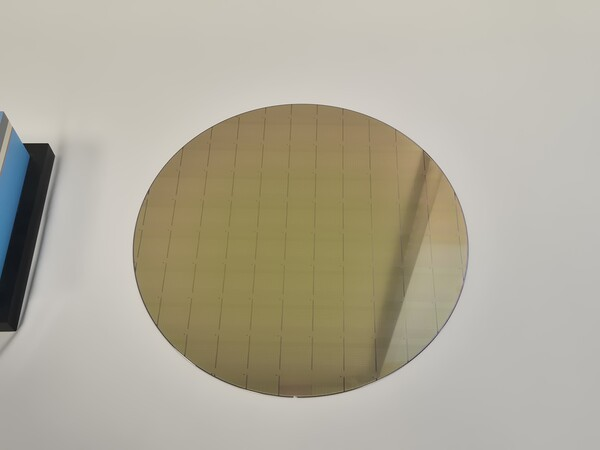
Taiwan's GlobalWafers: "Supply constraints have emerged in 12 inch wafers"
Taiwan's GlobalWafers has formally acknowledged a shortage in silicon wafers.
At its second quarter earnings conference call on the 4th, GlobalWafers said an imbalance between supply and demand in the semiconductor wafer industry is already underway, adding that its 12 inch (300mm), 8 inch (200mm) and 6 inch (150mm) lines have effectively reached maximum utilization and that supply constraints have already emerged for some advanced 12 inch products.
Orders have surged on rising demand from AI semiconductors, high bandwidth memory (HBM), silicon photonics and advanced packaging. The company explained that the shortage has become a reality as logic makers, not only memory makers, move to secure long term capacity.
The shortage is appearing across the wafer industry. Germany's Siltronic said in its earnings release on the 30th of last month that inventories at memory and logic customers are normalizing and that customers have begun rebuilding wafer safety stock, adding that this restocking is expected to increase wafer demand further and that new customers as well as existing ones are requesting 300mm volumes.
Japan's Shin-Etsu Chemical, the global number one, also said in its earnings release on the 24th of last month that 300mm wafer shipments grew at double digit rates both year over year and quarter over quarter. Japan's SUMCO likewise assessed in May that customer inventory adjustment was entering its final stage. SK Siltron is expanding capacity by bringing equipment at its new fab online in stages, but the pace of order growth is understood to be outrunning that.
The way long term agreements (LTAs) are struck is also changing. In the past the purpose was for customers to secure stable volumes, but recently they have taken on a stronger character of locking up capacity ahead of a shortage. Contract terms are also lengthening from around three years to five to eight years.
Last month GlobalWafers signed a 10 year LTA with Micron, the longest in the wafer industry. The contract begins next year and includes strategic financial support in the nature of a prepayment. Most of its revenue in the second half of this year and the first half of next year is also expected to come from LTAs.
Shin-Etsu Chemical said it currently supplies all of its 300mm wafers under LTAs. Siltronic supplies two thirds of its volume through LTAs. Memory customers are requesting volumes for delivery two to three years out.
Moves to raise prices are also emerging. With supply tight, prices have begun to rise first in the non LTA (spot) market. Siltronic said prices for 300mm non LTA wafers have started to rise. GlobalWafers also expects spot prices in the second half of this year to be higher than in the first half.
Price increases are expected to spread to LTAs as well. GlobalWafers said it is discussing price increases with customers to reflect higher raw material, energy, logistics and labor costs, adding that while LTAs already signed will maintain their contracted prices, new contracts will reflect not only price and volume but also price adjustment mechanisms, product mix and market changes. Siltronic likewise stressed that with some LTA renegotiations coming up in 2027 and 2028, prices need to recover to levels that allow reinvestment, and that broad and meaningful price increases are necessary.
The wafer industry had previously gone through roughly two years of simultaneous shipment declines and price pressure as customer inventories built up sharply from 2023. Customer inventories of 300mm wafers then turned lower from late 2025, and months of inventory also declined from the first quarter of this year, completing the inventory correction. The industry is understood to have turned from the second quarter of this year.
A deeper shortage and full scale price increases are expected to appear from the second half of 2027. Rising utilization at existing semiconductor lines is currently driving shipment growth, but once new memory fabs from Samsung Electronics, SK hynix and Micron come online, wafer demand is expected to rise to roughly double current levels.
"For Chinese and Indian fabless companies that need to secure leading-edge-class performance amid U.S. sanctions on China, Samsung Foundry is a realistic alternative"
LMAO
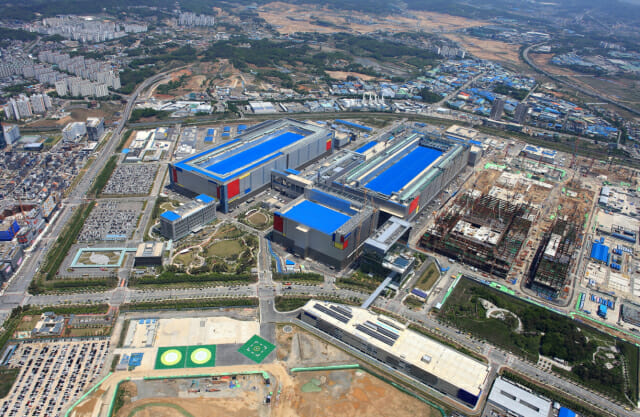
Samsung Foundry’s 4nm Capacity Fully Booked as 5nm Orders Rise, Expanding into AI and Servers
Samsung Electronics' foundry business is stepping up its sales push for its 5nm process. The move is read as offering 5nm as an alternative now that utilization of the in-demand 4nm node has hit its ceiling.
According to semiconductor industry sources on the 5th, Samsung Foundry's 4nm process is expected to remain at full capacity through next year.
"As Samsung Electronics' HBM4 order volumes have surged, 4nm line utilization has shot up," one industry source said. "The foundry's largest customer has become the memory division."
On top of that, volumes for U.S.-based Nvidia's inference LPU "Groq3" have reportedly exceeded expectations, further contributing to the 4nm full-capacity situation.
In response, Samsung Foundry is presenting 5nm as an alternative to customers seeking 4nm. The strategy is to pitch the 5nm process — where yield and performance are already proven — as a value-oriented substitute for fabless customers who find it difficult to move up to the 2nm and 3nm nodes given the higher cost burden versus 4nm.
"The 2–3nm leading-edge nodes carry a heavy burden for customers in terms of yield and cost, and the 4nm line is already full," the source said. "Samsung Electronics is actively proposing its yield-stabilized 5nm process as an alternative, and fabless companies are viewing it favorably."
The 5nm process is classified as a dedicated automotive line. Hyundai Motor's ADAS chip targeting mass production in 2030, Bos Semiconductor's SoC, and Telechips' automotive AP "Dolphin7" are all slated for volume production on SF5A, the automotive-specific process.
More recently, its scope of application has been broadening into server and high-performance AI/NPU chips.
"The 5nm process is also well suited to implementing high-performance server chips, so licensing agreements with overseas fabless firms have been coming in one after another," another industry source explained. "Over the past three to four months, customer demand for 5nm has clearly increased versus the past."
Overloading on Taiwan's TSMC leading-edge lines and global geopolitical factors are also working in favor of Samsung Foundry's 5nm order intake. As supply-demand on TSMC's 3nm, 4nm and 5nm lines tightens, Chinese and Indian fabless firms are turning to Samsung's 5nm line both to meet their fine-node requirements and to circumvent sanctions.
"For Chinese and Indian fabless companies that need to secure leading-edge-class performance amid U.S. sanctions on China, Samsung Foundry is a realistic alternative," a Samsung Foundry supply-chain partner said. "Samsung is absorbing even the smaller-volume customers pushed out of TSMC, so it is reaping spillover benefits on the 5nm process."
Meanwhile, alongside the pragmatic 5nm-centered sales activity, global customers are also continuing to sound out volumes on the 2nm process.
"I understand inquiries about 2nm keep coming in to Samsung Foundry," an industry source said. "What matters now is nailing the yield."
Since June 12, we’ve been working closely with the US government to restore access to Claude Mythos 5 and Fable 5. Today, the government notified us that Mythos 5, our strongest cybersecurity model, can be redeployed to a set of US organizations that operate and defend critical infrastructure.
We’re restoring access for these organizations quickly, and we’re continuing to work with the government to expand access to Mythos 5 and make Fable 5 available for general use again.
👀 Since last Nov or the start of agentic AI GPU rental curve has risen significantly across the term structure. The flattening of the rental curve means that long-term contracts no longer receive discounts as compute providers feel confident that future rents may go even higher.
@SouthernValue95 It literally doesn't matter? CXMT cannot satisfy China demand this decade. So there's 0nreason besides the small price arbitrage. It's like bannin Iranian oil. India and China buy it anyways, but price diff is less
I had a great time with @jukan05 over delicious Korean beef and coffee.
We talked about a wide range of topics, from tech and career paths to macro, and the conversation was genuinely insightful. Although the main event of my Busan trip, the conference, has not even started yet, I have a cautious feeling that today’s conversation with Jukan may end up being one of the most valuable moments of the entire trip.
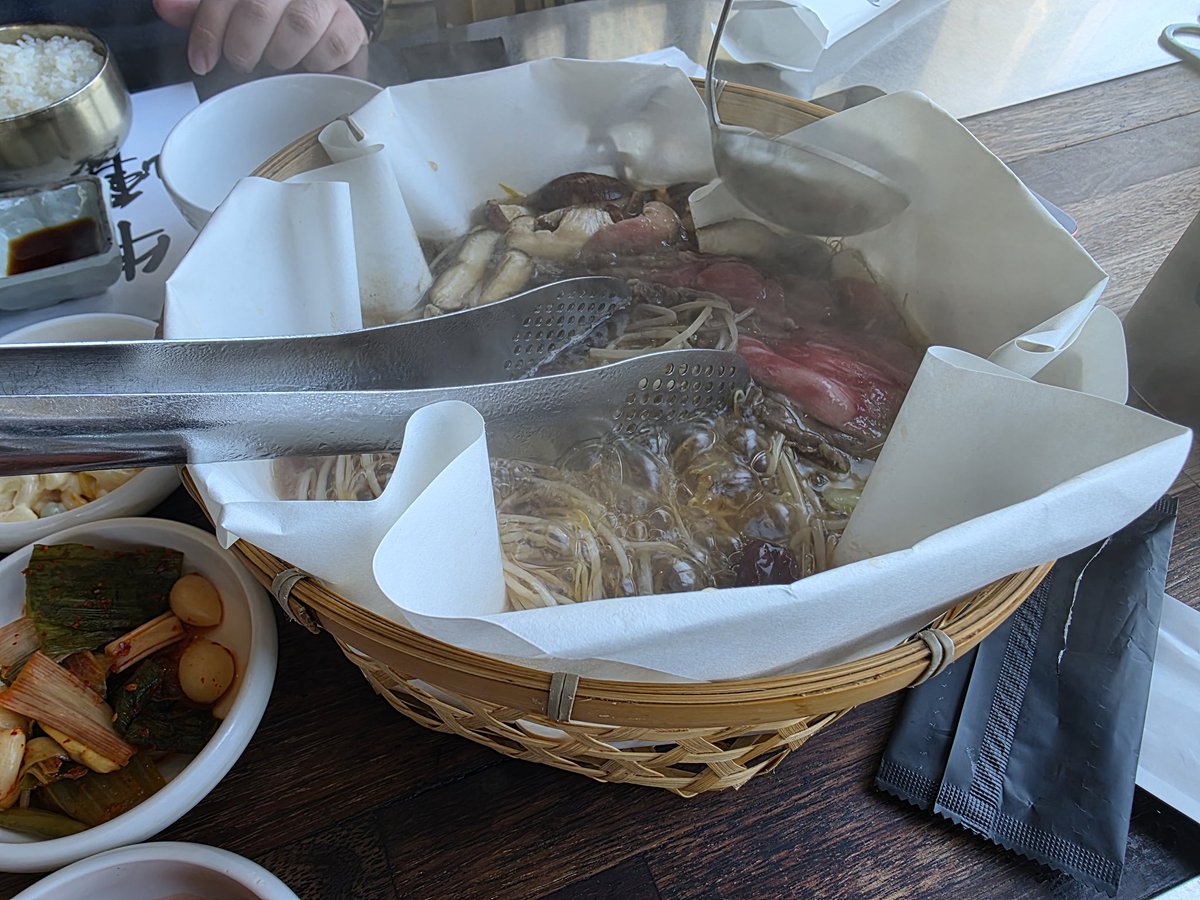
Also, the paper used on the hot pot induction stove was surprisingly fascinating. It is funny how small details like that can make a good meal and a good conversation even more memorable.
Thank you for the great conversation.
See you again soon, Jukan.
Grok 4.5, based on our 1.5T V9 foundation model, with Cursor data added in supplemental training, is now in private beta at SpaceX & Tesla. Early evals show performance close to, perhaps exceeding Opus.
RL is continuing to significantly improve the model, and the Grok Build harness gets better every day.
Nice work by all those involved!
Completely trained from scratch new models will be released by @SpaceX every month this year.
The memory supply-demand gap will keep widening through 2027. That is the real reason Apple is lobbying the White House to keep CXMT off the Entity List.
▌Start with my latest industry checks: The pressure on Apple has shifted from soaring memory costs to a widening supply gap.
1. Of the memory capacity allocated to consumer electronics in 2026, an estimated 15–20% is expected to shift to data centers in 2027, and that share could grow.
2. Due to tight memory (LPDDR) supply, Apple's actual pull-in volume of A20 chips in 2H26–1Q27 could be 10–20% below its original target (though part of that may reflect Apple’s own overbooking).
▌CXMT states in its IPO prospectus that its capacity is far below domestic demand. Given the persistent global memory imbalance, even if Apple’s lobbying succeeds and it buys DRAM from CXMT, that would not materially lower costs or fill the supply gap. Still, with the imbalance widening, Apple has every reason to secure an additional source.
▌This also explains why Apple is being more proactive this time than it was when it evaluated YMTC in 2022. YMTC was mainly about lowering NAND costs; CXMT is about managing DRAM supply risk.
▌Tim Cook is one of the few tech leaders who can still navigate both Washington and Beijing, so this is better handled before he steps down as CEO. Even if the effort goes nowhere, the media coverage can still leave the market with the impression that Apple tried but was constrained by U.S. policy. That may help ease frustration over price hikes and longer delivery times.