✨️ In the Beginning No One Spoke is now available to request on NetGalley! ✨️
A chance email explodes Kai Shan's picture-perfect life and forces her to make a terrible choice.
At once nail-biting and thought-provoking, this is a sharply insightful novel about complicity, secrets, and the courage it takes to speak out. Out in April 2027!
I am not mixing up anything. The name Palestine does indeed derive from the Philistines. But the Palestinians themselves are an indigenous population, strongly rooted in the landscape between the River Jordan and the Mediterranean Sea. Their faith evolved from Canaanite paganism through Judaism and Christianity to Islam. Their language moved from Archaic Canaanite to Aramaic and Greek, and then from Greek to Arabic. But the Palestinians remained throughout much the same cosmopolitan mix of mainly Semitic peoples as the rest of the Levant.
Ancient DNA evidence has transformed our ability to trace population continuity across deep time. A 2020 meta-analysis found that Palestinians derive 81 to 87 per cent of their ancestry from Bronze Age Levantines. The geneticist Marc Haber and his colleague Pierre Zalloua at the Wellcome Sanger Institute demonstrated that the Lebanese population, genetically indistinguishable from the Palestinian population, derives over ninety per cent of its ancestry from Bronze Age Canaanites. The people who lived in Palestine before the Nakba of 1948 were the descendants of the people who built the villages and cities of Canaan.
What the DNA evidence specifically refutes is the claim, central to Zionist founding mythology, that Palestinian Arabs were late arrivals from the Arabian Peninsula who flooded into the country in the wake of the seventh-century Arab conquest. They were not. The 7thC conquests brought in only a small military elite. The population remained, becoming majority Arabic speaking by the 10thC and the majority converting to Islam by the 12th.
The Haber and Zalloua findings are corroborated by a series of independent studies that together constitute an overwhelming body of evidence. The most comprehensive is the 2020 meta-analysis led by Lily Agranat-Tamir then at the Hebrew University of Jerusalem (now at Stanford), co-authored by David Reich’s lab at Harvard, which extracted genome-wide data from seventy-three individuals across nine Bronze and Iron Age archaeological sites in the southern Levant, including Megiddo, Hazor, Ashkelon, and Sidon. Published in the journal Cell, the study found that modern Levantine Arabic-speaking populations, including Palestinians, Lebanese, Jordanians, Druze, and Syrians, derive almost all of their ancestry from Bronze Age Levantines.
Percival Everett, Ta-Nehisi Coates, Sarah McNally, Nicole Aragi, Judith Gurewich, and former PEN America president Dinaw Mengestu are among a coterie of literary leaders spearheading a new U.S. PEN chapter they say will “defend protected speech consistently and without exception.” https://t.co/AaExbxkcTr
Who brought genocidal Myanmar before the International Court of Justice?
Not the West, so fond of proclaiming its moral leadership.
The Gambia did: mainland Africa's smallest country, GDP per capita $919.
And who brought genocidal Israel there? South Africa.
Arrested for wearing a t-shirt with "Palletsign Acton" on it.
The UK is beyond a joke, we supposedly have 'no money' and how many millions do they waste on this BS?
Arrested for wearing a t-shirt with "Palletsign Acton" on it.
The UK is beyond a joke, we supposedly have 'no money' and how many millions do they waste on this BS?
She was told the children were dying from a disease doctors already understood.
Cicely Williams wasn’t convinced.
In 1929 the young Jamaican doctor arrived on the Gold Coast of West Africa. She saw toddlers with swollen bellies, pale patches on their skin, and brittle hair. The official diagnosis was pellagra. Treatment was given. The children kept dying.
She listened to the mothers and grandmothers. They already had a name for it: kwashiorkor—“the disease the child gets when the new baby comes.”
These weren’t simply starving children. They were toddlers weaned too early when a sibling was born and given maize pap that filled their stomachs but gave them almost no protein. Without the amino acids their bodies needed, they broke down.
By 1931 she had recognized the pattern. In 1933 she published her findings, describing kwashiorkor as a distinct condition caused by protein deficiency.
The medical establishment dismissed her. A leading authority accused her of carelessness and deceit. She was ignored again when she published more detailed evidence. Then she was transferred to Malaya—widely understood as professional punishment.
In Malaya she saw something else. Companies, including Nestlé, were sending women in white coats into homes and maternity wards, telling poor mothers that sweetened condensed milk from a tin was better and more modern than their own breast milk. Many of those families had no clean water. Formula mixed with contaminated water was killing babies.
In 1939 she was invited to speak to the Singapore Rotary Club. The chairman was the president of Nestlé. She titled her speech “Milk and Murder.” She told the room that promoting infant formula this way among vulnerable families was negligence, and the deaths that followed should be regarded as murder.
Then the war came. When Japan invaded, she fled on foot through the jungle. She was captured and spent three and a half years as a prisoner of war—starved, tortured, held in cages. She developed dysentery and beriberi that permanently damaged her feet. When the war ended she was close to death in a hospital bed.
She survived. And she went back to work.
Three years later the newly formed World Health Organization needed someone to lead its first Department of Maternal and Child Health. They chose Cicely Williams.
She spent the rest of her career training local health workers, advising governments, and insisting that the health of mothers and children was not a minor branch of medicine—it was one of its foundations.
In 1981, forty-eight years after her paper on kwashiorkor and forty-two years after her “Milk and Murder” speech, the World Health Assembly adopted the International Code of Marketing of Breast-milk Substitutes. The vote was 118 to 1.
Much of what she had warned about since the 1930s had finally become international policy.
She lived long enough to see it. Cicely Williams died in 1992 at 98.
She began with a notebook, a stethoscope, and the willingness to listen to people others had ignored. It took the world decades to catch up with what she had seen.
A man who died 23 years ago may explain Palestine better than anyone on television today.
A new documentary has brought Edward Said back to life. And if you want to understand Palestine, the Western media, and why an entire people have spent generations fighting for the right to tell their own story, put this film on your must-watch list.
Edward Said: Between Worlds (2026), directed by Maiken Baird, is a 107-minute documentary unlike the usual parade of historians and experts telling us what to think.
For the first time, filmmakers were given full access to the Said family archives.
Decades of previously unseen home movies, private recordings, rare television interviews, public confrontations and lectures have been assembled into a film in which Said largely tells his own story.
It premiered at the Toronto International Film Festival, has travelled to festivals around the world and won a Special Jury Prize in São Paulo.
But who was Edward Said?
Born in Jerusalem in 1935, he became one of the twentieth century's most influential intellectuals, teaching at Columbia University and writing Orientalism, the 1978 book that exposed how the West had spent centuries inventing its own versions of Eastern peoples, describing them, classifying them and claiming intellectual authority over them.
A Palestinian telling the West that perhaps the people it had colonised understood their own existence better than their colonisers did.
And doing so with such intellectual brilliance that ignoring him became increasingly difficult.
One particularly devastating moment in the documentary takes us back to 1992.
Said returns to the Jerusalem house where he played as a little boy, captured in the family home movies his father had filmed.
The house is still there.
His childhood isn't.
And the building now houses an office of a Christian Zionist organisation.
He cannot bring himself to knock.
That single scene says more about exile than a hundred political speeches.
Said died in 2003.
He never lived to see what happened to Gaza after October 7, 2023. But he spent decades explaining how Palestinians were dispossessed not only of their land, but of the authority to describe what had happened to them.
And why their suffering so often had to be translated into language acceptable to Western audiences before it was considered worthy of attention.
That is what makes this documentary so urgently relevant.
In a world overflowing with people explaining Palestinians to everybody else, here is a Palestinian explaining himself.
No one can accuse Edward Said of having nothing to say.
The question is whether we are finally prepared to listen.
Edward Said: Between Worlds (2026). Remember the title. Watch it when you get the opportunity.
I spoke with @RealAmnaNawaz on @PBS@NewsHour about Huna, why I wrote it and whom it’s written for, my visa rejection that denied me from attending the ceremony, and the wonderful show of solidarity from my fellow finalists on the awards night. 🧵
When @El_Gendy_95 read an excerpt from his memoir at the 2023 Bread Loaf Writers Conference, the applause was thunderous. I remember sitting in the audience, surrounded by fellow writers, thinking, This book is going to win awards and it just did - the @nationalbook in Nonfiction. Warmest congrats!
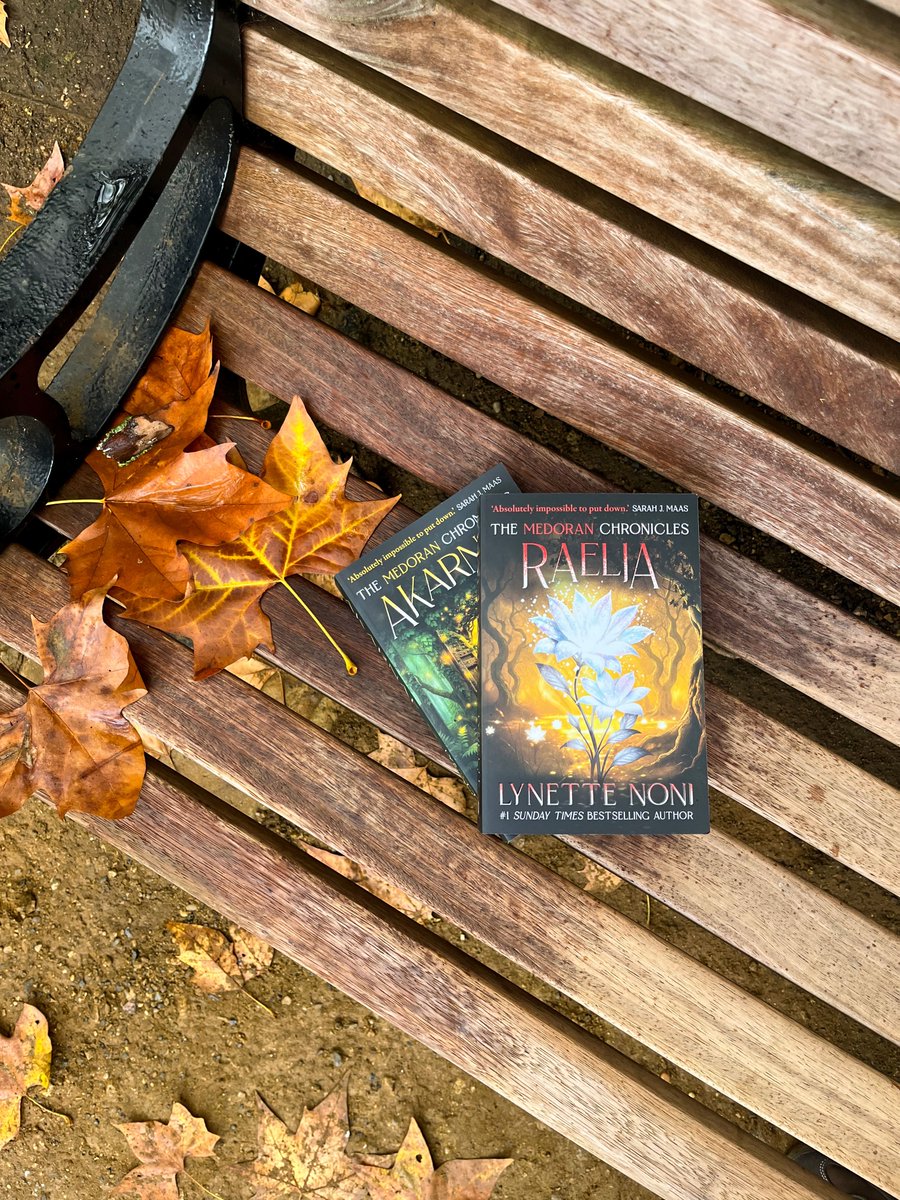
✨️ The first two books in The Medoran Chronicles are out in the UK! ✨️
Narnia meets the X-Men in this immersive YA fantasy full of intrigue, danger and magic. The perfect form of escapism this winter!
These gorgeous sprayed edge editions are available while stocks last!
A weird, gross, story with zero meaningful context on conditions in Egypt. The pending trial of @Linaattalah doesn't merit a mention, or the coddling of Sisi by Donald Trump. Every writer quoted supports his eligibility, and a bunch of lawyers don't. https://t.co/R73pat2akm
In 2022, I met @El_Gendy_95 by chance near an elevator at a conference. His story stayed with me, broke my heart, and became one of the most memorable profiles I've ever written.
He just won the National Book Award for his gorgeous memoir, Huna.
Alf mabrouk! So well deserved.
.@RealBobMortimer has decided to launch his
Book today to scupper my chances of getting to No.1
In the bestseller charts.
I thought he'd gone fishing but oh no,
He's stalking the high street with his wares.
Time for some Astral Planing and a Bookachino.
Toodlemoose!