A Finance & Accounting professional, left brained, GettyImages contributor, riding SpecializedStumpjumperFSR in weekends and trade for fun at IDX occasionally.
Indonesia’s biggest nickel complex may have to slash output by as much as 40% due to an El Niño-driven drought that’s curbing water supply to smelters. https://t.co/i0rickQdMB
If you can watch only one video to understand current geopolitics, make it this one by George Yeo, one of Singapore's longest-serving cabinet ministers (23 years!)
As Yeo explains, current global geopolitics is fundamentally driven by US "retreat" and "decline", forced by a financial reality that no US administration can reverse: its debt servicing already exceeding its entire defense budget.
To Yeo, this explains why the US insists so much that its "allies" in Europe and Asia spend more of their GDP on defense - to basically pick up the tab for an empire America can no longer afford - but it also means that, inevitably, "once your allies begin to have their own military capabilities, they will think differently, and they will not follow you in everything that you want to do."
As such, American decline becomes self-reinforcing: the more it asks allies to carry their own weight, the less reason they have to follow its lead.
Still, Yeo says that a similar dynamic to one that happened after the fall of Rome could occur where America - like Byzantium did - sheds its empire and consolidates around its own hemisphere, allowing it to remain self-sustaining and powerful for a very long time.
He believes it's the direction things are heading - which would also explain Trump's obsession with Canada and Greenland.
It remains however obviously an open question whether an American "Byzantium strategy" is even achievable: Canada, for one, clearly wants no part of it.
Full video available here: https://t.co/99APyQjG3q
Dunia akan segera menyaksikan keajaiban dari Aceh. Ratoh Jaroe warisan suci tanah Rencong akan menjadi Opening Ceremony FIFA World Cup 2026 di panggung sepak bola terbesar di dunia.
Indonesia's currency and stock market are the worst performers in Asia. By June 4, the rupiah had lost nearly 8% against the dollar this year, and the stock index had fallen about 32%, with foreign investors pulling trillions of rupiah out of equities and government bonds. While the government blames global turbulence, Indonesia's neighbors weathered the same storm and are recovering. Indonesia is not. The real problem is the loss of confidence.
Investors need either better returns or lower risk, and Indonesia offers neither. On paper, rupiah assets pay well: yields are higher than US Treasuries, and Bank Indonesia raised its rate by 50 basis points in May. But foreign investors eventually cash out in dollars, and a falling rupiah erodes those returns. This fuels a vicious cycle: fear of depreciation drives selling, which pushes the rupiah lower, which confirms the fear. It is a self-fulfilling prophecy that policy reassurances cannot break.
Two government missteps deepen the crisis. First, the Bond Stabilization Fund artificially suppresses yields, creating cosmetic calm while reducing the compensation investors get for taking on rupiah risk. Second, the Prabowo administration manufactures uncertainty through abrupt, unexplained policy moves, from routing strategic commodity exports through a state vehicle to ordering ride-hailing commission caps.
The writer proposes two cures: let rupiah assets pay enough to offset currency risk (which means BI may need to tighten further and fiscal authorities should stop suppressing yields) and stop generating policy uncertainty through erratic decision-making.
📚 Read the insight from Riandy Laksono, Researcher, Department of Economics, CSIS Indonesia in https://t.co/OZbKz84FHK.
Indonesia is the 'fourth most populous country', growth over 5%, with 'nuclear competence' already present — Rosatom's Likhachev
HORMUZ shock: 25% of Indonesian oil and 30% of LNG from the Persian Gulf
Floating stations for the archipelago: 'Nuclear power is the best answer'
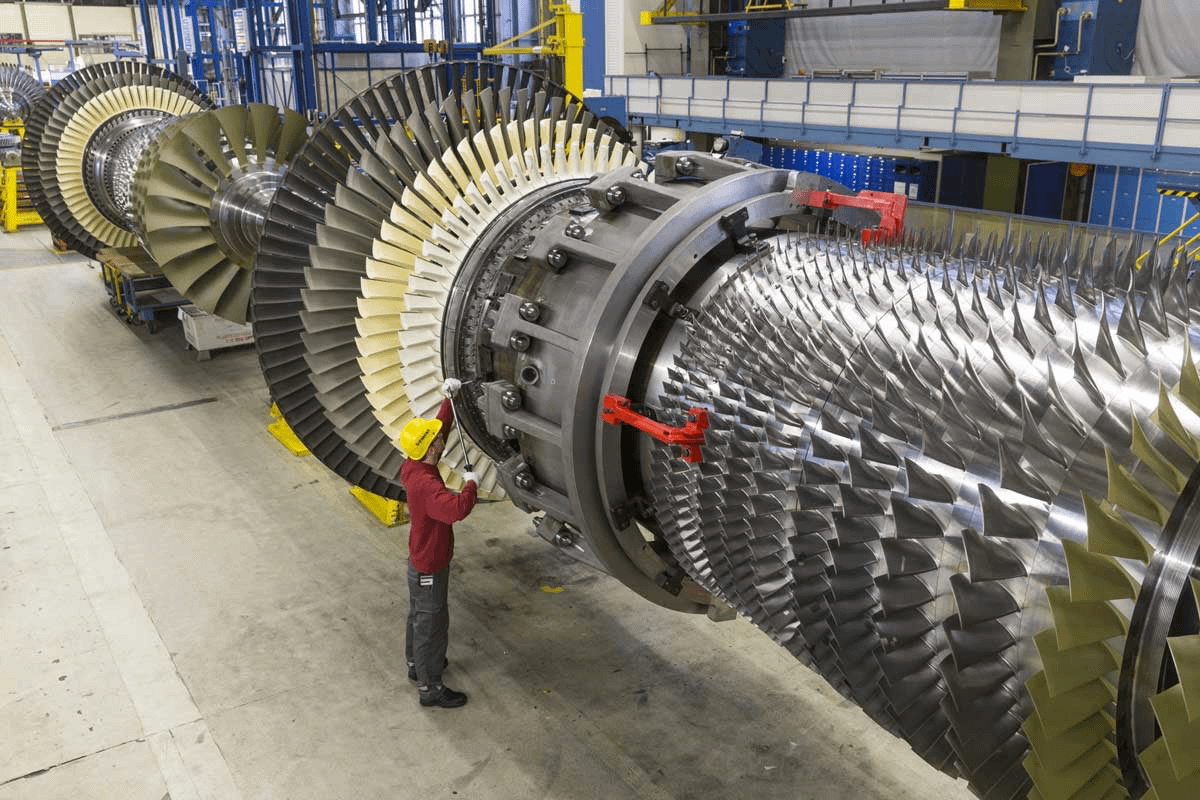
You cannot buy a new gas turbine until 2030. Order books at GE, Siemens, and Mitsubishi stretch to 2029. Turbine prices have nearly tripled since 2019. Every AI data center needs power and every gas plant needs a turbine. And every turbine has one part that bottlenecks the entire industry: The blade. It has to survive in gas 500°C above the melting point of the metal it's made from and spin at up to 20,000 RPM under 10,000 g of centrifugal force. Each blade is grown as a single crystal of nickel superalloy, pulled through a vacuum furnace at 3 mm per minute. A set of blades costs $600,000 and takes 90 weeks to grow. The same metallurgy powers modern jet engines. Only 3 companies on Earth can build one. China spent $42 billion trying to catch up. They bought a Russian fighter engine, took it apart, and copied every part. Their copy ran 30 hours between overhauls versus 400 for the original. Modern Western engines run 4,000. You can reverse engineer the shape of a turbine blade. You cannot reverse engineer 60 years of metallurgy.
Woe to those who manipulate religion and the very name of God for their own military, economic, and political gain, dragging that which is sacred into darkness and filth. #ApostolicJourney#Cameroon https://t.co/bKteFZ3iWE
84.4% of cancer patients taking ivermectin + mebendazole declared NO EVIDENCE OF DISEASE, TUMOR SHRINKAGE, or CANCER STABILIZATION after 6 months.
HUNDREDS of preclinical studies explain why: anti-parasitics exert over 12 anti-cancer mechanisms across more than 12 cancer types.
🇮🇩 BREAKING: Indonesia just played the game perfectly. Signed a security deal with the US, then flew to Moscow and locked in oil, gas, and LPG supplies from Russia.
That's not choosing sides. That's choosing Indonesia.
Energy from one superpower, security from another. While Europe burns itself to punish Russia, Jakarta is quietly securing its own interests from both.
The rest of the Global South is watching and taking notes.